Longevity Medicine
What Is Plasmapheresis for Longevity?
Last reviewed: May 2026 · Haute MD Editorial Team
Plasmapheresis — also called therapeutic plasma exchange (TPE) — is a procedure that removes a patient's plasma and replaces it with albumin, saline, or donor plasma. Established for decades in autoimmune and neurological diseases, it has become an active area of longevity investigation based on animal experiments suggesting that diluting aged plasma factors can rejuvenate aged tissues.
How plasmapheresis works
During the procedure, blood is drawn from the patient, separated by centrifuge or membrane filtration into plasma and cellular components, the plasma is discarded, and the cellular components are returned to the patient along with a replacement fluid (typically 5% albumin). A typical session lasts 2-4 hours and exchanges 1-1.5 plasma volumes. The procedure has a strong safety track record when performed in qualified centers. Established medical indications include myasthenia gravis crisis, Guillain-Barré syndrome, thrombotic thrombocytopenic purpura, certain autoimmune neuropathies, and some hyperviscosity syndromes. In these contexts, removing pathogenic antibodies or proteins from circulation provides clinical benefit.
Why it is being investigated for longevity
Animal experiments by researchers including Irina and Michael Conboy demonstrated that diluting old mouse blood with saline + albumin (without adding 'young' factors) produced rejuvenating effects in muscle, liver, and brain tissue comparable to parabiosis (joining old and young circulatory systems). This suggested that aged plasma contains accumulated pro-aging factors — chronic inflammatory cytokines, damaged proteins, dysfunctional signaling molecules — whose removal allows endogenous regenerative capacity to resurface. The hypothesis is that plasmapheresis or plasma dilution in humans may produce similar benefits by reducing the accumulated 'pro-aging' factor load. Small human pilot studies are underway examining biomarkers (epigenetic age, inflammatory markers), and several longevity-focused clinics now offer the procedure off-label as a longevity intervention. Larger randomized controlled trials with longevity endpoints have not been completed; the evidence is at the early stage.
Practical considerations and limits of evidence
Practical realities: a single session costs $5,000-$15,000 at longevity clinics; multi-session protocols can exceed $30,000-$60,000 annually. Insurance does not cover plasmapheresis for longevity indications. Procedure requires venous access (sometimes a central catheter), trained staff, and 2-4 hour sessions, repeated monthly or quarterly in most longevity protocols. Side effects of properly performed plasmapheresis are usually mild (citrate-related hypocalcemia, mild blood pressure changes) but include rare serious risks (allergic reactions, bleeding, infection from vascular access). Evidence limits: small pilot studies in humans show some biomarker improvements (reduced inflammatory markers, modest epigenetic age changes), but no large randomized longevity outcome trials exist. Most longevity physicians consider plasmapheresis an investigational intervention worth following but premature to recommend broadly compared to foundational interventions (exercise, sleep, diet) that have far stronger evidence per dollar.
Frequently Asked Questions
How much does plasmapheresis cost as a longevity treatment?
Single sessions at longevity clinics typically run $5,000-$15,000. Multi-session protocols ($30,000-$60,000+ annually) are common in aggressive programs. Insurance does not cover plasmapheresis for longevity indications, only established autoimmune and neurological diagnoses.
Does plasmapheresis actually reverse aging in humans?
Animal data are encouraging; rigorous human longevity outcome data are not yet available. Small pilot studies show some biomarker improvements (epigenetic age, inflammation), but it is not established that plasmapheresis produces clinically meaningful healthspan or lifespan effects in humans. The field is investigational.
Is plasmapheresis safe?
When performed in qualified medical settings, generally yes — it has decades of safety data in established autoimmune indications. Side effects are typically mild; rare serious complications (allergic reactions, infection from vascular access, bleeding) occur. Safety depends heavily on facility quality and operator experience.
How does plasmapheresis differ from young blood plasma transfusion?
Plasmapheresis removes the patient's own plasma and replaces it with albumin (a dilution effect). Young blood plasma transfusion adds plasma from young donors to the patient (an addition effect). Current research suggests dilution alone — without young plasma — may capture most or all of the rejuvenating effect seen in animal models.
Get Help Now
Speak with a Haute MD Longevity Medicine physician

Dr. George Kaltner
CEO
Longevity Medicine · Miami Beach, FL
View Profile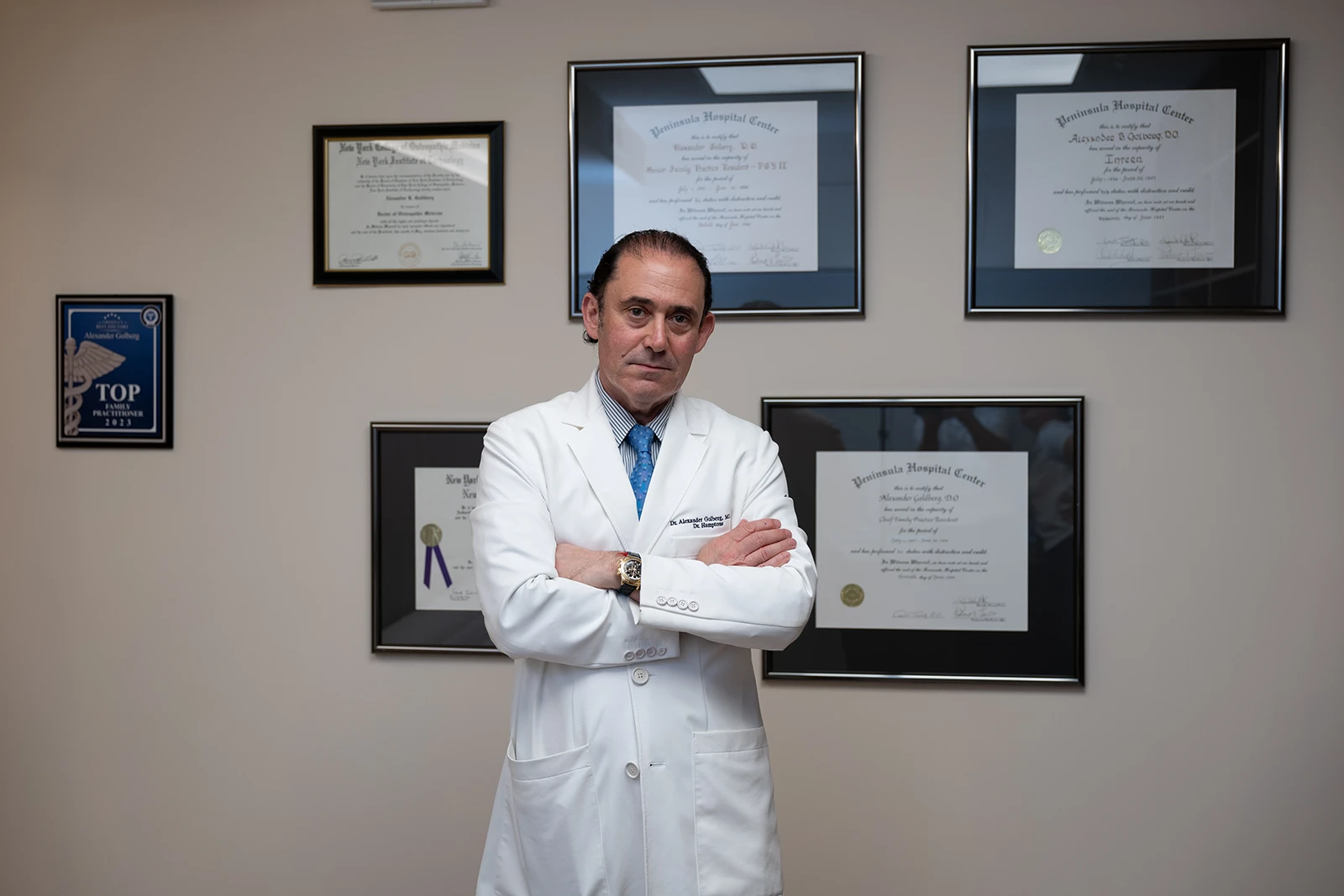
Dr. Alexander Golberg
Longevity Medicine · New York, NY
View Profile
Dr. Steven Victor
Regenerative Medicine Specialist
Longevity Medicine · New York, NY
View ProfileAre you a Longevity Medicine physician?
Join Haute MD Network and have your profile featured alongside these answers.
Apply for the NetworkRelated Guides
Guide · LONGEVITY MEDICINE
What Is Young Blood Plasma?
Young blood plasma transfusion has been investigated as a longevity intervention. Learn what the science actually supports — and what the FDA has warned about.
Read GuideGuide · LONGEVITY MEDICINE
What Are the Hallmarks of Aging? The Biology Behind Why We Age
The hallmarks of aging are the 12 fundamental biological mechanisms driving aging. Learn what they are and how longevity interventions target them.
Read GuideGuide · LONGEVITY MEDICINE
What Is Cellular Aging?
Cellular aging refers to the molecular damage that accumulates inside cells over time. Learn the key mechanisms and how longevity medicine targets them.
Read Guide