AI Can Now Measure Your Pores by Shape, Not Just Size
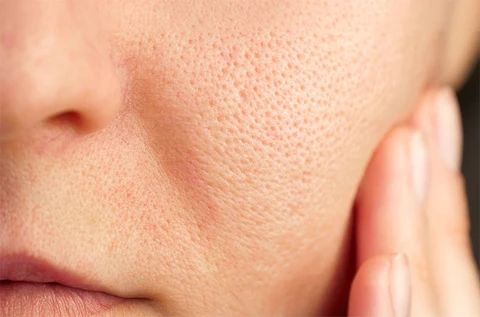
Photo Credit: Shutterstock
For most of dermatology's history, "skin quality" has been a visual judgment call, a provider's trained eye, a magnifying lamp, and a general sense of what fine, coarse, or enlarged pores actually look like. That's changing quickly. A new wave of imaging technology is turning skin assessment into something closer to a lab report, and pores, long measured mostly by size, are becoming one of the more interesting test cases for what that shift actually looks like in practice.
Why Pore Shape Is the New Frontier
At the 2026 American Society for Dermatologic Surgery Annual Meeting, dermatologist Daniel Schlessinger pointed to pore assessment as a clear example of where skin evaluation is headed. "What skin quality entails is becoming better defined," he said, noting that providers are moving toward more objective criteria for evaluating skin overall. "Being able to assess pores at the level of detail to know not just how fine or coarse they are but the shape of the pore can be beneficial," he added.
That distinction matters more than it might initially sound. Two pores can register as the same size on a basic measurement but look and behave completely differently depending on their shape and orientation, factors tied to how visible they appear, how they respond to treatment, and what's actually causing them to look enlarged in the first place. Research published in Skin Research and Technology has already validated imaging methods capable of measuring pore shape, color, and orientation, not just size, moving the field beyond older tools that were largely limited to counting or sizing.
The Accuracy Numbers Are Genuinely Notable
The case for AI-assisted skin analysis isn't just about convenience. A 2025 systematic review found that AI skin diagnostic models achieved sensitivity rates of 90 to 98 percent and specificity rates of 45 to 99 percent, and outperformed board-certified dermatologists in 63 percent of the studies analyzed. That's a meaningful data point, though the wide range in specificity is worth sitting with too: accuracy still varies significantly depending on the specific skin condition being assessed, which is precisely why physician interpretation of AI results remains essential rather than optional.
In practice, modern AI imaging systems generate a full skin profile in the time it takes to complete a consultation, quantifying pigmentation, texture, elasticity, pore size, redness, and overall radiance immediately after imaging, rather than requiring a separate follow-up visit. Some newer systems are also being trained on more diverse datasets specifically to maintain accuracy across the full Fitzpatrick skin type spectrum, addressing a real limitation in earlier-generation tools that performed inconsistently across different skin tones.
What This Actually Changes for Patients
The practical shift is less about a single flashy scan and more about what happens after it. Instead of a provider describing a concern in general terms, patients increasingly leave a consultation with quantified metrics attached to specific concerns, numbers that can be tracked over time to measure whether a treatment plan is actually working, not just whether it looks like it might be. That data can also help set realistic expectations upfront, since a measured baseline makes it much easier to define what meaningful improvement will actually look like for a specific patient's skin.
None of this replaces the physician's role. A scan can quantify a pore's shape or a patch of erythema with real precision, but it can't decide, on its own, which treatment approach fits a patient's broader skin history, sensitivities, or goals. The technology is best understood as a more precise starting point for a conversation a qualified provider still needs to have directly with the patient in front of them. Patients weighing skin quality treatments can find a board-certified physician through the Haute MD network.
Frequently Asked Questions
What does AI skin analysis actually measure? Modern AI skin imaging tools can quantify pigmentation, texture, elasticity, pore size and shape, redness, and overall skin radiance, generating a detailed profile immediately after imaging rather than relying on visual assessment alone.
Is AI skin analysis more accurate than a dermatologist's evaluation? A 2025 systematic review found AI skin diagnostic models outperformed board-certified dermatologists in 63 percent of studies analyzed, with sensitivity rates as high as 90 to 98 percent. However, accuracy varies by specific skin condition, which is why physician interpretation of results remains important.
Why does pore shape matter, not just pore size? Pores of the same size can look and behave differently depending on their shape and orientation, factors linked to visibility and how a pore responds to treatment. Assessing shape in addition to size gives providers a more complete picture of what's actually driving a patient's concern.
Does AI skin analysis replace the need to see a dermatologist? No. AI tools provide more precise, quantified data, but a board-certified provider is still needed to interpret that data and determine an appropriate treatment plan based on a patient's full skin history and goals.
Are AI skin imaging systems accurate across all skin tones? Accuracy has historically varied across skin tones, but newer systems are increasingly trained on more diverse datasets specifically to improve consistency across the full Fitzpatrick skin type spectrum.
Articles are independently produced by the Haute Living editorial team. Featured physicians are members of the Haute MD Network — inclusion does not influence editorial coverage or rankings.