


Think about how you maintain a high-performance vehicle. You don’t just wait for the engine to seize or the brakes to fail before taking it to the shop. You perform regular, meticulous maintenance to ensure it runs at its peak for as long as possible. This is the very essence of preventive medicine.
It represents a fundamental shift away from the old-school, reactive model of healthcare—a system designed to fix problems only after they’ve already started causing damage.
Defining Preventive Medicine: A Proactive Approach to Health
This proactive philosophy moves far beyond simply reacting to symptoms. It’s about building a strategic defense for your health, identifying potential risks long before they escalate into critical issues. It puts you back in the driver’s seat, empowering you to write your long-term health story rather than just being a passive recipient of treatment when things go wrong.
Shifting from Reactive to Proactive Care
The core difference between the two approaches comes down to timing and intent. Reactive medicine responds to an existing illness, like prescribing medication for high blood pressure that has already been diagnosed. Preventive medicine, on the other hand, aims to stop that high blood pressure from ever developing in the first place by addressing its root causes—things like personalized nutrition, targeted exercise plans, and stress management.
This forward-thinking approach involves a few key actions:
- Understanding Your Baseline: Using advanced diagnostics to get a crystal-clear picture of your current health, including genetic predispositions and detailed biomarker analysis.
- Identifying Future Risks: Pinpointing potential health challenges based on your unique genetic makeup, lifestyle, and family history.
- Implementing Protective Strategies: Creating a personalized roadmap with actionable steps to mitigate those risks and elevate your overall well-being.
The goal isn’t just to add years to your life, but to add life to your years. Preventive medicine focuses on maximizing your healthspan—the period of life spent in good health—free from the limitations of chronic disease.
This modern paradigm is built on one simple truth: your health is your most valuable asset. It’s a direct investment in your future performance, productivity, and quality of life. The table below breaks down the key distinctions between these two healthcare models.
Reactive vs. Proactive Healthcare: A Fundamental Shift
The contrast between traditional and preventive medicine highlights a crucial change in philosophy. One waits for failure, while the other engineers success. This table illustrates how different the mindset, tools, and goals truly are.
| Attribute | Traditional Reactive Medicine | Modern Preventive Medicine |
|---|---|---|
| Primary Focus | Treating symptoms and diseases | Identifying risks and preventing illness |
| Timing of Care | After a health problem occurs | Before a health problem develops |
| Patient Role | Passive; receives treatment for illness | Active; partners with a physician to build a health strategy |
| Key Tools | Prescription drugs, surgery, emergency care | Advanced screenings, genetic testing, lifestyle counseling |
| Ultimate Goal | Curing or managing existing conditions | Optimizing health and maximizing longevity |
Ultimately, the choice is between being a passenger in your own health journey or taking the controls. Preventive medicine provides the map and the tools to navigate toward a longer, healthier, and more vibrant life.
The Four Levels of Preventive Care Explained
To really understand preventive medicine, it helps to stop thinking of it as a single action, like getting a flu shot. Instead, picture it as a sophisticated, multi-layered defense system designed to protect your most valuable asset: your health. You wouldn’t secure a billion-dollar company with a single password; you’d use integrated, overlapping security measures. Your health deserves the same strategic approach.
This proactive philosophy is all about averting disease rather than reacting to it after the fact. It uses a powerful toolkit of advanced screenings, immunizations, and personalized lifestyle strategies to get ahead of health problems. It’s a field experiencing explosive growth, valued at USD 395.80 billion in 2023 and projected to skyrocket to USD 870.06 billion by 2033, a surge driven by the urgent need to manage and prevent chronic conditions. You can explore more about this market expansion and find detailed reports on the industry’s growth.
The diagram below perfectly illustrates the core choice we all face: a reactive model that fixes what’s broken versus a proactive one that keeps it from breaking in the first place.
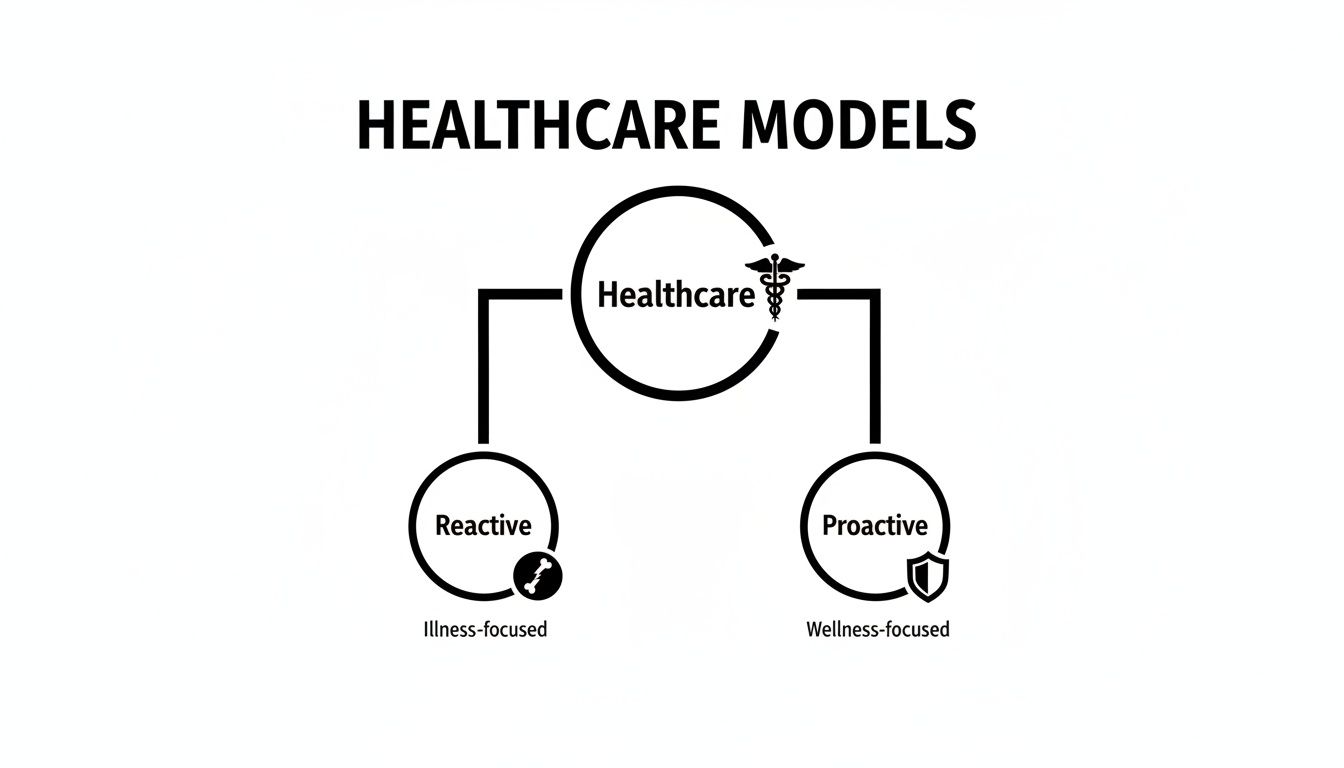
This simple visual makes it clear. Preventive medicine is the shield. Now, let’s break down the four layers of that shield.
Primordial and Primary Prevention
These first two levels are the bedrock of a long, high-performance life. They focus on neutralizing threats at the earliest possible stage—sometimes before they’re even on your personal radar.
Primordial prevention is the big picture. It’s about shaping the world around us to eliminate the root causes of disease before they can ever take hold in a population. Think of it as architecting a healthier environment from the ground up.
- Real-World Example: A real estate developer who designs a new community with walkable greenways, a local farmer’s market, and state-of-the-art fitness facilities is practicing primordial prevention. They’re making healthy choices the easy choices.
Primary prevention, on the other hand, is intensely personal. It targets healthy individuals who, due to genetics or lifestyle, might be susceptible to a future illness. This is where we take direct action to stop a specific disease from ever developing.
- Real-World Example: An executive with a family history of heart disease works with their doctor to create a personalized nutrition and exercise protocol. They get specific immunizations and targeted supplements to actively drive down their inherited risk. That’s primary prevention in action.
Secondary and Tertiary Prevention
While the first two layers aim to keep disease from starting, the next two are about smart, early management for those who may have already developed a condition, often without knowing it.
Secondary prevention is all about early detection. The entire goal is to catch a disease in its infancy, long before symptoms appear, when it’s most treatable. This is where advanced diagnostics become mission-critical.
By finding and addressing health issues early, secondary prevention can halt or even reverse disease progression, dramatically improving long-term outcomes and preserving quality of life.
Key services at this level include:
- Advanced Cancer Screenings: Think liquid biopsies or full-body MRIs that can spot malignancies years before traditional methods would.
- Cardiovascular Risk Assessment: Using tools like a Coronary Artery Calcium (CAC) score or advanced lipid panels (ApoB, Lp(a)) to uncover hidden heart disease risk.
Finally, tertiary prevention kicks in after a diagnosis has been made. The focus shifts to softening the impact of an ongoing illness, preventing complications, and optimizing function to maintain a high quality of life.
- Real-World Example: After a minor cardiac event, a CEO doesn’t just get standard rehab. They engage in a bespoke program featuring personalized exercise physiology, stress resilience coaching, and nutritional optimization to regain peak performance and ensure it never happens again.
Together, these four levels form the strategic framework of modern preventive medicine. It’s a decisive shift away from simply treating sickness toward actively building and defending lasting health and vitality.
Core Services and Specialists in Preventive Medicine

Knowing the theory behind prevention is one thing, but seeing it in action is another entirely. Elite preventive medicine isn’t just a concept; it’s a suite of tangible services delivered by a team of highly specialized physicians. This is where a personalized health strategy gets built, using advanced tools and deep expertise to create a protective shield around your well-being.
Think of it as the difference between a standard car inspection and a Formula 1 team’s diagnostic pit stop. Both check the basics, sure. But one uses sophisticated data, expert analysis, and precision tuning to ensure peak performance and prevent catastrophic failure on the track. In the same way, top-tier preventive services go far deeper than a routine check-up to optimize your health for the long race of life.
The Toolkit for Proactive Health
The services that form the backbone of preventive care are designed to provide a crystal-clear, high-definition picture of your current and future health. They replace guesswork with hard data, allowing physicians to create a truly bespoke plan.
Core services typically include:
- Advanced Diagnostic Screenings: This is worlds beyond standard blood work. We’re talking comprehensive cancer screenings like full-body MRIs or liquid biopsies, which can detect malignancies at their earliest, most treatable stages.
- In-Depth Cardiovascular Assessments: Forget just checking cholesterol. These evaluations use advanced markers like ApoB, Lp(a) levels, and Coronary Artery Calcium (CAC) scoring to reveal hidden risks for heart attack and stroke long before symptoms appear.
- Genetic and Epigenetic Testing: By analyzing your DNA, specialists can identify hereditary predispositions to certain conditions. More importantly, they create targeted strategies to mitigate those inherited risks, effectively helping you rewrite your health destiny.
- Bespoke Immunization Plans: These are not one-size-fits-all vaccination schedules. They are customized based on your age, lifestyle, travel habits, and specific risk factors to provide maximum, intelligent protection.
- Comprehensive Lifestyle Counseling: This is a deep dive into the pillars of health. It involves creating personalized nutrition protocols, physician-guided fitness regimens, and actionable strategies for stress resilience and sleep optimization.
The essence of these services is proactive intelligence. They are designed to answer not just “How am I today?” but, more importantly, “Where am I headed, and how can we chart a better course?”
This data-driven approach gives you and your physician the power to act from a position of strength. It’s about making small, precise adjustments now to avoid major, disruptive health events later.
The Experts Who Lead the Charge
Delivering this caliber of care requires a unique skill set that bridges general medicine, cutting-edge science, and a deep understanding of long-term health optimization. A great general practitioner is essential, but elite preventive medicine often involves a team of specialists.
Key players in this field include:
- Concierge Medicine Physicians: These doctors manage a small panel of patients, which allows for deeply personalized, 24/7 care. They act as the quarterback of your health team, coordinating with all specialists and ensuring your strategic plan is executed flawlessly.
- Preventive Cardiologists: These experts focus exclusively on stopping heart disease before it starts. They use advanced imaging and biomarker analysis to identify and aggressively manage cardiovascular risk factors. Understanding what is preventive cardiology and its focused approach is a critical step for anyone with a family history or lifestyle concerns related to heart health.
- Longevity and Anti-Aging Specialists: These physicians are at the forefront of healthspan science. They utilize the latest research in cellular health, metabolic function, and hormone optimization to slow the biological aging process and enhance vitality.
- Functional Medicine Practitioners: They excel at identifying the root causes of dysfunction. By looking at how all the body’s systems interact, they address issues like inflammation and gut health to prevent chronic disease from ever taking hold.
By connecting these specific services with the right experts, the abstract concept of preventive medicine becomes a powerful, real-world strategy. It’s this combination of advanced tools and dedicated expertise that transforms a desire for better health into a measurable, achievable outcome, securing your vitality for decades to come.
Who Benefits Most From Preventive Medicine
While it’s true that a proactive approach to health benefits everyone, the value of preventive medicine is most profound for those who see their well-being as a strategic asset. High-achievers—executives, entrepreneurs, and families leading demanding lives—get it. They understand that their health directly fuels their performance, clarity, and capacity to lead.
For these individuals, health isn’t just a passive state; it’s the very engine of their success. A reactive approach, simply waiting for illness to strike, is profoundly inefficient. It guarantees unplanned downtime, diminished cognitive function, and a compromised quality of life—all unacceptable costs for people who operate at the highest levels.
Preventive medicine, then, isn’t really for the sick. It’s for those who are serious about protecting their future and optimizing their present.
The Executive Use Case: Protecting Peak Performance
Think about a CEO leading a multi-billion dollar corporation. Her ability to make clear, high-stakes decisions is everything. For her, a standard annual physical that just ticks a few boxes is nowhere near enough. She requires a forward-thinking health strategy designed to safeguard her most critical professional tools: her energy, mental acuity, and resilience.
This is where elite preventive care becomes a non-negotiable investment. Through advanced diagnostics and a truly personalized plan, her medical team can:
- Optimize Cognitive Function: By analyzing biomarkers tied to brain health and inflammation, they can craft nutrition and supplement protocols to sharpen focus and enhance memory.
- Build Stress Resilience: Instead of just treating symptoms, they can identify the physiological toll of stress and implement strategies to fortify her system against burnout.
- Mitigate Future Health Risks: Genetic testing might flag a predisposition to cardiovascular issues. Her team can then roll out an aggressive primary prevention plan, ensuring she never loses a single day of productivity to a preventable condition.
For the high-performer, preventive care is the ultimate form of risk management. It systematically de-risks their health future, ensuring they can continue to operate at their peak for decades to come.
Many top leaders now build these deep dives into their routines. You can explore some of the best executive health programs to see how these services are structured to meet the unique demands of a C-suite lifestyle.
The Family Use Case: A Legacy of Health
The same strategic mindset applies to families who view their well-being as a multi-generational legacy. Proactive health isn’t just about personal optimization; it’s about protecting loved ones and giving the next generation the best possible head start. This becomes absolutely critical when hereditary conditions are a known factor.
Imagine a family with a strong history of certain cancers. Instead of waiting anxiously, they can partner with a preventive specialist to take control of their genetic narrative. Through comprehensive genetic screening, they can identify exactly which family members carry specific risk markers.
This knowledge empowers them to act decisively. Those with elevated risk can begin enhanced surveillance protocols years—or even decades—earlier than standard guidelines recommend. They can also implement targeted lifestyle interventions scientifically shown to lower their specific inherited risk. This approach transforms a genetic inheritance from a source of fear into a roadmap for proactive, life-saving action.
Ultimately, preventive medicine offers its greatest returns to those who refuse to leave their future to chance. It is for the architect, not the bystander—the individual who understands that building a life of extraordinary success requires an equally extraordinary foundation of health.
What to Expect From Your First Consultation

If you’re picturing a typical annual physical, think again. Stepping into a premier preventive medicine consultation is a fundamentally different experience. The goal isn’t just to confirm you aren’t sick today; it’s to build a detailed, strategic blueprint for your long-term health and vitality.
Forget the rushed, 15-minute appointment. This initial meeting is less of a quick assessment and more of a deep, collaborative discovery session. It’s the essential first step in shifting from a reactive health posture to a proactive, forward-thinking one.
The Comprehensive Intake Process
The deep dive begins long before you even meet the physician. You’ll typically complete an exhaustive intake questionnaire that goes miles beyond a simple medical history. This is a 360-degree look at your life, designed to uncover hidden risks and opportunities for optimization.
This process will explore several key areas:
- Detailed Medical and Family History: This moves beyond basic conditions to identify subtle patterns and hereditary predispositions that could influence your future health.
- In-Depth Lifestyle Analysis: You’ll provide granular information on your nutrition, exercise habits, sleep quality, stress levels, and even the demands of your professional life.
- Personal Health Goals: This is where you articulate your ambitions. Is it maintaining cognitive sharpness, running a marathon at 60, or simply ensuring you have the energy to keep leading your industry for another two decades?
This initial data-gathering phase is crucial. It gives your physician the raw material needed to customize your diagnostic plan and, ultimately, your personalized health roadmap.
Advanced Diagnostics and Data Collection
With a foundational understanding established, the next phase is about gathering objective, hard data on your current biological state. This is where elite preventive medicine truly separates itself, using advanced diagnostic tools that see what standard tests miss.
Your physician will order a battery of assessments tailored to your specific profile—this isn’t a one-size-fits-all panel, but a targeted investigation.
The purpose of these diagnostics is to replace speculation with precision. By measuring hundreds of biomarkers, physicians can identify subtle imbalances and early signs of dysfunction years before they would ever manifest as symptoms.
Common advanced diagnostics may include:
- Comprehensive Blood Panels: Analyzing not just standard markers but also advanced indicators for inflammation, metabolic health, hormone balance, and nutrient deficiencies.
- Genetic and Epigenetic Testing: This reveals your inherited health predispositions and offers powerful insights into how your lifestyle is influencing your gene expression right now.
- Advanced Cardiovascular Imaging: Tools like a Coronary Artery Calcium (CAC) scan or a CIMT (Carotid Intima-Media Thickness) test provide a direct look at your arterial health, offering a true picture of your heart attack and stroke risk.
- Body Composition Analysis: Using methods like DEXA scans to accurately measure body fat, muscle mass, and bone density—all critical indicators of metabolic health and longevity.
The integration of modern technology is a cornerstone of this process. The global preventive healthcare market is projected to grow from USD 268.7 billion in 2023 to USD 585.6 billion by 2030, driven by wearables, telemedicine, and personalized digital tools. For instance, continuous glucose monitors (CGMs), now used by 1.5 million Americans, can help reverse prediabetes in a majority of users within months. You can discover more insights about the role of technology in preventive medicine and its market growth.
Co-Creating Your Personalized Health Roadmap
The culmination of this process is the final, most important step: creating your health roadmap. In a dedicated follow-up session, your physician will walk you through all your diagnostic results, translating complex data into clear, actionable insights.
This isn’t a lecture; it’s a collaborative dialogue. Together, you will build a strategic plan that integrates all the findings into a manageable, step-by-step guide for optimizing your health.
This roadmap is a living document, designed to evolve as you make progress and as new health data becomes available. It is your personalized blueprint for a longer, healthier, and higher-performing life.
How to Find an Elite Preventive Medicine Partner
Knowing what preventive medicine is is the first step. The real game-changer is turning that knowledge into a life-altering health strategy by finding the right expert to guide you. For discerning individuals, this isn’t about finding a doctor—it’s about partnering with a physician who not only practices medicine but pioneers it.
Treat this search with the same rigor you’d apply to a major investment decision. You’re looking for a specific combination of credentials, advanced technology, and a shared philosophy of proactive health.
Your search should start with the absolute non-negotiables. Any top-tier provider must be board-certified, which is the baseline proof of mastery in their specialty. But don’t stop there. Look for physicians with advanced training or certifications in fields like longevity science, functional medicine, or age management. This extra layer of expertise is a clear signal they’re committed to the leading edge of health optimization.
Key Criteria for Selecting Your Physician
When you start vetting potential partners, prioritize those with a specific, evidence-based approach. The best physicians are completely transparent about their methods and can clearly explain how they weave the latest medical science into their practice.
Look for these key differentiators:
- Access to Advanced Diagnostics: Your chosen physician needs an established protocol for next-level testing. This includes comprehensive biomarker panels, deep genetic analysis, and state-of-the-art imaging that goes far beyond a standard physical.
- A Focus on Personalization: Steer clear of any provider pushing a one-size-fits-all program. A true expert will take your unique data and co-create a dynamic, personalized health roadmap with you.
- Emphasis on Partnership: The relationship has to feel like a strategic alliance. Your doctor must be an exceptional listener, willing to dedicate real time to understanding your goals, lifestyle, and concerns.
The right preventive medicine partner acts as your personal health strategist, translating complex medical data into a clear, actionable plan that aligns with your life’s ambitions. It’s a relationship built on trust, precision, and a shared commitment to your long-term vitality.
Streamlining Your Search with Curated Expertise
Navigating this highly specialized landscape can feel overwhelming. The very best physicians often run private, low-profile practices and won’t show up in a standard directory search. This is where a curated network like Haute MD becomes indispensable. We take the guesswork out of the equation by rigorously vetting every physician in our network, ensuring they meet the highest standards of excellence and innovation.
Our platform connects you directly with the nation’s foremost experts in the fields that are foundational to this proactive approach. Many of our specialists operate within a direct-care model, which is crucial for building the kind of deep doctor-patient relationships that true preventive care requires. To really grasp this elevated level of service, it’s helpful to understand what concierge medicine is and how it works.
By using a trusted network, you bypass the uncertainty of a broad, frustrating search and get immediate access to physicians who are already proven leaders. This is the final, crucial step in your journey—transforming your commitment to proactive health into a tangible partnership that will safeguard your well-being for decades to come.
Frequently Asked Questions About Preventive Medicine
It’s only natural to have questions when you’re considering a more strategic, forward-thinking approach to your health. Let’s tackle some of the most common inquiries about the logistics, costs, and real-world differences between elite preventive care and the conventional system.
Is Preventive Medicine Covered by Insurance?
This is usually the first question on everyone’s mind, and the answer is nuanced. While your standard health insurance plan will likely cover the basics—think annual physicals and routine screenings like mammograms or colonoscopies—it almost never covers the comprehensive, data-driven approach found in top-tier preventive programs.
It’s best to view high-level concierge medicine and longevity programs as a private investment in your future health. The membership fees reflect the incredible amount of physician time, advanced diagnostic technologies, and deep personalization that go far beyond what insurance was ever designed to reimburse.
How Is This Different From a Regular Check-Up?
Comparing a preventive medicine deep dive to a standard annual check-up is like comparing a quick car wash to a full engine rebuild by a Formula 1 team. They simply aren’t in the same league.
A regular check-up is designed to confirm you aren’t acutely sick today. A preventive medicine consultation, on the other hand, is a strategic assessment designed to build your personalized health roadmap for the next decade and beyond.
A check-up is a snapshot. An elite preventive consultation is a feature film—it examines your past (genetics, history), analyzes your present (deep biomarkers), and helps you script a healthier future.
The entire focus shifts from just ticking boxes and identifying existing diseases to proactively building a physiological fortress against future health risks.
At What Age Should I Start Preventive Medicine?
The simple answer? Now. It’s never too early—or too late—to get started. The strategies and focus of preventive medicine are tailored to your specific life stage, making it an incredibly powerful tool at any age.
- In Your 20s and 30s: This is all about building a powerful foundation for the future. We focus on establishing an optimal baseline, understanding your unique genetic predispositions, and embedding healthy habits that will pay off for decades to come.
- In Your 40s and Beyond: The approach becomes more intensive and tactical. This stage is about meticulous risk mitigation and performance optimization, using advanced screenings to catch potential issues at their earliest whisper and implementing strategies to maintain peak physical and cognitive function.
Proactive health isn’t about waiting for a problem to show up. It’s about making a strategic decision to protect your most valuable asset, starting today.
Ready to partner with a physician who can build your personalized health roadmap? Haute MD connects you with the nation’s leading experts in preventive and longevity medicine. Find a trusted, vetted specialist to guide your journey. Discover your expert partner today.