



Choosing breast implants is a deeply personal decision. For many patients, volume and shape are tied closely to identity, confidence, and the image they want to present to the world. But when it comes to larger implants, it’s important to understand that more isn’t always better, especially when it comes to preserving the long-term health and aesthetics of the breasts.
Over the years, I’ve seen the full spectrum of implant choices and their effects on the body. While larger implants can achieve a fuller look, they also place more mechanical stress on the skin, soft tissues, and chest wall. This mechanical stress can alter the breast’s topography over time, changing the way the breast looks, feels, and ages.
Understanding Breast Topography
The topography of the breast refers to its surface anatomy — the curves, projection, and natural transitions between the chest, breast mound, and upper pole. When the breast is in balance with the surrounding tissue, the contours appear soft, seamless, and proportional.
Larger implants, particularly those with higher projections or added width, can distort these natural transitions. The added volume may cause the breast mound to sit unnaturally high or pull the skin outward, thereby flattening or rounding the upper chest.
Over time, this can lead to thinning of the breast tissue, visible rippling, or even downward displacement of the breast unit as gravity takes its toll.
The Anatomy Must Be Respected

Every breast has a unique set of anatomical boundaries: the width of the breast, the strength of the ligaments, the thickness of the breast tissue and the position of the breast on the middle of the chest. When implants exceed what the body can comfortably accommodate, these boundaries are violated by lowering the breast or making it too wide. This results in breast fullness under the arms and lower breast position over the chest. This may lead to lateral displacement over time, with the implants shifting toward the armpits or creating a “bottomed-out” appearance.
Furthermore, large implants can stretch the skin envelope and breast tissue, resulting in doughnut reshaping of the breast tissue with a central concavity at the site of maximal implant projection.
This doesn’t mean larger implants are off-limits, but they must be selected with anatomical awareness, surgical precision, and a long-term perspective.
Balancing Size With Shape
Patients often come in with a desired cup size in mind, but what matters more than size is shape and proportion. A well-selected implant should enhance your natural anatomy, not overpower it. This may involve selecting a more moderate volume and combining it with a breast lift or internal support techniques to achieve the desired look while maintaining structural integrity.
It’s also important to consider lifestyle and long-term comfort. Larger implants may look appealing at first, but they can feel heavy or limit physical activity over time. Many of my revision patients come in years later seeking smaller implants or explant procedures because of these very concerns.
A Shift Toward Natural Proportions
In recent years, we have seen a shift in aesthetic trends, moving away from overly large, augmented appearances and toward more natural, sculpted silhouettes. Patients today are asking for implants that complement their figure, age gracefully, and feel authentic to who they are.
This evolution has allowed for more individualized planning. By taking precise measurements, understanding tissue dynamics, and incorporating techniques like fat grafting or internal bra support, we can achieve beautiful, full results without compromising the breast’s long-term health.
The Goal: Longevity, Balance, and Beauty
Ultimately, implant size should never be chosen in a vacuum. It’s part of a larger conversation about your goals, your anatomy, and how your body may change over time. The impact of larger implants isn’t just aesthetic — it’s structural.
My role as a surgeon is not just to give you the result you want today, but to ensure that it lasts and continues to look natural in the years to come. That means being honest about what your body can support — and designing a surgical plan that protects your anatomy while enhancing your beauty.
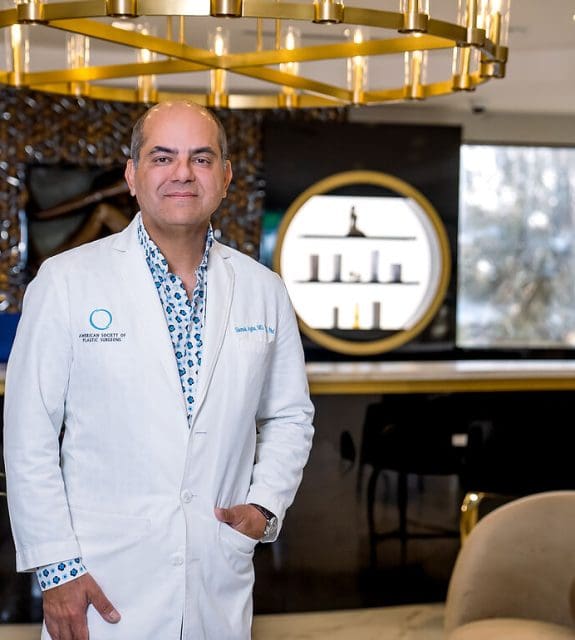
– As a graduate of one of the top Medical Schools in the world, the University of Cambridge, Dr. Siamak Agha was selected into the highly exceptional physician scientist program (integrated MD / PhD) on a scholarship funded by The Wellcome Trust. During this time, Dr. Agha’s research in Gene Therapy resulted in 2 international patents that were filed by Cambridge University. Dr. Agha then completed 7 years of residency in Plastic and Reconstructive Surgery at the University of Pittsburgh Medical Center, one of the most respected and comprehensive Plastic Surgery training programs in the United States. Dr. Agha is a Board Certified plastic surgeon and a member of the American Society of Plastic Surgeons. He has spent the last 20+ years perfecting the art of aesthetic facial surgery, breast reshaping, and body contouring. During this time, he has pioneered new techniques in the field of plastic surgery, such as his signature Three-Dimensional Facelift, High-Definition Tummy Tuck™, High-Definition Mommy Makeover, Spiral Thigh Lift, Internal Dermal Bra-suspension Breast Lift, and High-Definition Brazilian butt lift Lower Body Lift™.