


Embarking on the journey of rotator cuff surgery recovery can feel daunting. The path from the operating room back to full strength and mobility is a marathon, not a sprint, demanding precision, patience, and a well-informed strategy. A successful outcome hinges not just on the surgeon’s skill but on the deliberate, evidence-based actions you take in the weeks and months that follow. This is where elite-level guidance becomes indispensable.
This comprehensive guide moves beyond generic advice to provide an actionable, phase-by-phase playbook. We’ve curated the most critical, clinician-vetted rotator cuff surgery recovery tips to empower you with the knowledge needed to navigate your rehabilitation with confidence. You will gain specific, practical insights into every facet of the healing process, from immediate post-operative care to the final stages of strengthening.
Inside, you’ll find detailed strategies for:
- Pain and Inflammation Control: Advanced techniques to manage discomfort and promote healing.
- Structured Rehabilitation: A clear protocol for physical therapy, progressive exercises, and proper sling use.
- Lifestyle Optimization: Crucial guidance on sleep positioning, ergonomics, and nutrition for accelerated tissue repair.
- Strategic Return to Activity: A carefully planned timeline for resuming work, daily activities, and sport without compromising your repair.
Each tip is designed to help you minimize complications, protect your surgical investment, and optimize your return to an active, pain-free life. Whether you’re an executive aiming for a swift return to the boardroom or an athlete targeting a peak-performance comeback, these proven strategies will form the cornerstone of your successful recovery.
1. Structured Physical Therapy and Progressive Range-of-Motion Exercises
The single most important factor in your recovery is a structured, progressive physical therapy (PT) program. This is not simply a recommendation; it is a clinical mandate for successful outcomes after rotator cuff surgery. This evidence-based approach, championed by institutions like the American Academy of Orthopaedic Surgeons (AAOS), is meticulously designed to restore function while protecting the delicate surgical repair.
The process unfolds in carefully managed phases over 12 to 16 weeks, or even longer for complex repairs. The initial phase focuses on passive range-of-motion (PROM), where a therapist gently moves your arm for you. This crucial step prevents the formation of scar tissue and the development of a “frozen shoulder” (adhesive capsulitis) without stressing the newly repaired tendons.
The Progression Protocol
As your tissues heal, your program will advance. You will graduate from PROM to active-assisted range-of-motion (AAROM), using your non-operative arm or a pulley system to help guide movement. Finally, you will progress to active range-of-motion (AROM) and, eventually, strengthening exercises. This phased progression is a cornerstone of rotator cuff surgery recovery tips because it ensures each stage of healing is respected.
Clinical Insight: Patients who adhere to a consistent PT schedule, typically 2-3 times per week, combined with a dedicated home exercise program, demonstrate significantly better outcomes. Studies show that 85-90% of these patients achieve excellent results in terms of pain relief and functional restoration.
Actionable Implementation Steps
To maximize your physical therapy results, consider these strategies:
- Specialize Your Search: Seek a physical therapist who has a deep specialization in post-operative shoulder rehabilitation. Their expertise in specific protocols and potential setbacks is invaluable.
- Embrace Home Exercises: Your formal PT sessions are only part of the equation. Commit to your prescribed home exercise routine 2-3 times daily to maintain mobility and accelerate progress between appointments.
- Track Your Progress: Use objective measures to stay motivated. Record your range-of-motion in degrees (e.g., flexion, external rotation) and note improvements. This data helps your PT and surgeon tailor your plan.
- Leverage Technology: For busy executives or those with limited mobility, virtual physical therapy sessions can provide a flexible and effective way to ensure consistency and receive expert guidance from anywhere.
2. Proper Immobilization and Progressive Mobilization Protocol
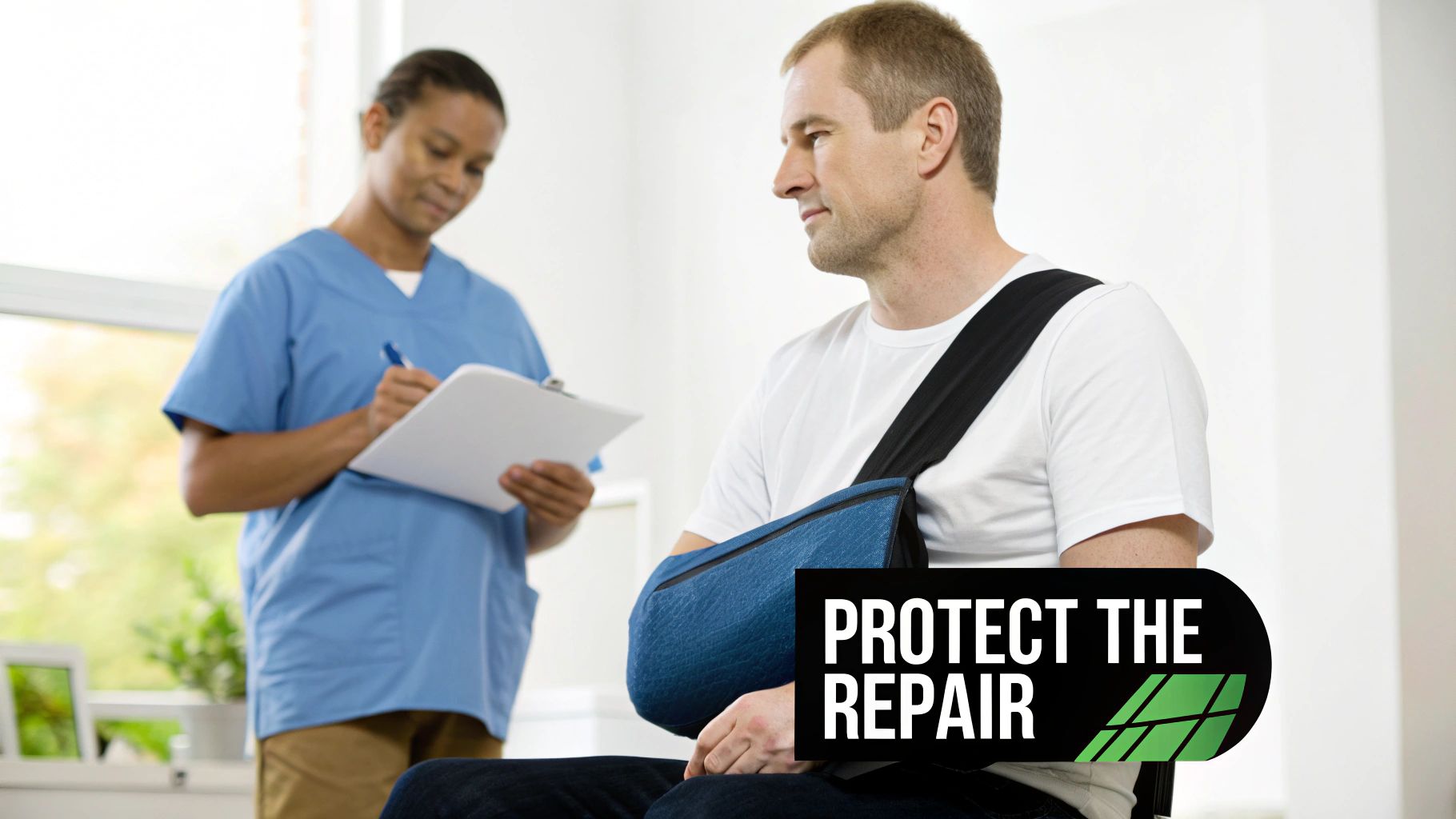
Following your surgeon’s immobilization protocol is a non-negotiable component of a successful recovery. This strategic use of a sling, often with an abduction pillow, is designed to protect the delicate, newly anchored tendons from tension and gravity during the critical initial healing phase. This period, typically lasting 4 to 6 weeks, allows the tendon to begin reattaching to the bone, a biological process that is easily disrupted by premature movement.
This protocol is not about complete inactivity; it is about controlled protection. Modern orthopedic guidelines, influenced by pioneers like Dr. Stephen Snyder and refined by institutions such as the American Society of Orthopedic Surgeons, emphasize a balance between safeguarding the repair and preventing secondary complications like stiffness. The duration and specific type of immobilization are tailored to your surgery’s complexity, ranging from a simple sling for a minor debridement to a more restrictive abduction brace for a massive or complex tear repair.
The Progression Protocol
The transition from immobilization to mobilization is a meticulously planned process. Your surgeon will provide a specific timeline for weaning off the sling. This typically begins with removing it for prescribed, gentle exercises (like pendulum swings) and personal hygiene. Gradually, you will increase the time spent out of the sling in safe, controlled environments, eventually discontinuing it completely as you enter the active-assisted phase of physical therapy.
Clinical Insight: A common cause of re-tear or failed healing is patient non-compliance with the immobilization protocol. Research indicates that even simple, unguarded movements like reaching for an object or using the arm to get out of bed in the first few weeks can compromise the integrity of the surgical repair, leading to significant setbacks.
Actionable Implementation Steps
To ensure you are protecting your surgical investment, follow these rotator cuff surgery recovery tips for immobilization:
- Request a Written Timeline: Obtain a detailed, written protocol from your surgeon that outlines the specific milestones for wearing and weaning from your sling. This eliminates guesswork.
- Prioritize Sleep Safety: You must sleep in your sling or brace for the entire prescribed period, typically 4 to 6 weeks. This prevents unconscious movements at night that could re-tear the tendon.
- Navigate Public Spaces Carefully: Always wear your sling when outside your home. It not only protects your arm from accidental bumps but also serves as a clear visual cue to others to be cautious around you.
- Use Digital Reminders: Set alarms or calendar alerts on your phone for key dates, such as when to begin weaning or when to stop wearing the sling at night. This helps maintain adherence to the protocol.
3. Anti-Inflammatory Management and Pain Control Strategy
An intelligent, multi-modal approach to managing inflammation and pain is not merely about comfort; it is a critical component for facilitating optimal tissue healing. Controlling post-operative inflammation and pain is one of the most proactive rotator cuff surgery recovery tips, as it allows for better participation in physical therapy, improves sleep quality, and reduces the overall stress on your body’s recovery systems. This strategy goes beyond just taking a pill when it hurts.
This comprehensive approach combines pharmacological interventions with non-pharmacological techniques to create a synergistic effect. The goal is to minimize swelling and discomfort, which directly impacts your ability to perform the gentle range-of-motion exercises necessary to prevent stiffness. Leading orthopedic and sports medicine protocols, such as those used with elite athletes, emphasize aggressive but safe inflammation control in the initial two to four weeks post-surgery.
The Multi-Pronged Protocol
Your surgeon will prescribe a pain management regimen, but actively participating in a broader strategy is key. This typically involves a scheduled approach to non-steroidal anti-inflammatory drugs (NSAIDs) to stay ahead of the pain cycle, combined with consistent cryotherapy (ice application) to locally reduce swelling and numb the area. This protocol is designed to protect the surgical repair by keeping inflammation at a minimum.
Clinical Insight: Patients who effectively manage inflammation and pain in the first 14 days post-op report higher satisfaction and often progress more smoothly through the initial phases of physical therapy. Well-controlled pain enables the consistent performance of passive range-of-motion exercises, which is essential for preventing adhesive capsulitis (frozen shoulder).
Actionable Implementation Steps
To execute a superior pain and inflammation control strategy, integrate these advanced tactics:
- Strategize Medication Timing: Take prescribed anti-inflammatory medications on a consistent schedule for the first several days, rather than waiting for pain to escalate. Taking NSAIDs with a small amount of food can help minimize potential gastric irritation.
- Optimize Cryotherapy: Use a specialized shoulder ice wrap or cryotherapy unit for 20-30 minutes every 2-3 hours during the first 1-2 weeks. This consistent application is far more effective than sporadic icing.
- Leverage Gravity: Sleep in an elevated, semi-reclined position for the first few weeks. Propping your operative arm on pillows to keep it slightly elevated above your heart uses gravity to help drain inflammatory fluid from the shoulder.
- Incorporate Supplements: For those seeking an integrative approach, discuss pharmaceutical-grade anti-inflammatory supplements like curcumin (turmeric extract) or bromelain with your clinical team. These can complement traditional medications for enhanced inflammation control.
4. Nutrition Optimization for Tissue Healing and Recovery
Surgical success extends beyond the operating room and physical therapy clinic; it happens at a cellular level, fueled by strategic nutrition. Optimizing your diet provides the essential building blocks your body needs for efficient tissue repair, robust collagen synthesis, and a well-regulated immune response. This approach, championed by sports medicine nutritionists and elite athletic programs, is a critical and often overlooked component of the best rotator cuff surgery recovery tips.
Proper nutrition is not just about general health; it’s about providing targeted biochemical support for the healing tendons. The weeks following surgery create a massive metabolic demand for specific nutrients involved in creating new tissue and managing inflammation. Without adequate intake, the body’s repair processes can be sluggish, increasing recovery time and the risk of complications.

The Progression Protocol
Your nutritional protocol should begin even before your surgery and continue intensely for the first 6-8 weeks post-operatively, a critical window for tendon healing. The initial focus is on providing high levels of protein and key micronutrients to support the inflammatory and proliferative phases of healing. This includes amino acids for tissue scaffolding, Vitamin C for collagen cross-linking, and zinc as a cofactor in cellular repair.
As you move into the remodeling phase (weeks 8 and beyond), the focus shifts slightly to maintaining this high-quality intake while incorporating more anti-inflammatory foods like omega-3 fatty acids. This helps modulate the healing environment and supports the maturation of the repaired tissue, ensuring it is strong and resilient as you progress in physical therapy.
Clinical Insight: Elite athletes recovering from similar surgeries often consume 1.5-2.0 grams of protein per kilogram of body weight daily. This elevated intake is scientifically shown to accelerate soft tissue repair and minimize muscle atrophy during periods of immobilization, directly translating to a faster and more robust recovery.
Actionable Implementation Steps
To turn your kitchen into a recovery powerhouse, implement these targeted strategies:
- Prioritize Protein: Aim for 25-30 grams of high-quality protein with each meal. Sources include lean chicken, fish, eggs, Greek yogurt, and legumes. This steady supply provides the amino acids needed for continuous tissue regeneration.
- Supplement Strategically: Bolster your diet with targeted supplements. Consider 500-1000mg of Vitamin C and 15-30mg of zinc daily to directly support collagen synthesis. Collagen peptide supplements (15-20g daily) can also provide a direct source of healing amino acids.
- Manage Inflammation: Incorporate potent anti-inflammatory foods. Fatty fish like salmon, along with flaxseeds, walnuts, and olive oil, are rich in omega-3 fatty acids that help naturally regulate post-operative inflammation.
- Hydrate for Healing: Proper hydration is non-negotiable for nutrient transport to the surgical site. Aim for at least 80-100 ounces of water daily. This foundational element is key to improving your metabolic health and supporting every cellular process. You can learn more about improving metabolic health for recovery on Haute Living.
5. Sleep Optimization and Positioning for Healing
Optimizing your sleep environment and body positioning is not a luxury, but a core component of your recovery strategy. Quality sleep is when your body enters its primary state of tissue repair, releasing growth hormone, reducing inflammation, and consolidating the motor skills learned in physical therapy. Leading sports medicine programs and concierge recovery specialists emphasize that for rotator cuff surgery, how you sleep is as critical as your waking rehabilitation.
This approach goes beyond simply getting rest; it involves creating a therapeutic environment that protects the surgical repair from accidental strain while maximizing the body’s natural healing cascade. Ignoring sleep hygiene can lead to increased pain, higher inflammation levels, and a significantly prolonged recovery timeline, making this one of the most impactful rotator cuff surgery recovery tips you can implement.

The Progression Protocol
Initially, for the first four to six weeks, the priority is protection and pain management. This requires sleeping in a semi-reclined position, often in a recliner or with a wedge pillow system in bed, to decrease gravitational pull on the shoulder joint. You must wear your prescribed sling and abduction pillow to maintain the arm in a neutral, tension-free position, preventing you from rolling onto the surgical site.
As you progress and are cleared by your surgeon, you can gradually transition to a flatter position on your back. The goal remains to avoid sleeping directly on the operative side for several months. This phased approach ensures the delicate tendon-to-bone repair is never compromised during its most vulnerable healing stages.
Clinical Insight: Research from sleep science and recovery medicine specialists demonstrates that deep, uninterrupted sleep can accelerate tissue regeneration. Elite athletes who prioritize 9-10 hours of sleep in optimized positions often report significantly faster healing and reduced pain perception compared to those with disrupted sleep patterns.
Actionable Implementation Steps
To transform your sleep into a powerful recovery tool, implement these strategies:
- Engineer Your Position: Sleep on your back in a semi-reclined position (30-45 degrees) for the first several weeks. Use a wedge pillow or 3-4 pillows to create a supportive nest, placing one under your operative elbow to prevent it from falling behind your body.
- Optimize Your Environment: Create a sleep sanctuary. Use blackout curtains to ensure complete darkness, set the room temperature to a cool 65-68°F (18-20°C), and consider a white noise machine to mask disruptive sounds.
- Establish a Pre-Sleep Ritual: Begin winding down at least 30-60 minutes before bed. This includes avoiding all screens (phones, tablets, TVs) which emit blue light that suppresses melatonin. Read a book or listen to calming music instead.
- Adhere to Sling Protocol: Always wear your sling and any prescribed abduction pillow while sleeping for the period your surgeon specifies, typically 4-6 weeks. This is your primary defense against accidental, harmful movements during the night.
6. Psychological Resilience and Mental Health Management
The physical repair of your rotator cuff is only half the battle; the mental and emotional journey is an equally critical component of a successful recovery. The impact of prolonged pain, functional limitations, and dependency on others can lead to significant psychological stress. Addressing post-operative anxiety, frustration, and even depression is a proactive strategy championed by leading sports medicine psychologists and integrated into elite executive health programs to optimize healing.
This approach acknowledges the profound connection between mind and body. High levels of stress hormones like cortisol can impede tissue repair and increase inflammation, directly sabotaging your physical progress. By actively managing your mental state, you create a physiological environment that is more conducive to healing, a key principle in modern, holistic rotator cuff surgery recovery tips.
The Mind-Body Recovery Protocol
A structured approach to mental wellness post-surgery involves setting realistic expectations and building a robust support system. This is not about simply “staying positive”; it’s about deploying specific tools to navigate the inevitable frustrations of a lengthy rehabilitation process. Professional athletes, for instance, routinely work with sports psychologists to maintain focus and motivation during their recovery, a strategy now accessible through concierge medicine.
Clinical Insight: Research indicates a strong correlation between a patient’s psychological state and their physical outcome. Patients who participate in post-operative support groups or engage in mindfulness practices often report higher satisfaction rates and demonstrate better adherence to their demanding physical therapy regimens, which directly improves functional results.
Actionable Implementation Steps
To build psychological resilience during your recovery, integrate these strategies into your daily routine:
- Pre-Operative Mental Prep: Schedule a consultation with a therapist or coach who specializes in medical recovery before your surgery. This allows you to establish coping strategies and set realistic expectations from the outset.
- Practice Daily Mindfulness: Dedicate 10-15 minutes each day to mindfulness meditation or guided breathing exercises. Apps like Headspace or Calm can help lower cortisol levels and manage pain perception.
- Join a Support Community: Connect with others who are navigating the same recovery. Online forums or local support groups provide a space to share experiences and combat feelings of isolation, a common trigger for depression.
- Celebrate Micro-Wins: Your progress will be incremental. Instead of focusing on what you can’t do, keep a journal to track small achievements, like reaching a new range-of-motion degree or performing a daily task with less pain.
- Seek Professional Support: Do not hesitate to engage a mental health professional if you experience persistent sadness, anxiety, or hopelessness for more than two weeks. This is a medical issue that can and should be treated to protect your overall recovery.
7. Strategic Return-to-Activity Planning and Gradual Progression
Returning to your daily life, work, and recreational activities is the ultimate goal of surgery, but a haphazard approach can jeopardize the entire repair. A strategic, data-driven return-to-activity plan is essential. This is not about rushing back; it’s about a methodical progression that balances rehabilitation milestones with the prevention of re-injury, a core principle in modern orthopedic care.
This evidence-based approach avoids the twin pitfalls of recovery: returning to activities too soon, which risks re-tearing the tendon, and being overly conservative, which can lead to muscle atrophy and deconditioning. The plan is tailored to your specific repair, job demands, and lifestyle, ensuring that each new activity is introduced only when your shoulder is biomechanically ready to handle the load.
The Progression Protocol
Your surgeon and physical therapist will provide a structured timeline based on objective metrics, not just the calendar. For instance, a return to sedentary desk work may be cleared as early as 2-4 weeks with ergonomic support, while light duties like typing may begin around weeks 4-6. Activities requiring overhead work are typically delayed until 8-12 weeks, and a return to demanding sports like golf or tennis often requires 12-16 weeks of sport-specific training.
Clinical Insight: A common mistake is underestimating the strain of seemingly light activities. Even simple tasks like carrying a briefcase or reaching into a high cabinet can stress the repair if done prematurely. Leading orthopedic surgeons specializing in executive and athlete care emphasize that a gradual, metric-guided progression is paramount for long-term success.
Actionable Implementation Steps
To ensure your return to activity is safe and successful, follow these rotator cuff surgery recovery tips:
- Document Your Clearances: Obtain written clearance from your surgeon or therapist for each new phase of activity, from returning to the office to resuming your fitness routine. This is crucial for both medical guidance and workplace documentation.
- Follow the 25% Rule: Begin any new activity at approximately 25% of your pre-surgery intensity and duration. If you experience no significant pain or swelling, you can increase this by another 25% each week.
- Log and Listen: Keep a detailed log of your daily activities and any corresponding symptoms. If you notice a spike in pain or swelling, it’s a clear signal to scale back. This feedback loop is your best guide.
- Utilize Objective Testing: Before clearing you for high-demand work or sports, your care team should perform objective tests, such as strength assessments (using a dynamometer) and precise range-of-motion measurements, to confirm your readiness. A similar phased approach is critical for other major procedures; you can learn more about recovery timelines for complex surgeries on Haute Living.
8. Surgeon Communication, Compliance Monitoring, and Follow-Up Care
Your relationship with your orthopedic surgeon and their team extends far beyond the operating room. Maintaining clear, consistent communication and diligently adhering to follow-up protocols are foundational elements of a successful recovery. This active partnership allows for real-time monitoring of your healing, early intervention for potential issues, and precise adjustments to your recovery plan, making it one of the most critical rotator cuff surgery recovery tips.
This process involves scheduled post-operative appointments, typically at the 2-week, 6-week, 3-month, and 6-month marks, where your surgeon assesses wound healing, suture integrity, and functional progress. It is the gold standard for care advocated by premier orthopedic specialists and organizations like the American Academy of Orthopaedic Surgeons, which have linked high patient compliance to significantly better outcomes.
The Progression Protocol
Your surgeon’s guidance dictates the pace of your recovery. Early follow-ups confirm the initial healing is on track, allowing for the progression from a sling to passive, then active, physical therapy. Later appointments, often involving imaging, verify that the tendon repair is securely anchored to the bone, clearing you for more advanced strengthening and a gradual return to normal activities.
Clinical Insight: Elite patient care models, such as those for professional athletes or in concierge orthopedic practices, often feature more frequent touchpoints. Weekly check-ins with the entire care team or direct lines of communication to the surgeon ensure that even minor deviations from the expected recovery curve are addressed immediately, optimizing the healing trajectory.
Actionable Implementation Steps
To foster a strong partnership with your surgical team, implement these strategies:
- Prepare for Appointments: Arrive at each follow-up with a written list of questions, a log of your pain levels, and progress notes from your physical therapist. This maximizes the value of your time with the surgeon. Learn more about what to ask by reviewing these essential questions to ask an orthopedic surgeon.
- Establish Communication Channels: Clarify the best method to contact your surgeon’s office with concerns between appointments, whether via a patient portal, dedicated email, or phone line.
- Report Symptoms Immediately: Do not wait for your next scheduled visit to report unusual pain, swelling, redness, or a sudden loss of motion. Early detection of complications is paramount.
- Discuss Life Factors: Be transparent about any upcoming travel, work demands, or significant life stressors that could impact your ability to comply with your recovery plan. Your surgeon can help you strategize to stay on track.
8-Point Rotator Cuff Recovery Comparison
| Intervention | Implementation Complexity 🔄 | Resources & Requirements 💡 | Expected Outcomes ⭐📊 | Ideal Use Cases | Key Advantages ⚡ |
|---|---|---|---|---|---|
| Structured Physical Therapy and Progressive Range-of-Motion Exercises | Moderate–High — phased protocol, specialist oversight | Regular PT sessions, rehab equipment, time commitment (12–16+ wks) | High (⭐⭐⭐) — restores ROM & strength, lowers re-tear risk | Post-op patients aiming for full functional recovery or sport return | Restores function reliably; evidence-based progression |
| Proper Immobilization and Progressive Mobilization Protocol | Low–Moderate — strict timing and positioning rules | Sling/abduction brace, patient discipline, follow-up visits | High for early protection (⭐⭐⭐) but risk of stiffness if prolonged | Early healing phase (weeks 0–4) and complex/large repairs | Protects repair and reduces early re-tear risk |
| Anti-Inflammatory Management and Pain Control Strategy | Low — medication and symptom monitoring | NSAIDs/analgesics, ice protocols, possible injections | Moderate–High (⭐⭐) — reduces pain enabling therapy participation | Immediate post-op period (weeks 0–4) and patients with significant pain | Improves comfort and PT engagement; reduces swelling |
| Nutrition Optimization for Tissue Healing and Recovery | Low–Moderate — dietary planning and supplementation | High-protein diet, micronutrients (vit C, zinc), supplements or nutritionist | Moderate (⭐⭐) — accelerates tissue repair and reduces complications | All post-op patients; especially athletes and frail patients | Speeds healing, preserves muscle, supports immune function |
| Sleep Optimization and Positioning for Healing | Moderate — behavior change and positioning aids | Specialized pillows/abduction support, environment adjustments | Moderate–High (⭐⭐) — better sleep, enhanced repair hormone activity | Patients with night pain or needing hormonal recovery support | Improves nocturnal pain control and recovery quality |
| Psychological Resilience and Mental Health Management | Moderate–High — ongoing psychological work | Counseling, support groups, mindfulness programs | Moderate–High (⭐⭐) — improves adherence and recovery speed (20–30%) | Patients with anxiety/depression, competitive athletes, long recoveries | Enhances compliance, motivation, and long-term satisfaction |
| Strategic Return-to-Activity Planning and Gradual Progression | High — objective testing and phased clearances | Strength/ROM testing, therapist/surgeon coordination, graded training | High (⭐⭐⭐) — minimizes re-injury, structured safe return | Athletes, workers with physical demands, executives returning to travel | Evidence-based milestones for safe, measurable progression |
| Surgeon Communication, Compliance Monitoring, and Follow-Up Care | Moderate — scheduled visits and documentation | Regular follow-ups, imaging, secure communication channels | Very High (⭐⭐⭐) — early complication detection; best outcomes with compliance | All post-op patients; high-risk or complex cases | Professional oversight, protocol adjustments, highest outcome rates |
Integrating Elite Strategies for Optimal Outcomes
Navigating the path to a full recovery after rotator cuff surgery is a marathon, not a sprint. It demands dedication, patience, and a strategic, multi-faceted approach that goes far beyond simply resting your arm. As we have explored, a successful outcome is built upon a foundation of eight interconnected pillars, each playing a crucial role in restoring strength, mobility, and function to your shoulder. The journey is not passive; it is an active partnership between you and your surgical team, where your commitment to the process directly influences the quality of your final result.
The collection of rotator cuff surgery recovery tips detailed in this guide is designed to empower you with a comprehensive framework. By mastering these elite strategies, you transform a potentially daunting recovery into a structured, predictable, and highly successful process.
Synthesizing Your Recovery Blueprint
True mastery lies not just in following individual pieces of advice, but in understanding how they work together synergistically. Your recovery is a dynamic system where progress in one area amplifies gains in another.
- Physical Therapy and Immobilization: The disciplined adherence to your immobilization protocol creates the protected environment necessary for initial tissue healing. This foundation makes it possible to safely begin structured physical therapy, where progressive exercises methodically rebuild your range of motion and strength without compromising the surgical repair.
- Pain Management and Nutrition: An intelligent anti-inflammatory and pain control strategy does more than provide comfort. It reduces systemic stress and inflammation, allowing your body to focus its resources on healing. When combined with optimized nutrition, rich in protein, vitamins, and minerals, you provide the essential building blocks for robust tissue regeneration.
- Sleep, Mindset, and Activity Planning: Optimal sleep is when your body performs its most intensive repair work. By prioritizing restorative sleep and proper positioning, you accelerate healing. This physical recovery is supported by psychological resilience and a positive mindset, which are critical for navigating the inevitable frustrations and maintaining motivation. Together, these elements enable a strategic and gradual return to your daily activities and passions.
Ultimately, your surgeon remains the central architect of your recovery plan. Consistent communication, diligent compliance monitoring, and attending all follow-up appointments are non-negotiable elements that ensure your progress stays on track and any potential issues are addressed immediately.
The Long-Term Reward: A Return to Peak Performance
Embracing these detailed rotator cuff surgery recovery tips is an investment in your future. It’s the difference between a good outcome and an exceptional one. The discipline you apply during these critical weeks and months pays dividends for years to come, translating into a strong, stable, and pain-free shoulder that allows you to return to your work, hobbies, and athletic pursuits with confidence.
The goal is not merely to heal, but to return to your life stronger and more resilient than before. This requires a proactive, informed, and holistic approach that addresses every facet of the recovery process, from the physical to the psychological.
Take ownership of this journey. View each tip not as a suggestion, but as an essential component of your personalized recovery protocol. By applying these expert strategies with consistency and precision, you are setting the stage for an outstanding long-term result. The commitment is significant, but the reward-a complete return to the life you love-is invaluable.
For those seeking to implement these strategies under the guidance of the nation’s foremost orthopedic specialists, Haute MD provides an exclusive network of vetted, top-tier physicians. Connect with elite surgeons and concierge care providers who can tailor a bespoke recovery plan to ensure you achieve peak outcomes. Explore the network and find a leading expert at Haute MD.