



So, what exactly is a nuclear medicine doctor?
Think of them as biological detectives. They’re highly specialized physicians who use trace amounts of radioactive materials, known as radiopharmaceuticals, to see how your body is functioning on a cellular and molecular level. It’s a perspective that most other imaging techniques simply can’t provide.
Unveiling the Role of a Nuclear Medicine Doctor
While a radiologist uses an X-ray or MRI to look at your body’s anatomy—the structure of your organs and bones—a nuclear medicine doctor is focused entirely on physiology, or function. They are experts at revealing the invisible biological processes that signal disease, often long before any structural changes become obvious on a standard scan.
This unique vantage point makes incredibly early and precise diagnosis possible for some of the most complex conditions.
The whole approach hinges on special substances called tracers. These tracers are brilliantly designed to travel to and accumulate in specific areas of the body, acting like a biological GPS for cellular activity. A special camera then detects the faint energy signals emitted by these tracers, creating detailed, real-time maps of your body’s metabolic processes.
Function Over Form: The Core Principle of Molecular Imaging
The fundamental difference between this specialty and others comes down to what is being visualized. A standard X-ray, for example, will clearly show a major bone fracture. But a nuclear medicine bone scan can reveal subtle stress fractures or tiny areas where cancer has spread to the bone by highlighting metabolic “hotspots.”
This ability to see biological activity in motion provides mission-critical information for a host of conditions.
Nuclear medicine doctors provide unique and powerful insights in several key areas:
- Oncology: Detecting cancer, staging it by determining if it has spread (metastasized), and monitoring precisely how well a treatment is working.
- Cardiology: Assessing blood flow to the heart muscle, identifying coronary artery disease, and evaluating heart function after a cardiac event.
- Neurology: Diagnosing conditions like Alzheimer’s, dementia, and seizure disorders by visualizing brain activity and metabolic patterns.
- Endocrinology: Evaluating thyroid function with incredible accuracy and locating overactive parathyroid glands.
This PET/CT scan shows exactly what a nuclear medicine specialist sees. The bright areas highlight regions of high glucose uptake—a tell-tale sign of metabolically active cancer cells that would be invisible on a standard CT scan alone.
This image perfectly illustrates the “function over form” principle. It’s not just a picture of the body’s anatomy; it’s a dynamic map of its physiological processes, giving physicians a clear roadmap for treatment.
To better understand their distinct role, it helps to see how nuclear medicine physicians fit within the broader landscape of medical imaging and treatment specialists.
Medical Specialists at a Glance
| Specialist | Primary Focus | Key Technology Used | Example Application |
|---|---|---|---|
| Nuclear Medicine Doctor | Physiological Function: How organs and tissues are working at a molecular level. | PET, SPECT, Gamma Cameras | Detecting cancer metastases by imaging metabolic activity. |
| Diagnostic Radiologist | Anatomical Structure: The size, shape, and physical appearance of organs. | MRI, CT, X-ray, Ultrasound | Identifying a tumor’s physical location and size with a CT scan. |
| Radiation Oncologist | Cancer Treatment: Using high-energy radiation to destroy cancer cells. | Linear Accelerators (LINAC) | Delivering targeted radiation beams to shrink a lung tumor. |
| Medical Oncologist | Systemic Cancer Treatment: Using chemotherapy, immunotherapy, or targeted drugs. | Infusion Pumps, Oral Medications | Prescribing a chemotherapy regimen based on tumor genetics. |
This comparison clarifies why a nuclear medicine doctor’s input is so vital. They provide the functional context that other specialists use to make more informed decisions about diagnosis and therapy.
A nuclear medicine doctor isn’t just taking a picture of an organ; they are creating a map of its activity. This molecular-level insight is fundamental for both early diagnosis and personalized, targeted therapies.
Ultimately, these specialists bridge the critical gap between diagnostic imaging and molecular biology. A nuclear medicine doctor interprets these intricate functional images to give your other physicians definitive answers, guiding everything from surgical planning to selecting the most effective and personalized therapies. In the world of modern precision medicine, their expertise is simply indispensable.
Understanding How Molecular Imaging Works
To truly grasp the value of a top nuclear medicine doctor, you have to appreciate the incredible science they command. At its core, nuclear medicine is about making the invisible visible. It goes far beyond the static, anatomical pictures from an X-ray or MRI to reveal how your body is actually functioning at the cellular level—a live window into your biological processes.
The key that unlocks this entire process is a remarkable class of smart molecules called radiopharmaceuticals.
The GPS Tracker for Your Cells
Think of a radiopharmaceutical as a highly sophisticated biological GPS tracker. It’s built in two parts: a pharmaceutical agent designed to zero in on a specific organ or even a particular type of cell, and a tiny radioactive component (a radioisotope) that acts as a beacon. This beacon sends out a faint energy signal that can be picked up by incredibly sensitive cameras outside your body.
For example, one kind of radiopharmaceutical is engineered to be absorbed only by thyroid cells. Another might be taken up almost exclusively by rapidly dividing cancer cells. A nuclear medicine specialist meticulously selects the exact tracker needed to investigate a specific biological question, ensuring it travels directly to the target.
This is the fundamental distinction: traditional imaging shows you the body’s structure, while nuclear medicine shows you its function.
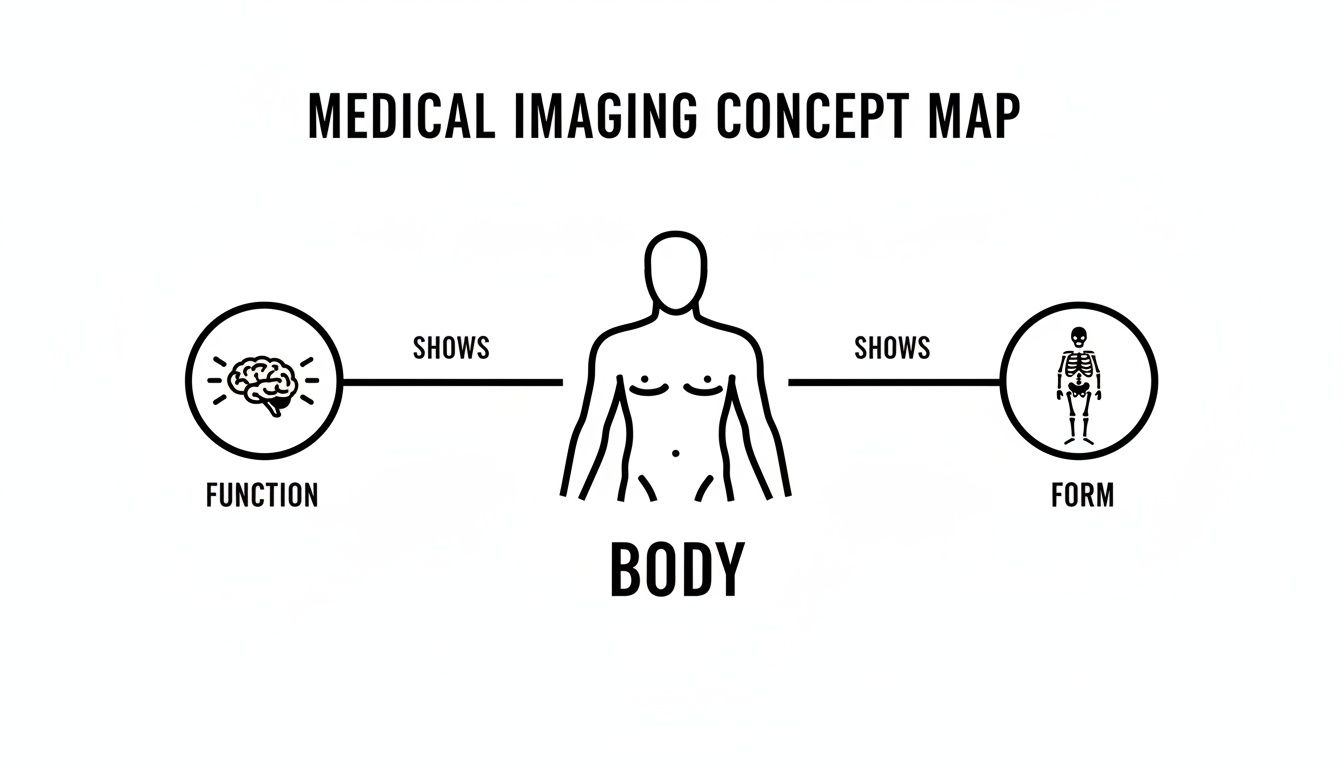
This focus on function is critical. It reveals the metabolic activity that signals disease long before any structural changes—like a tumor—become large enough to see on a standard scan.
Once the radiopharmaceutical is administered, usually through a simple injection, it travels through your bloodstream to its destination. This journey is where the magic happens, giving the specialist the power to either diagnose a condition or treat it with surgical precision.
Diagnostic Scans: Cellular Photographs
In diagnostic procedures, the objective is to create a detailed map of your body’s metabolic activity. The amount of radioactive material used is exceptionally small—just enough for the specialized cameras to capture its signal. It’s like taking intricate photographs of your cells at work.
- PET (Positron Emission Tomography) Scans: These are brilliant at detecting areas of high metabolic activity. This is why they are so indispensable in oncology for finding cancer, determining its stage, and checking if treatment is working.
- SPECT (Single Photon Emission Computed Tomography) Scans: These are frequently used to evaluate blood flow to organs, making them vital for diagnosing certain heart conditions or assessing brain function after a stroke or injury.
The images produced aren’t just static pictures. They are dynamic, functional maps that show a nuclear medicine doctor exactly how your organs are operating, helping them spot abnormalities with incredible accuracy.
By visualizing function, a nuclear medicine doctor can detect the biochemical signs of disease at its earliest stage. This is a fundamental shift from traditional imaging, which often relies on seeing a physical tumor or structural damage that has already occurred.
Therapeutic Procedures: Targeted Molecular Missiles
Therapeutic procedures work on the same principle but with a different mission. Instead of just creating an image, the goal is to deliver a precise, localized dose of radiation directly to diseased cells. Think of them as targeted molecular missiles.
Here, the radiopharmaceutical carries a more potent radioisotope. It still travels to the specific target—like prostate or thyroid cancer cells—but once it arrives, it releases therapeutic radiation that destroys the unhealthy cells while minimizing damage to the surrounding healthy tissue. This powerful strategy, known as theranostics, brilliantly combines diagnostics and therapeutics.
Demand for these advanced procedures is surging. The global nuclear medicine market has expanded significantly, driving higher demand for specialists skilled in these techniques. In fact, industry analyses project strong double-digit annual growth through the 2020s and early 2030s, underscoring the field’s growing importance in modern medicine. You can learn more about these market trends and what they mean for physician demand.
What Nuclear Medicine Doctors Diagnose and Treat
A nuclear medicine doctor’s expertise lies in connecting the dots between molecular science and your personal health. By seeing how your body is functioning on a cellular level—not just what it looks like structurally—they can diagnose complex diseases with incredible precision and even deliver highly targeted therapies.
This approach gives your medical team a powerful advantage across several key areas, providing answers where other methods fall short.
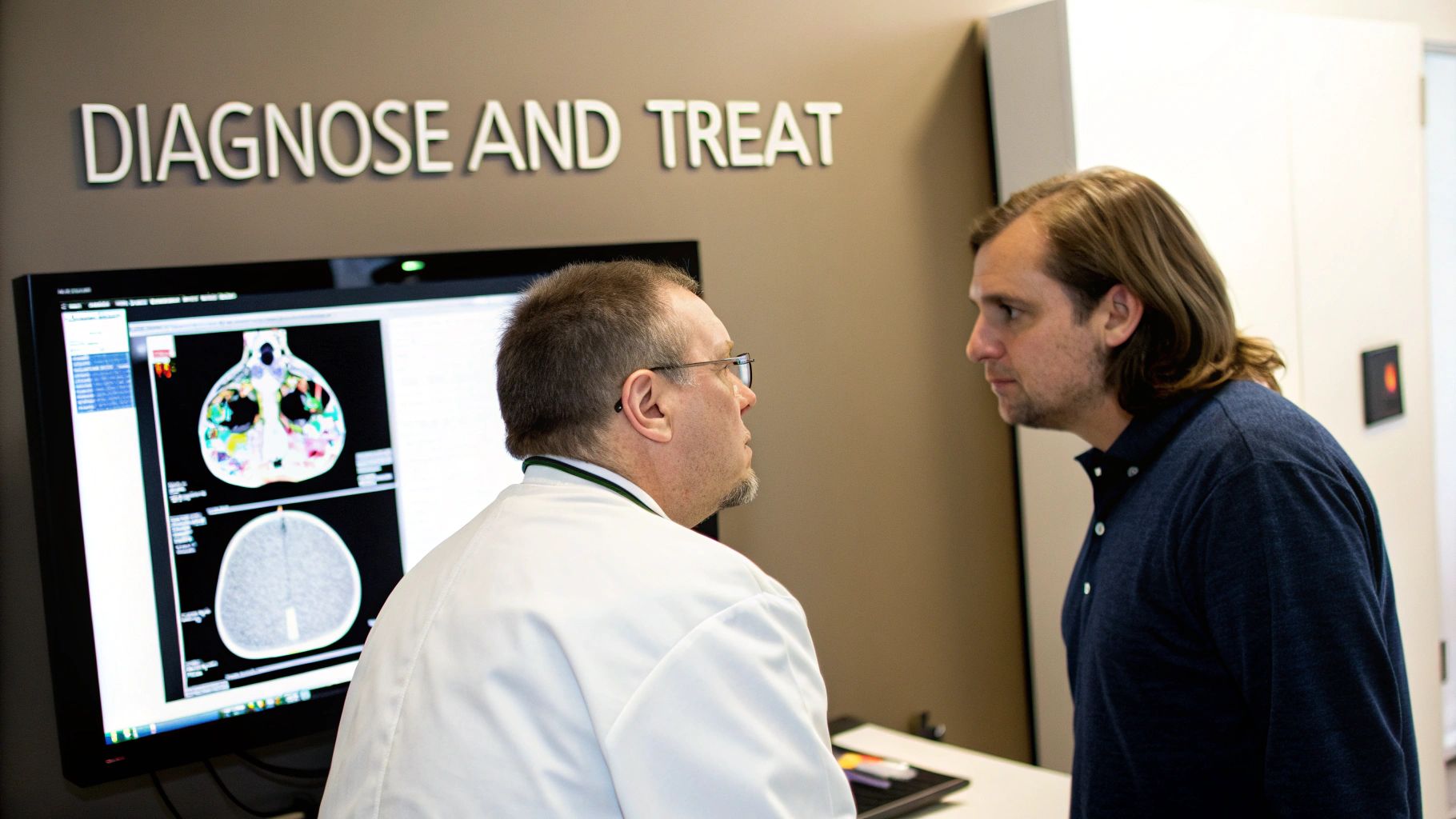
The applications are incredibly diverse, from figuring out the root cause of perplexing chest pain to meticulously staging cancer. Each procedure uses a specific radiopharmaceutical engineered to track a particular biological process, essentially creating a clear, actionable roadmap for your health.
Advanced Diagnostic Imaging Applications
Diagnostic scans are the foundation of this specialty, offering insights that drive some of the most critical treatment decisions in medicine. A skilled nuclear medicine doctor doesn’t just look at a picture; they interpret these dynamic, functional images to provide definitive answers, often identifying issues at their earliest and most treatable stages.
Here are some of the most common diagnostic procedures:
- PET/CT Scans in Oncology: This is what most people think of when they hear “nuclear medicine.” By using a tracer called FDG, which acts like sugar, a PET scan lights up areas of high metabolic activity. Since cancer cells devour glucose much faster than healthy cells, they glow on the scan. This allows doctors to find tumors, see if cancer has spread (metastasized), and track how well a treatment is working with unmatched accuracy.
- Cardiac Stress Tests (Myocardial Perfusion Imaging): To get a clear picture of heart health, a tracer is used to map blood flow to the heart muscle, both at rest and during exercise. This helps a nuclear medicine physician pinpoint blockages in coronary arteries that could lead to a heart attack and assess any damage after one has already occurred.
- Bone Scans: These scans are exceptionally sensitive for detecting subtle bone problems. They’re used to find tiny stress fractures an X-ray might miss, diagnose bone infections, or determine if cancer from another area, like the breast or prostate, has spread to the bones.
Targeted Therapeutic Interventions
Beyond diagnostics, nuclear medicine physicians also direct powerful therapeutic procedures. These treatments leverage the same “smart molecule” principle, but instead of just imaging, they deliver a therapeutic dose of radiation directly to diseased cells. It’s a highly effective and personalized way to fight disease.
The growth in this area has been substantial. Both PET imaging and targeted therapies are the fastest-growing segments in the field, driven by the wider availability of new radiotracers and scanners. This has naturally increased the workload for the nuclear medicine doctor who interprets these complex scans and oversees these advanced treatments. You can explore more insights into these market dynamics and see how they’re shaping patient care.
These advanced treatments include:
- Radioiodine (I-131) Therapy for Thyroid Conditions: A classic and highly successful treatment for hyperthyroidism and thyroid cancer. The thyroid gland naturally soaks up iodine. By giving a therapeutic dose of radioactive iodine, the material is taken up directly by the thyroid cells (or cancer cells anywhere in the body), destroying them with minimal impact on surrounding healthy tissue.
- Theranostics for Prostate Cancer: This is a truly cutting-edge approach for advanced prostate cancer. First, a diagnostic PET scan identifies cancer cells that have a specific protein (PSMA) on their surface. If the cancer cells show this target, a therapeutic agent is attached to the very same molecule, delivering radiation directly to metastatic cancer cells, wherever they are in the body.
By combining a diagnostic imaging agent with a therapeutic one, a nuclear medicine doctor can see the target and then treat it with surgical precision at a molecular level. This is the essence of theranostics—a truly personalized treatment strategy.
From diagnosing the cause of persistent back pain to delivering a life-saving cancer therapy, the work of a nuclear medicine doctor provides the functional clarity that drives modern, evidence-based medical decisions. Their expertise ensures you receive the right diagnosis and the most effective treatment for your specific condition.
What to Expect During Your Appointment
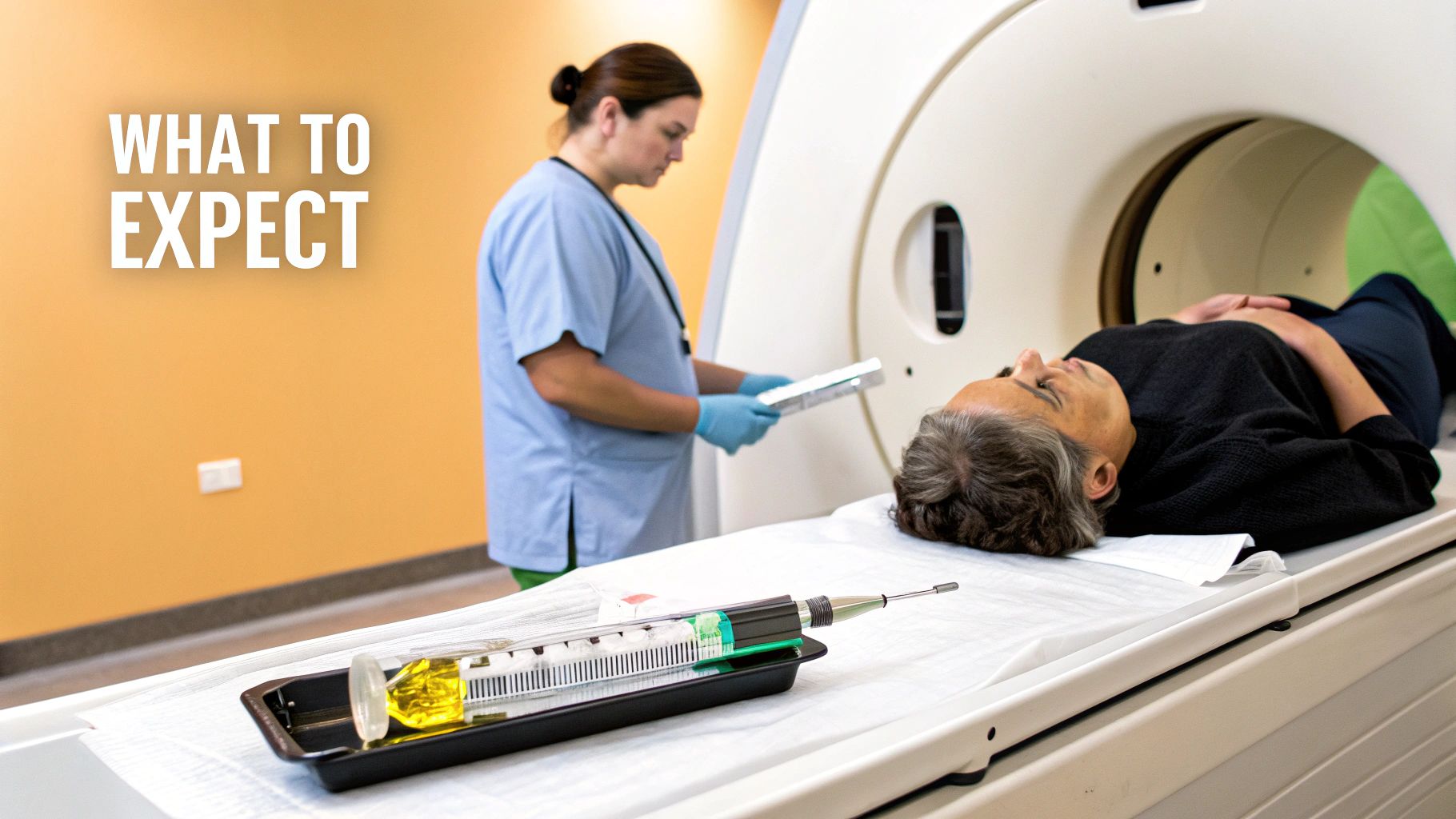
Knowing exactly what to anticipate can transform a potentially stressful medical appointment into a straightforward, manageable experience. A visit to a nuclear medicine department is a highly controlled, safe, and typically painless process. Your physician and their team are entirely focused on your comfort and safety at every stage.
The entire procedure is designed around one simple goal: to get an incredibly clear picture of how your body is functioning on a molecular level. Let’s walk through the distinct phases of a typical appointment so you can feel completely prepared and confident.
Before the Procedure Begins
Preparation is the key to ensuring the imaging results are as accurate as possible. Your doctor’s office will provide you with a specific set of instructions tailored to your scan. Following these directions carefully is essential for a successful outcome.
Common pre-appointment instructions often include:
- Fasting: You may be asked to avoid eating or drinking for several hours beforehand. This is especially common for PET scans, as undigested food can interfere with how the radiotracer is distributed throughout your body.
- Medication Adjustments: Be sure to inform your nuclear medicine doctor about every medication and supplement you take. They may ask you to temporarily pause certain ones that could affect the scan’s results.
- Hydration: In some cases, you’ll be encouraged to drink plenty of water. This helps your body process the radiopharmaceutical and, later, clear it efficiently.
- Comfortable Clothing: Wear loose-fitting, comfortable clothing without metal zippers, buttons, or snaps. You’ll need to lie still for an extended period, so comfort is paramount.
Arriving prepared helps the entire process run smoothly and ensures the team can acquire the highest quality images to guide your care.
During the Imaging Process
Once you’ve checked in, the main part of your appointment begins. It’s a simple three-step sequence, all overseen by a highly trained technologist under the direct supervision of your nuclear medicine physician.
Step 1: Receiving the Radiopharmaceutical First, you’ll receive the radiopharmaceutical. This is usually done through a simple injection into a vein in your arm, much like getting a routine blood draw. The amount of radioactive material is incredibly small, and you won’t feel anything from the tracer itself.
Step 2: The “Uptake” Period After the injection, you’ll rest quietly in a comfortable room for anywhere from 30 to 90 minutes. This is the crucial “uptake” period. It gives the radiopharmaceutical enough time to travel through your bloodstream and accumulate in the specific organs or tissues being studied.
Think of this quiet waiting time as allowing a biological GPS tracker to reach its destination. Your body’s own metabolic processes are doing all the work, ensuring the tracer gathers in the right areas to create a clear, detailed picture.
Step 3: The Scan Itself For the final step, you’ll lie on a padded table that slides into the imaging machine, which looks like a large, open ring or doughnut. The scan is completely painless, and the machine makes very little noise. Your only task is to remain as still as possible to guarantee the images are sharp and clear.
After Your Appointment Concludes
Once the scan is finished, you are generally free to go home and resume your normal activities, including eating and drinking. The technologist will provide a few simple post-procedure instructions.
The most common piece of advice is to drink plenty of water over the next 24 hours. This helps your body flush the remaining trace amount of the radiopharmaceutical from your system. It’s important to remember that the radiation exposure from a diagnostic scan is very low, often comparable to what you’d receive from a few standard CT scans or natural background radiation over several years. Your nuclear medicine doctor ensures the dose is always kept as low as reasonably achievable for your safety.
Your images will be meticulously analyzed by the nuclear medicine physician, who will then prepare a detailed report for your referring doctor. This process usually takes a few business days, and your doctor will discuss the findings with you at your follow-up appointment.
How to Find a Top Nuclear Medicine Doctor
Finding the right specialist is arguably the most critical step in your health journey. When you need the sophisticated expertise of a nuclear medicine doctor, it’s not just about finding someone qualified—it’s about finding a true leader in the field. You need a partner with access to the most advanced technology and a deep, nuanced understanding of your specific condition.
The search should always begin with your existing, trusted medical team. Your primary care physician or oncologist is the most logical starting point. They have a deep understanding of your medical history and can refer you to a nuclear medicine specialist they know and have collaborated with successfully. This existing relationship can make all the difference in ensuring seamless communication and coordination of your care.
Broaden Your Search to Leading Institutions
Beyond personal referrals, concentrate your efforts on physicians who are affiliated with major academic medical centers and National Cancer Institute (NCI)-designated cancer centers. These institutions live on the front lines of medical research and are almost always the first to adopt breakthrough diagnostic and therapeutic technologies.
A nuclear medicine doctor in this type of environment is far more likely to have hands-on experience with novel radiopharmaceuticals and cutting-edge techniques like theranostics. Their day-to-day involvement in clinical trials and research means they aren’t just following established standards—they are actively helping to write them. An academic affiliation is one of the strongest indicators of a physician who is truly committed to the leading edge of their specialty.
Verify Credentials and Ask the Right Questions
Once you have a shortlist of promising doctors, the next step is to rigorously verify their credentials. Board certification is a non-negotiable benchmark of expertise and dedication.
Look for certification from the American Board of Nuclear Medicine (ABNM) or the American Board of Radiology (ABR) with a subspecialty in nuclear medicine. This certification is your assurance that the physician has met incredibly high standards of training, knowledge, and ongoing education.
Your initial consultation is your opportunity to determine if the doctor is the right fit. Don’t be afraid to ask direct, specific questions about their experience.
The goal of a consultation is to get past the diplomas on the wall and understand the doctor’s real-world experience with your specific health challenge. A top specialist will not only welcome your informed questions but will also provide clear, confident answers about their approach and outcomes.
To make the most of this critical meeting, consider asking these questions:
- Experience with Your Condition: How many patients with my specific condition do you see annually? What is your direct experience with the precise scan or therapy I’m scheduled to receive?
- Technology and Resources: What generation of imaging technology (e.g., PET/CT, SPECT/CT) does this facility use? Do you have access to the latest radiopharmaceuticals that are most relevant to my diagnosis?
- Collaborative Care: How, specifically, do you collaborate with my referring oncologist or cardiologist to ensure my care plan is fully integrated?
- Interpreting Results: What is your process for interpreting scans, and how will you communicate the findings to both me and my medical team?
Taking a strategic, informed approach to finding your specialist is essential. For more powerful insights into this process, our guide on how to find the best doctor offers additional valuable strategies. Making a deliberate choice empowers you to partner with a nuclear medicine doctor who can provide the highest possible level of care.
Verifying Your Doctor’s Credentials and Training
When you’re seeking highly specialized care, digging into an expert’s background isn’t just due diligence—it’s essential. A top-tier nuclear medicine doctor doesn’t just finish medical school. They navigate a long and incredibly demanding journey designed to forge an exceptional level of expertise in molecular imaging and radionuclide therapy. This rigorous path is your best assurance of quality and safety.
It all starts with a four-year medical degree, but that’s just the beginning. What follows is a demanding residency, which could be in diagnostic radiology—providing a broad foundation in all imaging—or a dedicated residency purely in nuclear medicine. Many of the most sought-after specialists actually pursue both, creating a powerful command of both anatomical and functional imaging.
For those aiming for the pinnacle of the field, many complete a specialized fellowship. This adds another one to two years of focused training in a subspecialty like PET/CT imaging for oncology, nuclear cardiology, or advanced therapeutic procedures like theranostics.
The Gold Standard of Board Certification
While education lays the groundwork, board certification is the ultimate seal of approval. It’s a clear signal that a physician has not only completed the required training but has also passed a comprehensive examination proving their mastery. This isn’t a one-time hurdle; certified doctors must commit to continuous medical education to keep their credentials sharp.
When you’re vetting a potential nuclear medicine doctor, look for certification from one of these two leading organizations:
- The American Board of Nuclear Medicine (ABNM): This is the primary certifying body dedicated exclusively to the specialty.
- The American Board of Radiology (ABR): Many physicians are certified by the ABR, often holding a specific subspecialty qualification in nuclear medicine.
Board certification acts as a critical benchmark. It tells you that the physician has met the highest national standards for knowledge, skill, and patient care in their specialized field. It is a non-negotiable credential when seeking premium care.
How to Confirm a Doctor’s Qualifications
Thankfully, verifying these credentials is now a straightforward process. You can usually find a doctor’s board certification status right on the websites of the certifying boards themselves or through reputable hospital and clinic directories. Taking this simple step offers peace of mind, confirming you are placing your trust in a true, validated expert.
Making an informed choice means carefully weighing a doctor’s training and qualifications. To simplify your search, our comprehensive network can help you find a vetted doctor who meets these exacting standards. By understanding what these credentials truly represent, you can confidently select a specialist equipped to provide the highest caliber of care for your specific needs.
Answering Your Questions About Nuclear Medicine
Stepping into the world of advanced medical imaging naturally brings up questions. To help you feel confident and prepared, we’ve put together straightforward answers to the queries we hear most often from patients considering a nuclear medicine procedure.
Is Nuclear Medicine Safe?
Yes, nuclear medicine is considered exceptionally safe. The primary concern people have is radiation, but it’s important to understand the context. The doses used in diagnostic scans are incredibly small and meticulously controlled. The radiopharmaceuticals themselves are designed to lose their radioactivity very quickly—often within hours—and your body naturally clears them out in a day or two.
To put it in perspective, the amount of radiation from a typical scan is comparable to what you’d get from other common imaging tests, like a standard CT scan. Your nuclear medicine doctor operates under a guiding principle known as “ALARA,” which stands for As Low As Reasonably Achievable. This ensures you only receive the tiny dose necessary to get the highest quality images for your diagnosis.
How Long Until I Get My Scan Results?
This is where patience really pays off. While the scan itself might take about an hour, the real work begins afterward. A highly trained nuclear medicine doctor needs to meticulously interpret the complex functional images, which is far more involved than just looking at a picture. They’re analyzing metabolic patterns and often cross-referencing the results with your other medical records and previous scans.
Once this detailed analysis is complete, the specialist creates a comprehensive report for your referring physician, like your oncologist or cardiologist. This entire process usually takes about one to three business days. Your own doctor will then schedule time with you to go over the findings and explain what they mean for your treatment path.
The real value of a nuclear medicine scan lies in the expert interpretation. The physician is not just looking at pictures; they are analyzing complex patterns of metabolic function to provide definitive answers that will guide your care.
Will My Health Insurance Cover These Procedures?
For the most part, yes. Procedures like PET/CT and bone scans are considered standard-of-care tools for diagnosing and staging many common diseases, especially in oncology and cardiology. Because they are well-established and evidence-based, they are generally covered by most major health insurance plans, including Medicare.
However, coverage can always vary based on your specific plan and the exact medical reason for the scan. That’s why getting pre-authorization from your insurance provider is a critical step before your appointment. While your doctor’s office typically handles this for you, it’s always wise to confirm it yourself to avoid any unexpected financial surprises and ensure everything goes smoothly.
As you navigate your care options, understanding a physician’s standing in their field is also crucial. For those interested, an insightful guide on online reputation management for doctors offers a unique look at how top physicians build and maintain trust.
Finding a specialist who meets the highest standards is paramount for your peace of mind and health outcomes. The Haute MD network is an exclusive, curated resource connecting discerning patients with the nation’s top, board-certified physicians who are leaders in their fields. Explore our network of vetted specialists today.