


Boosting patient satisfaction scores isn’t about chasing a number. It’s about consistently delivering an experience that feels personal, seamless, and deeply respectful of a patient’s time and well-being.
This means moving beyond clinical excellence—which patients at this level take for granted—and mastering the art of hospitality, communication, and operational efficiency. For a premium practice, every single interaction must reinforce value and trust.
Why “Good Enough” Satisfaction Fails Premium Practices
In the world of concierge and luxury medicine, patient satisfaction is far more than a simple metric; it’s a core business differentiator. Affluent patients don’t just expect competent care—they assume it. Their loyalty is won or lost based on the quality of the service experience that wraps around that clinical expertise.
If you’re only meeting expectations, you’re already falling behind. The real goal is to anticipate needs and exceed those expectations at every turn.
This distinction has never been more critical. The global healthcare landscape saw patient satisfaction with health systems plummet by 10 percentage points between 2021 and 2023. This widening gap between average and exceptional care creates a massive opportunity for elite providers to showcase what makes them different. You can dive into the full OECD findings to see how this trend is reshaping healthcare quality standards.
The Six Pillars of a Luxury Patient Experience
To truly elevate patient satisfaction in a high-end setting, you have to focus on the specific pillars that define a premium experience. Think of these less as a checklist and more as interconnected elements that create an environment feeling less like a clinic and more like a five-star service.
- Effortless Access: Patients should be able to schedule appointments, reach their care team, and get health information with zero friction. This means lightning-fast responses to inquiries and genuinely flexible scheduling options.
- Personalized Recognition: Greeting patients by name is the bare minimum. The real magic happens when your staff knows their preferences and history, transforming a transactional visit into a personal relationship.
- A Refined Environment: The physical space speaks volumes. A clean, comfortable, and aesthetically pleasing environment with thoughtful amenities—like premium beverages or quiet, private consultation rooms—screams quality before a word is spoken.
- Proactive Communication: Patients should never have to guess what’s next. Proactive updates, clear explanations of procedures, and timely follow-ups build confidence and dramatically reduce anxiety.
- Operational Excellence: Every single process, from the first phone call to the final bill, must be smooth and transparent. Long wait times or administrative headaches can instantly destroy the perception of quality, no matter how brilliant the clinical care is.
- Unwavering Discretion: Privacy isn’t just a policy; it’s a promise. Demonstrating an ironclad commitment to discretion in every interaction is non-negotiable, especially when serving a high-profile clientele.
The key takeaway is this: for luxury providers, patient satisfaction isn’t just about the medical outcome. It’s about how the patient feels throughout the entire journey—respected, valued, and genuinely cared for.
Mastering these pillars creates a powerful, sustainable competitive advantage. For those curious about the business models that make this level of service possible, you might want to discover how boutique medical practices deliver truly personal care.
Ultimately, these efforts don’t just bump up your scores. They build deep, lasting loyalty and drive the word-of-mouth referrals that are the lifeblood of any premium practice.
Mastering the Patient’s First Impression
The patient journey doesn’t kick off when they walk into your exam room. It begins the moment they first interact with your practice, whether that’s through an online booking portal, a welcome call, or their arrival at your front desk. If you want to improve patient satisfaction scores, mastering this first impression is non-negotiable—it sets the tone for the entire relationship.
Every touchpoint is a chance to reinforce your message of premium, attentive care. This isn’t about just getting through transactional processes; it’s about creating genuine moments of hospitality. Small details—a warm, personal greeting, an effortless check-in, a serene waiting area—add up to form a powerful, positive perception right from the start.
Redesigning the Arrival Experience
A clunky, impersonal arrival is one of the fastest ways to deflate patient satisfaction. It’s a major source of frustration, and the research backs this up: administrative processes like registration are consistently one of the lowest-scoring areas in patient satisfaction surveys. For a premium or concierge practice, this is a critical vulnerability that demands a better solution.
In fact, a nationwide patient satisfaction survey found that registration processes and the clinic environment, including something as simple as display signs, consistently tanked satisfaction scores among outpatients. This is a huge insight for elite medical networks. High-net-worth patients, more than anyone, expect seamless administrative experiences and aesthetically pleasing spaces. You can explore the detailed findings to see just how far outpatient experiences lag behind inpatient care, creating a massive opportunity for luxury practices to stand out.
So, how do you fix it? A great first step is implementing digital intake forms that patients can complete at home. Even better, have those forms prepopulate with existing data. This saves them precious time and shows you value their convenience. A simple change like this transforms a tedious administrative chore into a smooth, respectful prelude to their visit.
This flowchart really drives home how those initial expectations shape the entire patient experience, ultimately influencing their loyalty and overall satisfaction.
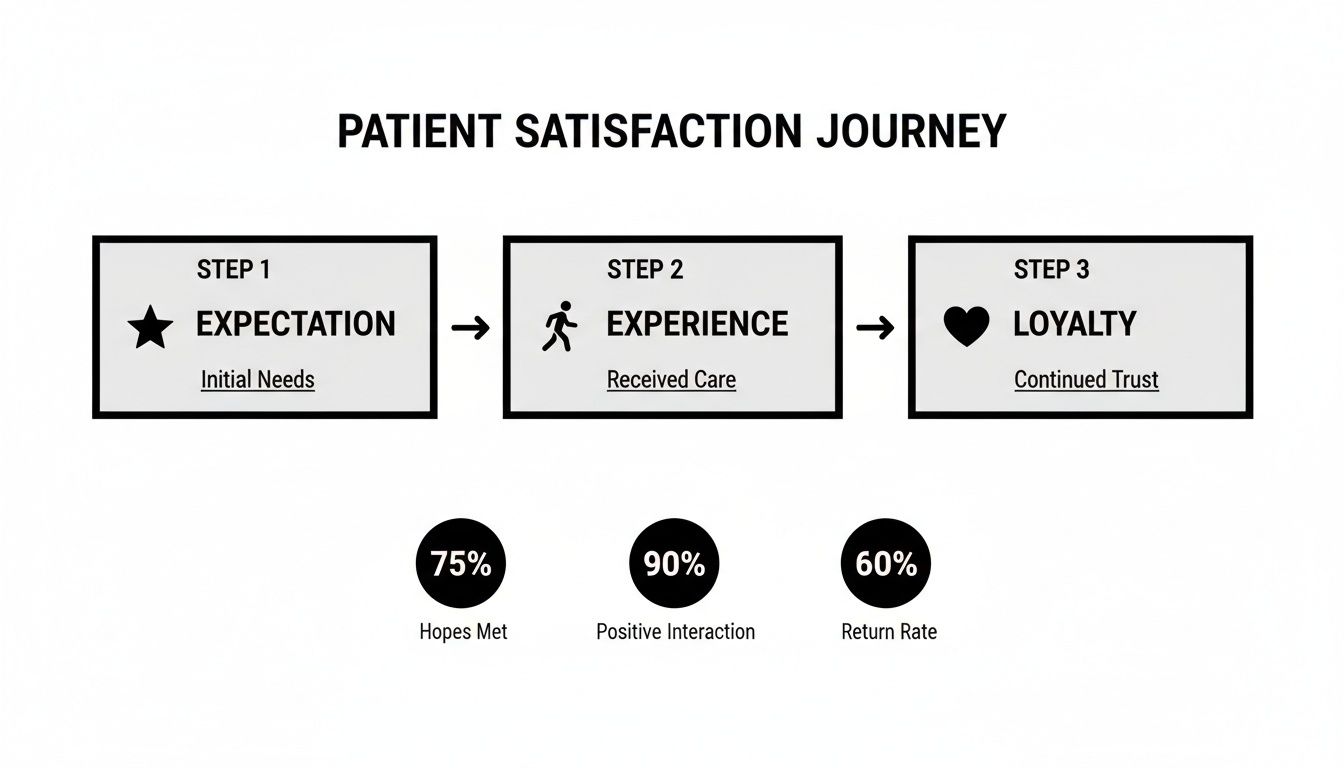
As you can see, the path from expectation to loyalty is a direct line. Every single touchpoint either builds or erodes their long-term trust in your practice.
We’ve found that breaking down the patient journey into specific touchpoints and identifying potential friction is the most effective way to elevate the experience. Here’s a look at how we approach it.
Key Patient Journey Touchpoints and Improvement Strategies
| Patient Journey Touchpoint | Common Pain Point | Luxury Improvement Strategy |
|---|---|---|
| Initial Contact (Phone/Online) | Impersonal automated systems, long hold times, confusing booking portals. | A dedicated patient coordinator answers calls promptly. The online portal is intuitive, mobile-friendly, and confirms appointments instantly with clear instructions. |
| Pre-Visit Communication | Generic, automated reminders that feel robotic and lack useful information. | Personalized email or text from the patient coordinator confirming details, offering directions, and asking if they have any questions beforehand. Digital forms are sent to complete at their leisure. |
| Arrival & Check-In | Long lines, confusing paperwork, impersonal front-desk interactions. | No lines. Staff greets the patient by name upon arrival. Check-in is a simple confirmation, as all forms are complete. Offer a beverage upon arrival. |
| Waiting Experience | Crowded, noisy waiting rooms with outdated magazines and uncomfortable seating. | A calm, private “lounge” with comfortable seating, curated reading materials, complimentary Wi-Fi, and high-end refreshments (e.g., sparkling water, artisanal tea). |
| Clinical Encounter | Feeling rushed, not being heard, clinical jargon, cold exam rooms. | Appointments are scheduled with ample time. The physician is fully briefed and gives the patient their undivided attention. The environment is comfortable and private. |
| Check-Out & Follow-Up | Confusion over billing, difficulty scheduling next steps, lack of clear post-visit instructions. | A seamless check-out process with a dedicated coordinator who explains any charges, schedules follow-ups, and provides a clear, printed summary of the visit and next steps. |
By addressing these common pain points with a luxury mindset, you begin to systematically build a patient experience that not only satisfies but truly impresses.
Training Your Front-Desk Team for VIP Service
Your front-desk team members are the ambassadors of your practice. They need to be trained not just as administrators but as genuine hospitality experts. This requires a fundamental shift in mindset—from processing patients to welcoming guests.
- Personalized Greetings: Train your team to greet every patient by name with a warm, authentic smile. A simple, “It’s wonderful to see you again, Mrs. Davis,” is infinitely more powerful than a sterile, “Can I have your name?”
- Proactive Assistance: Empower your team to anticipate needs. If a patient looks uncertain about where to go, they should approach and ask, “May I help you find something?” instead of waiting to be asked for help.
- Concierge Mindset: They should be ready to assist with logistics that go beyond the appointment itself, like coordinating transportation or recommending a nearby café for a post-visit coffee.
A well-trained front-desk team can single-handedly elevate the patient’s first impression. They are your first, best tool for demonstrating a culture of exceptional care and service from the moment of arrival.
Creating an Environment of Comfort and Calm
The waiting area is much more than just a place to sit; it’s a physical extension of your brand and a huge factor in shaping patient perception. A chaotic or uncomfortable environment breeds anxiety and frustration, quickly undoing any positive work you’ve done elsewhere.
Focus on creating a space that feels calm, curated, and respectful of your patient’s time and well-being.
- Thoughtful Amenities: Go beyond a basic water cooler. Consider offering a curated selection of teas, premium coffee, and healthy, high-quality snacks.
- Ambient Elements: Use soft, ambient lighting and perhaps a subtle, pleasant scent from a high-end diffuser. Make sure the seating is comfortable and arranged to offer a sense of privacy, not just rows of chairs.
- Clear Wayfinding: Use elegant and clear signage to guide patients effortlessly through the space. The goal is to reduce any potential for confusion or stress.
By meticulously designing these initial touchpoints, you build a strong foundation of trust and satisfaction before the clinical consultation even begins. This proactive approach is essential for any practice serious about not just improving patient satisfaction scores, but cultivating lasting loyalty.
Elevating Patient Communication and Engagement
Exceptional communication is what separates a routine clinical visit from a memorable, high-value experience. It isn’t just about what you say, but how and when you say it. For premium practices serious about improving patient satisfaction scores, the entire mindset has to shift from reactive replies to proactive engagement. This means training your team on everything from the subtle power of a welcoming tone to the non-verbal cues that build instant trust.
This isn’t an overnight fix; it requires a structured approach. You need to move beyond just returning phone calls and start building a real communication system—one that includes scheduled follow-ups, secure patient portals, and personalized health content. The goal is simple but powerful: make every single patient feel seen, heard, and genuinely supported throughout their entire journey with you.

Mastering Empathetic Scripts and Role-Play
Your front-line staff and clinicians are, quite literally, the voice of your practice. Giving them the right language doesn’t just improve perception; it can dramatically change the entire patient experience. Standard, robotic scripts feel cold and fall flat. The focus should be on crafting language that radiates genuine empathy and quiet confidence.
Think about a simple phone greeting. A standard, rushed “ABC Clinic, please hold” is an immediate disconnect. Contrast that with, “Thank you for calling ABC Clinic. This is Sarah. How may I help you today?” The difference is night and day. It establishes a personal, respectful connection from the very first second.
Role-playing common (and difficult) scenarios is one of the most effective training tools I’ve seen. It builds the “muscle memory” needed to handle tough conversations with grace and ensures your team’s response is always aligned with your practice’s premium standards.
Here are a few essential scenarios to practice:
- Handling an appointment delay: Instead of a blunt “The doctor is running behind,” train your team to say, “Mrs. Smith, Dr. Allen is giving another patient some extra time. We anticipate a delay of about 15 minutes and deeply appreciate your patience. May I get you a fresh coffee while you wait?”
- Explaining a complex procedure: Clinicians should practice breaking down dense medical jargon. Using an analogy like a “roadmap to recovery” with clear milestones is far more reassuring than just listing clinical steps.
- Addressing billing questions: Staff must be trained to respond with transparency, not defensiveness. A great starting point is, “I’d be happy to walk you through that charge. Let’s review it together to ensure everything is clear.”
The Power of Active Listening and Non-Verbal Cues
Often, what you don’t say speaks volumes. Active listening is the bedrock of trust in a clinical setting. It’s the difference between simply hearing words and truly understanding the emotion and concern behind them.
Train your entire team on these fundamental techniques:
- Paraphrasing for Clarity: After a patient explains their concerns, responding with, “So, if I’m understanding correctly, the main issue is…” accomplishes two things: it confirms you were paying attention and it ensures you’re both on the same page.
- Using Empathetic Affirmations: Simple phrases like “That sounds incredibly challenging” or “I can see why you’d be concerned” are incredibly powerful. They validate the patient’s feelings and build immediate rapport.
- Mindful Body Language: This is crucial. Maintaining eye contact, leaning in slightly, and nodding show you are engaged. In contrast, glancing at a computer screen or appearing rushed can make a patient feel completely dismissed in an instant.
By mastering active listening, your team moves from being information providers to trusted partners in a patient’s health journey. This single shift is one of the most powerful levers for improving patient satisfaction scores.
From Ad-Hoc Replies to Proactive Engagement
In a premium or concierge setting, patients don’t just hope for good service; they expect you to anticipate their needs. This means your communication strategy must be relentlessly proactive, not just reactive. Stop waiting for patients to call with questions and start reaching out first with information that helps them.
A curated concierge newsletter is a brilliant tactic. One practice we know implemented a simple weekly email with health tips, practice updates, and a “meet the team” feature. The results were stunning: they boosted patient engagement by 30% in just three months. Why? Because it kept the practice top-of-mind and reinforced its value long after an appointment ended. Building this kind of communication pipeline is a cornerstone of effective medical practice marketing strategies.
Other powerful proactive tools include:
- Post-Visit Summaries: Email a clear, concise summary of the visit—including care instructions and next steps—through a secure patient portal.
- Scheduled Check-ins: For patients undergoing treatment, a simple automated text or brief video check-in to see how they’re doing can make all the difference.
- Personalized Content: If you know a patient’s health goals, send them relevant articles or videos. This shows you’re thinking about them as an individual.
This kind of consistent, value-added communication does more than just inform. It solidifies the patient relationship, fosters deep loyalty, and turns satisfied patients into your most enthusiastic advocates.
Leveraging Technology for Seamless Patient Journeys
When technology works best, it’s practically invisible. It should quietly remove friction from the patient journey, automating the routine stuff so your team can focus on what they do best: providing high-touch, personal care.
For premium and concierge practices, the right tech stack isn’t just an administrative tool; it’s a powerful engine for improving patient satisfaction scores. It’s how you build a truly seamless experience that feels intuitive from the moment a patient thinks about booking an appointment. This is where you can create a massive competitive advantage.
The goal here is to get rid of the patchwork of disconnected systems. What you need is an integrated Health Information Management System (HIMS) that gives you a complete, 360-degree view of every patient. This ensures every single touchpoint—from booking online to paying a bill—feels consistent, personal, and utterly effortless.

Building an Intuitive Digital Front Door
Let’s be honest: your patient portal and mobile app are your new front door. A clunky, hard-to-navigate portal is an immediate source of frustration, undermining the premium experience you promise.
In contrast, a well-designed, single-sign-on mobile app can completely transform the patient experience. It feels less like dealing with a healthcare provider and more like using a high-end consumer service from a brand that respects your time.
One concierge practice I know implemented a mobile app that brought everything—appointment scheduling, secure messaging with their doctor, lab results, and bill pay—into one clean interface. The results were immediate. They saw a 20% reduction in no-show rates simply because the integrated calendar and reminder system was so seamless.
Your digital front door absolutely must offer:
- Effortless Scheduling: Patients should be able to see real-time availability and book, reschedule, or cancel appointments without ever picking up the phone.
- Secure and Simple Communication: A built-in messaging feature needs to feel as easy as sending a text, but with the rock-solid security required for health information.
- One-Click Access to Information: Patients expect to instantly view their medical records, see test results (with clear, simple explanations), and access their care plans on demand.
A seamless digital experience shows you respect your patients’ time and autonomy. It empowers them to manage their own care, which is a cornerstone of modern, patient-centric medicine and a huge driver of satisfaction.
Automating Outreach to Personalize Care
Automation, when done right, doesn’t feel robotic—it feels incredibly attentive. Using a healthcare-specific Customer Relationship Management (CRM) tool allows you to personalize your communication at scale, going far beyond generic appointment reminders.
These systems can trigger automated, yet personalized, messages based on what a patient actually needs or does.
- Post-Visit Follow-Up: A day after an appointment, an automated message can check in, provide a direct link to their visit summary, and ask if they have any follow-up questions.
- Preventive Care Nudges: If a patient is due for an annual screening, the system can send a gentle, personalized reminder to get it scheduled.
- Educational Content: Based on a new diagnosis, the CRM can automatically send curated, easy-to-understand articles or videos to help the patient feel informed and in control.
This kind of smart outreach does two critical things. First, it ensures no patient ever feels like they’ve fallen through the cracks, reinforcing that sense of continuous care. Second, it frees up your staff from making hundreds of routine phone calls, allowing them to focus on higher-value work, like handling complex patient inquiries or providing that white-glove service in person.
Selecting and Implementing the Right Tech Stack
Choosing the right technology partners is make-or-break. When you’re evaluating vendors, don’t just get dazzled by a long list of features. Dig into their commitment to a smooth implementation process and robust staff training.
Key Vendor Selection Criteria
| Feature | What to Look For | Why It Matters |
|---|---|---|
| Interoperability | Does it integrate easily with your existing EHR and billing systems? | A disconnected system creates data silos and manual busywork, completely defeating the purpose of the investment. |
| User Experience (UX) | Is the interface clean and intuitive for both patients and staff? | Awful UX leads to low adoption. If your team or patients find it clunky, they simply won’t use it. |
| Implementation Support | Does the vendor provide a dedicated project manager and a clear timeline? | A structured plan prevents costly delays and ensures a smooth transition for your entire practice. |
| Staff Training | Is comprehensive, hands-on training for your whole team included? | Your tech is only as good as your team’s ability to use it. Insist on a thorough training and onboarding plan. |
By strategically investing in an integrated, user-friendly technology stack, you create a patient journey that isn’t just efficient, but genuinely pleasant. This technological backbone supports every other effort in improving patient satisfaction scores, ensuring the entire experience lives up to the promise of premium care.
Building a Culture of Safety and Trust
In the world of premium healthcare, clinical excellence is just the price of entry. Your real differentiator—the thing that builds a fiercely loyal patient base—is an unshakable foundation of safety and trust.
Patients paying a premium don’t just expect to be safe; they expect to feel safe at every single touchpoint. This feeling isn’t a happy accident. It’s the direct result of a deliberate, practice-wide culture that puts transparency, well-being, and patient confidence front and center.
Frankly, improving patient satisfaction scores is directly tied to how secure a patient feels under your care. This goes way beyond clinical protocols. It’s about creating an environment where trust is woven into everything, from the credentials on the wall to the calm, confident demeanor of your team. When safety is something patients can actually feel, satisfaction and loyalty just naturally follow.
Make Safety Visible and Tangible
You can have the most rigorous safety protocols in the world, but if patients don’t see them, their power to build confidence is lost. The trick is to communicate these efforts in a way that feels reassuring, not alarming.
Forget sterile, corporate-looking posters. Subtle, elegant communication is far more effective.
- Discreet Signage: Think small, tastefully designed placards in key areas. For example, a small sign near a hand-sanitizing station might simply read, “Our commitment to your well-being includes meticulous attention to hygiene.” It’s confident, not corporate.
- Patient-Facing Videos: A short, professionally produced video playing silently in the waiting lounge can be incredibly powerful. It can showcase your sterilization processes or introduce your team’s commitment to patient safety in a warm, welcoming way.
- Showcasing Credentials: How you display accreditation badges and physician credentials matters. Frame them elegantly in a private consultation room or office. It reinforces expertise without being flashy, offering visual proof that builds immediate confidence.
The ROI of a Resilient, Supported Team
Let’s be blunt: a stressed, burned-out clinical team cannot possibly deliver a premium patient experience. Investing in your staff’s well-being isn’t just an HR initiative; it’s one of the most powerful levers you have for boosting patient satisfaction. A supported, resilient team has the bandwidth to provide the empathetic, attentive care that high-net-worth patients demand.
This isn’t just a hunch; it’s backed by hard data. Recent findings show a staggering link between a patient’s perception of safety and their willingness to recommend a practice. Practices that excel at making patients feel ‘very safe’ can hit ‘Likelihood to Recommend’ (LTR) scores of 85.3. Compare that to the dismal 34.6 score for practices where that feeling of safety is missing.
The takeaway is clear: investing in a culture that supports your team is a direct driver of business growth. You can discover more about the link between workforce well-being and patient experience outcomes in a recent industry report.
Investing in staff resilience programs directly translates to a higher quality of service. When clinicians feel supported, they have the emotional and mental capacity to go above and beyond for patients, transforming good care into an exceptional experience.
Weave Trust into Every Single Interaction
Trust is built on a foundation of consistency. Every interaction—from a scheduling call to a post-procedure follow-up—is an opportunity to prove your commitment to the patient’s welfare.
One incredibly effective tactic is the pre-visit briefing. Before a new patient’s first appointment, have a clinical coordinator call to walk them through what to expect. This isn’t just about logistics. It’s a chance to say, “We’ve reviewed your file, we are prepared for your visit, and our absolute priority is making sure you are comfortable and informed every step of the way.”
This simple, proactive step accomplishes several critical things at once:
- It reduces anxiety. You’re demystifying the visit and easing any apprehension.
- It demonstrates preparedness. It shows the patient they are not just another name on the schedule.
- It sets a collaborative tone. From the very beginning, you’re framing the relationship as a partnership.
Ultimately, this culture of safety and trust becomes your most powerful marketing tool. It’s what turns a first-time patient into a lifelong advocate for your practice, driving the kind of word-of-mouth referrals that are the hallmark of every successful premium provider.
Measuring Satisfaction and Driving Continuous Improvement
You can have the most luxurious office and the best clinical outcomes, but if you aren’t constantly measuring the patient experience, you’re flying blind. Real improvement doesn’t come from a one-off initiative; it’s fueled by an engine of continuous measurement and feedback.
This is about creating a data-driven culture where every single team member—from the front desk to the clinical staff—understands their role in perfecting the patient journey. The goal is to ditch the dusty annual survey and build a real-time feedback loop. This is how you spot small issues before they become big problems, recognize trends as they emerge, and celebrate the wins that reinforce your team’s commitment to excellence.
For a premium practice, this isn’t just about collecting data. It’s about signaling a relentless, obsessive dedication to getting better every single day.
From Data Points to Actionable Insights
Collecting feedback is just the first step. The real magic happens when you connect the dots between different channels to paint a complete, nuanced picture of the patient experience. The key is making this data visible. When you pipe key metrics into an internal dashboard, patient satisfaction stops being an abstract concept and becomes a shared, daily priority.
There are a few core metrics that every high-end practice should be tracking:
- Net Promoter Score (NPS): This isn’t just another survey question. Asking “How likely are you to recommend our practice to a friend or colleague?” is a powerful litmus test for patient loyalty and overall satisfaction. It cuts right to the heart of the matter.
- Pulse Surveys: These are short, sharp, two-to-three question surveys sent via text or email immediately after an appointment. Their power lies in their immediacy and high response rates, giving you instant feedback on specific touchpoints while the experience is still fresh.
- Digital Feedback Loops: This means systematically monitoring what patients are saying about you on public-facing platforms like Google, Healthgrades, and Vitals. This is raw, unfiltered intelligence that gives you a direct window into public perception.
We worked with one practice that implemented a simple two-question text survey sent just hours after a visit. The result? A stunning 45% response rate within the first 24 hours. They had an immediate, actionable snapshot of that day’s performance. This kind of proactive listening is also a cornerstone of any serious online reputation management for doctors, as it allows you to identify and resolve issues before they turn into negative online reviews.
Running Monthly Improvement Sprints
Once you have a steady stream of data flowing in, you need a rhythm for taking action. This is where monthly “improvement sprints” come in. These are focused, 30-day initiatives designed to solve one specific problem your feedback has surfaced.
Let’s say several pulse surveys mention a clunky, time-consuming check-out process. Your sprint for that month would be dedicated entirely to streamlining it. You’d bring the front-desk team into a room, map out the current workflow, pinpoint every friction point, and design and implement a new, smoother process.
The sprint model is powerful because it transforms feedback from a passive report card into an active, engaging challenge for your team. It fosters a culture of continuous improvement where everyone feels empowered to be part of the solution.
Creating a System for Accountability and Celebration
For this system to have real teeth, it needs structure. A simple monthly scorecard, shared transparently with the entire team, is the perfect tool. It should track your key metrics, show trends over time, and highlight the direct impact of your latest improvement sprint.
This isn’t about shaming or pointing fingers. It’s about creating a sense of collective ownership over the patient experience.
When a metric improves, celebrate it. Acknowledge the team members who drove that change. Tying small, tangible incentives to hitting specific satisfaction goals—like a catered team lunch or a bonus day off—can be an incredibly powerful motivator.
By building this continuous cycle of measurement, action, and recognition, you do more than just raise a few numbers. You embed the pursuit of excellence into the very DNA of your practice.
Frequently Asked Questions
When you’re running a premium practice, the expectations are just different. Improving patient satisfaction isn’t just about avoiding bad reviews; it’s about delivering an experience that justifies your reputation. Here are the questions I hear most often from practice leaders trying to navigate this, with answers designed to give you clarity and a clear path forward.
What’s the Single Biggest Lever for Quick Wins?
If you want to see a fast, noticeable jump in your satisfaction scores, pour your energy into the first and last five minutes of every single visit. It’s astonishing how much these moments color a patient’s entire perception of their care. They are the bookends of the experience, and people remember them vividly.
For the first five minutes, it’s all about a seamless, welcoming arrival. Get rid of the clipboard and chaotic check-in. Use digital forms patients can fill out at home. This one change signals that you respect their time. Then, train your front-desk team to greet patients by name, warmly and personally, the moment they walk in. It’s a small touch that separates a standard medical office from a high-end service experience.
The last five minutes are equally critical. The checkout has to be just as smooth. Make sure billing is explained clearly and patiently. Proactively book their next follow-up appointment before they even have to ask. And end with a genuine, personal closing like, “We look forward to seeing you again, Mr. Jones.” This leaves a final, positive impression that lasts long after they’ve left your office.
How Can We Get Beyond Standard Satisfaction Surveys?
Formal surveys like HCAHPS or Press Ganey are great for benchmarking, but they often miss the why behind the numbers. To really understand the patient experience in a way that drives meaningful change, you have to get more personal and immediate with your feedback channels.
- Launch Pulse Surveys: Right after an appointment, send a simple two-question text message. “How was your visit today?” followed by, “What’s one thing we could have done better?” The response rates are incredibly high, and you capture feedback while the experience is still fresh in their mind.
- Treat Online Reviews as a Focus Group: Platforms like Google and Healthgrades are your real-time report card. Assign someone to monitor these reviews daily. Discuss the good and the bad in your weekly team huddles. It’s a direct line into public perception.
- Train Staff to Ask for Feedback: Empower your checkout team to ask a simple, disarming question: “Was there anything at all we could have improved for you today?” This direct approach not only uncovers gold but shows patients you genuinely care about their individual experience.
Capturing qualitative feedback is about listening between the data points. The nuances discovered in a single patient comment can often reveal systemic issues that broad-stroke surveys will never uncover.
Our Clinical Outcomes Are Great, but Satisfaction Lags. Why?
I see this all the time, and it’s one of the most common frustrations for elite medical practices. The truth is, your discerning patients expect outstanding clinical outcomes. That’s the table stakes, not the differentiator. If your medical results are excellent but your scores are just okay, the problem is almost always the service envelope surrounding the clinical care.
The things that truly set you apart for this demographic are all about the quality of the service experience:
- Communication: Was it empathetic and unrushed, or did it feel transactional and clinical?
- Punctuality: Were you on time? If not, was the delay acknowledged and explained?
- Ambiance: Does your waiting area feel calm and comfortable, or sterile and chaotic?
- Administration: Is scheduling and billing effortless, or is it a source of friction?
You need to do a thorough audit of every non-clinical touchpoint. Find every point of friction—a portal message that took too long to answer, a cluttered reception desk, a rushed phone call—and fix it with a hospitality mindset. The key is to make the quality of your service match the excellence of your medicine.
We Have Limited Resources. How Do We Prioritize?
Trying to fix everything at once is a surefire way to burn out your team and achieve nothing. The smartest strategy is to focus on low-cost, high-visibility changes first. This approach generates momentum, builds your team’s confidence, and delivers tangible wins you can use to justify bigger investments down the road.
Start by mapping your patient journey and identifying the top two or three pain points you’ve uncovered from feedback. Then, attack them in focused, 30-day improvement sprints.
Often, the best place to start is with things that require more training than capital investment:
- Refine Your Scripts: Role-play new phone greetings and check-in dialogues that emphasize warmth and personalization. This costs nothing but time.
- Upgrade the Ambiance: Small touches in the waiting area have an outsized impact. Offer a selection of premium teas and coffees, play subtle ambient music, or provide high-quality reading material.
- Hold a Communication Workshop: Dedicate a staff meeting to training on empathetic communication and active listening for every patient-facing team member.
By targeting the most obvious pain points first, you show patients you’re listening. These early successes create a positive feedback loop that builds morale and makes it much easier to get buy-in for bigger projects later on.
At Haute MD, we understand that building a premier medical practice requires more than just clinical excellence—it demands a patient experience that reflects the highest standards of service and care. Our platform is dedicated to connecting discerning patients with top-tier physicians who have mastered both. Discover the nation’s leading specialists and elevate your practice by exploring our curated network at Haute MD.