



Choosing a plastic surgeon is a huge decision, and it all starts with one non-negotiable step: verifying their credentials. This isn’t just about looking up a name; it’s about confirming they are board-certified by the American Board of Plastic Surgery (ABPS), not just any medical board. This single check is your first and most important line of defense.
It ensures your surgeon has dedicated years to specialized training in this specific field, prioritizing your safety and results above everything else.
Verifying Credentials and Board Certification
Your path to a great plastic surgery outcome starts long before you ever step into a consultation room. It begins with careful, diligent research into a surgeon’s qualifications.
It’s easy to get swayed by a slick website or an impressive social media feed, but those are marketing tools. True qualification lies in credentials that are meaningful and, most importantly, verifiable. This foundational step directly impacts your safety and the quality of your results, making it the most critical part of the entire process.
The Gold Standard in Plastic Surgery
The term “board-certified” gets thrown around a lot, which can be confusing because many different medical boards exist. For plastic surgery of the face, breast, and body, there is only one gold standard: certification by the American Board of Plastic Surgery (ABPS).
This distinction is absolutely crucial.
A surgeon certified by the ABPS has gone through an exhaustive process:
- Graduated from an accredited medical school.
- Completed a minimum of six years of surgical training, with at least three years dedicated specifically to plastic surgery.
- Passed a series of rigorous written and oral examinations that cover every single aspect of plastic surgery.
This intensive journey ensures the surgeon has the judgment, skill, and deep anatomical knowledge to perform your procedure safely and effectively. The good news? You can easily check a surgeon’s certification status yourself, directly on the ABPS website.
Here’s a look at the official verification tool. You just type in the surgeon’s name.

This simple search provides instant confirmation and immediate peace of mind.
Plastic Surgeon vs. Cosmetic Surgeon: A Critical Difference
One of the biggest points of confusion for patients is the difference between a “plastic surgeon” and a “cosmetic surgeon.” The titles sound almost identical, but the training and qualifications behind them can be worlds apart.
Any licensed physician can legally call themselves a “cosmetic surgeon” and perform cosmetic procedures, regardless of their original specialty. This could be a dermatologist, an OB-GYN, or even a general practitioner who simply took a weekend course on liposuction.
A board-certified plastic surgeon, on the other hand, is trained in both cosmetic and reconstructive surgery. This gives them a profound, anatomical understanding of the entire body that is simply unmatched.
To make this clearer, let’s break down what these different titles really mean for you as a patient.
Understanding Surgeon Credentials at a Glance
| Credential | What It Means | Relevance for Plastic Surgery |
|---|---|---|
| Board-Certified Plastic Surgeon (ABPS) | Completed 6+ years of surgical training, including 3+ years specifically in plastic surgery. Passed rigorous exams. | The Gold Standard. This is the only certification that ensures comprehensive training in all aspects of cosmetic and reconstructive surgery. |
| “Cosmetic Surgeon” | A title any licensed MD can use. Training can range from a weekend course to a fellowship, but it’s not standardized or overseen by a recognized board. | High-Risk. Lacks the standardized, in-depth surgical training of an ABPS surgeon. The provider could be from any medical specialty. |
| Board-Certified (in another specialty) | A physician who is board-certified in a field other than plastic surgery (e.g., dermatology, otolaryngology). | Variable. While they are a legitimate specialist in their own field, they do not have the formal, extensive surgical training required for plastic surgery. |
This table highlights why verifying ABPS certification is not just a casual recommendation—it’s an essential safeguard for your health.
Security in your choice comes from knowing your surgeon has completed this specialized training and adheres to the strictest ethical standards. For those looking to find a doctor from a curated network of elite professionals, understanding these distinctions is the first step toward connecting with a top-tier, properly vetted surgeon.
Evaluating a Surgeon’s Experience and Specialization
Once you’ve confirmed a surgeon is board-certified, the real detective work begins. It’s time to zero in on their specific experience and area of mastery.
Think of it this way: a surgeon celebrated for intricate facial reconstructions after an accident isn’t automatically the best choice for a breast augmentation. General plastic surgery is the foundation, but true artistry and consistent results come from deep specialization.
Your goal is to find someone who doesn’t just offer your procedure but considers it a cornerstone of their practice. This focus translates directly into refined techniques, an intuitive grasp of potential challenges, and ultimately, better, more predictable outcomes. You’re hiring a master craftsman, not a jack-of-all-trades.
Digging Deeper Than the Resume
Volume is a powerful indicator of proficiency. A surgeon performing a specific procedure every week has a level of muscle memory and nuanced understanding that someone doing it a few times a year simply can’t match. This is especially true for major procedures; in fact, surgically intensive operations command about 80% of the cosmetic surgery market, showing that patients are seeking significant results that demand true surgical depth.
This is why your consultation is so critical. You need to be ready to ask direct, insightful questions. Don’t be timid—this is your health and your results on the line.
Here’s what you need to find out:
- “How many rhinoplasties (or your specific procedure) do you perform on average each month?”
- “Roughly what percentage of your practice is dedicated to this procedure?”
- “How many years have you been regularly performing this surgery since finishing your residency?”
Their answers will paint a vivid picture. A surgeon who dedicates 40% or more of their time to your procedure of interest is likely a true specialist.
The Importance of Professional Affiliations
Beyond a surgeon’s personal track record, look for their professional affiliations. Memberships in elite organizations like the American Society of Plastic Surgeons (ASPS) are a huge green flag.
Membership in these societies isn’t just about paying dues. Surgeons must follow a strict code of ethics, commit to ongoing medical education, and operate exclusively in accredited, high-standard surgical facilities.
This isn’t a one-time certification; it’s a continuous commitment to excellence. It ensures your surgeon is up-to-date on the latest techniques and patient safety protocols in a field that’s constantly evolving. It’s one more layer of assurance that you’re in the hands of a dedicated professional. Using a curated doctor listing can help identify professionals who often hold these respected memberships.
How to Realistically Review Before and After Photos
A surgeon’s before and after gallery is their visual resume. It’s the most direct look you’ll get into their aesthetic eye and technical skill. But here’s the thing: learning to look at these photos effectively is a skill in itself. It’s about moving past the initial “wow factor” and analyzing the images with a critical, informed perspective.
Honestly, this process is your single best tool for setting realistic expectations. When you carefully evaluate a surgeon’s past work, you can see if their artistic sensibility lines up with what you want, ensuring the final result is one you’ll be thrilled with.
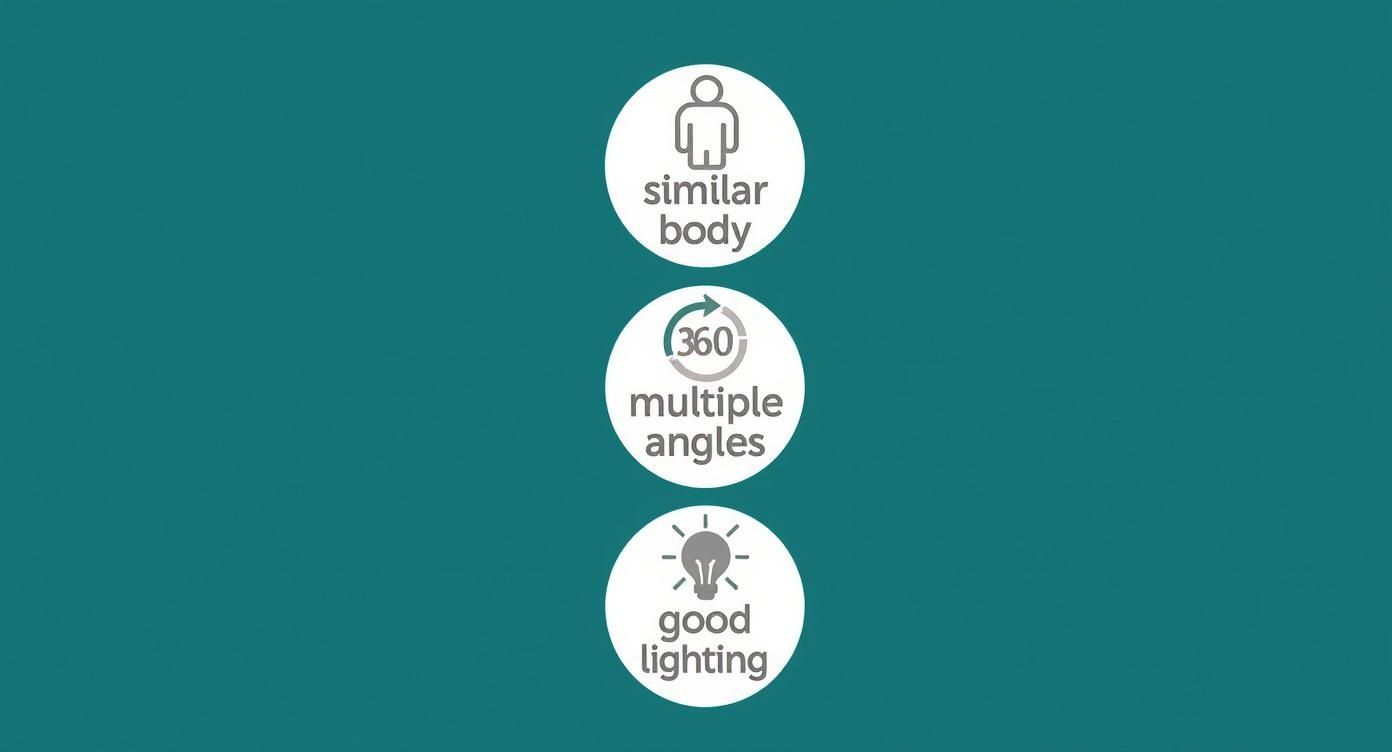
Look for Patients Who Look Like You
This is the most important step, hands down. You need to find photos of patients who had a similar starting point to your own. If you’re considering a tummy tuck because you have significant skin laxity after kids, a gallery full of patients who just needed a little bit of tightening won’t give you a realistic picture of your potential outcome.
Pay close attention to a few key things:
- Body Type: Are there individuals with a similar frame, weight distribution, and proportions to you?
- Anatomical Features: For a rhinoplasty, look for noses that have a similar bridge, tip, and nostril shape as yours. For breast augmentation, find examples of women with similar chest wall dimensions and existing breast tissue.
- Age and Skin Quality: The results a surgeon can achieve vary significantly based on skin elasticity. Try to find patients who appear to be in a similar age range.
A diverse gallery showing fantastic results on a variety of body types is a huge green flag. It signals a surgeon’s versatility and skill. If you scroll through and don’t see anyone who reminds you of yourself, don’t be afraid to ask for more examples during your consultation.
Become a Detail-Oriented Observer
Okay, once you’ve found some comparable examples, it’s time to zoom in. The best, most transparent galleries provide high-resolution images taken from multiple angles—front, side, and three-quarter views are the standard. This is crucial for a complete and honest assessment.
A great before and after photo isn’t just about a dramatic transformation. It’s an honest depiction of the surgeon’s work, showcased in consistent lighting, with no heavy shadows or filters that could hide the important details.
Now, analyze the finer points of the results. For any surgical procedure, look closely at the incision sites. Are the scars neat, fine, and well-placed in natural creases to minimize their visibility? For something like a breast lift, are the nipples symmetrical and positioned naturally on the breast mound? For liposuction, are the contours smooth and free of weird lumps or irregularities?
This kind of detailed analysis tells you everything you need to know about a surgeon’s attention to detail, which is the true hallmark of an expert. It’s this meticulous approach that separates a good result from a truly exceptional one.
Making the Most of Your Consultation
The consultation is far more than just getting a price quote; it’s your interview with the surgeon. This is your chance to really size them up—to assess their expertise, their communication style, and whether their aesthetic vision clicks with yours. At the same time, they’re figuring out if you’re a good candidate for the procedure. To truly understand how to choose the right plastic surgeon, you have to treat this meeting with the seriousness it deserves.
Don’t just show up and wing it. Arriving prepared is critical.
Seriously, don’t rely on memory alone—bring a written list of questions. This simple step ensures you cover all your bases and lets you directly compare answers if you’re meeting with more than one surgeon. A patient who comes in with thoughtful questions signals they’re serious about their health, and every good surgeon respects that.
Questions That Go Beyond the Basics
Your questions need to dig deeper than just cost and recovery time. Of course, those things matter, but you need to understand the surgeon’s specific game plan for your body and your goals. A great surgeon will welcome detailed questions and give you clear, comprehensive answers without making you feel like you’re on the clock.
Here are a few essential questions to get the conversation started:
- The Surgical Plan: “Looking at my anatomy and what I want to achieve, what specific surgical plan do you recommend? Why is that the best approach for me?”
- Procedure Volume: “How many of this exact procedure do you perform each month?” This gives you a real-time snapshot of their current experience and focus.
- Safety and Facility: “Where will the surgery actually happen, and is the facility accredited?” Your surgery should always take place in an accredited hospital or a dedicated outpatient surgery center. No exceptions.
- The Real Recovery: “What does the recovery timeline look like, week by week? When can I realistically expect to get back to my desk job and my workouts?”
- What Ifs: “What’s your policy if a revision is needed down the road? What are the most common complications with this procedure, and how do you handle them when they pop up?”
A surgeon who is upfront about risks isn’t trying to scare you; they are being honest and prioritizing your safety. If you get vague answers or they brush off your concerns, that’s a massive red flag.
It’s Not Just About the Technical Stuff
While the surgeon’s technical answers are vital, pay close attention to the vibe in the room. How do you feel during the conversation? Your comfort and trust are just as important as their credentials on the wall. A surgeon can be technically brilliant, but if you don’t connect with them, the entire experience can feel stressful and isolating.
Do they actually listen, or are they just waiting for their turn to talk? Do they explain complex medical terms in a way you can actually understand, or do they hide behind confusing jargon? You should feel like a partner in this process, not just a patient being told what to do.
Don’t forget to notice the little things, too. The clinic’s atmosphere and the professionalism of the front desk staff provide valuable clues. A well-run, friendly, and organized office is almost always a reflection of the surgeon’s own high standards. Taking in this whole picture is a core part of learning how to choose a plastic surgeon you can trust completely.
Red Flags and Warning Signs to Avoid
Knowing what to look for is only half the battle. Just as important is knowing what to run away from. Spotting the red flags in your search for a plastic surgeon is critical to protecting your health and ensuring you get the outcome you deserve.
Some warning signs are glaringly obvious, but others are more subtle, often wrapped up in slick marketing or a deal that seems too good to be true. Let’s break down what these red flags look like in the real world so you can steer clear of any practitioner who doesn’t meet the highest standards.
High-Pressure Sales Tactics and Unrealistic Promises
A consultation should feel like a medical appointment, not like you’re buying a used car. If you feel rushed, pushed into booking surgery on the spot, or offered a “special discount” that conveniently expires today, that’s your cue to leave. A reputable surgeon wants you to make a thoughtful, informed decision on your own timeline.
This kind of pressure often comes with promises that are wildly unrealistic. Be deeply skeptical of any surgeon who guarantees a specific result, claims a procedure is “scarless,” or swears you’ll look exactly like that celebrity photo you brought in.
True medical professionals are brutally honest about limitations and work hard to set realistic expectations. They’ll discuss potential outcomes based on your unique anatomy, not on a fantasy. Anyone selling a perfect, risk-free result is simply not being truthful.
Dismissing Risks and Downplaying Recovery
Every single surgery—no matter how minor it seems—comes with risks. A great surgeon will sit down with you and have a frank, thorough conversation about potential complications, from infection and scarring to anesthesia-related issues.
If a surgeon glosses over these risks or makes the recovery process sound like a breezy weekend affair, this is a massive problem. It signals they’re either dangerously inexperienced or intentionally misleading you. A responsible surgeon prepares you for the reality of recovery: the discomfort, the swelling, and the time you’ll need off work. You should walk out of a consultation feeling informed, not just excited.
The Problem with Bargain Shopping
While cost is a legitimate factor for everyone, choosing a surgeon based on the lowest price is one of the most dangerous mistakes you can make. Plastic surgery is an investment in your well-being. A suspiciously low price almost always means corners are being cut somewhere critical.
What does “cutting corners” look like?
- The surgery might be performed in an unaccredited, in-office surgical suite instead of a proper hospital or a certified ambulatory surgical center.
- The surgeon could be using a non-certified anesthesiologist or underqualified support staff to save money.
- They might be using cheaper, less reliable implants or materials to bring down their costs.
Your safety is not the place to hunt for a bargain. The costs associated with fixing a botched procedure are often far greater—emotionally, physically, and financially—than any initial savings.
To make it even clearer, I’ve put together a table of some of the most critical red flags. If you encounter any of these, it’s a signal to pause and reconsider.
Key Red Flags in Your Surgeon Search
| Red Flag | Why It’s a Concern |
|---|---|
| No Hospital Privileges | Hospitals have an intense vetting process. If a surgeon can’t get privileges to perform a procedure in a hospital, it’s a huge sign that they may not meet the required standards of training or safety. |
| Lack of ABPS Certification | This is completely non-negotiable. As we’ve covered, it means they lack the specialized, rigorous training required for plastic surgery, putting your safety directly at risk. |
| Vague Answers to Questions | If a surgeon is evasive about their experience, complication rates, or the specifics of your surgical plan, they may be hiding something or simply lack the necessary expertise. A confident surgeon has nothing to hide. |
| Pressure to Add More Procedures | A good surgeon listens to your goals. One who constantly tries to upsell you on additional, unsolicited procedures is prioritizing profit over your well-being and what you actually want. |
Ultimately, your intuition is a powerful tool. If something feels off during a consultation—if you feel dismissed, rushed, or uncomfortable—trust that feeling. The right surgeon will make you feel confident, respected, and, above all, safe.
Common Questions About Choosing a Plastic Surgeon
Even after you’ve done your homework, a few key questions almost always pop up when you’re zeroing in on the right plastic surgeon. Getting clear, honest answers is what turns a good decision into a great one, giving you the confidence to move forward.
Let’s tackle some of the most common—and most important—questions patients ask.
A major point of confusion, and frankly a dangerous one, is the difference between a “cosmetic surgeon” and a board-certified plastic surgeon. The titles sound almost identical, but the training and qualifications behind them can be worlds apart.
A board-certified plastic surgeon has dedicated years to a formal plastic surgery residency and passed grueling written and oral exams administered by the American Board of Plastic Surgery. In contrast, a “cosmetic surgeon” can be any medical doctor—from a dermatologist to an ER physician—who decides to perform cosmetic procedures, often with just a weekend course or two under their belt.
For your safety, this is non-negotiable. Always, always confirm your surgeon is certified by the American Board of Plastic Surgery.
Making a Confident Final Decision
Another big question is how many consultations you should actually book. Is one enough? Should you see five? While there’s no magic number, I’ve found that meeting with at least two or three different board-certified plastic surgeons is the sweet spot.
This strategy gives you a huge advantage for a few reasons:
- You get to compare surgical plans. One surgeon might suggest a full tummy tuck, while another believes a mini-tuck with liposuction will better meet your goals. Hearing different expert opinions is invaluable.
- You can find the right aesthetic match. Every surgeon has a unique artistic eye. Looking at their before-and-after photos helps you find someone whose results consistently reflect the look you’re hoping for.
- You can gauge the personal connection. This is huge. A consultation lets you see who truly listens and which team makes you feel the most comfortable and respected.
Meeting with a few top contenders helps you make an informed choice without feeling rushed or pressured into the first option you hear. While you’re researching, you’ll notice that the principles of finding a great specialist apply across medicine. For instance, there are dedicated platforms that guide patients on how to find surgeons for pancreatic cancer and other highly specialized fields. The core idea is the same: credentials and experience matter.
Finally, let’s talk about cost. If you get a quote that seems too good to be true, it almost certainly is. A significantly lower price is one of the biggest red flags you can encounter.
It usually means corners are being cut somewhere critical—maybe the procedure is being done in an unaccredited office backroom instead of a hospital, the anesthesiologist isn’t board-certified, or they’re using subpar materials. Plastic surgery is a serious investment in your health and well-being. Treat bargain-basement prices with extreme skepticism and dig deeper.