



Choosing an orthopaedic surgeon is one of the most critical healthcare decisions you can make, profoundly impacting everything from your mobility and athletic performance to your long-term quality of life. While the field is filled with skilled professionals, a select group operates at the highest echelon of medical science and surgical artistry. These are the innovators and pioneers who not only master existing techniques but invent new ones, setting the global standard for patient care. They are the surgeons trusted by elite athletes, sought out for the most complex revision surgeries, and responsible for research that transforms outcomes.
This guide moves beyond simple directories to explore the careers and contributions of eight of the world’s best orthopaedic surgeons. We will delve into what makes each of them exceptional, from developing groundbreaking rapid recovery protocols to pioneering injury prevention programs that have saved thousands from the operating table. Each profile is structured to provide a deep, actionable understanding of their unique approach, helping you navigate your own journey toward finding the perfect specialist for your unique needs.
We will examine their key specializations, notable achievements, and, most importantly, provide practical insights into their treatment philosophies. By understanding this landscape of excellence, you will be equipped to make a more informed and confident choice, whether you are facing a complex joint reconstruction, a sports-related injury, or seeking a second opinion from a true master of the craft. This is your definitive resource for identifying surgical excellence.
1. Dr. James Andrews – Sports Medicine Pioneer
When discussing the best orthopaedic surgeons, Dr. James Andrews is a name that consistently emerges at the forefront, particularly within the demanding world of sports medicine. His career is a testament to innovation and excellence, making him the definitive choice for elite athletes facing career-threatening injuries. Dr. Andrews co-founded the Andrews Institute for Orthopaedics & Sports Medicine in Gulf Breeze, Florida, a world-class facility dedicated to research, education, and clinical care.
His specialization in knee, elbow, and shoulder injuries has not only salvaged but also extended the careers of countless professionals. Dr. Andrews is especially renowned for his mastery of the ulnar collateral ligament (UCL) reconstruction, popularly known as Tommy John surgery. This procedure, critical for baseball pitchers, has been refined under his skilled hands, setting the standard for surgeons globally. His patient list reads like a hall-of-fame roster, including NFL quarterbacks Tom Brady and Drew Brees, MLB legends Roger Clemens and John Smoltz, and even basketball icon Michael Jordan.
Core Philosophy and Approach
Dr. Andrews’ methodology is rooted in a conservative, patient-first philosophy. He emphasizes exhausting all non-operative options before recommending surgery. When an operation is necessary, he employs minimally invasive arthroscopic techniques designed to accelerate recovery and reduce scarring, a critical factor for athletes aiming for a swift return to peak performance.
This approach is a key reason why he is among the best orthopaedic surgeons trusted by the world’s top athletic talent. His commitment to research and education, through his fellowship program, ensures his techniques and principles are disseminated to the next generation of surgeons.
The following infographic highlights some of Dr. Andrews’ most significant career achievements.
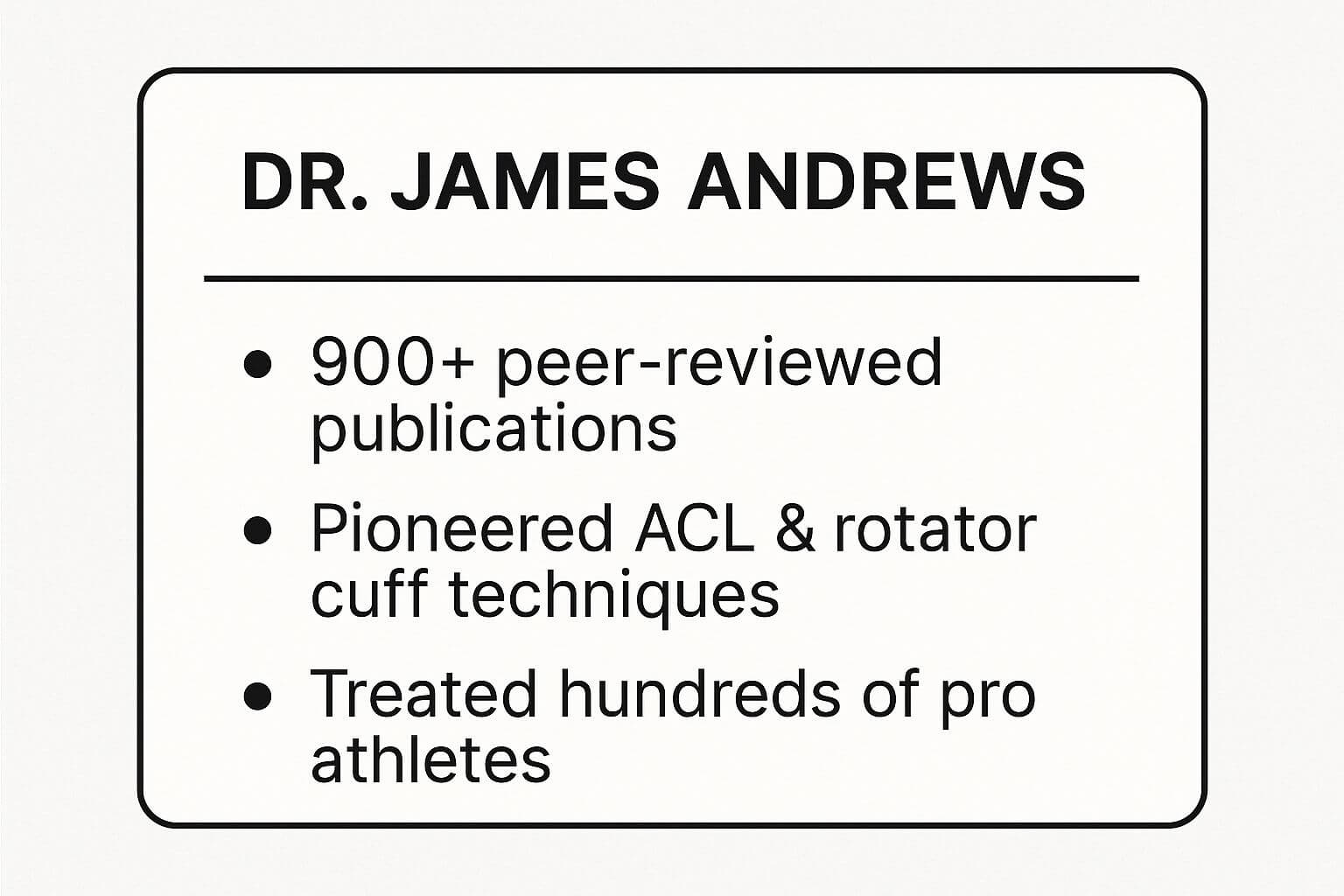
These statistics underscore Dr. Andrews’ profound impact on orthopaedic surgery, blending prolific academic contributions with pioneering surgical techniques and unparalleled clinical experience.
Practical Steps for Consultation
Securing a consultation with Dr. Andrews requires preparation and strategic planning. Here are actionable tips for prospective patients:
- Physician Referral: A referral from a primary care sports medicine physician is often the most effective first step. This ensures your case is properly documented and relevant to his specialty.
- Comprehensive Diagnostics: Be prepared with a complete medical history, including all prior imaging like MRIs and X-rays. His team conducts a thorough evaluation before considering surgical intervention.
- Explore Fellowship Network: If wait times are prohibitive, consider a consultation with one of his highly trained fellows or partners at the Andrews Institute. They operate under his direct principles and protocols.
- Insurance and Financials: Verify your insurance coverage in detail. As a top-tier specialist, associated fees can be substantial, and understanding your financial responsibility is crucial. Learn more about the medicine that helps top athletes and CEOs achieve peak performance on HauteLiving.com.
2. Dr. Richard Berger – Rapid Recovery Hip and Knee Replacement Innovator
Dr. Richard Berger has fundamentally reshaped the landscape of joint replacement surgery, establishing himself as a leader in rapid recovery protocols. Operating out of Rush University Medical Center in Chicago, he pioneered minimally invasive hip and knee replacement techniques that allow patients to return to their lives with unprecedented speed. His work has transformed what was once a procedure requiring lengthy hospital stays into an outpatient experience for many.
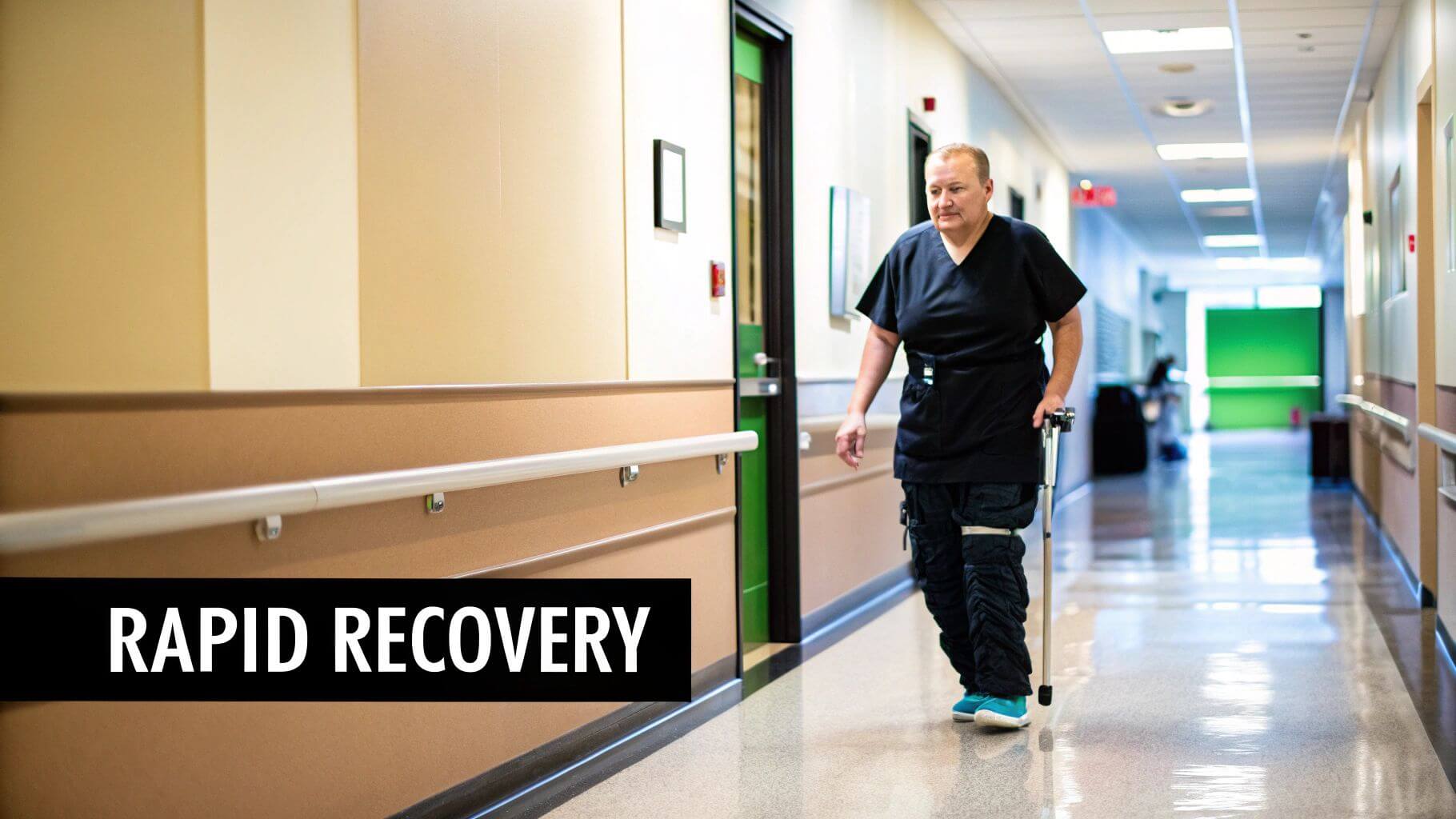
Dr. Berger’s innovative approach avoids cutting the muscles, tendons, and ligaments that are crucial for stability and function. This muscle-sparing technique, combined with a specialized anesthetic and pain management protocol, minimizes trauma and dramatically accelerates healing. His patient outcomes are a testament to his method’s success, with many walking unassisted just hours after surgery and returning to activities like golf or tennis in weeks, not months. Having performed over 15,000 joint replacements and trained thousands of surgeons globally, his influence is undeniable.
Core Philosophy and Approach
Dr. Berger’s methodology centers on preserving the patient’s natural anatomy to facilitate an immediate and robust recovery. He believes that by minimizing surgical trauma, the body can heal faster and with less pain, eliminating the need for extended hospitalization and aggressive physical therapy. His comprehensive pre-operative education and conditioning program empowers patients to take an active role in their own successful outcome. This patient-centric, minimally invasive philosophy is why he is consistently ranked among the best orthopaedic surgeons for joint replacement.
The video below offers further insight into his groundbreaking techniques and patient experiences.https://www.youtube.com/embed/CNQKDepMucMHis approach not only focuses on the surgery itself but on the entire patient journey, from pre-surgical preparation to post-operative independence.
Practical Steps for Consultation
Engaging with Dr. Berger’s practice requires a proactive approach due to high demand. The following tips can help prospective patients navigate the process:
- Engage in Pre-Operative Education: Fully commit to his prescribed pre-operative exercises and educational materials. Strengthening surrounding muscles is key to a rapid recovery.
- Prepare Your Home Environment: Since discharge often occurs the same day, ensure your home is prepared for a safe and comfortable immediate post-operative period.
- Arrange for Caregiver Support: Plan for a reliable friend or family member to provide support for the first 24 to 48 hours post-surgery, as this is a critical time.
- Seek Out Trained Surgeons: If traveling to Chicago is not feasible, research and consider surgeons who have been specifically trained by Dr. Berger in his minimally invasive techniques. His official website often provides resources to find these qualified professionals.
3. Dr. Bert Mandelbaum – Sports Medicine and Injury Prevention Expert
Dr. Bert Mandelbaum stands out in the world of orthopaedic surgery not just for his surgical skill, but for his pioneering work in injury prevention. Based in Santa Monica, California, and affiliated with Cedars-Sinai, he has built a global reputation by combining elite surgical treatment with proactive, evidence-based strategies to keep athletes on the field. His dual focus makes him a unique and essential figure for athletes at all levels, from youth leagues to the professional stage.
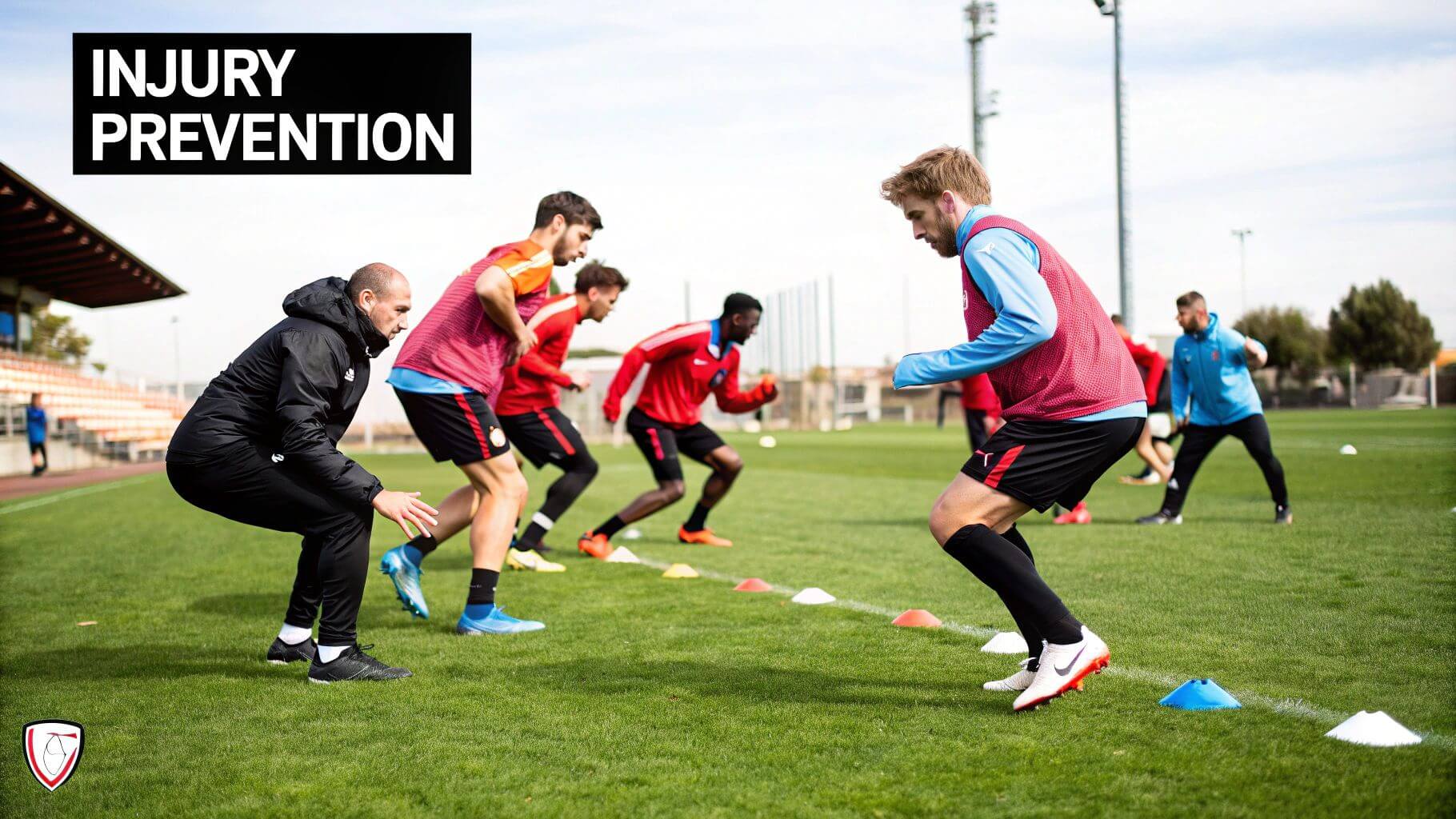
Dr. Mandelbaum is perhaps most famous for his role in developing and promoting the FIFA 11+ program, a neuromuscular warm-up designed to reduce severe injuries in soccer players. This program has been implemented worldwide and studies have shown it can reduce ACL injuries by up to 70%, a revolutionary achievement in sports medicine. His patient roster includes soccer legends like David Beckham and Landon Donovan, as well as athletes from the NFL, NBA, and NHL. His service as a team physician for US Soccer and multiple Olympic teams further cements his status as one of the best orthopaedic surgeons available.
Core Philosophy and Approach
Dr. Mandelbaum’s philosophy is elegantly simple: the best surgery is the one that never happens. His approach integrates cutting-edge surgical techniques for knee and shoulder injuries with a deep commitment to biomechanics and preventative medicine. He views each patient as an entire kinetic chain, analyzing movement patterns to identify and correct imbalances before they lead to catastrophic injury. When surgery is unavoidable, he utilizes advanced, minimally invasive procedures and explores regenerative medicine options like PRP and stem cell therapy to optimize healing and accelerate a safe return to sport. This holistic perspective, blending treatment with prevention, is what truly defines his practice.
Practical Steps for Consultation
Engaging with Dr. Mandelbaum’s practice requires a focus on both immediate treatment needs and long-term athletic health. Here are key steps for prospective patients:
- Inquire About Prevention: Even if you are not currently injured, his team can provide valuable insight into injury prevention protocols. Ask about implementing programs like the FIFA 11+ for yourself or your team.
- Discuss Regenerative Options: Be prepared to discuss innovative treatments beyond traditional surgery. Ask about the potential role of regenerative medicine in your specific case to enhance recovery.
- Emphasize Long-Term Goals: Clearly communicate your long-term athletic and life goals during the consultation. This allows his team to develop a comprehensive plan that extends beyond the immediate surgical repair.
- Seek Associate Evaluation: Given his high demand, consider an initial evaluation with one of his highly trained associates at the Santa Monica Orthopaedic and Sports Medicine Group. They work directly under his supervision and share his patient-centric philosophy.
4. Dr. Neal ElAttrache – Elite Shoulder and Elbow Surgeon
In the world of high-stakes sports orthopaedics, Dr. Neal ElAttrache of the Kerlan-Jobe Orthopaedic Clinic in Los Angeles stands as a titan, particularly for complex shoulder and elbow procedures. His reputation is built on successfully repairing injuries that once ended careers, making him a go-to surgeon for a global roster of elite athletes. Dr. ElAttrache serves as the head team physician for the Los Angeles Dodgers and the Los Angeles Rams, placing him at the frontline of sports medicine.
His specialization in rotator cuff repairs, intricate shoulder reconstructions, and ulnar collateral ligament (UCL) reconstruction, or Tommy John surgery, has redefined recovery standards. Dr. ElAttrache’s patient list is a who’s who of athletic legends, having famously repaired NBA star Kobe Bryant’s rotator cuff and performed crucial shoulder surgery on NFL quarterback Tom Brady. His expertise extends across all major leagues, including treating MLB pitchers like Clayton Kershaw and Zack Greinke, ensuring their return to dominant form.
Core Philosophy and Approach
Dr. ElAttrache’s methodology combines meticulous surgical precision with a forward-thinking embrace of biologic advancements. He is a proponent of using techniques like biologic augmentation to enhance tissue healing, which can significantly improve recovery outcomes and durability of the repair. This innovative approach is a primary reason he is considered one of the best orthopaedic surgeons for athletes whose livelihoods depend on optimal joint function.
He places immense value on a highly personalized approach, tailoring each surgical plan and rehabilitation protocol to the athlete’s specific sport and performance demands. This commitment to individualized care, backed by the legendary reputation of the Kerlan-Jobe Orthopaedic Clinic, ensures that patients receive not just a repair, but a comprehensive strategy for returning to their peak.
Practical Steps for Consultation
Engaging with Dr. ElAttrache’s office requires thorough preparation, especially for athletes with specific return-to-play goals. Here are key steps for prospective patients:
- Detailed Imaging and Records: Arrive at your consultation with a complete set of recent, high-quality MRIs, X-rays, and all pertinent medical records. His team requires comprehensive diagnostics to make an informed assessment.
- Define Performance Goals: Be prepared to articulate your specific athletic goals and performance requirements. This information is critical for him to develop a sport-specific surgical and rehabilitation plan.
- Explore the Kerlan-Jobe Network: Given his high demand, consider scheduling with a partner or fellow at the Kerlan-Jobe Orthopaedic Clinic. These surgeons are trained under the same rigorous standards and principles.
- Commit to Rehabilitation: A successful outcome is heavily dependent on post-operative care. Ensure you are fully committed to following the prescribed rehabilitation protocols, as they are as crucial as the surgery itself. Learn more about his practice and the Kerlan-Jobe Orthopaedic Clinic on their official website.
5. Dr. Thomas Thornhill – Complex Joint Reconstruction Specialist
In the realm of adult reconstructive surgery, particularly for the most challenging hip and knee cases, Dr. Thomas Thornhill stands as a towering figure. A distinguished surgeon at Massachusetts General Hospital and a professor at Harvard Medical School, his career is defined by tackling complex joint problems that other surgeons may deem inoperable. Dr. Thornhill has dedicated his practice to revision arthroplasty and limb preservation, offering hope and mobility to patients with a history of failed surgeries, severe bone loss, and debilitating deformities.
His expertise lies in navigating the intricate landscape of revision hip and knee replacements. Dr. Thornhill is renowned for his meticulous, problem-solving surgical approach, which has restored function to patients who have endured multiple unsuccessful procedures. His work often involves reconstructing joints with significant bone loss using custom implants and managing severe complications like periprosthetic infections that require complex, staged revisions. This focus on the most difficult cases solidifies his position as one of the best orthopaedic surgeons for complex joint reconstruction.
Core Philosophy and Approach
Dr. Thornhill’s methodology is anchored in exhaustive preoperative planning and a commitment to salvaging limbs and restoring function. He approaches each case as a unique puzzle, often requiring innovative solutions and custom-tailored surgical plans. His philosophy emphasizes a deep understanding of biomechanics and implant design, allowing him to address severe structural deficiencies that standard procedures cannot fix. He is a leader in a field where success is measured by turning seemingly hopeless situations into functional, pain-free outcomes.
His academic contributions through Harvard Medical School and leadership roles in prestigious organizations like The Hip Society and The Knee Society have shaped modern arthroplasty techniques. His research, frequently published in premier journals, provides the evidence-based foundation for treating complex joint failures, influencing surgical protocols worldwide and educating the next generation of specialists.
Practical Steps for Consultation
A consultation with a specialist like Dr. Thornhill requires meticulous preparation, especially for complex revision cases. Here are practical steps for prospective patients:
- Compile All Records: Gather a complete and organized history of all previous surgeries, including operative reports, implant details, and all related imaging (X-rays, CT scans, MRIs). This is critical for his team’s evaluation.
- Prepare for a Thorough Assessment: The evaluation process for complex cases is extensive and may involve multiple visits, advanced imaging, and consultations with other specialists, such as infectious disease experts.
- Discuss Realistic Outcomes: Complex revision surgery has different goals than primary joint replacement. Engage in an open discussion about realistic expectations regarding pain relief, functional improvement, and potential limitations.
- Commit to Rehabilitation: Successful outcomes are heavily dependent on a patient’s commitment to a prolonged and intensive postoperative rehabilitation program. Be prepared for this essential phase of recovery. You can find more information about top doctors who treat arthritis and related joint conditions on HauteLiving.com.
6. Dr. Christopher Ahmad – Baseball and Overhead Athlete Specialist
In the highly specialized world of sports orthopaedics, Dr. Christopher Ahmad stands out as a leading authority, particularly for his work with baseball players and other overhead athletes. As the head team physician for the iconic New York Yankees and a distinguished surgeon at NewYork-Presbyterian/Columbia University Medical Center, his expertise is sought by athletes at the highest level of competition. Dr. Ahmad is internationally acclaimed for his surgical skill in treating complex shoulder and elbow injuries.
His specialization is sharply focused on the unique demands placed on the throwing arm. Dr. Ahmad has performed hundreds of ulnar collateral ligament (UCL) reconstructions, or Tommy John surgeries, pioneering techniques that aim to optimize recovery and enhance performance post-injury. His patient list includes prominent MLB pitchers like Masahiro Tanaka, and his research is instrumental in shaping modern return-to-play protocols. His work extends beyond the operating room to injury prevention, where he develops screening methods to identify at-risk athletes from youth leagues to the professional ranks.
Core Philosophy and Approach
Dr. Ahmad’s approach is a sophisticated blend of advanced surgical intervention and data-driven preventative medicine. He operates on the principle that understanding the biomechanics of a throwing athlete is as crucial as repairing the anatomical damage. His philosophy prioritizes a holistic view of the athlete, considering everything from pitching workload to long-term career aspirations.
This meticulous, evidence-based methodology solidifies his reputation as one of the best orthopaedic surgeons for athletes whose careers depend on the health of their arm. He actively integrates his clinical practice with research, using biomechanical analysis to inform both his surgical techniques and his influential injury prevention programs.
Practical Steps for Consultation
Engaging with Dr. Ahmad’s practice requires a focused and well-prepared approach, especially for competitive athletes. Here are actionable tips for a successful consultation:
- Detailed Athletic History: Prepare a comprehensive history of your athletic activity. For pitchers, this should include detailed data on pitch counts, velocity trends, and any fluctuations in performance or discomfort.
- Articulate Career Goals: Be ready to discuss your long-term career objectives. Dr. Ahmad tailors treatment and rehabilitation timelines to align with your specific goals, whether that involves a return to professional play or long-term health.
- Discuss Biomechanics: Ask about the possibility of participating in biomechanical analysis or research studies. This can provide invaluable insight into your personal movement patterns and potential risk factors.
- Inquire About Prevention: For parents of young athletes, this is an opportunity to discuss evidence-based injury prevention strategies and programs. Dr. Ahmad is a leading voice in youth sports safety. You can learn more about his practice on the Columbia University Department of Orthopedic Surgery website.
7. Dr. William Levine – Shoulder Surgery Innovator
For patients grappling with complex shoulder conditions, Dr. William Levine stands out as a leading authority and a key figure among the best orthopaedic surgeons in the nation. As the Director of Sports Medicine at Columbia University Irving Medical Center and former team physician for the New York Giants and New York Knicks, his expertise is trusted by elite athletes and discerning patients alike. Dr. Levine has dedicated his career to advancing the field of shoulder surgery, establishing a reputation for exceptional outcomes in even the most challenging cases.
His specialization is focused on intricate shoulder reconstruction, advanced rotator cuff repair, and resolving shoulder instability. Dr. Levine is a pioneer in developing and implementing minimally invasive arthroscopic techniques that minimize tissue damage and promote faster recovery. His patient roster includes not just high-profile athletes from the NFL and NBA, but also a broad spectrum of individuals seeking to regain function and eliminate pain. His work on biologic augmentation in tendon repair and protocols for accelerated rehabilitation further solidifies his status as an innovator in orthopaedics.
Core Philosophy and Approach
Dr. Levine’s approach is a synthesis of cutting-edge surgical innovation and personalized patient care. He meticulously evaluates each case, focusing on the patient’s specific functional goals and activity level to create a tailored treatment plan. While he is a master surgeon, his philosophy prioritizes the least invasive, most effective solution for long-term success. This often involves leveraging advanced biologics to enhance the body’s natural healing processes following surgery.
His commitment to academic medicine and research is profound. Dr. Levine actively publishes in peer-reviewed journals, such as the Journal of Shoulder and Elbow Surgery, and leads one of the country’s most prestigious sports medicine fellowship programs at Columbia. This ensures his groundbreaking techniques and patient-centric principles are disseminated, influencing the next generation of shoulder specialists and elevating the standard of care.
Practical Steps for Consultation
Engaging with a specialist of Dr. Levine’s caliber requires careful preparation to maximize the value of the consultation. Here are practical steps for prospective patients:
- Gather All Imaging: Arrive at your initial consultation with all relevant diagnostic studies, including recent MRI and X-ray images and reports. This provides a complete picture of your condition from the outset.
- Define Your Goals: Be prepared to discuss your functional goals in detail. Clearly articulating your desired activity level, whether it’s returning to a professional sport or simply lifting your grandchild without pain, is critical.
- Inquire About Innovations: Ask specifically about your candidacy for the latest minimally invasive approaches or biologic augmentation techniques that may improve your outcome.
- Understand the Commitment: Discuss the rehabilitation timeline and the level of commitment required. A successful outcome is a partnership between the surgeon’s skill and the patient’s dedication to post-operative therapy. To find other top-tier specialists, you can explore this extensive doctor listing on HauteLiving.com.
8. Dr. Michael Hal – Foot and Ankle Reconstruction Expert
While many top surgeons address the larger joints, the intricate mechanics of the foot and ankle demand a unique and profound level of sub-specialization. Dr. Michael Hal represents the elite category of fellowship-trained foot and ankle specialists whose expertise is critical for treating complex disorders in this anatomical region. These surgeons are sought after for everything from high-level sports injuries to debilitating degenerative conditions, making them an essential part of any list of the best orthopaedic surgeons.
The specialization in foot and ankle reconstruction addresses a spectrum of conditions, including Achilles tendon ruptures common in professional athletes, total ankle replacements for end-stage arthritis, and complex hindfoot reconstructions for severe deformities. This focus is increasingly recognized by organizations like the American Orthopaedic Foot & Ankle Society (AOFAS) and professional sports teams, which often employ dedicated specialists for their athletes.
Dr. Hal’s work exemplifies the precision required to restore function to the 26 bones, 33 joints, and over 100 muscles, ligaments, and tendons in the foot. His patient successes include restoring mobility in patients with severe flatfoot deformity and enabling professional basketball and football players to return to play after high-ankle sprains or cartilage injuries.
Core Philosophy and Approach
The philosophy of a top-tier foot and ankle specialist is centered on preserving motion and restoring biomechanical alignment. Dr. Hal’s approach involves an exhaustive diagnostic process, utilizing weight-bearing X-rays and advanced imaging to understand the foot’s mechanics under load. He prioritizes joint-preserving techniques and cartilage restoration procedures whenever possible, reserving fusions for cases where they offer the most predictable pain relief and stability.
When surgery is the definitive path, he often employs minimally invasive techniques to reduce recovery time and tissue disruption. This approach is especially vital for conditions requiring extensive post-operative non-weight-bearing periods, as it can accelerate the healing process. His comprehensive treatment plans also integrate non-operative solutions like custom orthotics and shoe modifications, ensuring a holistic approach to patient care.
Practical Steps for Consultation
Engaging with a leading foot and ankle specialist like Dr. Hal requires specific preparation to ensure a productive consultation. Here are actionable tips for patients:
- Seek Fellowship Training: Prioritize surgeons who have completed a fellowship in foot and ankle surgery. This indicates an additional year of dedicated, advanced training beyond general orthopaedics.
- Bring Appropriate Imaging: It is crucial to bring any existing X-rays, especially weight-bearing views, as they provide essential information about your foot’s alignment under stress. Also, provide any relevant MRIs or CT scans.
- Discuss All Options: Ask specific questions about joint preservation versus fusion options for arthritis. Understanding the long-term implications of each is critical for informed decision-making.
- Clarify Recovery Protocols: Be prepared to discuss the post-operative recovery, particularly the duration of any required non-weight-bearing periods. This is a significant logistical and lifestyle consideration.
Top 8 Orthopaedic Surgeons Comparison
| Expert | Implementation Complexity 🔄 | Resource Requirements ⚡ | Expected Outcomes 📊 | Ideal Use Cases 💡 | Key Advantages ⭐ |
|---|---|---|---|---|---|
| Dr. James Andrews | High: advanced arthroscopic & multi-disciplinary techniques | High: specialized surgical team, surgical facilities | Excellent: high recovery rates, reduced rehab time | Elite athletes needing complex joint repairs | Pioneered ACL & rotator cuff techniques; broad elite athlete experience |
| Dr. Richard Berger | Moderate to High: minimally invasive, rapid recovery protocols | Moderate: specialized equipment, home support required | Very High: same-day discharge, fast return to activities | Hip and knee replacement candidates seeking rapid recovery | Developer of anterior hip approach; reduced hospital stays |
| Dr. Bert Mandelbaum | Moderate: mixes surgical and preventive programs | Moderate: injury prevention infrastructure and regenerative options | High: significant injury reduction, improved athlete performance | Injury prevention and treatment for soccer and overhead athletes | Co-developed FIFA 11+ program; regenerative medicine expertise |
| Dr. Neal ElAttrache | High: complex shoulder/elbow surgeries | High: advanced surgical tech and rehab support | Excellent: successful return-to-play for throwing athletes | Shoulder and elbow injuries in high-level overhead athletes | Leader in Tommy John surgery; comprehensive care for elite athletes |
| Dr. Thomas Thornhill | Very High: complex revision and limb preservation surgeries | Very High: academic resources, multidisciplinary teams | High: effective in challenging cases, limb salvage | Complex joint reconstruction, failed prior surgeries | Harvard expertise; advanced reconstruction techniques |
| Dr. Christopher Ahmad | High: specialized in overhead athlete surgical techniques | High: university resources and tailored rehab | Excellent: optimized return-to-play, focused on injury prevention | Baseball players and throwing athlete injuries | Extensive Tommy John surgery experience; biomechanics focus |
| Dr. William Levine | High: advanced shoulder surgeries with biologic augmentation | High: academic center resources and rehab facilities | Excellent: strong repair outcomes, especially rotator cuff | Complex shoulder reconstruction and instability | Innovative biologic techniques; contact athlete expertise |
| Dr. Michael Hal | Moderate to High: specialized foot and ankle reconstruction | Moderate: advanced implants and surgical skill | High: functional preservation in foot/ankle disorders | Complex foot/ankle injuries and deformities | Subspecialty expertise; focus on mobility and high-level activity return |
Your Blueprint for Selecting a World-Class Surgeon
Navigating the world of elite orthopaedics can feel like an overwhelming task, but this comprehensive review of the industry’s titans provides a clear roadmap. The careers of luminaries like Dr. James Andrews, the father of modern sports medicine, and Dr. Richard Berger, the pioneer of rapid-recovery joint replacement, offer more than just inspiration; they establish a benchmark for excellence. Their collective stories underscore a critical truth: the path to an optimal outcome is paved with specialization, innovation, and a relentless focus on the patient’s long-term well-being.
Your personal journey to finding one of the best orthopaedic surgeons begins not with a list of names, but with a deep understanding of your own needs. The profiles of Dr. Neal ElAttrache, a master of complex shoulder and elbow procedures, and Dr. Christopher Ahmad, a specialist in the unique biomechanics of overhead athletes, highlight the profound importance of sub-specialty expertise. A surgeon who performs hundreds of a specific procedure each year develops a level of mastery that a generalist simply cannot replicate.
Actionable Steps for Your Surgical Search
To translate these insights into a practical strategy, you must become an active participant in your own healthcare. Arm yourself with knowledge and approach your consultations with a structured plan. The goal is to move beyond a passive patient role and become a co-architect of your recovery.
1. Define Your Non-Negotiables: Before you even schedule a consultation, clarify your primary objectives. Is your main goal a rapid return to a specific sport? Are you seeking the least invasive option available to minimize recovery time? Or is your priority the long-term durability of a joint replacement? Having clear goals allows you to assess a surgeon’s philosophy against your specific needs. For example, a patient prioritizing a quick return to work might favor a surgeon like Dr. Berger, whose techniques are explicitly designed for accelerated recovery.
2. Master the Art of the Consultation: Your initial meeting with a potential surgeon is an interview, and you are the hiring manager. Prepare a list of precise, targeted questions that go beyond the basics.
- Volume and Specificity: Instead of asking, “Have you done this surgery before?” ask, “How many arthroscopic rotator cuff repairs have you performed in the last year specifically on patients with my tear pattern and activity level?”
- Technological Proficiency: Ask about the specific technologies or implants they prefer and why. “What are the advantages of the implant system you use for total knee arthroplasty compared to others on the market?”
- Rehabilitation Philosophy: A surgeon’s involvement doesn’t end in the operating room. Ask, “What does your standard post-operative rehabilitation protocol look like, and how do you customize it for individual patients?”
3. Evaluate the Entire Ecosystem: The best orthopaedic surgeons build world-class teams around them. Pay close attention to the entire clinical ecosystem. This includes the responsiveness of their administrative staff, the expertise of their physician assistants and nurses, and their relationships with physical therapists. A seamless, well-coordinated team is often a reflection of the surgeon’s own high standards and commitment to a superior patient experience.
Key Insight: Finding an elite surgeon is not about finding a famous name; it’s about finding the right expert for your specific diagnosis, anatomy, and life goals. The profiles in this article are a template for what that expertise looks like.
Ultimately, the defining characteristic of a truly great surgeon is their role as a partner in your health journey. They are educators and strategists, not just technicians. They should be able to articulate the “why” behind their recommendations, present you with viable alternatives, and respect your personal priorities. By taking an informed, proactive, and meticulous approach, you empower yourself to make a choice that will positively impact your mobility and quality of life for decades to come.
Navigating this elite tier of medical expertise can be challenging. For those seeking a direct, vetted pathway to top-tier specialists, the Haute MD network provides an invaluable resource. Haute MD meticulously curates its list of physicians, ensuring you connect with surgeons who meet the highest standards of skill and patient care, simplifying your search for the best orthopaedic surgeons. Haute MD.