



Think of your body’s metabolism as a finely tuned engine. Hormones are the master control system, dictating everything from how much fuel you burn to how much power you generate. An expert in endocrinology and metabolism is the elite performance engineer for this system, fine-tuning every chemical signal that controls your energy, focus, and overall vitality.
The Rising Need for Metabolic Specialists
In a world where peak performance is the baseline expectation, understanding the deep connection between an endocrinologist and your metabolism is no longer a luxury—it’s a necessity. This isn’t just about treating disease anymore. It’s about proactively optimizing your body’s complex internal machinery for longevity, resilience, and an undeniable edge.

This is why many top performers are now seeking out these specialists not just to fix problems, but to get ahead of them entirely. The goal is to unlock their full biological potential, making sure their health can sustain—and even accelerate—their ambitions. This shift toward proactive, elite care is a direct response to the mounting pressures of modern life.
Why This Expertise Is Crucial Now
The numbers don’t lie. The global burden of endocrine and metabolic disorders has exploded, jumping from around 285 million cases in 1990 to over 475 million in 2021. This staggering increase underscores the absolutely vital role of endocrinologists in managing these complex conditions and, more importantly, guiding the proactive health strategies that can prevent them.
This guide will break down how a top-tier endocrinologist can help you achieve true metabolic mastery by zeroing in on three core areas:
- Hormonal Balance: Ensuring your body’s most powerful chemical messengers are working for you, not against you.
- Metabolic Efficiency: Rewiring how your body produces and burns energy for maximum output and minimal waste.
- Preventive Care: Using advanced diagnostics to identify and neutralize risks long before they become chronic, life-altering issues.
An endocrinologist acts as your personal health architect, using a deep well of data to design a precise blueprint for your vitality. They don’t just patch up what’s broken; they build a stronger, more resilient biological system from the ground up.
This approach is the very heart of modern performance medicine, seamlessly blending world-class medical expertise with your personal health ambitions. You can learn more about this paradigm shift in our detailed article on how hormone optimization and metabolic medicine are revolutionizing healthspan. By partnering with the right specialist, you can stop just managing your health and start truly mastering it.
Your Metabolic Blueprint: The Engine Within
To understand the critical role an endocrinologist plays in your metabolic health, it’s useful to think of your body as a finely tuned performance vehicle. Your metabolism is the engine—the powerful core that turns fuel from food into the energy that powers every single thing you do.
The hormones coursing through your system? They’re the sophisticated onboard computer and the vital fluids—the engine oil, coolant, and transmission fluid. They are the chemical messengers that ensure your engine runs with precision, power, and efficiency.
When this complex system is perfectly balanced, you feel it. Your energy is steady all day long, your focus is razor-sharp, and your body just works. But when even one small thing is out of sync, it can throw the entire machine off course. It’s like putting the wrong grade of fuel in the tank or, worse, ignoring a flashing check engine light.
The Key Components of Your Metabolic Engine
Getting a handle on your metabolism isn’t about memorizing dense scientific textbooks. It’s about knowing the key players and how they work together. A skilled endocrinologist doesn’t just look at one number; they analyze how these core elements interact to diagnose issues and optimize your health.
These are the core concepts that make up your personal metabolic blueprint:
- Basal Metabolic Rate (BMR): This is the baseline energy your engine burns just to idle. It’s the minimum number of calories your body needs at complete rest to keep vital functions running—think breathing, circulating blood, and maintaining body temperature. Your thyroid hormones, in particular, act as the accelerator pedal for your BMR, dictating whether your engine runs fast and hot or slow and cool.
- Insulin Sensitivity: Picture insulin as the key that unlocks your body’s cells, allowing glucose (your primary fuel) to get inside and be used for energy. When you have high insulin sensitivity, the lock turns easily. Your cells respond quickly, so your body only needs to produce a small amount of insulin to get the job done. But poor sensitivity, known as insulin resistance, is like having a rusty, stubborn lock. Your pancreas has to pump out more and more insulin to force the door open, leading to energy crashes, stubborn fat storage, and chronic inflammation.
- Hormonal Signaling: Beyond insulin, an entire orchestra of hormones directs your metabolic performance. Ghrelin and leptin are the conductors of your hunger and fullness signals. Cortisol, your stress hormone, can hijack the system and signal your body to store fat, especially around your midsection. And as mentioned, thyroid hormones set the pace for nearly every chemical reaction in your body.
Your metabolic blueprint isn’t a static document. It’s a dynamic, real-time dashboard reflecting the intricate dance between your hormones, your diet, and your lifestyle. An endocrinologist’s job is to read this dashboard, interpret the signals, and make the precise adjustments needed to keep your engine running at peak capacity.
A slightly underactive thyroid can act like a misfiring spark plug, leaving you with persistent fatigue and unexplained weight gain. Likewise, chronic stress can flood your system with cortisol, instructing your body to hoard fuel as abdominal fat instead of burning it for energy.
By digging deep into these components, an endocrinologist specializing in metabolism can pinpoint the exact source of any performance issues. They move far beyond treating surface-level symptoms to correct the root hormonal imbalance, truly optimizing the engine within.
Identifying When Your System Needs a Tune-Up
Just like a high-performance engine, your metabolism can develop subtle issues that sap your energy and focus long before a major breakdown occurs. Too often, we dismiss the early warning signs—fatigue, brain fog, stubborn weight—as the unavoidable price of a demanding lifestyle. But these aren’t personal failings; they’re biological signals that a key hormonal system is out of sync.
This is precisely where an expert in endocrinology and metabolism becomes indispensable. They are trained to interpret these signals, connecting them to underlying metabolic disorders before they escalate into serious health roadblocks that derail your performance and long-term vitality.
This diagram breaks down the core components of your metabolic engine, illustrating how your Basal Metabolic Rate (BMR), thyroid, and insulin work in concert.
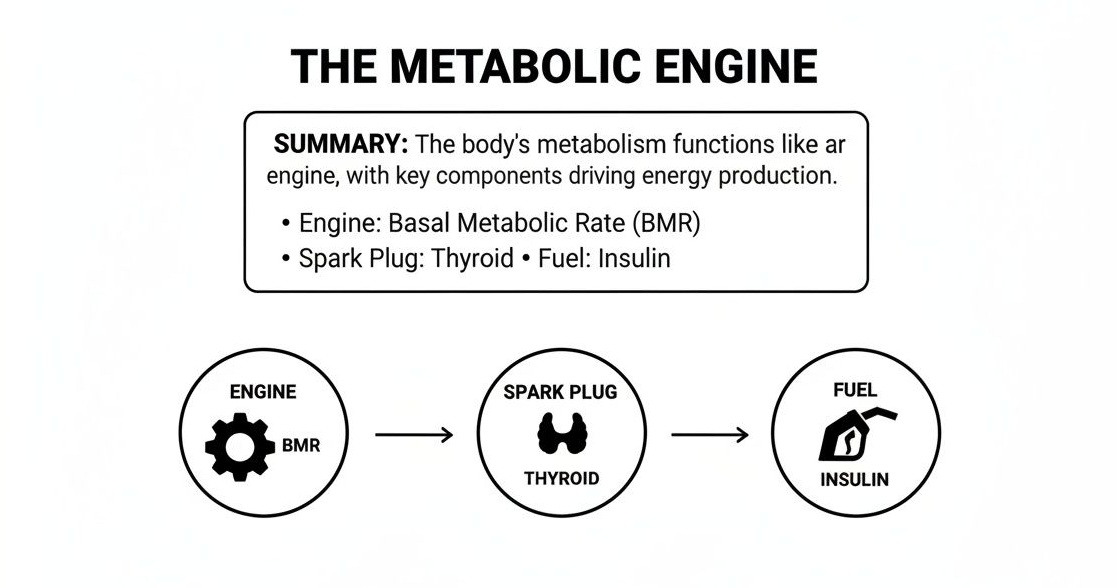
Think of your thyroid as the “spark plug” igniting your metabolic rate, while insulin is the key that unlocks fuel for your cells. When any part of this system misfires, the consequences ripple through your entire body.
Common Metabolic Conditions and Their Impact
Several common disorders can throw your metabolic machinery into disarray. Each stems from a distinct hormonal imbalance and presents a unique set of challenges. Recognizing the signs is the first step toward reclaiming your edge.
Here’s a quick-reference guide to the primary conditions an endocrinologist addresses, their core issues, and how they can impact your health and performance.
Common Metabolic Conditions at a Glance
| Disorder | Core Metabolic Issue | Impact on Performance and Health |
|---|---|---|
| Diabetes (Type 1 & 2) | Insulin production failure or resistance, leading to high blood sugar. | Causes energy crashes, brain fog, nerve damage, and significantly increases cardiovascular risk. |
| Thyroid Disorders | An underactive (hypothyroidism) or overactive (hyperthyroidism) thyroid gland. | Drastically slows or accelerates metabolism, causing fatigue, weight gain/loss, anxiety, and cognitive issues. |
| Metabolic Syndrome | A cluster of issues: high blood pressure, high blood sugar, excess body fat, and abnormal cholesterol. | Signals severe insulin resistance and dramatically elevates your risk for heart disease, stroke, and diabetes. |
| Lipid Disorders | Imbalances in cholesterol (LDL, HDL) and triglycerides, often driven by genetics or lifestyle. | Directly contributes to arterial plaque buildup (atherosclerosis), a silent driver of heart attacks and strokes. |
| Insulin Resistance | Cells become less responsive to insulin, forcing the pancreas to overproduce it to manage blood sugar. | The precursor to metabolic syndrome and Type 2 diabetes; causes weight gain (especially abdominal fat) and inflammation. |
| PCOS | A hormonal imbalance in women, often involving insulin resistance and excess androgens. | Leads to metabolic complications, fertility issues, and increased risk for long-term health problems. |
These conditions act like critical alerts on your body’s dashboard. While a primary care doctor might spot the warning light, an endocrinologist is the master mechanic who can run deep diagnostics to find out exactly why it’s on and perform the precision repairs needed.
The Growing Need for Expert Diagnostics
The alarming rise in these disorders highlights an urgent need for specialized care. The global endocrine testing market is projected to more than double, surging from USD 3.2 billion in 2025 to USD 7.3 billion by 2035.
This growth isn’t just a market trend; it reflects a real-world health crisis. It underscores the critical importance of having a top endocrinologist for metabolism to manage advanced diagnostics and build a proactive health strategy. You can dig deeper into the data in this market insights report.
Ultimately, understanding these potential issues empowers you to take control. By recognizing the subtle signs and seeking the right expertise, you can address metabolic imbalances head-on, ensuring your internal engine is fully optimized for sustained peak performance.
Data-Driven Diagnostics for Precision Health
A top-tier endocrinologist doesn’t guess; they measure. To truly understand the intricate dance between your hormones and metabolism, they move far beyond the standard blood work you get at an annual physical. This is about transforming vague symptoms like fatigue or weight gain into a clear, data-driven picture of your unique metabolic machinery.

Think of this process as building your personal health dashboard. Every data point offers a critical insight into how your body’s engine is running, paving the way for precise, effective interventions. This level of detail isn’t just nice to have—it’s essential for crafting a personalized strategy that delivers real, measurable results.
Beyond Basic Blood Panels
While a standard lipid panel is a start, a specialist in endocrinology and metabolism digs much deeper to unearth the root causes of dysfunction. They use specific, powerful tests to map out your biological landscape in high definition.
Here are some of the key advanced diagnostics they use:
- Continuous Glucose Monitoring (CGM): Instead of a single snapshot from a finger prick, a CGM tracks your glucose levels 24/7. This reveals exactly how your body responds to meals, exercise, and stress in real-time. It’s an incredibly powerful tool for understanding your true insulin sensitivity.
- Comprehensive Hormone Panels: This goes way beyond just checking your TSH for thyroid function. A proper workup includes a full thyroid panel (Free T3, Free T4, Reverse T3, antibodies), sex hormones (testosterone, estrogen), and adrenal hormones like cortisol to see the complete picture of how these systems interact.
- Advanced Lipid Profiles (ApoB): Standard cholesterol tests can be dangerously misleading. Measuring Apolipoprotein B (ApoB) gives you a direct count of the artery-clogging particles in your bloodstream, offering a far more accurate assessment of cardiovascular risk than LDL-C alone.
- Insulin Resistance Scores (HOMA-IR): The Homeostatic Model Assessment for Insulin Resistance (HOMA-IR) is a simple but powerful calculation using your fasting glucose and insulin. It generates a specific score that quantifies your degree of insulin resistance, catching problems years before they ever show up as high blood sugar.
These advanced tests aren’t just for diagnosing disease; they are for optimizing wellness. By quantifying hormonal function and metabolic efficiency with this level of precision, an endocrinologist can design a health strategy tailored to your exact biology.
From Data to Actionable Insights
This granular data allows an endocrinologist specializing in metabolism to spot subtle imbalances that are almost always missed in a conventional setting. For instance, a “normal” TSH might be hiding a low Free T3 level, which perfectly explains persistent fatigue and brain fog. A CGM might reveal hidden blood sugar spikes after you eat certain “healthy” foods, empowering you to make specific dietary tweaks that have an immediate impact.
This data-first methodology is the bedrock of modern metabolic medicine. For a closer look at how these tools are applied, our practical guide on metabolic testing for weight loss offers more context. By using these diagnostics, your physician can move from making broad recommendations to creating a precise, targeted plan for achieving peak health and performance.
Creating Your Personalized Optimization Strategy
Once your comprehensive diagnostic data is in, an elite endocrinologist shifts from detective to architect. This is the moment a generic health plan gets thrown out the window, replaced by a precision-engineered roadmap designed for your unique biology. The goal is to integrate multiple pillars of health into a single, cohesive system, ensuring every single intervention works in concert to get you where you want to go.

This process is far more than just writing a prescription. It involves a careful synthesis of advanced medical treatments with foundational lifestyle adjustments, creating a powerful synergy that optimizes your metabolism and overall vitality.
The Pillars of Modern Metabolic Management
A truly effective strategy is built on several key pillars, each customized to address the specific findings from your diagnostic workup. A premier endocrinologist will skillfully combine these elements to restore balance and drive peak performance.
The primary components include:
- Targeted Medical Interventions: This is the application of precise medical science. It could involve next-generation medications like GLP-1 agonists (such as Ozempic or Mounjaro) to powerfully regulate blood sugar and appetite, or advanced thyroid management using combination T4/T3 therapies to resolve persistent symptoms conventional treatments miss.
- Sophisticated Hormone Therapies: For many, optimizing hormones is a game-changer. This may include Bioidentical Hormone Replacement Therapy (BHRT) to restore youthful levels of testosterone or estrogen, carefully managed to enhance energy, cognitive function, and body composition.
- Personalized Nutrition Protocols: Your data dictates your diet. Based on CGM results and insulin resistance scores, a plan is created to stabilize blood sugar, reduce inflammation, and provide the exact fuel your body needs to thrive—no guesswork involved.
- Strategic Supplementation: This involves using specific, high-grade nutraceuticals to fill nutritional gaps or support metabolic pathways. Think targeted support for mitochondrial function, insulin sensitivity, or adrenal health based on your lab results.
- Tailored Exercise Prescriptions: Your physical activity plan is designed to achieve specific metabolic goals. It may combine resistance training to build insulin-sensitive muscle with zone 2 cardio to improve mitochondrial efficiency.
A top-tier endocrinologist doesn’t just treat individual symptoms; they engineer a holistic system where each component—medical, nutritional, and lifestyle—amplifies the effects of the others, creating a powerful upward spiral of health.
Integrating Advanced Pharmaceuticals
The role of advanced pharmaceuticals in this process cannot be overstated, especially when it comes to correcting significant metabolic dysfunction. The global endocrinology drug market is projected to hit USD 39.7 billion by 2025, a surge driven in large part by the obesity epidemic.
This growth highlights the critical role these powerful therapies play in a modern metabolic management plan executed by a top endocrinologist. You can find more insights about this growing market and its drivers.
Ultimately, creating your personalized strategy is about integration. It’s the art and science of combining the right medical tools with the right lifestyle foundations to build a more resilient, energetic, and optimized version of you. This thoughtful approach ensures that you’re not just chasing symptoms, but fundamentally upgrading your body’s operating system for the long haul.
Choosing the Right Endocrinologist for You
Finding the right specialist isn’t just about clinical credentials; it’s about choosing a long-term partner for your health journey. The relationship you build with your endocrinologist should be grounded in shared goals, deep trust, and a mutual commitment to proactive, data-driven care.
A truly exceptional expert doesn’t just treat problems as they arise. They become a co-creator in a strategy designed to help you reach your most ambitious health and performance goals.
This requires a shift in perspective. You’re not looking for a reactive problem-solver; you’re seeking a physician with a clear focus on preventive medicine and longevity. They should view your health through the lens of long-term optimization, not just short-term fixes, and be a master of advanced diagnostics, using the best tools available to build a precise, high-resolution picture of your unique biology.
Key Qualities of a Top-Tier Specialist
When you’re vetting a potential specialist, prioritize those who take a patient-first, collaborative approach. They need to be excellent communicators who can explain complex metabolic concepts clearly and empower you to take an active role in your own care.
Look for these essential attributes:
- A Focus on Root-Cause Analysis: They aren’t satisfied with just treating symptoms. They dig deeper to understand the underlying hormonal and metabolic drivers causing the issue.
- Expertise in Advanced Diagnostics: They should be fluent in and regularly use tools like CGM, ApoB testing, and comprehensive hormone panels to guide their decisions.
- A Proactive, Preventive Mindset: Their primary goal is to optimize your future health and extend your healthspan, not just manage your current conditions.
- A Collaborative Spirit: They see you as a genuine partner in the process. They work with you to make sure your health plan aligns with your personal and professional ambitions.
The right endocrinologist acts as your personal health strategist. They don’t just follow standard protocols; they tailor every recommendation to your specific data, lifestyle, and ambitions, ensuring a truly personalized path to peak vitality.
To figure out if a specialist is the right fit, you need to ask the right questions during your initial consultation. Come prepared. Ask about their philosophy on preventive care, their experience with advanced metabolic testing, and how they integrate lifestyle factors like nutrition and stress management into their treatment plans.
This initial conversation is incredibly revealing. It will tell you whether their approach truly aligns with your vision for optimal health. Finding a trusted expert is a crucial first step, and our guide on how to find the best doctors near you offers additional valuable strategies for your search.
Frequently Asked Questions About Endocrinology and Metabolism
When Should I See an Endocrinologist Instead of My Primary Care Doctor?
While your primary care physician is the cornerstone of your general health, there are specific moments when an endocrinologist’s expertise becomes essential. Think of it this way: your PCP is the general contractor, but an endocrinologist is the master electrician for your body’s intricate hormonal wiring.
You should seek out a specialist if you’ve already been diagnosed with a hormone condition like thyroid disease or diabetes, or if you’re experiencing persistent issues like unexplained fatigue, stubborn weight gain, or brain fog that haven’t resolved with standard care. More importantly, if you’re a high performer looking to move beyond “normal” and truly optimize your metabolic health for longevity and peak performance, an endocrinologist is the partner you need.
Is My Metabolism Just Based on Genetics?
Genetics absolutely play a role—they might load the gun. But your lifestyle, environment, and choices are what pull the trigger. Genetics are not your destiny.
Think of your genetic code as the factory settings on a high-performance engine. An elite endocrinologist and metabolism specialist helps you understand those settings—your predispositions—and then builds a personalized strategy using diet, exercise, sleep, and stress management to fine-tune your engine for maximum output.
An endocrinologist helps you move beyond genetic fatalism. They provide the tools to take control of your metabolic destiny through precise, data-driven interventions that are tailored to your unique biology and long-term health ambitions.
What Is the Difference Between an Endocrinologist and a Nutritionist?
This is a critical distinction. A nutritionist is an expert on food and diet—they are the “fuel specialist,” providing crucial guidance on what you put into your body. They are an indispensable part of any health optimization plan.
An endocrinologist, on the other hand, is a medical doctor who diagnoses and treats the root hormonal causes of metabolic issues. They are the “systems architect” who understands how all the components—from your thyroid to your pancreas to your adrenal glands—work together. The endocrinologist designs the blueprint for your medical treatment, while the nutritionist helps you execute the dietary component of that master plan. Both are vital, but they serve different, complementary roles.
Finding a specialist who understands your performance goals is the most important step you can take. On Haute MD, we connect discerning patients with the nation’s leading physicians in metabolic care and longevity medicine. Explore our curated network of elite, board-certified specialists at Haute MD Network.