



You’ve probably heard the term “boutique medicine” or “concierge medicine” thrown around. What does it actually mean?
At its heart, it’s a radical shift away from the assembly-line feel of modern healthcare—a move from a system that values volume to one that values you. It’s the difference between being another anonymous face in a crowded waiting room and having a personal health advocate who knows your story inside and out. The entire model is built on one simple, powerful idea: a real, meaningful relationship between you and your doctor.
How the Boutique Medical Model Actually Works
So, how do they pull this off? Boutique practices operate on a straightforward membership model. You pay a monthly or annual fee directly to the practice.
This fee doesn’t replace your health insurance. Think of it as an investment in a vastly superior primary care experience. Your insurance is still there for the big stuff—specialist visits, hospital stays, surgeries, and complex tests. The membership fee covers the enhanced, direct access to your primary care physician.
This structure completely changes the game. A typical primary care doctor is responsible for a staggering 2,000 or more patients. It’s a recipe for burnout, packed schedules, and rushed appointments. Boutique doctors, on the other hand, intentionally cap their patient panels at just a few hundred.
This small patient list is the secret sauce. It’s what unlocks the whole model, allowing your doctor to give you the time and focus you deserve. This creates a proactive, deeply personal partnership for your long-term health.
What You’re Really Paying For
What does that membership fee get you in the real world? While the exact perks can vary from one practice to another, they all aim to eliminate the biggest frustrations of the traditional system.
Here’s what’s usually included:
- Direct Access to Your Doctor: You get your physician’s cell phone number or a direct email. When an urgent question pops up at 9 PM, you’re not navigating a call center—you’re talking to your doctor.
- Appointments That Don’t Feel Rushed: Forget the 7-minute fly-by visit. Boutique appointments often last 30-60 minutes. You have plenty of time to cover all your concerns without one eye on the clock.
- Same-Day or Next-Day Visits: No more waiting three weeks to see your doctor when you’re sick now. Members get seen right away when they need care.
- A True Focus on Prevention: With more time, the conversation shifts from just treating sickness to building a proactive, long-term wellness plan that fits your life.
This isn’t just a niche trend; it’s a movement. Back in the early 2000s, you could count the number of retainer-based doctors on one hand—only about 152 in the entire country. By 2019, that number had exploded to an estimated 5,000 to 20,000 physicians. It’s clear people are hungry for a better way to manage their health. You can read the full research about this market growth here.
How Boutique Care Differs from Traditional Healthcare
Picture two completely different medical experiences.
In the first, you wait weeks, maybe even months, for an appointment. When you finally get in, you’re rushed through a seven-minute visit in a chaotic, crowded clinic. You leave feeling more like a number on a chart than a person.
In the second, you get a same-day appointment. Your doctor spends a full hour with you, listening intently and engaging in a real conversation. You have their undivided attention.
This isn’t a fantasy—it’s the fundamental difference between the conventional healthcare system and the highly personalized world of boutique medical practices.
It all starts with the number of patients. A typical primary care doctor is responsible for a staggering 2,000 to 3,000 patients. At that volume, building a meaningful, personal connection is practically impossible. Boutique doctors, on the other hand, intentionally limit their practice to just a few hundred patients. This single decision is the key that unlocks an entirely different standard of care.
That smaller scale completely redefines everything, from how you schedule a visit to the core philosophy of your medical care.
A Focus on Access and Prevention
The traditional healthcare model is almost entirely reactive. You get sick, you call the office, you wait for an opening, and you get treatment. The system is designed to manage illness after it has already appeared.
Boutique medical practices flip that script. With far fewer patients to manage, they can shift the focus from reactive “sick care” to proactive wellness and prevention.
Instead of navigating frustrating call centers and administrative mazes, patients in a boutique practice often have their doctor’s direct cell phone number or email. This immediate line of communication creates a true partnership. Your doctor becomes an accessible guide dedicated to your long-term health, not just a problem-solver you see when you’re ill. You can dig deeper into this contrast by exploring this detailed comparison of concierge medicine vs. traditional healthcare.
The infographic below really drives home how this personalized approach is built on a foundation of better access and more time with your physician.
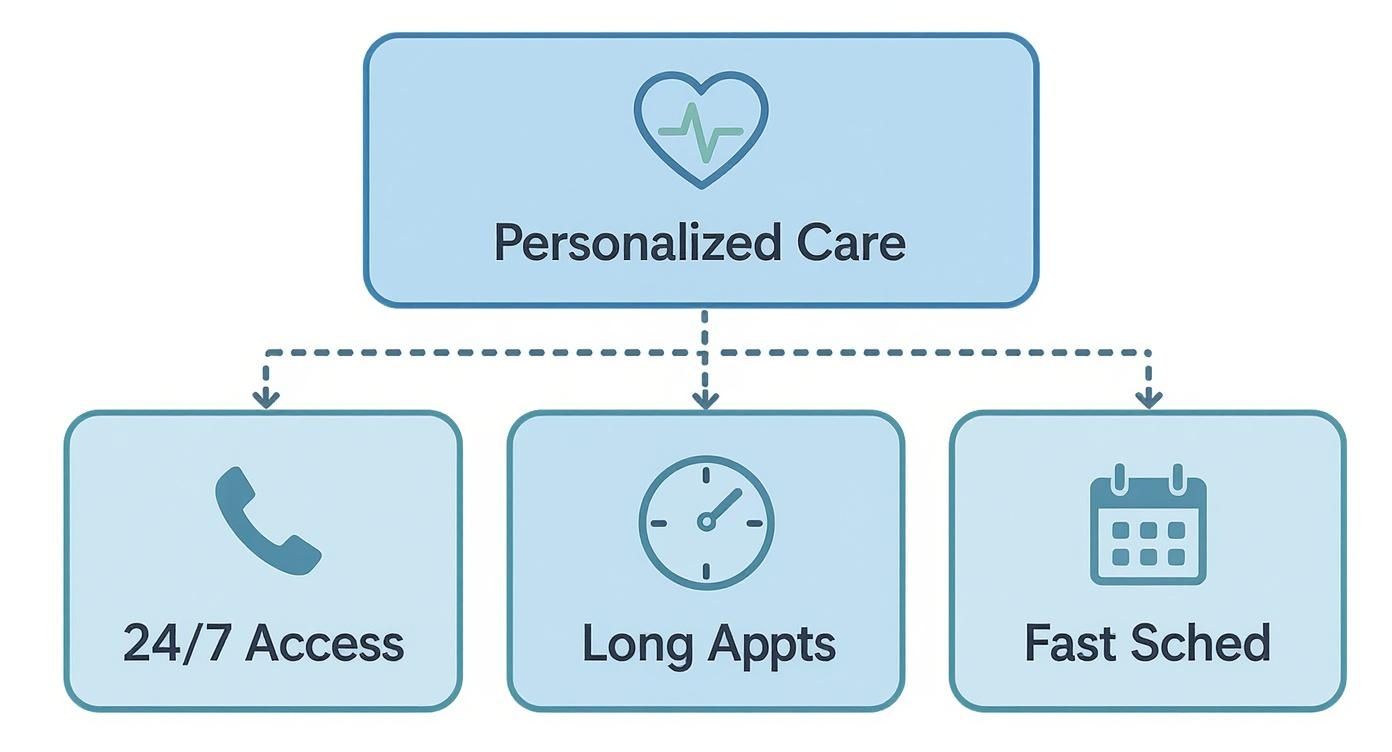
As you can see, personalized care isn’t just a single feature. It’s the powerful outcome you get when 24/7 access, longer appointments, and faster scheduling all work together.
Comparing the Patient Experience
To lay it out as clearly as possible, let’s put the two models side-by-side. The table below gives you a quick, scannable summary of what to expect in each environment.
Boutique Medical Practices vs Traditional Healthcare
| Feature | Boutique Medical Practice | Traditional Healthcare |
|---|---|---|
| Patient Panel Size | A few hundred patients | 2,000+ patients |
| Appointment Length | 30-60 minutes, or longer | 7-15 minutes on average |
| Physician Access | Direct via cell or email | Through call centers and staff |
| Scheduling | Same-day or next-day visits | Weeks or months wait time |
| Core Philosophy | Proactive wellness and prevention | Reactive “sick care” |
This comparison makes it obvious: the real value of a boutique medical practice isn’t just one perk. It’s a complete redesign of the healthcare experience, one that places the highest value on your time, your access to your doctor, and building a deep, lasting relationship.
The Real Benefits of Personalized Medical Care

Sure, the flashy perks of boutique medicine—like same-day appointments and direct access to your doctor’s cell phone—get all the attention. And don’t get me wrong, they’re great. But the real, life-altering value runs much deeper. It’s all built on the single most powerful tool in medicine: a genuine, continuous relationship between a doctor and a patient.
Think about it. Imagine a physician who doesn’t just know your medical chart but knows you. They understand your career pressures, your family dynamics, your health goals, and what keeps you up at night. When a doctor has the time to really listen and connect the dots, diagnostic accuracy skyrockets. Subtle symptoms that might get brushed aside in a typical seven-minute sprint of an appointment are suddenly seen for what they are: crucial clues.
This detailed, proactive approach is a game-changer for managing chronic conditions. For anyone navigating diabetes, heart disease, or an autoimmune disorder, having a doctor who acts as a true partner is priceless. They aren’t just writing prescriptions; they’re helping you fine-tune your diet, navigate lifestyle changes, and monitor your progress every step of the way.
From Anxiety to Advocacy
This kind of deeply engaged care does wonders for a patient’s mental well-being. So much health-related anxiety comes from the unknown—the agonizing wait for test results, the frustration of unreturned phone calls, or the feeling of not being heard. In a boutique practice, that anxiety is systematically dismantled and replaced with security.
Knowing you have a trusted medical advocate on standby provides an incredible peace of mind. It’s the confidence of having an expert in your corner, ready to help you navigate the maddening complexities of the broader healthcare system.
The shift from a quick, transactional appointment to a true partnership is where the magic happens. This isn’t just about better customer service; it’s about achieving better health outcomes fueled by trust, time, and deep personalization.
This membership model is all about enhanced access. It’s designed to eliminate long waits and foster direct, meaningful conversations between you and your physician. By bundling in comprehensive preventive care and ongoing health management, boutique practices attract people who are serious about investing in a higher standard of health.
The Tangible Health Outcomes
These benefits aren’t just fuzzy feelings; they translate into measurable results. A doctor who knows you inside and out is uniquely positioned to build a truly personalized long-term health plan. This isn’t some generic checklist printed off the internet. It’s a living, breathing strategy tailored to your specific genetic risks, lifestyle, and evolving health needs. In fact, the top benefits of concierge medicine almost always circle back to this highly customized, preventive strategy.
Ultimately, the goal is to shift from reactively treating sickness to proactively optimizing your health and extending your lifespan. With the right partner guiding you, that goal becomes more than just a possibility—it becomes a plan.
The Bottom Line: Costs and Insurance
Let’s get right to it. The first question everyone asks about boutique medicine is simple: what’s the price tag? Understanding the financial side is key to figuring out if this model fits your life. And frankly, it’s structured very differently than the traditional healthcare you’re used to.
The heart of the boutique model is a membership fee, usually paid once a year or monthly. This fee typically falls somewhere between $2,000 and $5,000 annually, though some highly exclusive practices in major cities can certainly charge more.
It’s crucial to think of this fee not as a substitute for health insurance, but as your investment in a fundamentally better primary care relationship.
What Your Membership Fee Actually Buys
So, what are you paying for? That membership fee is what unlocks the entire experience. It’s what allows your doctor to see fewer patients, be available when you need them, and focus on keeping you healthy long-term, not just treating you when you’re sick.
While the specifics can differ from practice to practice, your fee almost always gets you:
- Unlimited Primary Care Visits: See your doctor as often as you need to without a co-pay for the visit.
- Direct Physician Access: This is a big one. You get your doctor’s cell phone number or a direct email for urgent questions, 24/7.
- A Real Annual Physical: Not a 15-minute check-up, but a deep dive into your health with a forward-looking wellness plan.
This fee structure is precisely what gives your doctor the freedom to offer unhurried appointments and get you in the same or the next day.
The Role of Your Health Insurance
Here’s a common point of confusion: a boutique membership does not replace your health insurance. You absolutely, 100% still need a traditional insurance plan.
Think of it this way: Your boutique membership covers your quarterback—your primary care doctor—who guides your overall health. Your insurance is the rest of the team, ready for the big plays and unexpected events.
Your insurance plan is the safety net for all the major medical expenses that happen outside of your primary doctor’s office. You’ll rely on it for things like:
- Hospitalizations and trips to the ER
- Surgeries or other major procedures
- Seeing specialists like a cardiologist or an oncologist
- Expensive imaging, such as MRIs and CT scans
- Prescription drugs
Making the Investment Work for You
For many, using tax-advantaged accounts can make the cost much more manageable. You can often use funds from a Health Savings Account (HSA) or a Flexible Spending Account (FSA) to pay for the membership fee. It’s always a good idea to double-check with your plan administrator, but it’s a very common practice.
Some people might also have access to executive health benefits through their employer that can cover some or all of the cost.
Ultimately, it comes down to a personal calculation of value. For a growing number of people, the fee is a small price to pay for the peace of mind that comes from having a true partner—an expert guide—in their health.
How to Find the Right Boutique Practice for You
Making the decision to explore boutique medicine is the first step. The next, and arguably more important, is finding the physician who feels like a true partner in your health.
This isn’t about just checking boxes on a list. It’s about finding the right personal and philosophical fit. Since the entire model is built on the strength of that doctor-patient relationship, your goal is to find a physician you can trust implicitly.
Start your search locally. A simple online query for “boutique medical practices near me” or “concierge doctors in [your city]” will generate a list of potential candidates. But that’s just the beginning. Really dig into each practice’s website. Pay close attention to the doctor’s biography, their stated care philosophy, and exactly what services are included in the membership fee. You’re looking for transparency and a clear, confident approach to medicine.
Your Initial Research Checklist
You can learn a surprising amount before you even pick up the phone. As you browse a practice’s website, keep an eye out for these key elements:
- Physician Background: Do they specialize in an area relevant to your needs, like internal medicine or preventative care? What does their experience and training look like?
- Service Offerings: Does the membership include things that matter to you, such as an advanced annual physical, health coaching, or direct coordination with specialists?
- Patient Testimonials: What are current patients actually saying? Look for reviews that mention the doctor’s attentiveness, responsiveness, and accessibility—the core promises of this model.
This initial screening should help you narrow the field to a handful of top contenders. From there, you move to the most critical step: scheduling a consultation or a simple meet-and-greet. Most boutique practices offer this free of charge, and it’s your chance to interview them as much as they are getting to know you.
The initial consultation is your single best opportunity to gauge chemistry and alignment. Go prepared with thoughtful questions that get to the heart of what matters most to you in a healthcare partnership.
Essential Questions for Your Consultation
Think of this meeting as an interview—because it is. Don’t be shy about asking direct, detailed questions. A great physician will welcome this level of engagement.
Here’s a good list to get the conversation started:
- What is your overall philosophy of care? (Are they focused on prevention and holistic wellness, or more on aggressive treatment of existing conditions?)
- What does a typical annual physical include at your practice? (Ask for specifics about the tests performed and, just as importantly, the time dedicated to reviewing the results with you.)
- How do you handle after-hours emergencies or urgent needs? (Will you be speaking directly with them, or with a covering physician?)
- How do you coordinate care with specialists? (Do they simply provide a name, or will they actively manage referrals and communication to ensure nothing falls through the cracks?)
- What is your patient communication policy? (What’s a realistic response time for calls, texts, or emails?)
Finding the right fit is a deeply personal journey. To get a sense of what sets leading practitioners apart, you can explore directories featuring top concierge internal medicine doctors. Ultimately, success isn’t just about finding exceptional medical care; it’s about finding a physician who gives you the confidence and peace of mind you deserve.
The Future of Personalized Patient Care

The highly personalized care you get in a boutique practice isn’t just a niche trend; it’s a look into where all of healthcare is headed. This model is constantly evolving, pulling in modern tech to make proactive, data-driven wellness a reality for more people.
We’re moving toward a future where healthcare isn’t just about damage control when you get sick. It’s about continuously fine-tuning your health.
Imagine your doctor creating a wellness plan that adjusts in real-time based on data from your smartwatch or fitness tracker. Boutique physicians are already starting to use this stream of information—everything from sleep quality to heart rate variability—to offer incredibly precise, forward-looking advice. This isn’t just about reacting to problems; it’s about having a health strategist who uses your own data to keep you ahead of the curve.
The Rise of Tech-Enabled Care
The very things that make boutique medical practices so effective—unparalleled access and deep personalization—are now getting supercharged by technology. This creates a powerful blend of old-school, high-touch relationships and new-school, high-tech insights.
Here’s a glimpse of how technology is pushing this evolution forward:
- Advanced Diagnostics: Practices are now using sophisticated genetic testing and deep biomarker analysis. This allows them to build a health roadmap based on your unique biology, not just generic, one-size-fits-all guidelines.
- Seamless Telemedicine: With secure video calls and direct messaging platforms, your connection to your doctor is always on. It’s convenient, constant support, whether you’re down the street or traveling across the country.
This forward-thinking approach is what’s fueling the industry’s explosive growth. The global concierge medicine market was valued at around USD 20.33 billion in 2024 and is on track to hit USD 35.79 billion by 2030. That growth is a direct result of technology making exceptional care more effective and easier to access. You can explore more market growth insights here.
The future of patient care is one where technology doesn’t replace the doctor-patient relationship but deepens it, providing the insights needed for truly personalized medicine.
As these practices continue to raise the bar, they’re fundamentally changing what patients expect from their healthcare. The message is becoming crystal clear: healthcare should be personal, proactive, and built on a partnership that lasts. This isn’t just a luxury anymore; it’s the new standard for what excellent medical care looks like.
Your Questions, Answered
Stepping into the world of personalized healthcare often brings up a few questions. Let’s clear up some of the most common ones about boutique medical practices so you can make a decision that feels right for you.
Is Boutique Medicine the Same as Direct Primary Care?
Think of them as cousins, not twins. They share a similar philosophy of personalized, accessible care, but the main difference is how they work with insurance.
A boutique (or concierge) practice typically bills your insurance for covered services, just like a traditional doctor’s office. The membership fee you pay is for the enhanced access, longer appointments, and proactive wellness services that fall outside of standard insurance coverage.
Direct Primary Care (DPC), on the other hand, usually cuts out the insurance middleman for primary care altogether. Your membership fee covers everything they offer, creating a much simpler, direct financial relationship. Always get clarity on the billing model before you commit.
Who Is This Model Really For?
Boutique medicine is a perfect match for anyone who sees their health as a serious investment and wants a true partner in their physician, not just a problem-solver. It’s especially powerful for:
- People managing chronic health conditions who need meticulous, ongoing oversight from a doctor who knows their history inside and out.
- Busy executives and professionals who can’t afford to waste time in waiting rooms and need the flexibility of same-day appointments and direct after-hours access.
- Anyone who is simply fed up with the rushed, 7-minute appointment model and is ready for a premium, high-touch healthcare experience.
This model isn’t built for people who see a doctor only when they’re sick. It’s designed for those who view healthcare as a proactive, long-term strategy for optimizing their well-being and longevity.
What Happens If I Need a Specialist or End Up in the Hospital?
This is where having a dedicated physician truly shines. Your boutique doctor acts as your personal health quarterback, not just a referral machine. They won’t just hand you a name from a list; they’ll connect you with a trusted specialist they know and respect, often coordinating directly to ensure a seamless handoff.
If you’re hospitalized, your doctor remains your advocate. They’ll typically consult with the hospital’s medical team, review your treatment plan, and in some cases, even visit you during your stay. All of your specialist, emergency, and hospital care is covered by your regular health insurance plan, as those services fall outside the scope of your primary care membership.
Ready to find a top-tier physician who matches your health ambitions? The Haute MD network connects you with the nation’s most respected, vetted specialists in concierge medicine and beyond. Explore the network and discover a higher standard of care at https://www.hauteliving.com/hautemd.