


An internal medicine physician, often called an internist, is a medical doctor who specializes exclusively in adult healthcare. They are the expert diagnosticians of the medical world, trained to manage everything from proactive wellness strategies to the most complex chronic diseases affecting adults.
Think of an internist as the highly skilled quarterback of your personal health team—the central strategist who understands the entire field of play.
What an Internal Medicine Physician Does

At its core, an internal medicine physician is a specialist trained to prevent, diagnose, and treat the full spectrum of diseases that affect adults. Unlike family doctors who also see children and adolescents, an internist’s focus is solely on patients aged 18 and older. This dedicated focus allows them to build deep expertise in the conditions that commonly arise—and often intertwine—in adulthood.
Their role is central to high-level primary care. An internist isn’t just a doctor you see when you’re sick; they are a strategic partner in your long-term health, responsible for:
- Comprehensive Diagnostics: Unraveling complex, puzzling symptoms that might involve multiple organ systems at once.
- Chronic Disease Management: Overseeing and optimizing treatment for conditions like diabetes, hypertension, and heart disease.
- Specialist Coordination: Directing your care and ensuring seamless communication between other specialists, such as cardiologists or endocrinologists.
- Preventive Care: Crafting proactive strategies to maintain peak health and promote longevity, catching issues before they become problems.
The heart of internal medicine is the unique ability to handle diagnostic challenges and manage severe, long-term illnesses. They provide the essential foundation for sophisticated adult medical care.
The demand for these experts is growing sharply. The U.S. is facing a projected shortage of up to 40,400 primary care physicians by 2036, with internists making up a significant portion of this essential workforce. You can learn more about these projections from the AAMC. To see how top-tier doctors of internal medicine are recognized, you can find more information on our network.
The Grueling Path to Becoming an Internist
Becoming an internal medicine physician is a marathon, not a sprint. It’s a decade-long commitment defined by intense education and hands-on training, all designed to forge the deep diagnostic expertise needed to manage the complexities of adult health.
The journey starts with four demanding years of medical school, where they build a vast foundation in medical science. But the real trial by fire begins after graduation.
This is immediately followed by a pivotal, three-year internal medicine residency. Here, physicians-in-training are thrown into the deep end of real-world medicine. They rotate through nearly every hospital department and outpatient clinic, learning to diagnose and manage a staggering array of illnesses—from common infections to rare, life-threatening conditions—all under the watchful eye of seasoned internists.
The Hallmark of True Expertise
The final hurdle that solidifies an internist’s credentials is board certification. After finishing their residency, a physician must pass a notoriously difficult examination administered by the American Board of Internal Medicine (ABIM).
Established in 1936, this certification isn’t just a piece of paper. It’s the ultimate seal of approval, a public declaration that the physician has met the absolute highest standards of knowledge and clinical judgment in their field.
This demanding path is precisely what prepares internists to shoulder the immense responsibility of adult primary care. In fact, they manage over 50% of all adult outpatient visits in the United States. Many also spearhead advanced wellness strategies in fields like preventive cardiology, which can slash health risks by 15-25% through early, targeted interventions. As healthcare leaders look to meet future demand, the value of these highly trained experts is undeniable. You can find more insights in the 2026 global health care outlook on Deloitte.com.
Board certification from the ABIM is not a formality; it is a public declaration of a physician’s commitment to excellence and lifelong learning in the complex field of adult medicine.
Internist Vs. Family Doctor: The Critical Differences
While both internists and family doctors serve as exceptional primary care physicians, their training and patient focus create a critical distinction. The most important difference is simple: patient age.
An internal medicine physician is a specialist exclusively for adults. In contrast, a family physician is trained to treat the entire family, from newborns to the elderly.
Think of it this way: a family doctor is a skilled generalist, equipped to handle a wide range of issues across all life stages. An internist, however, is a deep specialist whose entire career is dedicated to the unique complexities of adult health.
This specialization allows an internist to develop profound expertise in adult-onset conditions, intricate diagnostic puzzles, and the sophisticated management of multiple chronic diseases at once. Their training is intensely focused on the illnesses and health challenges that emerge and evolve as we age.
Internal Medicine vs. Family Medicine at a Glance
This table breaks down the core differences in their training, patient focus, and typical practice settings.
| Attribute | Internal Medicine Physician (Internist) | Family Medicine Physician |
|---|---|---|
| Patient Population | Adults only (typically 18 and older) | All ages (infants, children, adults, elderly) |
| Training Focus | Deep dive into adult-specific diseases (e.g., heart disease, diabetes, autoimmune disorders) | Broad training across pediatrics, obstetrics, adult medicine, and geriatrics |
| Common Setting | Often hospital-based roles (“hospitalists”) or specialized outpatient clinics | Primarily outpatient clinics, serving as the central point of care for entire families |
| Core Strength | Expertise in complex adult diagnostics and managing multiple chronic conditions | Continuity of care across the entire lifespan for a family unit |
While both are fantastic physicians, the right choice depends entirely on who needs the care. For an adult with complex or overlapping health concerns, the internist’s focused expertise is invaluable.
Where Their Paths Diverge
Because they don’t divide their attention among pediatrics, obstetrics, and adult medicine, internists can concentrate fully on conditions like heart disease, diabetes, autoimmune disorders, and metabolic health. This singular focus makes them the definitive choice for adults seeking proactive, in-depth care geared toward longevity and peak performance.
An internist’s sole focus on adults isn’t a limitation; it’s their greatest strength. It allows for a level of diagnostic and management depth in adult medicine that is essential for complex care.
The flowchart below illustrates the rigorous pathway every board-certified internist must complete to achieve this specialized expertise.
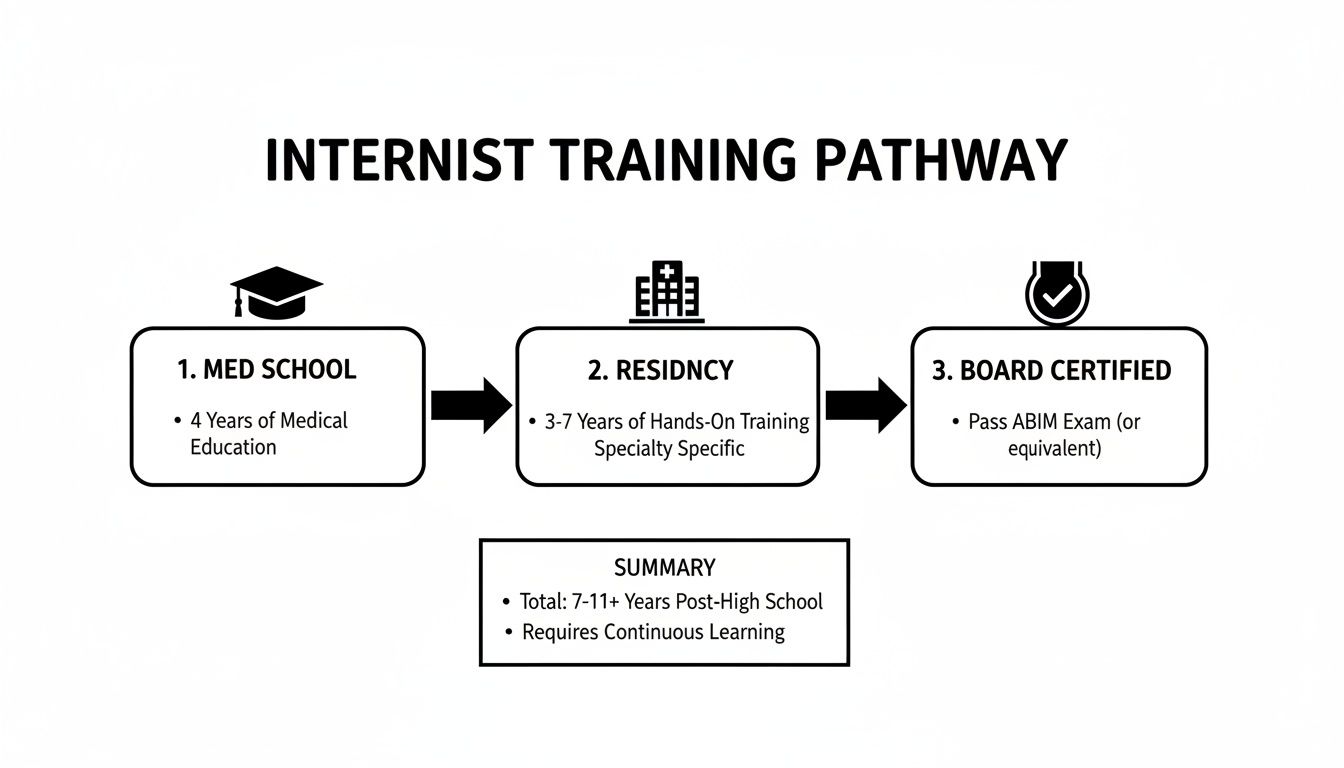
This dedicated progression from medical school through a specialized residency and board certification ensures they are masters of adult medicine.
For those wanting a deeper comparison, you can explore the difference between internal medicine and a general practitioner in more detail. In short, when your health demands specialized adult expertise, an internist is the clear strategic partner.
From Hospitalist to Concierge Doctor Practice Settings

One of the defining traits of an internal medicine physician is their remarkable versatility. Their specialized training in adult health allows them to excel in wildly different clinical environments, from the intense, high-stakes world of a hospital to the bespoke, relationship-driven setting of a boutique private practice.
A very common role for internists today is the “hospitalist.” These are the physicians who work exclusively inside a hospital, quarterbacking the care of acutely ill, hospitalized patients. They are the leaders of the inpatient team, diagnosing complex conditions, coordinating treatments with specialists, and ensuring patients are safely transitioned back to their outpatient doctors.
The Outpatient Primary Care Role
Still, the majority of internists practice in outpatient clinics, serving as the trusted primary care provider for adults. In this setting, the focus shifts from acute crisis management to building long-term relationships. Here, they manage chronic conditions, champion preventive health, and act as the central hub for all their patients’ medical needs.
This role requires a different kind of expertise—one centered on continuity of care and proactive wellness. It’s in the outpatient clinic where the internist’s role as a health strategist truly comes to life, guiding patients through the complexities of their long-term health journey.
The Apex of Personalized Care: Concierge Medicine
At the very highest level of personalized care, internists are the physicians of choice for concierge and executive health practices. This model completely flips traditional healthcare on its head by prioritizing what is usually in shortest supply: access, time, and an exceptionally deep doctor-patient relationship.
In concierge medicine, the focus shifts from reactive sick-care to proactive, optimized wellness. It’s a partnership designed to keep high-performing individuals at their absolute best.
In a concierge practice, an internal medicine physician delivers services tailored to the demanding schedules and unique needs of executives, entrepreneurs, and other discerning individuals. This typically includes:
- 24/7 direct access via phone, text, or email for immediate guidance.
- Extended, unhurried appointments that allow for deep-dive discussions and comprehensive planning.
- Proactive wellness strategies focused on longevity, prevention, and peak performance.
Concierge models have proven remarkably effective, with some reports showing patient satisfaction rates soaring as high as 95%. As chronic illnesses continue to rise—consuming 90% of all U.S. healthcare dollars—the internist’s detailed, preventive approach is more valuable than ever.
For anyone intrigued by this highly personalized approach, our guide explains exactly what concierge medicine is and how it works.
Why High Performers Choose an Internist

For executives, entrepreneurs, and discerning individuals, health isn’t just a personal matter—it’s a strategic asset. Choosing an internal medicine physician is a calculated decision to install a high-level specialist as the architect of your long-term wellness and performance. Their exclusive focus on adult medicine gives them an unmatched depth of expertise in preventing, diagnosing, and managing the complex health issues that can derail a career.
This partnership moves far beyond reactive sick care and into the realm of proactive health optimization. An internist acts as a central coordinator, managing the dialogue between various specialists to ensure your health plan is cohesive and strategic. They are uniquely positioned to oversee everything from advanced diagnostics during an executive physical to crafting personalized longevity blueprints.
A Partnership for Peak Performance
The relationship with a top internist is less about appointments and more about a continuous alliance. They translate complex medical data into actionable strategies for maintaining peak physical and cognitive function—a level of oversight that is absolutely critical for individuals navigating demanding lifestyles.
For high-net-worth patients, this proactive approach yields measurable returns. Internists practicing in executive health programs have been shown to reduce hospitalizations by 20-30% through diligent monitoring and early intervention. This is a powerful testament to their value in a primary care market projected to reach USD 1,037 billion by 2034. You can find more details in this physician market report on TheBusinessResearchCompany.com.
Choosing an internist is like appointing a Chief Medical Officer for your personal health. Their role is to protect your most valuable asset, ensuring you can perform at your best, today and for decades to come.
Ultimately, high performers choose an internist for the same reason they hire elite financial advisors or legal counsel: they demand expert, specialized guidance that delivers superior outcomes and peace of mind.
A Few Common Questions About Internal Medicine
Navigating the world of adult healthcare can feel needlessly complex, but a few clear answers can make all the difference. Let’s tackle some of the most practical questions patients have when considering an internist for their care.
When Do I See an Internist Instead of a Specialist?
Think of your internist as your personal health strategist—the general contractor for your entire adult well-being. You see a cardiologist for your heart or a gastroenterologist for your digestive system, but an internist is the expert who manages your overall health picture. They are your first call for any non-emergency adult health concern.
Their real power lies in diagnosing complex issues that might involve multiple organ systems at once. They are responsible for coordinating your care across all specialists, ensuring nothing falls through the cracks and every piece of your health puzzle fits together.
What Is a Concierge Internist Visit Really Like?
Your initial visit with a concierge internist isn’t just a check-up; it’s a strategic deep dive into your unique health profile. Forget the rushed 15-minute appointment. This is an unhurried conversation designed to build a powerful, long-term partnership.
Expect to spend an hour or more discussing not just your medical history, but also your lifestyle, stressors, and ambitious health goals. This detailed dialogue is followed by a thorough physical exam and often includes orders for advanced diagnostic tests that go far beyond standard screenings. The entire process is engineered to create a truly personalized, proactive wellness plan.
Your first concierge visit is a strategic planning session. The goal is to move beyond simply reacting to illness and instead build a detailed, data-driven roadmap toward optimal health and longevity.
How Do I Choose the Right Internist?
Selecting the right physician is one of the most critical decisions you’ll make for your long-term health. The process should be systematic, ensuring the doctor you choose aligns perfectly with your health philosophy and personal demands.
Here are a few essential steps to guide your search:
- Verify Board Certification. This is non-negotiable. Your first step is to confirm the physician is board-certified by the American Board of Internal Medicine (ABIM). This certification is the baseline indicator of expertise and a commitment to the highest standards of care.
- Assess Their Practice Philosophy. Find a physician whose approach matches your goals. Are you focused on proactive prevention and longevity, or do you need an expert diagnostician to manage complex chronic conditions? Their primary focus should mirror your needs.
- Consider the Practice Model. For discerning individuals who value immediate access and deep personalization, a concierge or executive health practice is often the ideal choice. These models are structured to provide the high-touch service that high-performing people require.
- Use Trusted Platforms. Finally, lean on curated networks that vet and feature top-tier physicians in your area. This simplifies the search and adds a crucial layer of confidence to your decision.
At Haute MD, we connect discerning patients with the nation’s leading internal medicine physicians and wellness experts. Find a trusted, board-certified internist near you who aligns with your health goals by exploring our network today.