Dr. Sam Rizk Explains SMAS vs. Deep Plane Facelifts: A Guide to Modern Facial Rejuvenation

For years, facelifts were the beauty industry's open secret—easy to spot, rarely discussed, and often a little too obvious for comfort. Tight skin, confusing jargon, and a "worked-on" look defined the era. That's no longer the case. As headline-making transformations spark curiosity, today's patients aren't just asking if a facelift looks good—they're asking why.
The SMAS Facelift
"A facelift isn't one procedure," Dr. Rizk explains. "It's a category of techniques. And the technique matters more than most people realize." The SMAS facelift—short for superficial musculoaponeurotic system—targets a thin layer of tissue just beneath the skin. In a traditional SMAS approach, that layer is tightened and repositioned, typically in a more horizontal direction, while excess skin is removed.
"In the right patient, a SMAS facelift will absolutely deliver beautiful results," details Rizk. "But because it works at a more superficial level, the lift can be limited—especially in the midface. If too much tension ends up on the skin, that's when results can start to look pulled or overly sculpted."
The Vertical Deep Plane Facelift
Rizk's signature approach, the Vertical Deep Plane Facelift, takes things several layers deeper. Rather than separating the skin from the underlying tissues, the deep plane technique lifts the skin, muscle, and fat together as a single unit. This allows the deeper facial structures to be repositioned vertically, restoring youthful contours in a way that mirrors how the face actually ages.
"When we age, everything moves downward," Rizk says. "So true rejuvenation comes from lifting those deeper tissues back up—vertically—not pulling the face sideways."
A deep plane facelift can naturally restore cheek volume without fillers, soften nasolabial folds, redefine the jawline, and improve the neck—all while preserving facial expression. Because the skin isn't stretched tight, scars tend to heal more discreetly, and results often look softer, more believable, and more natural.
The Philosophy: Less Drama, More Discretion
"The goal is never to look tight," Rizk says. "It's to look rested and refreshed." That philosophy aligns with a broader shift in luxury aesthetics: less drama, more discretion. Today's patients aren't chasing a new face—they want their own, just on a really good day.
"Every face ages differently," says Rizk. "My role is to restore balance, not impose a new look." As interest in facial rejuvenation continues to grow, the difference between SMAS and deep plane facelifts has never mattered more. For Rizk, the takeaway is simple: the most beautiful results don't announce themselves—they simply allow patients to look like the best version of themselves.
Cosmetic Treatments
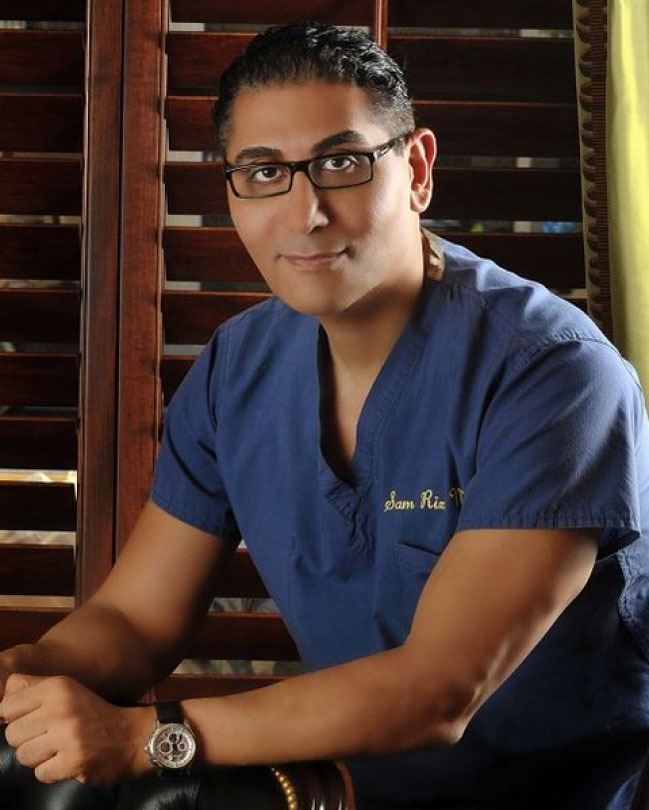
Sam RizkFacial Plastic Surgeon · Plastic Surgeon · Otolaryngologists & Facial Plastic Surgeons
Manhattan Facial Plastic Surgery
New York, NY
Articles are independently produced by the Haute Living editorial team. Featured physicians are members of the Haute MD Network — inclusion does not influence editorial coverage or rankings.