


When used correctly and with medical guidance, many well-researched nootropics are generally considered safe for healthy adults. But let’s be clear: safety is never a guarantee. It depends entirely on the specific compound you’re considering, the dosage, the quality of the product, and your own unique health profile.
The real challenge is separating the authentic, low-toxicity nootropics from the unregulated ‘smart drugs’ that carry serious risks.
The Critical Question: Are Nootropics Safe?

The conversation around cognitive enhancement almost always circles back to one essential question: are they safe? The answer isn’t a simple yes or no; it’s nuanced.
By their original definition, true nootropics must have a very low toxicity profile and offer neuroprotective benefits. Think of compounds like L-Theanine, found in green tea, or Bacopa Monnieri, an herb used for centuries in Ayurvedic medicine. These substances have been studied for their cognitive benefits and are typically well-tolerated by most people.
The problem is, the modern market has stretched the term “nootropic” to include potent prescription drugs and poorly regulated synthetic compounds, often sold as “smart drugs.” This creates a landscape where the safety of one product is worlds apart from another.
It’s like comparing a morning cup of coffee—a common and relatively safe cognitive enhancer—to an unregulated, high-stimulant powder you bought from a questionable online source. Both might promise to boost alertness, but their risk profiles are dramatically different.
Navigating the Landscape of Cognitive Enhancers
Understanding this distinction is the first step toward making a smart decision. The safety of any nootropic hinges on several key factors that you and your doctor absolutely must evaluate together.
- Compound Specifics: Every nootropic interacts with your brain’s chemistry differently. A substance that helps your brain produce more neurotransmitters is not the same as one that increases blood flow.
- Source and Quality: The supplement industry is notoriously inconsistent. A product’s safety is directly tied to its purity, potency, and whether it’s free from contaminants—something that can only be verified with rigorous third-party testing.
- Individual Health: Your unique physiology, any existing health conditions, and current medications create a personal risk profile. A nootropic that is perfectly safe for one person could be dangerous for another.
The core principle of safe nootropic use is personalization under expert medical oversight. A one-size-fits-all approach isn’t just ineffective; it can be downright hazardous.
At a Glance: Nootropic Safety Profiles
To help frame the different categories you’ll encounter, the table below offers a high-level comparison. It provides a comparative overview of the general safety, regulatory status, and common risks associated with different types of cognitive enhancers.
| Enhancer Type | Typical Safety Profile | Regulatory Status | Common Side Effects |
|---|---|---|---|
| Natural Nootropics | Generally high safety, well-tolerated with a long history of use. | Dietary Supplement (FDA oversight under DSHEA) | Mild digestive upset, headaches at high doses. |
| Synthetic Nootropics | Varies widely; some have research, others are experimental. | Often sold in a legal gray area as ‘research chemicals’. | Jitters, insomnia, unknown long-term effects. |
| Prescription Stimulants | Effective but carry significant risks and potential for dependency. | Controlled Substance (Requires prescription and monitoring) | Anxiety, increased heart rate, addiction risk. |
This initial overview makes it clear why a blanket “yes” or “no” to the safety question is impossible—and why professional medical guidance is completely non-negotiable before you start.
Understanding True Nootropics vs. Unregulated Stimulants
Before we can tackle the question “are nootropics safe,” we have to clear up a common—and frankly, risky—misconception. The word ‘nootropic’ has been stretched to cover everything from a morning cup of green tea to powerful, unverified synthetic powders sold online. This catch-all marketing blurs the lines and masks the huge safety differences between these substances.
The term actually has a very specific, safety-focused origin. Dr. Corneliu Giurgea, who coined the word back in the 1970s, was clear: a true nootropic had to enhance cognition while having minimal side effects and extremely low toxicity. Safety was baked into the original concept from day one. You can explore more about these foundational principles of nootropic safety to see just how high that bar was set.
Under this original definition, a substance doesn’t just have to boost focus or memory. It must also be neuroprotective—meaning it helps shield the brain from harm—and carry an exceptionally low risk of side effects. Many products marketed as “nootropics” today don’t come close to meeting this standard.
The Three Tiers of Cognitive Enhancers
To bring some sanity to this crowded market, it helps to think of these so-called ‘brain boosters’ in three distinct tiers. Imagine you’re modifying a car for better performance; each approach comes with a different level of engineering, reliability, and risk.
- The Professional Tune-Up (Prescription Enhancers): These are pharmaceuticals like Modafinil or Ritalin, prescribed by doctors for diagnosed conditions like ADHD or narcolepsy. They’re effective, sure, but they’re also tightly controlled for a reason. They carry significant risks, including dependency and cardiovascular strain, and are powerful tools that demand expert medical oversight.
- The Factory Standard Parts (Researched Nootropics): This is where you’ll find compounds that actually align with Dr. Giurgea’s original definition. Substances like L-Theanine, Bacopa Monnieri, and Citicoline have been studied in human trials and are known for their cognitive benefits alongside a strong safety profile when used correctly. They’re the reliable, well-understood components that form the backbone of most responsible nootropic formulas.
- The Untested Aftermarket Kits (Unregulated Stacks): Welcome to the Wild West of cognitive enhancement. This tier is flooded with proprietary blends hiding behind vague ingredient lists, experimental research chemicals never approved for human use, and shadowy “smart drug” cocktails sold online. These products often have zero quality control, purity testing, or safety data, making them a high-stakes gamble with your health.
Why This Distinction Is Critical for Your Safety
Learning these categories isn’t just an academic exercise—it’s the foundation of using these compounds safely and effectively. When a product is just labeled “nootropic,” you have no idea if you’re getting a reliable factory part or a risky, untested kit. That ambiguity is where the danger lives.
A supplement containing L-Theanine and Bacopa has a vastly different risk profile than an unregulated powder that might contain undisclosed stimulants or research chemicals. Without clear categories and transparent labeling, you’re left navigating a minefield of potential risks on your own.
The real issue isn’t whether all nootropics are safe, but rather which specific compounds you are considering and whether they come from a reputable, transparent source. The safety of the substance is directly tied to the quality and integrity of the product.
This framework empowers you to ask the right questions. Is this a well-researched compound? Is the final product third-party tested for purity and potency? Was it made in a GMP-certified facility? These are the crucial inquiries that separate a calculated health decision from a blind risk. Your long-term cognitive health should always come first.
The Hidden Dangers of an Unregulated Market

Often, the biggest threat to your health isn’t the nootropic you intended to take. It’s what you don’t know is lurking in the bottle.
The dietary supplement market, where most nootropics live, plays by a completely different set of rules than prescription drugs. This regulatory gap creates a Wild West scenario for consumers, where quality and safety are anyone’s guess.
Unlike pharmaceuticals, supplement companies don’t have to prove their products are safe or effective before they sell them. The responsibility for safety rests almost entirely on the manufacturers themselves, with official oversight usually happening only after people get hurt. This creates a market where product quality varies wildly from one brand to the next.
This lack of pre-market approval opens the door to serious problems: contamination, incorrect dosages, and outright fraud. When you buy a nootropic from an unvetted source, you’re placing your trust in that company’s ethics. Unfortunately, that trust is often betrayed.
The Roulette of Contamination
The most alarming risk here is contamination with unlisted, potent pharmaceuticals. Some manufacturers intentionally spike their “natural” formulas with synthetic drugs to make them feel more powerful, tricking you into believing their product is exceptionally effective. This isn’t just unethical—it’s incredibly dangerous.
A recent study paints a disturbing picture. Researchers in the EU and Australia found that a shocking 68% of tested products marketed as cognitive enhancers contained unlisted prescription drugs. This included powerful substances like modafinil or methylphenidate, often sourced from illegal supply chains, with half of the products disguised as harmless herbal supplements. You can dig into the full research on supplement contamination to grasp the scale of the problem.
This means you could be seeking a mild boost from a natural herb but instead be unknowingly dosing a powerful pharmaceutical stimulant. It’s a game of “contamination roulette” that exposes you to several severe risks:
- Unexpected Side Effects: Prescription drugs have powerful, well-documented side effects. If your “natural” supplement is causing anxiety, heart palpitations, or severe insomnia, it’s a massive red flag.
- Dangerous Drug Interactions: Hidden pharmaceuticals can interact dangerously with medications you’re already taking. These interactions can make your prescribed drugs useless or cause life-threatening reactions.
- Potential for Dependency: Many of the drugs used as contaminants, especially stimulants, carry a real risk of tolerance and dependency. You could find yourself hooked on a product without ever knowing it contained an addictive substance.
The core danger lies in the unknown. When you take a contaminated supplement, you lose all control over what you are putting into your body, making informed consent impossible and transforming a health choice into a blind gamble.
GMP Certification and Third-Party Testing
So, how do you navigate this minefield? You demand transparency and verification. Two credentials separate reputable manufacturers from the risky operators: Good Manufacturing Practices (GMP) certification and third-party testing.
GMP certification ensures a product is made and controlled according to strict quality standards. It governs everything from raw material sourcing to the final packaging, minimizing the risk of contamination and errors.
Third-party testing takes it a step further. An independent lab analyzes the finished product to verify two critical things:
- Purity: The product is free from contaminants like heavy metals, microbes, and—most importantly—unlisted pharmaceutical drugs.
- Potency: The bottle contains exactly what the label claims, in the correct dose.
For anyone serious about their health, choosing products with both GMP certification and transparent, accessible third-party test results isn’t just a preference—it’s an absolute necessity. It’s the only way to ensure the product you take is safe, pure, and accurately dosed, turning a risky gamble into a calculated health decision.
Understanding Side Effects and Long-Term Risks

So you’ve meticulously sourced a pure, third-party tested nootropic. That’s a great first step, but the safety conversation doesn’t end there. Just like a strong cup of coffee can leave you with jitters or an upset stomach, even the most well-researched cognitive enhancers can have side effects.
Understanding these potential reactions is a critical part of answering the question, “are nootropics safe?” for you specifically.
Most reactions are mild and, more often than not, linked directly to dosage. Think of it like adjusting the volume on a speaker; turn it up a little too high, and you get unpleasant distortion. The same principle applies here—an excessive dose is usually the culprit behind the most common complaints.
Common and Mild Side Effects
The most frequently reported side effects are thankfully not severe and tend to resolve once you adjust the dose or stop taking the supplement. These often include:
- Headaches: This is especially common with choline-based nootropics. It can sometimes be a sign that your brain is working harder than usual and needs more of this key nutrient to keep up.
- Digestive Upset: Nausea or stomach cramps can pop up as your body adjusts to a new compound. Taking your nootropic with a meal is often a simple and effective fix.
- Insomnia or Sleep Disturbances: This one is just common sense. Nootropics with a stimulating effect will absolutely interfere with your sleep if taken too late in the day. Timing is everything.
Compared to many FDA-regulated pharmaceuticals, most well-studied nootropics have what experts call a “wide therapeutic window,” meaning they’re generally well-tolerated when used correctly. For example, mild issues like insomnia are reported in less than 5% of participants across many clinical trials.
Common Nootropics and Their Associated Risk Profiles
To bring this into the real world, let’s look at some of the most popular nootropics. This isn’t an exhaustive list, but it covers the compounds you’re most likely to encounter and provides a data-driven snapshot of their typical side effects and key considerations.
| Nootropic Compound | Typical Dosage Range | Reported Mild Side Effects (<5% of users) | Key Considerations and Contraindications |
|---|---|---|---|
| L-Theanine | 100–200 mg | Drowsiness (at higher doses), mild headache | Generally very safe; may lower blood pressure, so caution is advised for those on antihypertensive medication. |
| Bacopa Monnieri | 300–450 mg (standardized extract) | Stomach cramps, nausea, bloating, fatigue | Best taken with food to avoid GI upset. May interact with thyroid hormones; consult a physician if you have a thyroid condition. |
| Rhodiola Rosea | 200–600 mg (standardized extract) | Jitteriness, insomnia, mild anxiety | Has a stimulating effect; avoid taking it late in the day. Individuals with bipolar disorder should avoid it due to the potential risk of inducing mania. |
| Alpha-GPC | 300–600 mg | Headaches, heartburn, dizziness | Headaches may indicate an acetylcholine surplus. Caution is advised for individuals prone to hypotension. |
| Lion’s Mane Mushroom | 500–1,500 mg | Mild digestive discomfort, skin itchiness (rare) | Generally very well-tolerated. Individuals with mushroom allergies should avoid it. |
Remember, “mild” doesn’t mean “ignore.” These side effects are signals from your body. Listening to them and adjusting your approach is fundamental to using nootropics safely and effectively.
The Critical Gap: Long-Term Safety Data
This is where the conversation requires a healthy dose of caution. While short-term studies for many nootropics show promising safety profiles, the effects of sustained, multi-year use are largely a scientific blind spot.
We simply don’t have decades of data on most of these compounds. This unknown territory is a crucial consideration for anyone focused on longevity and lifelong wellness. A substance that appears perfectly safe over a six-month trial might have unforeseen consequences after five or ten years of continuous use.
The most significant unknown in nootropic safety is the long-term impact on brain chemistry. The brain is an incredibly delicate system, and sustained intervention without expert monitoring carries inherent risks.
Two primary long-term concerns stand out:
- Receptor Downregulation: If you continuously stimulate a specific receptor in your brain, it may become less sensitive over time. This leads to tolerance—where you need more of the substance for the same effect—and potential withdrawal symptoms if you suddenly stop.
- Neurochemical Imbalances: Aggressively pushing one neurotransmitter system for too long could disrupt the delicate balance it maintains with other systems. This is precisely why a scattershot, “more is better” approach is so risky.
Because your individual response to a nootropic is unique to your biochemistry, ongoing monitoring with a physician is non-negotiable. Understanding the benefits of personalized medicine makes it clear why a tailored strategy is always safer than following generic online advice.
A knowledgeable doctor can help you implement smart strategies like cycling—taking planned breaks from a supplement. This gives your brain’s receptors a chance to reset and helps prevent tolerance, transforming cognitive enhancement from a short-term experiment into a sustainable health strategy.
A Practical Framework for Safe Nootropic Use
Navigating the world of cognitive enhancement requires more than just curiosity—it demands a structured, safety-first approach. Simply hoping a supplement is safe isn’t a strategy. Instead, you need a practical framework that empowers you to make informed decisions alongside a trusted medical professional.
This isn’t about guesswork. It’s a systematic process for reducing risk at every stage, from vetting a product to monitoring its effects on your unique biology. Following these steps turns a potentially risky endeavor into a calculated part of your overall health and wellness plan.
Partner with Your Physician
The single most important step is bringing a qualified physician into the conversation before you start. Self-prescribing, even with supplements that seem harmless, bypasses the most critical safety check you have: a comprehensive medical evaluation. Your doctor is the only one who can assess your baseline health, screen for potential drug interactions, and order bloodwork to uncover underlying conditions.
To make this conversation as productive as possible, you need to come prepared.
- Be Specific About Your Goals: Don’t just say, “I want better focus.” Instead, try something like, “I’m struggling with afternoon mental fatigue and want to explore safe options to support concentration during my workday.”
- Bring Your Research: Show your doctor the specific compounds or products you’re considering. This proves you’re taking a serious, evidence-based approach, not just chasing trends.
- Ask Probing Questions: Don’t hesitate to ask pointed questions. “Based on my health history, are there any risks with this ingredient?” or “Are there any lifestyle changes you’d recommend I try first?”
This collaborative health strategy is central to how top performers operate. In fact, many successful athletes and executives work with specialists to optimize their bodies and minds, making this kind of dialogue a normal part of their health routine. To learn more, see this insightful article on peak performance medicine strategies.
Evaluate Product Quality with Precision
Once you and your doctor have landed on a potentially suitable nootropic, the focus shifts to product quality. As we’ve covered, the unregulated market is the primary source of risk here. Your best defense is to become an educated consumer who demands proof of quality and purity.
Look for these non-negotiable quality markers:
- GMP Certification: Good Manufacturing Practices (GMP) certification is the baseline. It ensures the product was made in a facility that follows strict quality control standards. Don’t consider any brand without it.
- Third-Party Testing: This is your only guarantee of purity and potency. An independent lab must test the final product to confirm it contains what the label says and is free from contaminants like heavy metals, microbes, or hidden drugs. Reputable brands make these test results—often called a Certificate of Analysis (CoA)—easy to find.
A brand’s refusal or inability to provide a recent, batch-specific Certificate of Analysis is a massive red flag. Transparency isn’t a bonus; it’s a fundamental requirement for earning trust and ensuring safety.
Start Low, Go Slow, and Monitor Everything
With a high-quality product in hand, the final phase is careful, methodical implementation. The goal is to find your minimum effective dose—the smallest amount that gives you the desired benefit with the lowest possible risk of side effects. This is done through a process called titration.
- Start with a Low Dose: Begin with half, or even a quarter, of the manufacturer’s recommended dose. This lets you see how your body reacts without overwhelming your system.
- Titrate Slowly: If the initial low dose is well-tolerated after a few days, you can increase it slightly. Make small, incremental adjustments and give your body time to adapt before raising the dose again.
- Keep a Detailed Journal: This is your personal data-gathering tool. Track the dose, the time you took it, any cognitive benefits you notice (like sharper focus or better memory recall), and any adverse effects (like headaches, anxiety, or an upset stomach). This log provides invaluable, objective data to discuss with your doctor.
This methodical approach also includes planning for the long term. Cycling—taking planned breaks from a supplement—is essential for preventing your body from building a tolerance and giving your brain’s neurochemical systems a chance to reset. A common cycle might be five days on and two days off, or three weeks on and one week off.
By following this practical framework, you transform the abstract question “are nootropics safe?” into a personalized, actionable plan. It puts you in the driver’s seat, working in partnership with your physician to make choices that are both effective and aligned with your health.
The Final Verdict on Nootropic Safety
So, after digging into the complex world of cognitive enhancers, what’s the bottom line? Are nootropics safe?
The answer is a conditional yes. Real safety doesn’t come from a pill bottle; it’s the result of diligent research, personal responsibility, and a strong partnership with a trusted medical expert. It all hinges on your commitment to making informed, evidence-based choices every step of the way.
Following this path means accepting the very real risks we’ve discussed. The dangers of market contamination from unregulated sellers, the massive gaps in our understanding of long-term effects, and the potential for improper dosing are not to be taken lightly. But you can actively manage these risks by focusing on well-studied compounds with established safety profiles and demanding total transparency from manufacturers.
Charting Your Path to Safety
Think of using nootropics safely as navigating a decision tree—each choice you make either leads you closer to a positive outcome or steers you toward a potential risk. This flowchart illustrates the critical first steps for anyone considering cognitive enhancement.
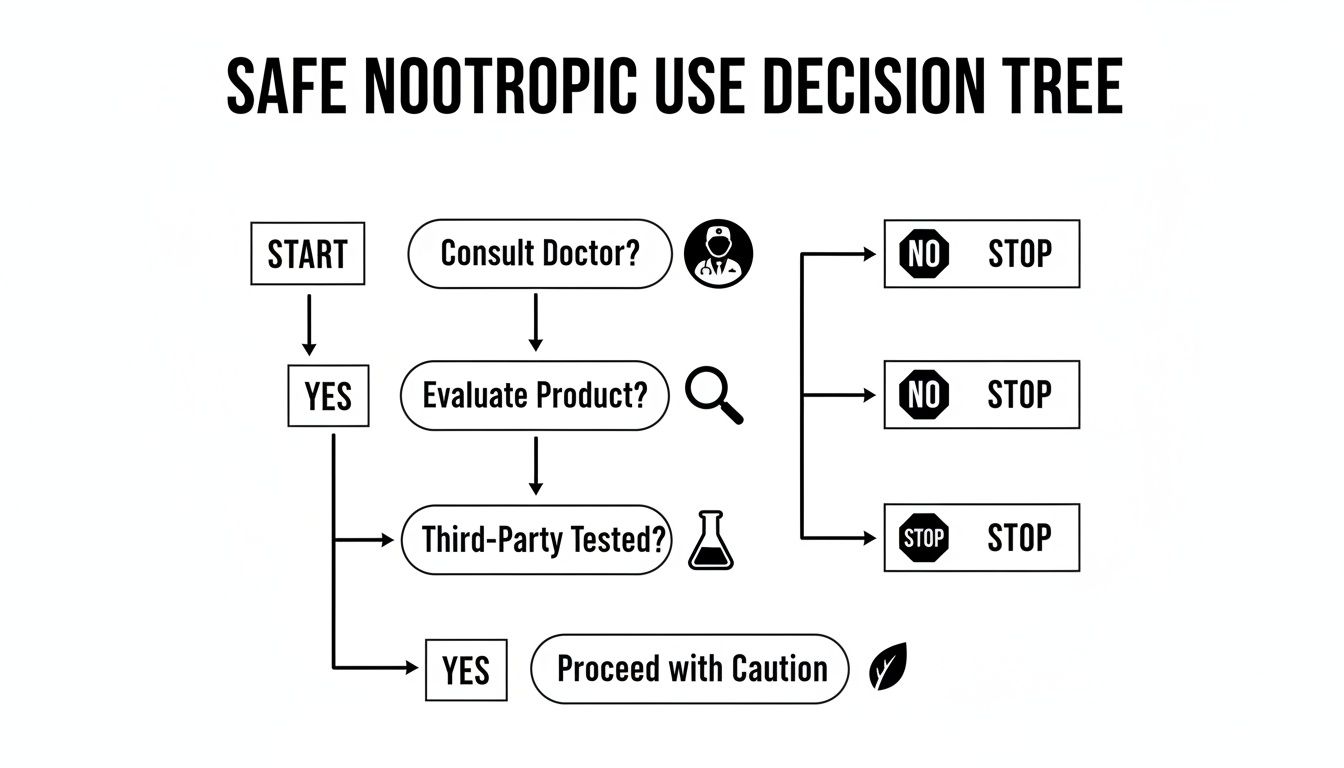
If there’s one key takeaway from this, it’s that the journey to safety begins—and ends—with professional medical guidance. There are no safe shortcuts here.
Ultimately, this is about empowerment. For anyone looking for a sustainable cognitive edge, the safest and most effective path is paved with evidence and built in close collaboration with your physician. This approach is what turns a risky experiment into a strategic, long-term part of your overall health and performance plan.
You are the chief advocate for your own health. By choosing products verified for purity, starting with low doses under medical supervision, and carefully monitoring your body’s response, you take control of the entire process.
This reframes the broad question of “are nootropics safe” into a much more personal and manageable one: “How can I use them safely?” By following this responsible framework, you put your long-term wellness above everything else.
Frequently Asked Questions About Nootropic Safety
Even after getting a handle on the risks, a few key questions always seem to pop up. Here are some straightforward, expert-backed answers to the most common queries about using nootropics safely.
Can I Safely Combine Nootropics into a Stack?
Combining different nootropics, a practice people call “stacking,” can sound appealing for its potential synergistic effects. However, doing so dramatically increases both complexity and risk. Think of it like a cocktail—mixing ingredients without knowing how they interact can lead to unpredictable and seriously unpleasant outcomes.
The main danger is combining compounds that hit the same neurotransmitter systems. For example, stacking multiple stimulants can easily over-excite your nervous system, triggering anxiety, jitters, or even heart palpitations. The reality is that interactions between many of these compounds are poorly studied, making DIY stacking a risky experiment with your own brain chemistry.
If you’re going to do it, the only safe approach is methodical and patient:
- Start with one compound. This is non-negotiable. You need to establish a baseline and see how your body reacts to it alone.
- Introduce a second ingredient only after you completely understand the first, and ideally, under a physician’s supervision.
- Never combine substances without expert guidance. A knowledgeable doctor can help design a stack that’s personalized to your unique biochemistry and cognitive goals, making sure the combination is both safe and effective.
The most crucial rule of stacking is to avoid redundancy and guesswork. A physician can help you understand how different nootropics interact, preventing dangerous overlaps and maximizing potential benefits safely.
Are Natural Nootropics Always Safer Than Synthetic Ones?
It’s one of the biggest misconceptions out there: that “natural” automatically means “safe.” While many botanicals like Bacopa Monnieri have centuries of traditional use and solid safety data, their safety is conditional. It always comes down to the dosage, the purity of the product, and any potential interactions with other substances you’re taking.
Natural supplements are not immune to serious risks. They can be contaminated with heavy metals, pesticides, or even unlisted pharmaceuticals if they come from an unreliable supplier. Beyond that, many herbs have powerful biological effects that can clash with prescription medications.
For instance, Ginkgo Biloba is well-known for its blood-thinning properties, which could be dangerous for someone already taking an anticoagulant like warfarin. This is exactly why a conversation with a medical professional is so vital. You can find a doctor to help you navigate these potential interactions and ensure your supplement regimen is safe.
Ultimately, whether a nootropic is natural or synthetic is less important than its quality. Always prioritize products with transparent, third-party testing for both purity and potency.
How Long Does It Take to Know if a Nootropic Is Working Safely?
The time it takes to feel effects varies widely from one compound to another. Some nootropics provide acute, noticeable benefits within the hour, while others work far more subtly over weeks or months.
- Acute Effects: Substances like L-Theanine can promote a state of calm alertness within an hour or so of taking them. You’ll know pretty quickly if it works for you.
- Cumulative Effects: Other compounds, such as Bacopa Monnieri, require consistent use for 4 to 12 weeks to build up in your system and produce measurable improvements in memory and learning.
When it comes to safety, however, you need to be vigilant from the very first dose. Keep a close eye out for any adverse reactions—headaches, digestive issues, or changes in your mood or sleep patterns. If anything feels off, stop taking the supplement immediately and talk to your doctor.
For any nootropic you plan to use long-term, regular check-ins with your physician are essential. This allows you to monitor your overall health, review bloodwork, and ensure continued safety over time.
Navigating the complexities of cognitive enhancement requires trusted medical expertise. The Haute MD network is a premier platform connecting you with the nation’s top physicians, from longevity specialists to executive health experts. Find a rigorously vetted doctor to guide your health journey and ensure your approach to wellness is both safe and effective.