


Before you even think about specific natural treatments, we need to get one thing straight. The single most important piece of the melasma puzzle—the absolute non-negotiable—is a rock-solid commitment to sun protection.
Without it, any other effort you make, whether natural or medical, is like trying to fill a bucket with a hole in it. You’re fighting a constant, losing battle against the primary trigger of all that unwanted pigment.
Your Foundational Strategy for Melasma Management
Think of sun protection less like a single step in your routine and more like the environment you create for your skin to actually heal. Melasma is notoriously reactive to not just UV radiation but also visible light—yes, that includes the blue light from your phone and computer screens.
This means your defense has to be comprehensive, consistent, and frankly, a little obsessive.
Rethinking Your Sunscreen Application
Just “wearing sunscreen” isn’t going to cut it here. For managing melasma, you need a very specific kind of product and a highly disciplined approach to applying it. The gold standard is a broad-spectrum, mineral-based sunscreen with an SPF of 50 or higher.
Why mineral? Sunscreens with zinc oxide and titanium dioxide form a physical shield that literally bounces UV rays away from your skin. This is often much better for pigmentation-prone skin than chemical sunscreens, which work by absorbing UV and converting it to heat—a process that can sometimes make pigmentation worse.
Even better, find a formula that contains iron oxides. These are the ingredients that give tinted sunscreens their color, but their real magic is their proven ability to block visible light, especially blue light. Studies have confirmed that visible light can trigger pigment cells just like UV rays can, making iron oxides a game-changer for anyone serious about getting melasma under control.
Real-World Sun Protection Scenarios
Slapping on some sunscreen in the morning is a start, but melasma demands constant vigilance.
- The Office Worker: You sit by a window all day, thinking you’re safe. Bad news: UVA rays, a major contributor to pigmentation, slice right through glass. Your workday sunscreen application needs to be just as thorough as your beach day one.
- The Outdoor Enthusiast: At the park or a kid’s soccer game? Reapplication is everything. Set a two-hour timer on your phone and stick to it religiously. And that baseball cap? Swap it for a wide-brimmed hat that actually shades your entire face.
- The Busy Parent: You’re in and out of the car all day running errands. Those short bursts of sun—walking to the store, standing in a sunny doorway—add up fast. Keep a stick sunscreen in your bag; it’s a lifesaver for quick, mess-free touch-ups on your cheeks, nose, and forehead.
Key Takeaway: Your daily sunscreen is a non-negotiable shield. For melasma, a tinted mineral sunscreen with SPF 50+ and iron oxides is your best defense, offering the most complete protection against both UV and visible light.
Beyond Sunscreen: Lifestyle Adjustments
A truly effective sun protection plan goes beyond what’s in the bottle. It’s about making small, smart behavioral changes that minimize your overall exposure until it becomes second nature.
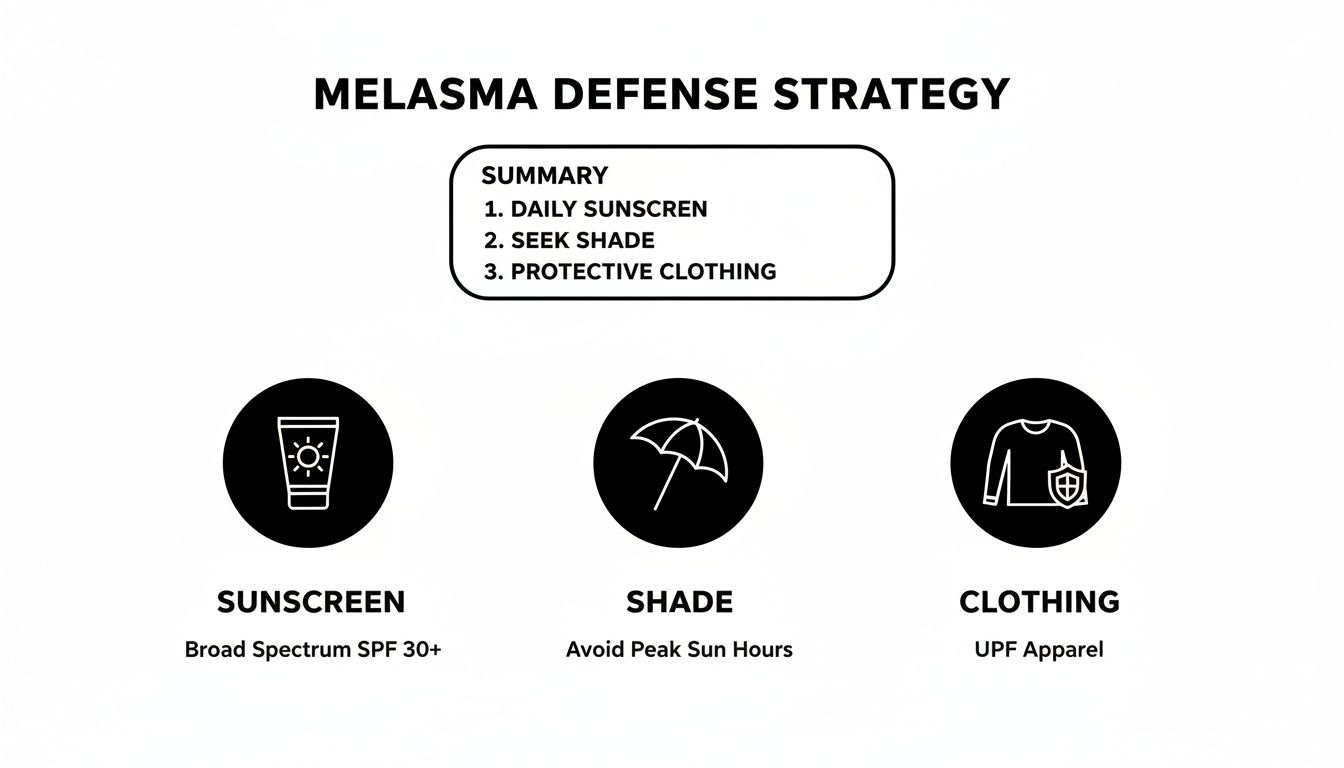
- Seek Shade Intelligently: This sounds obvious, but most people don’t do it consciously. When you’re walking down the street, actively choose the shady side. Grabbing coffee outside? Pick the table under the big umbrella. These little choices dramatically cut down your cumulative sun dose over time.
- Invest in UPF Clothing: For any extended time outdoors, Ultraviolet Protection Factor (UPF) clothing is incredible. A shirt with a UPF 50 rating blocks over 98% of UV rays, giving you consistent protection that doesn’t need to be reapplied.
- Time Your Outings: The sun is at its most powerful between 10 a.m. and 4 p.m. Whenever you have a choice, schedule your runs, errands, or gardening for the early morning or late afternoon.
By building this foundational wall of protection, you create the right conditions for any other natural treatments to have a fighting chance. If you’re looking for more guidance, you can find expert advice and connect with top specialists through our network of board-certified dermatologists and wellness experts. This proactive strategy is the true cornerstone of getting melasma under control.
Layer In Clinically-Proven Botanicals to Correct Pigment
Once your sun defense is dialed in, you can move from a purely defensive strategy to an offensive one. The next step in tackling melasma naturally is to introduce topical ingredients that actively work on the discoloration you already have. This isn’t about raiding the pantry for unproven DIY remedies; it’s about building a smart skincare routine with botanicals backed by serious clinical research.
Many of these natural compounds work by targeting a specific enzyme in your skin called tyrosinase. You can think of tyrosinase as the master switch for melanin production. When triggers like hormones or UV light flick that switch on, it sends pigment production into overdrive, creating the characteristic dark patches of melasma. The best botanicals work by gently turning that switch down.
Knowing Which Botanical Ingredients Actually Work
Reading a skincare label can feel like deciphering a foreign language, but knowing which ingredients have real scientific weight is a game-changer. You learn to spot the difference between marketing hype and genuine efficacy. The goal is to build a routine that’s as targeted and results-driven as a prescription, but using nature’s own intelligent compounds.
Look for these key players on the ingredient list:
- Licorice Extract (Glycyrrhiza glabra): A true heavyweight in natural pigment correction, thanks to its active compounds, liquiritin and glabridin.
- Soybean Extract (Glycine max): Contains soy isoflavones that have been shown to interfere with the transfer of melanin to the surface of your skin cells.
- Green Tea Extract (Camellia sinensis): Absolutely packed with polyphenols, especially EGCG. Its powerful antioxidant effects help shield your skin from the oxidative stress that fuels pigmentation.
- Mulberry Extract (Morus alba): The active components in mulberry are known to be potent tyrosinase inhibitors, hitting the problem right at the source.
When you pair these active botanicals with a non-negotiable defense strategy—sunscreen, shade, and protective clothing—you create a comprehensive system for getting melasma under control.
The Science Doesn’t Lie: These Ingredients Deliver
The idea that botanicals can produce real, visible results isn’t just wishful thinking—it’s confirmed by a growing body of research. A major 2021 meta-analysis in Frontiers in Medicine, which reviewed 10 randomized controlled trials with 598 patients, came to a powerful conclusion. It found that topical botanical products delivered a large, statistically significant improvement in melasma severity, with a standardized mean difference (SMD) of -0.79 in MASI scores compared to a placebo.
This data is why specific ingredients perform so well in individual studies. For instance, in one 4-week split-face trial on licorice extract, the majority of participants saw an ‘excellent response,’ while the control group saw zero improvement. You can dive into the full meta-analysis on botanical efficacy for melasma yourself to see the evidence. This research confirms that a well-formulated natural approach isn’t just an alternative; it’s a scientifically valid path for managing melasma.
To help you navigate the options, here’s a quick summary of the top evidence-based botanicals.
Evidence-Based Botanical Agents for Melasma
This table breaks down some of the most effective natural agents, explaining how they work and what the research says.
| Botanical Agent | Active Compound | Mechanism of Action | Key Clinical Finding |
|---|---|---|---|
| Licorice Extract | Glabridin, Liquiritin | Inhibits tyrosinase; disperses melanin | Showed significant improvement in melasma severity and darkness in multiple studies. |
| Soybean Extract | Soy Isoflavones | Inhibits the transfer of melanosomes to keratinocytes | Clinically proven to lighten hyperpigmentation and improve overall skin tone. |
| Green Tea Extract | Epigallocatechin gallate (EGCG) | Antioxidant; inhibits tyrosinase | Reduces oxidative stress that triggers melanin production; shows modest depigmenting effects. |
| Mulberry Extract | Arbutin, Mulberroside F | Potent tyrosinase inhibitor | Shown to be more effective than kojic acid in some studies for inhibiting melanin synthesis. |
Choosing products with these ingredients allows you to build a routine based on what’s proven to work, not just what’s trendy.
How to Build Your Botanical Skincare Routine
Bringing these ingredients into your daily regimen doesn’t need to be complicated. Consistency is everything, along with choosing products where these botanicals are star players—high up on the ingredient list, not just an afterthought at the very bottom.
Here’s a practical way to structure it:
- Morning Routine: After a gentle cleanse, apply an antioxidant serum with Green Tea Extract or Vitamin C. Immediately follow with your tinted, mineral-based SPF 50+ sunscreen. This locks in the antioxidant benefits and provides a physical shield against UV and visible light all day.
- Evening Routine: Nighttime is for repair. After cleansing, apply your main treatment serum. This is the ideal time for a product featuring Licorice Extract, Soy, or Mulberry. These actives can work without interruption overnight to inhibit tyrosinase and help fade discoloration.
- Soothing Support: Ingredients like Aloe Vera are fantastic supporting actors. While not a primary pigment-fighter, its anti-inflammatory properties help calm the skin. This is critical because inflammation is a known trigger that can worsen melasma or cause post-inflammatory hyperpigmentation. If you’re wondering how it fits in, our guide answers the common question, “does aloe vera clog pores?“.
Expert Tip: Any time you introduce a new active ingredient, do a patch test first. Apply a small amount on your inner arm or just behind your ear and wait 24-48 hours to make sure your skin tolerates it well before applying it to your entire face.
By becoming a savvy consumer and focusing on botanicals with proven mechanisms, you can create an elegant, effective, and natural regimen. It’s an approach that respects your skin’s biology while delivering visible, lasting improvements in clarity and evenness.
Why Licorice Extract Is a Game Changer
While a handful of botanicals show promise, one ingredient consistently stands out in the research and deserves its own spotlight: licorice root extract. This isn’t just another soothing plant extract; it’s a pigment-correcting powerhouse, and it’s earned a top spot in the toolkits of dermatologists who favor evidence-backed natural options.
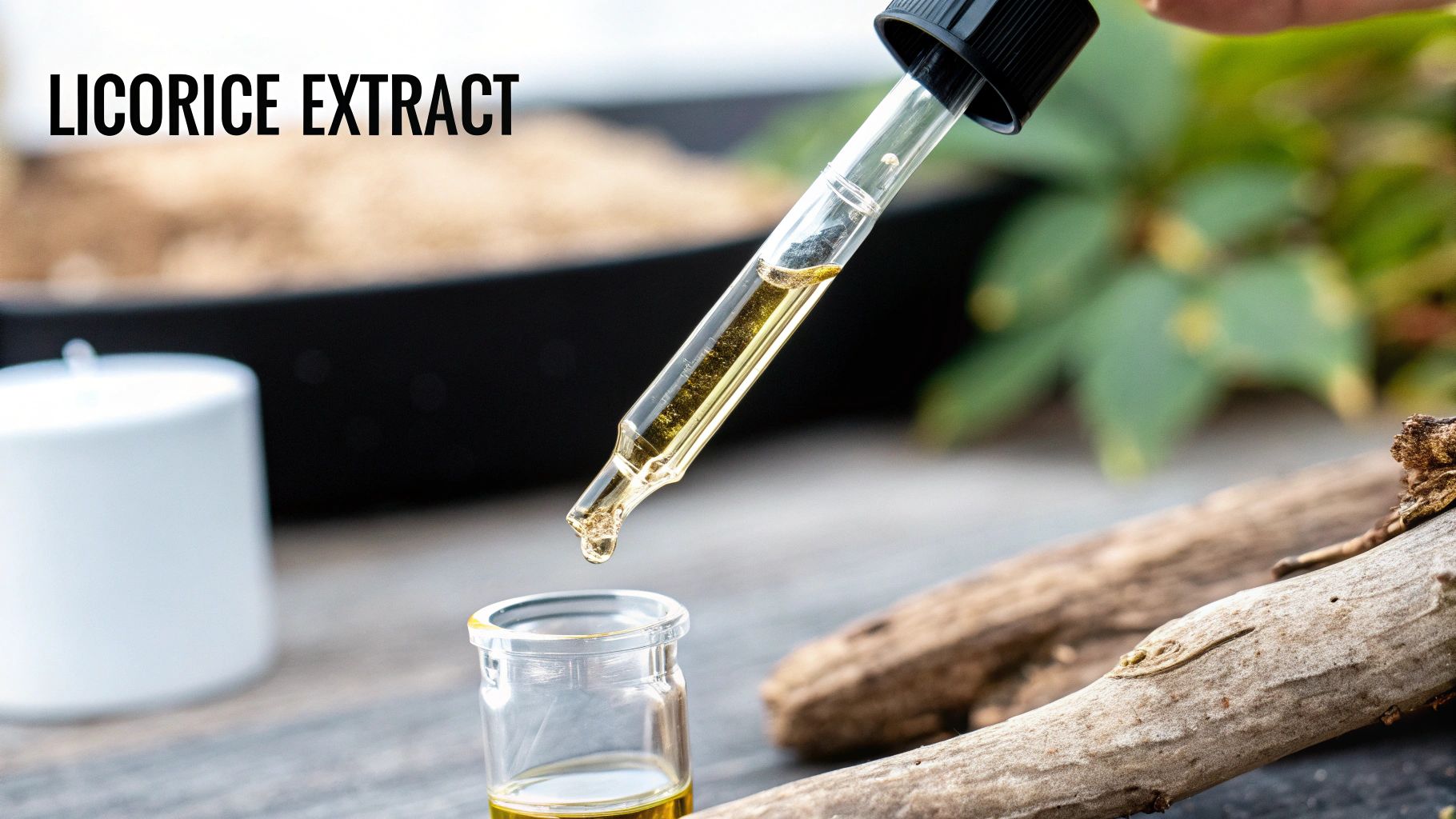
Its effectiveness boils down to two key compounds working in perfect harmony: glabridin and liquiritin. Together, they create a brilliant one-two punch against hyperpigmentation.
The Dual-Action Mechanism of Licorice
First up is glabridin, which acts as a potent tyrosinase inhibitor. Think of tyrosinase as the “on” switch for your skin’s pigment factory. Glabridin gets in there and directly interferes with that enzyme, effectively turning down melanin production before it can go into overdrive. This is crucial for preventing new dark spots and stopping existing ones from getting any darker.
Then, liquiritin steps in to do an entirely different—but equally important—job. It doesn’t stop new melanin from forming. Instead, it helps break up and disperse the pigment that has already collected in the upper layers of your skin. By scattering these dense clusters of melanin, it visibly fades existing melasma patches for a much more even-toned complexion.
This combined approach of both blocking new pigment and breaking up old pigment is what makes licorice extract so uniquely effective. It’s a complete strategy packed into a single ingredient.
Clinical Evidence That Speaks Volumes
The buzz around licorice isn’t just anecdotal; it’s grounded in solid clinical data. In a comprehensive scientific review, licorice extract was identified as the most-studied herbal compound for melasma, with an impressive 21 clinical trials under its belt.
In these studies, it consistently performed on par with the prescription gold standard, 4% hydroquinone, but with far fewer side effects like redness and irritation.
One pivotal trial really drives the point home. Researchers had patients apply a 20% liquiritin cream to one side of their face and a placebo cream to the other, twice a day for four weeks. The results were visually stunning. The vast majority of participants showed an ‘excellent response’ on the licorice-treated side, while the placebo side showed zero improvement.
The clinical photos from that study are remarkable, showing a near-total fading of dark patches. You can see the in-depth findings and before-and-after pictures from the research for yourself.
How to Incorporate Licorice Extract into Your Routine
Knowing it works is half the battle. The other half is using it correctly for maximum impact. Just grabbing any product with “licorice” on the label won’t cut it. You need a formula where the extract is a star player, not just a footnote at the bottom of the ingredient list.
Here are a few tips to make it a core part of your strategy:
- Find a Concentrated Serum: Serums are your best bet. They’re designed to deliver a high dose of active ingredients deep into the skin, making a licorice root extract serum the ideal choice for your main treatment step.
- Apply It at Night: Your skin’s repair cycle kicks into high gear while you sleep. Applying your licorice serum in the evening gives its compounds a full, uninterrupted window to inhibit tyrosinase and break down pigment.
- Boost Your Morning Sunscreen: This is a more advanced technique. Apply a few drops of licorice serum in the morning before your tinted mineral sunscreen. The antioxidant properties in licorice help neutralize UV-induced free radicals, giving your sunscreen an extra layer of protective power while it also works on correction.
What to Look for on the Label
When you’re scanning ingredient lists, keep an eye out for the scientific name, Glycyrrhiza glabra. The higher it appears on the list, the more concentrated it likely is.
Some high-quality formulas might even specify the active compounds like glabridin or liquiritin, which is always a good sign you’ve found a well-formulated, targeted product.
By adding this clinically validated botanical to your routine, you’re not just trying another “natural remedy.” You’re adopting a sophisticated, science-backed approach that offers a powerful and elegant path to the clear, even-toned skin you’re working toward.
Lifestyle and Nutritional Strategies That Support Clear Skin
To truly get a handle on melasma naturally, we have to look deeper than the skin’s surface. Lasting success comes from addressing the internal environment that’s driving the pigmentation in the first place.
Think of your body as an ecosystem. When factors like oxidative stress, hormonal imbalances, and chronic inflammation are running high, it creates the perfect storm for your pigment-producing cells to go into overdrive. The goal here is to restore balance from the inside out.

This internal-first approach isn’t about finding a single “miracle food.” It’s about consistently giving your body the nutritional building blocks and stress-management tools it needs to maintain equilibrium. When you do that, your skin becomes far more resilient to melasma’s triggers.
Fuel Your Skin with an Antioxidant-Rich Diet
One of the biggest culprits behind hyperpigmentation is oxidative stress. This is what happens when unstable molecules called free radicals—generated by things like UV exposure and pollution—damage your skin cells. This damage sparks an inflammatory response that can directly stimulate melanin production. An antioxidant-rich diet is your best internal defense against this entire process.
Antioxidants essentially act like bodyguards for your cells, neutralizing free radicals before they can cause mayhem. By loading your plate with these protective compounds, you help calm the underlying inflammation that so often makes melasma worse.
Try to make these foods a regular part of your routine:
- Berries and Pomegranates: These are packed with polyphenols, powerful antioxidants that have been shown to help protect skin cells from UV-induced damage. Tossing a handful of blueberries into your morning smoothie is an easy win.
- Leafy Greens: Think spinach, kale, and other dark greens. They’re incredible sources of Vitamins C and E, an antioxidant power couple that works together to protect your skin barrier.
- Green Tea: Sipping on green tea gives you a solid dose of EGCG (epigallocatechin gallate), an antioxidant celebrated for its potent anti-inflammatory and photoprotective benefits.
- Foods High in Vitamin C: It’s not just citrus. Bell peppers and broccoli are fantastic sources of Vitamin C, which is not only crucial for building collagen but also helps inhibit tyrosinase, the main enzyme involved in making melanin.
By making your diet a source of internal protection, you’re directly supporting the work your topical treatments are doing on the surface. For anyone wanting to go deeper, understanding how to improve metabolic health through a practical guide offers great insights into how diet impacts your overall wellness and, by extension, your skin.
Manage Hormonal Triggers and Stress Levels
Hormonal shifts are a massive, well-known trigger for melasma—there’s a reason it’s often called the “mask of pregnancy.” Estrogen and progesterone can directly stimulate melanocytes, ramping up pigment production. While you can’t always control these hormonal fluctuations, you can manage the factors that amplify their effects.
Chief among them is stress.
Stress floods your body with cortisol, a hormone that can throw your entire endocrine system out of whack and is known to worsen inflammatory skin conditions. This means that consistent stress management isn’t a luxury; it’s a core component of treating melasma from the inside out.
Key Insight: Reducing chronic stress is a direct way to support hormonal balance and calm skin inflammation. A calm nervous system often leads to calmer, clearer skin.
Finding what works for you is key. For some, it might be a daily 10-minute meditation using an app. For others, it could be a couple of restorative yoga classes a week or just taking a quiet walk in nature without your phone. The goal is to find something you can stick with.
On top of that, prioritizing quality sleep is completely non-negotiable. During deep sleep, your body performs critical repair processes and regulates hormone production. Aiming for 7-9 hours of uninterrupted sleep a night helps keep cortisol levels in check and gives your skin the best possible chance to heal and regenerate. This integrated approach—combining smart nutrition with mindful lifestyle choices—creates a powerful foundation for achieving lasting skin clarity.
Setting the Right Expectations for Your Journey
Choosing a natural path to manage melasma is an empowering, gentle choice. But it’s a path that demands a different mindset. Unlike aggressive peels or lasers that deliver a shock to the system, natural agents work with your skin’s own rhythm. This means progress is measured in months, not days.
Patience isn’t just a virtue here; it’s a non-negotiable part of the strategy. Your skin’s natural turnover cycle—the process of shedding old, pigmented cells and bringing fresh ones to the surface—takes about 28 days. For any visible change in pigmentation to occur, you need to live through several of these cycles.
This is why you should realistically expect to see the first hints of improvement in about 8 to 12 weeks of consistent, daily use. Think of it as a long-term investment in your skin’s health. Sticking with it is the only way to see the results.
Safe Application and Knowing When to Stop
Just because an ingredient grows on a plant doesn’t mean it’s harmless. Potent botanical compounds can still cause a reaction, which is why a cautious, observant approach is absolutely critical.
Before you introduce any new serum, cream, or oil into your daily routine, you must perform a patch test.
- Dab a small amount of the new product onto a discreet patch of skin, like behind your ear or on your inner wrist.
- Leave it alone for 24 to 48 hours and watch for any signs of trouble—redness, itching, or irritation.
- If your skin is calm and happy, you can feel confident moving forward and applying it to your face.
This simple two-day test can prevent a minor sensitivity from escalating into widespread inflammation, which can tragically make your melasma even worse.
A Crucial Reality Check: “Natural” does not mean “allergy-proof.” You have to listen to your skin. If a product causes persistent stinging, redness, or any kind of discomfort, stop using it. Immediately. The right treatment should feel supportive, not like a battle.
When to Call in a Dermatologist
An at-home, natural regimen is a fantastic and often effective first line of attack. But it’s just as important to recognize the limits of self-treatment. Knowing when to escalate your care to a medical professional is a sign of a smart, responsible approach to your skin’s health.
It’s time to book an appointment with a board-certified dermatologist if you find yourself in any of these situations:
- No Improvement After 3-6 Months: You’ve been diligent with sun protection and consistent with your topicals for several months, but you see absolutely zero change. It’s time for an expert opinion.
- Your Melasma Gets Worse: If your pigmented patches become darker, larger, or start spreading despite your best efforts, you need a professional diagnosis to see what’s really going on.
- You’re Experiencing Severe Skin Irritation: If you’re reacting negatively to products, a dermatologist can help calm your skin and build a new plan that’s both safe and effective.
A dermatologist can provide a definitive diagnosis (making sure it is, in fact, melasma) and open up a wider range of treatment options. This might include prescription-strength topicals like hydroquinone or tretinoin, in-office procedures like chemical peels, or a combination approach. Seeing a professional isn’t a sign that your natural routine failed. It’s the next logical step toward getting the expert, personalized care you need to finally get the best possible outcome.
Common Questions About A Natural Melasma Approach
When you first start tackling melasma, it’s only natural to have a few questions. The path to clearer skin isn’t always straightforward, so let’s clear up some of the most common uncertainties with direct, evidence-based answers.
How Long Does It Really Take to See Results?
This is where patience becomes your most powerful tool. While some clinical studies show subtle improvements in as little as four weeks, a more realistic timeline for seeing a noticeable difference is 8 to 12 weeks of daily, consistent effort.
Natural ingredients work with your skin’s own renewal cycle, which means progress is gradual, not dramatic. It’s also critical to understand that no topical treatment stands a chance without rigorous, daily sun protection. If you’re not militant about sunscreen, new pigment will form just as fast as you can fade the old, completely erasing your progress.
Can I Combine Different Natural Ingredients?
Yes, and this can be a smart strategy. Many botanicals target pigmentation through different biological pathways, so combining them can create a more powerful effect. For instance, you could use a licorice extract serum (which helps inhibit melanin production) under a moisturizer rich in green tea extract (which delivers potent antioxidant defense).
The key is to introduce new products one at a time, waiting several days between each addition. This lets you watch for any signs of sensitivity or irritation. Often, the best bet is to find a professionally formulated product that already combines several stable, effective actives. It takes the guesswork out of the equation.
Expert Takeaway: Layering natural actives can absolutely boost your results, but always put your skin’s tolerance first. Introduce new products slowly and consider a well-formulated blend to avoid overwhelming your skin.
Are There Any Natural “Cures” I Should Avoid?
Absolutely. While the world of botanicals is fantastic, some popular DIY remedies are a fast track to making things worse. You should never apply undiluted essential oils or pure lemon juice directly to your face.
These substances are incredibly harsh and acidic, often causing severe irritation, chemical burns, and extreme photosensitivity. This kind of skin trauma can trigger post-inflammatory hyperpigmentation—a new type of dark spot that can make your original melasma look far more pronounced. Always stick to products from reputable brands that use safe, stable ingredients at effective, non-irritating concentrations.
When Is It Time to See a Dermatologist?
If you’ve been diligent with a comprehensive natural plan for at least 3 to 6 months—meaning strict sun protection and consistent use of evidence-backed topicals—and still see little to no improvement, it’s time to consult a board-certified dermatologist.
A dermatologist brings a few critical advantages to the table:
- Confirm the Diagnosis: They can make sure what you’re dealing with is actually melasma and not another condition that mimics it.
- Evaluate Your Progress: An expert can often spot subtle improvements you might have missed and suggest tweaks to your current routine.
- Discuss Medical-Grade Options: They can introduce you to proven prescription treatments like hydroquinone or tretinoin, as well as procedures like chemical peels or certain laser therapies that are better suited for stubborn cases.
Finding the right specialist is a critical step in your journey to clear, healthy skin. Haute MD is a premier network that connects you with the nation’s top, board-certified dermatologists and wellness experts, ensuring you receive the highest standard of care. Discover a trusted physician in your area and take the next step with confidence.