



Embarking on a surgical journey requires more than just scheduling a date; it demands strategic preparation and informed decision-making. For the discerning patient, the consultation is not a passive event but an active investigation. It’s a critical opportunity to vet your surgeon, understand the procedure, and align expectations for a seamless, premium experience. The quality of your questions directly influences the quality of your outcome.
This comprehensive guide serves as your blueprint, providing the essential framework for a productive dialogue with your medical team. We will cover ten pivotal categories of questions to ask before surgery, each designed to uncover the nuanced details that separate standard care from an exceptional, white-glove service. Think of this not as a simple checklist, but as a strategic tool for due diligence.
By asking the right questions, you transform from a patient into a proactive partner in your own health. This ensures every decision is calculated, every risk is understood, and every aspect of your care meets the highest possible standard. Our goal is to empower you with the specific inquiries needed to move forward with absolute confidence and clarity, knowing you have thoroughly evaluated your options. We will delve into surgeon credentials, procedure specifics, recovery protocols, and the logistical intricacies that define a truly personalized surgical experience. This list is your key to navigating the process with precision and securing the successful outcome you expect.
1. What is your experience and credentials with this specific procedure?
This is arguably the most critical of all the questions to ask before surgery, as it directly addresses the surgeon’s qualifications and track record with your specific operation. You are not just vetting a doctor; you are vetting a highly specialized craftsman for a precise task. This inquiry goes beyond a medical degree, probing into board certifications, fellowship training, and, most importantly, high-volume experience. The goal is to confirm you are entrusting your health to a top-tier specialist who has mastered this exact procedure, not a generalist who performs it occasionally.

A surgeon’s proficiency is often linked to repetition and focus. For instance, a fellowship-trained cosmetic surgeon with 15 years of experience dedicated solely to facial procedures will likely have more refined techniques than a general plastic surgeon who performs them less frequently. Similarly, an orthopedic surgeon at a major sports medicine clinic who performs over 200 ACL reconstructions annually has a level of expertise far exceeding a generalist who might do 20. This distinction is paramount for achieving superior outcomes.
Actionable Follow-Up Questions
To get a clear picture of their expertise, be direct and specific with your follow-up questions. This level of diligence is a key part of how to find the best doctor for your needs.
- Case Volume: “How many of this specific procedure have you performed in the last year and over your entire career?”
- Outcomes & Complications: “What are your personal success and complication rates, and how do they compare to national averages?”
- Specialized Training: “Have you completed a fellowship or other advanced training specific to this surgery?”
- Credential Verification: Inquire about their board certification and verify it independently through the American Board of Medical Specialties (ABMS) database. True specialists are almost always board-certified in their respective fields.
2. What are the specific risks and complications associated with my surgery?
Beyond the generic consent form, this question is about achieving true informed consent by understanding the full spectrum of potential outcomes. A top-tier surgeon will welcome this discussion, moving past generalities like bleeding and infection to detail the nuanced risks unique to your specific procedure. This conversation is not meant to be frightening; it is meant to be empowering, providing you with a realistic framework for your surgical journey and ensuring your expectations are aligned with medical reality.

This level of detail is crucial for making a well-considered decision. For example, a patient considering a facelift should be aware of the specific statistical risk of temporary or permanent nerve injury (1-3%) and hematoma formation (3-5%). Similarly, someone undergoing a knee replacement needs to understand the probabilities of deep vein thrombosis (blood clots), which occurs in roughly 1.5% of cases, or implant loosening over time. This data-driven approach transforms abstract risks into tangible factors you can weigh.
Actionable Follow-Up Questions
A proactive discussion about potential downsides is a hallmark of a transparent and patient-centric surgical practice. Use these follow-ups to delve deeper into one of the most important questions to ask before surgery.
- Personal vs. National Data: “What is your personal complication rate for this procedure, and how does it compare to published national averages?”
- Risk Mitigation: “What specific techniques or protocols do you use pre-operatively, intra-operatively, and post-operatively to minimize these particular risks?”
- Management Plan: “If a complication does occur, what is your exact plan for managing it? Who would be involved in my care?”
- Revision Scenarios: “How often do patients require a revision surgery for this procedure, and what are the common reasons for it?”
- Long-Term Outcomes: “Beyond immediate recovery, what are the potential long-term complications or side effects I should be aware of years from now?”
3. What is the expected recovery timeline and lifestyle restrictions?
Understanding the recovery process is crucial for anyone, but for high-performing individuals juggling executive duties, athletic goals, or demanding social calendars, it is a non-negotiable part of strategic planning. This question moves beyond a generic “6 to 8 weeks” answer and into a personalized roadmap for your life. It’s about defining precisely when you can resume key activities like leading a board meeting, playing a round of golf, or boarding an international flight. Top-tier surgeons recognize this and should provide a bespoke recovery protocol tailored to your unique lifestyle demands.https://www.youtube.com/embed/c8tLrJg9AZY
The details of your recovery can drastically impact your professional and personal life. For an executive undergoing cosmetic surgery, knowing they can capably handle desk work within one week allows them to schedule around a major presentation. An avid tennis player needs to know that a rotator cuff repair means 6-8 weeks before returning to the sport, while a more complex knee reconstruction could mean 12 weeks or more. This level of detail allows you to strategically time your procedure to minimize disruption and set realistic expectations for your return to peak performance.
Actionable Follow-Up Questions
To ensure your recovery plan aligns with your life’s demands, you must provide your surgeon with a clear picture of your obligations and ask for equally clear guidance in return. For those facing a joint procedure, understanding the specifics of the rehabilitation process is key; you can find more rotator cuff surgery recovery tips that highlight the importance of a detailed plan.
- Activity-Specific Timelines: “Given my role as a CEO, when can I realistically expect to handle a full day of meetings? When can I travel for business?”
- Phased Re-entry: “Can you provide a phased timeline for returning to exercise? What modifications will I need to make at the 2-week, 1-month, and 3-month marks?”
- Lifestyle Restrictions: “Are there specific restrictions on lifting, driving, or flying? For how long will these be in place?”
- Support & Rehabilitation: “What support will I need post-operatively? Will I require physical therapy, home nursing care, or other concierge services to facilitate a smooth recovery?”
4. What alternative treatments should I consider before surgery?
A truly patient-centric surgeon will always present surgery as a well-considered option, not the only one. This question is crucial because it confirms your surgeon prioritizes the best possible outcome for you over simply performing a procedure. It opens a dialogue about the full spectrum of care, including non-surgical and less invasive therapies. A comprehensive discussion ensures you are making a fully informed decision, understanding why a surgical approach is being recommended over other viable treatments like physical therapy, medication, or advanced injectables.
Exploring alternatives is a sign of a thorough and ethical medical process. For instance, before undergoing a total knee replacement for osteoarthritis, a patient might first trial a regimen of physical therapy, weight management, and corticosteroid or hyaluronic acid injections. Similarly, a patient considering a surgical facelift might first be presented with a plan involving non-invasive options like laser skin resurfacing and dermal fillers. This step-wise approach validates the necessity of surgery if and when conservative measures prove insufficient, ensuring it is the right choice at the right time.
Actionable Follow-Up Questions
To fully explore your options and understand the rationale behind your surgeon’s recommendation, use these precise follow-up questions. This due diligence is a fundamental part of the questions to ask before surgery and guarantees you are an active partner in your healthcare journey.
- Rationale for Surgery: “Based on my specific diagnosis and imaging, why do you believe surgery is superior to conservative treatments for my case?”
- Conservative Trial: “Is it possible to first try a course of non-surgical treatment, like physical therapy or medication, and set a timeline for reassessment?”
- Comparative Success Rates: “What is the typical success rate for alternatives like injections or physical therapy for someone with my condition, compared to the surgery you are proposing?”
- Risks of Delay: “What are the potential consequences or risks if I choose to delay this surgery to pursue alternative options first? Will my condition worsen?”
5. Who will be performing the surgery and what about backup plans?
This is one of the most important questions to ask before surgery because it clarifies the “who” behind the scalpel. You have likely spent considerable time selecting a specific surgeon, and it is crucial to confirm they will be the one performing the entire procedure. This inquiry addresses the composition of the surgical team and the contingency plans in place, ensuring there are no surprises on the day of your operation. The goal is to verify that the expert you chose is the one leading and performing the critical parts of the surgery, not delegating them to a trainee.
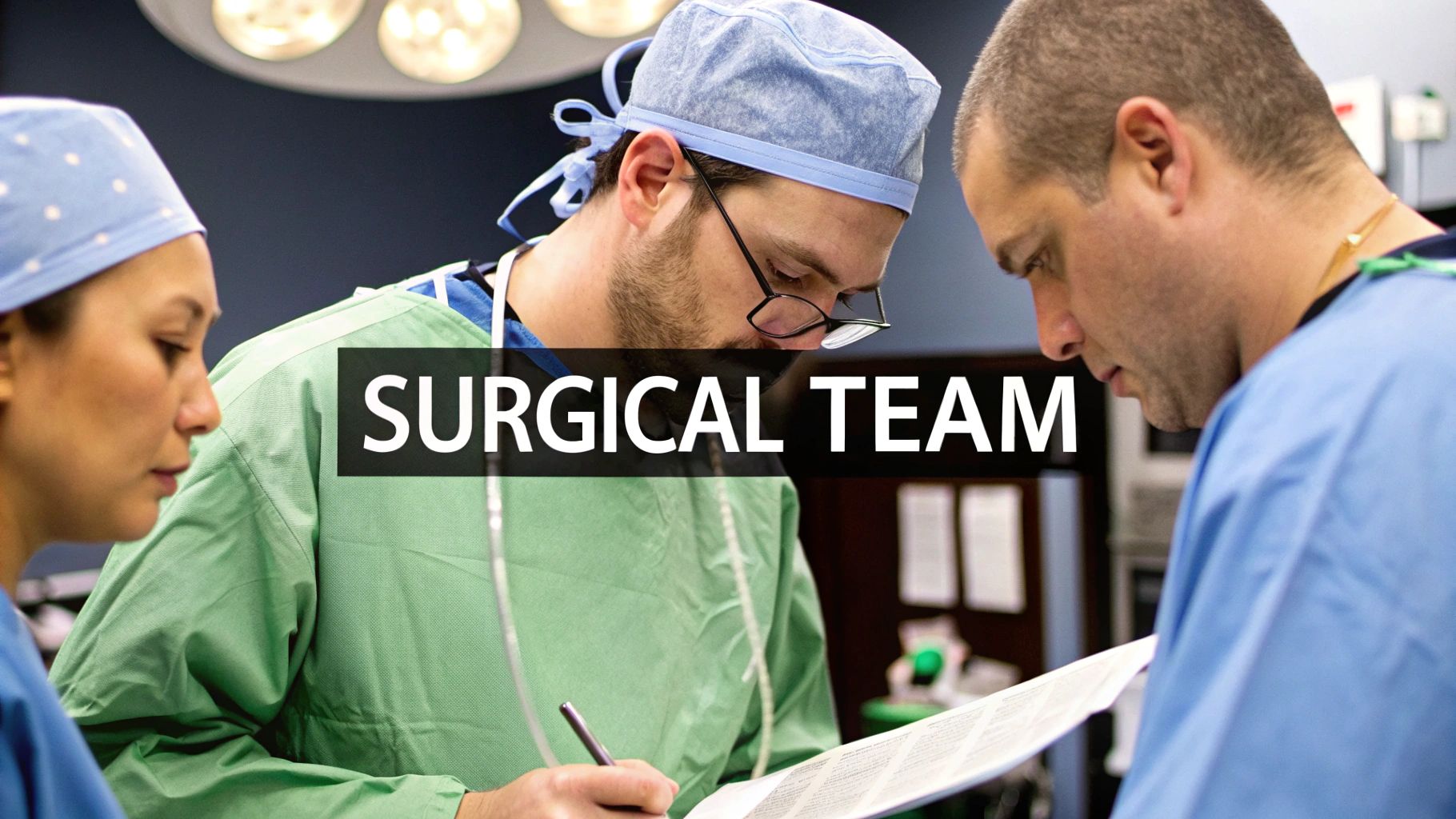
The operating room environment can vary significantly. In a private surgical center, your chosen surgeon often performs the entire procedure. However, in major academic or teaching hospitals, it is common for surgical residents or fellows to perform portions of the operation under the supervision of the attending surgeon. While this is a standard part of medical training, you have the right to know and consent to this arrangement. Transparency about the roles of everyone in the room, from the surgeon and anesthesiologist to physician assistants and nurses, is a hallmark of a patient-centric practice.
Actionable Follow-Up Questions
To ensure you have a complete understanding of your surgical team and the protocol for unforeseen events, ask these direct questions. This clarity is a fundamental aspect of your patient rights and responsibilities.
- Lead Surgeon’s Role: “Will you personally perform the entire operation from start to finish? If not, which specific parts will be performed by residents, fellows, or physician assistants?”
- Team Credentials: “Who else will be on my surgical team, including the anesthesiologist and key assistants, and what are their qualifications?”
- Contingency Plan: “What is the backup plan if you are unexpectedly unavailable on the day of my surgery due to an emergency?”
- Role Clarification: “Can you explain the specific role of each person you anticipate will be in the operating room during my procedure?”
6. What is included in the surgical fee and what are additional out-of-pocket costs?
Navigating the financial aspects of surgery is as crucial as understanding the medical details. This question is vital for achieving complete transparency and preventing unexpected, substantial bills post-operation. It moves beyond a single price tag to uncover the total financial commitment, encompassing all associated services from the initial consultation to the final follow-up appointment. For patients paying out-of-pocket or those seeking premium care, having a comprehensive, itemized breakdown is non-negotiable for proper planning and peace of mind.
A “surgical fee” often only covers the surgeon’s time and expertise. However, a major procedure is a complex production with many players and components, each with its own associated cost. For example, a total knee replacement may have a surgeon’s fee of $20,000, but the final bill can easily double or triple when you add facility charges, anesthesia, medical implants, post-operative physical therapy, and any necessary imaging. Gaining clarity on this total cost structure is a critical part of the pre-surgical due diligence process.
Actionable Follow-Up Questions
To ensure you have a complete financial picture, you must probe deeper than the initial quote. A proactive approach to these financial questions to ask before surgery can save you from significant stress and financial strain later.
- Itemized Quote: “Can you provide a written, itemized estimate that details all anticipated costs, including the surgeon’s fee, facility or operating room fees, anesthesia, implants or devices, and pathology reports?”
- Billing Procedures: “Who will be billing me separately? Will I receive individual bills from the anesthesiologist, the hospital, or any assistant surgeons?”
- Post-Operative Care: “Are routine post-operative visits, physical therapy, and any required medications or supplies included in the initial quote?”
- Revision Policy: “What is your policy regarding the costs of a revision surgery if it is needed due to a complication or a less-than-optimal outcome? Are surgeon fees waived or reduced?”
7. How will my medical records and imaging be managed before and after surgery?
In today’s interconnected yet often fragmented healthcare landscape, seamless data management is not a minor detail; it’s a cornerstone of high-quality, continuous care. This question addresses the logistical backbone of your surgical journey: how your critical health information, from MRI scans to lab results, will be collected, stored, and shared. For patients who travel for specialists, consult with multiple doctors, or simply demand meticulous coordination, understanding this process ensures that every member of your care team operates from a single source of truth, minimizing errors and enhancing outcomes.
Effective record management prevents dangerous information gaps and empowers you and your extended care team. For example, a patient undergoing a complex joint replacement can ensure their post-operative imaging and surgical reports are immediately accessible to their primary care physician and physical therapist back home, facilitating a more effective and personalized rehabilitation plan. Likewise, a cosmetic surgery patient can use a secure patient portal to track their progress with high-resolution “before and after” photos, sharing them securely for follow-up virtual consultations. Proactive data coordination is a key part of your list of questions to ask before surgery.
Actionable Follow-Up Questions
To ensure your medical data is handled with precision and accessibility, you need to probe into the practice’s specific systems and protocols. A well-organized practice will have clear, patient-centric answers.
- System & Access: “What Electronic Health Record (EHR) system do you use, and will I have access to a patient portal for my records, imaging, and lab results?”
- Data Portability: “What is the process for sharing my surgical report and post-operative imaging with my other physicians? Can you send them directly, and in what format?”
- Image Acquisition & Storage: “If I am providing imaging from an outside facility, what is the best way to get it to you? How do you store imaging long-term, and can I get a digital copy?”
- Privacy & Security: “What measures are in place to ensure the security and privacy of my digital health information, especially during electronic transfer?”
8. What is your approach to pain management and post-operative comfort?
This crucial question shifts the focus from the surgery itself to your quality of life during recovery. An outdated, one-size-fits-all approach to pain is no longer the standard of care among elite surgeons. You are looking for a sophisticated, multimodal pain management strategy that prioritizes comfort while minimizing the risks and side effects associated with over-reliance on opioids. A forward-thinking surgeon will proactively discuss a layered plan designed to manage pain from multiple angles, ensuring a smoother and more tolerable recovery.
Effective pain control is not just about comfort; it is a clinical necessity that promotes faster mobilization, reduces the risk of complications like blood clots, and improves overall outcomes. Top-tier specialists understand this and employ advanced techniques tailored to the patient and procedure. For example, an orthopedic surgeon might combine a regional nerve block administered before the first incision with a scheduled regimen of non-opioid medications like acetaminophen and NSAIDs. This preemptive approach can significantly reduce the need for strong narcotics after surgery.
Actionable Follow-Up Questions
A proactive discussion about pain management is a key part of your pre-operative diligence. Use these questions to understand the specific plan for your recovery.
- Multimodal Strategy: “Can you describe the specific multimodal pain management plan you have for me? Will it include regional anesthesia, non-opioid medications, or other techniques?”
- Opioid Plan: “If opioids are necessary, what is your specific plan for dosing, duration, and tapering? What are the alternatives if I have concerns about them?”
- Personal History: “I have a history of [e.g., opioid sensitivity, chronic pain, substance use]. How will you adjust my pain management plan accordingly?”
- Post-Discharge Care: “What is the plan for managing my pain once I am discharged home? Will I receive a written schedule or plan to follow?”
- Non-Pharmaceutical Options: “Beyond medication, what non-pharmaceutical comfort measures do you recommend, such as cold therapy, compression, or specific positioning?”
9. What qualifications and credentials does your surgical facility have?
While the surgeon’s skill is paramount, the environment where the surgery is performed plays an equally significant role in your safety and final outcome. This question probes the qualifications of the surgical facility itself, distinguishing between a hospital, an ambulatory surgical center (ASC), or an office-based suite. The goal is to ensure the facility meets rigorous safety standards, is appropriately equipped for your specific procedure, and has a clear protocol for managing emergencies.

The type of facility should match the complexity of the procedure. For example, a major operation like a complex spinal fusion requires the extensive resources of a top-tier hospital, including an intensive care unit (ICU) and immediate access to other specialists. In contrast, a routine cosmetic procedure may be performed safely and efficiently in a nationally accredited ASC. An unaccredited office-based surgery suite, however, may lack the oversight and emergency infrastructure necessary to provide the highest level of patient safety, making this one of the most important questions to ask before surgery.
Actionable Follow-Up Questions
To properly vet the surgical setting, you need to inquire about its official standing and emergency readiness. Understanding the nuances of different medical settings is key, particularly for complex procedures; for a deeper dive, explore this guide on the best hospital for heart surgery options.
- Accreditation Status: “Is this facility accredited by the Joint Commission, AAAHC, or another recognized national accrediting body?”
- Emergency Protocols: “What specific procedures are in place if a medical emergency or complication arises during or after surgery?”
- Hospital Privileges: “Do you have admitting privileges at a nearby hospital, and what is your transfer agreement?”
- Staff Qualifications: “Is the nursing and support staff certified in Advanced Cardiac Life Support (ACLS)?”
- Safety Record: “Can you provide information on this facility’s infection rates and other patient safety metrics?”
10. How will you communicate with me before and after surgery, and who do I contact with concerns?
Effective, proactive communication is a cornerstone of a premium surgical experience, yet it is often overlooked amidst clinical discussions. This question addresses the logistical and support systems your surgical team has in place. It shifts the focus from the procedure itself to the entire patient journey, ensuring you have clear, reliable pathways for information and support before, during, and after your operation. A well-defined communication protocol minimizes anxiety, prevents confusion, and guarantees rapid response should any issues arise.
Top-tier surgical practices distinguish themselves by treating communication as an integral part of care, not an afterthought. For example, a premier practice might provide a dedicated patient coordinator who serves as your single point of contact, a 24-hour direct line to a covering physician, and automated yet personalized pre-op instructions via a patient portal. They may also have a structured plan for updating your family every hour during the procedure. This level of organization demonstrates a commitment to patient well-being that extends far beyond the operating room.
Actionable Follow-Up Questions
To fully understand the support system available, you need to probe the specifics of their communication infrastructure. Clarity on these points is a vital part of preparing for surgery and ensuring a smooth, stress-free process.
- Pre-Operative Contact: “What is the schedule for pre-operative communication? Will I receive calls, emails, or portal messages with instructions?”
- Day-Of Updates: “How and how often will my family or designated contact be updated while I am in surgery?”
- Post-Operative Check-In: “Will the surgeon or a nurse call me the day after surgery to check on my progress and answer immediate questions?”
- Emergency Access: “What is the protocol for after-hours or weekend emergencies? Who do I call, and what is the expected response time?”
- Point of Contact: “Will I have a dedicated patient navigator or nurse to contact with non-urgent questions during my recovery?”
10 Essential Pre-Surgery Questions Comparison
| Item | Implementation complexity 🔄 | Resource requirements & cost ⚡ | Expected outcomes ⭐📊 | Ideal use cases 💡 | Key advantages ⭐ |
|---|---|---|---|---|---|
| What is your experience and credentials with this specific procedure? | 🔄 Low — verifiable credentials and case volume checks | ⚡ Moderate — time for verification, possible travel/consult fees | ⭐⭐⭐⭐ — Higher expertise correlates with better outcomes 📊 | 💡 Selecting a specialist for complex or high-stakes procedures | ⭐ Ensures expertise, reduces complications and revisions |
| What are the specific risks and complications associated with my surgery? | 🔄 Moderate — requires individualized risk assessment | ⚡ Low–Moderate — review of data and time for discussion | ⭐⭐⭐⭐ — Improves informed consent and preparedness 📊 | 💡 High-risk surgeries or patients with comorbidities | ⭐ Clarifies risks, mitigation plans, and decision-making |
| What is the expected recovery timeline and lifestyle restrictions? | 🔄 Moderate — personalized rehab and phased plans | ⚡ Moderate — PT, home care, time off work costs | ⭐⭐⭐ — Predictable return-to-activity; enables planning 📊 | 💡 Executives, athletes, frequent travelers | ⭐ Facilitates scheduling, reduces premature activity-related complications |
| What alternative treatments should I consider before surgery? | 🔄 Low–Moderate — evidence review and comparative discussion | ⚡ Low–Moderate — conservative care (PT, injections, meds) | ⭐⭐–⭐⭐⭐ — May avoid or delay surgery; variable impact 📊 | 💡 Mild–moderate conditions or when surgery is elective | ⭐ May reduce risk/cost and preserve future options |
| Who will be performing the surgery and what about backup plans? | 🔄 High — coordination and clear role definitions needed | ⚡ Moderate — staffing, possible premium for lead-surgeon guarantee | ⭐⭐⭐⭐ — Ensures continuity and accountability 📊 | 💡 Patients insisting on surgeon continuity or complex cases | ⭐ Transparency about team, contingency planning, surgeon accountability |
| What is included in the surgical fee and what are additional out-of-pocket costs? | 🔄 Moderate — requires itemized accounting and contracts | ⚡ High — multiple billing parties and potential large outlays | ⭐⭐⭐ — Prevents billing surprises; enables budgeting 📊 | 💡 Self-pay, concierge patients, medical tourists | ⭐ Financial transparency and ability to compare true costs |
| How will my medical records and imaging be managed before and after surgery? | 🔄 Moderate–High — EHR integration and data coordination | ⚡ High — IT systems, secure sharing, long-term storage | ⭐⭐⭐⭐ — Improves continuity, reduces duplicate testing 📊 | 💡 Traveling patients or those with multiple providers | ⭐ Accessible records, facilitates second opinions and future care |
| What is your approach to pain management and post-operative comfort? | 🔄 Moderate — multimodal perioperative planning required | ⚡ Moderate — anesthesiology resources, meds, monitoring | ⭐⭐⭐⭐ — Better pain control, faster recovery, opioid-sparing 📊 | 💡 Patients with opioid concerns or undergoing major surgery | ⭐ Multimodal analgesia improves outcomes and comfort |
| What qualifications and credentials does your surgical facility have? | 🔄 Moderate — verify accreditation and emergency readiness | ⚡ High — facility type affects cost and available resources | ⭐⭐⭐⭐ — Accredited facilities correlate with improved safety 📊 | 💡 Complex procedures or high-risk patients | ⭐ Accreditation, emergency backup, infection control |
| How will you communicate with me before and after surgery, and who do I contact with concerns? | 🔄 Low–Moderate — establish protocols and contact pathways | ⚡ Moderate — staff time, concierge/after-hours services | ⭐⭐⭐ — Reduces anxiety, improves response to complications 📊 | 💡 Concierge care, complex postoperative needs, anxious patients | ⭐ Clear expectations, rapid access, improved satisfaction |
Partnering with the Right Specialist for Your Peace of Mind
Navigating the path to surgery can feel like a complex and demanding journey, but it doesn’t have to be a journey taken in the dark. The comprehensive checklist of questions to ask before surgery provided in this guide is designed to be more than a simple list; it is a strategic framework for empowerment. By methodically addressing each area, from surgeon credentials and procedural specifics to recovery logistics and financial transparency, you transform from a passive recipient of care into an active, informed partner in your own health outcome.
The goal is not to challenge a surgeon’s expertise but to build a foundation of trust and clarity. The answers you receive to these critical questions will illuminate the expertise, communication style, and philosophical approach of your potential surgical team. This process is your primary tool for due diligence, ensuring the specialist you choose aligns perfectly with your expectations for precision, safety, and a superior standard of care.
The Power of Proactive Inquiry: Key Takeaways
The value of asking these questions extends far beyond the consultation room. It sets a precedent for your entire surgical experience, establishing a dynamic of open communication and mutual respect. Let’s distill the core principles you’ve learned into actionable takeaways:
- Expertise is Non-Negotiable: Your most fundamental inquiries should confirm a surgeon’s deep, specialized experience with your specific procedure. This goes beyond board certification to include case volume, fellowship training, and a proven track record of successful outcomes.
- Clarity Eradicates Anxiety: Ambiguity is the enemy of confidence. A clear understanding of risks, the recovery timeline, and all associated costs eliminates surprises and allows you to prepare mentally, physically, and financially for the road ahead.
- Logistics are Paramount: A world-class surgeon is only one part of the equation. The quality of the surgical facility, the structure of the support team, and the protocols for post-operative communication are equally critical components of a successful, seamless experience.
- Your Voice Matters: Never hesitate to ask for a second opinion or explore non-surgical alternatives. An elite surgeon will respect and encourage your diligence, viewing it as a sign of a committed and engaged patient.
From Questions to Confidence: Your Actionable Next Steps
Armed with this knowledge, your path forward is clear. You are now equipped to engage with prospective surgeons on a level that ensures your high standards are met. The process of vetting a specialist is not an adversarial one; it is a collaborative dialogue designed to build a partnership.
Think of your initial consultation as a high-stakes interview where you are the hiring manager for the most important job in the world: safeguarding your health. The quality of the answers, the transparency of the discussion, and the confidence with which your concerns are addressed will tell you everything you need to know.
Ultimately, mastering this inquisitive approach is about securing peace of mind. It’s about walking into the operating room with the absolute conviction that you have made the best possible choice, entrusting your care to a team that has earned your confidence through demonstrated expertise and unwavering transparency. This is the new gold standard in patient care, and by asking the right questions to ask before surgery, you are claiming your rightful place at the center of your healthcare journey.
For those who demand excellence from the start, the vetting process can be streamlined. The Haute MD network features a curated, pre-vetted list of the nation’s top doctors who excel in their specialties and are renowned for delivering a superior patient experience. Explore our network to connect with specialists who have already demonstrated the credentials, outcomes, and patient-centric approach you are looking for.