


At its core, what does an orthopedic surgeon specialize in? They are the master mechanics of the human body—medical doctors who are experts in the musculoskeletal system. This intricate framework of bones, joints, ligaments, tendons, muscles, and nerves is what allows you to move, work, and live.
Think of an orthopedic surgeon as the ultimate engineer for your body’s structure. They are dedicated to diagnosing, treating, and preventing any issue that compromises your mobility and quality of life.
Understanding the World of Orthopedic Surgery
An orthopedic surgeon’s expertise goes far beyond just setting a broken bone. Their domain is the entire mechanical system that supports and moves you. When a part of this system gets damaged by an acute injury, worn down by overuse, or compromised by a degenerative condition like arthritis, an orthopedic specialist is the one who steps in to restore function and eliminate pain.
Their work is a sophisticated blend of meticulous medical diagnosis and highly skilled surgical intervention. However, surgery is often the final option, not the first. A huge part of their practice is dedicated to non-operative treatments—like physical therapy, targeted injections, and medication—all aimed at fixing the problem without ever making an incision.
This field isn’t a one-size-fits-all discipline. Because the musculoskeletal system is so vast and complex, most top orthopedic surgeons choose to focus their practice on a specific area of the body or a particular type of condition. This advanced, focused training is known as a subspecialty.
The Importance of Subspecialization
Consider the difference between a general contractor and a master electrician. While the contractor has a broad skillset, you’d hire the electrician for a complex wiring project to ensure the job is done with the highest possible level of precision and safety. Orthopedic surgery works on the exact same principle.
A general orthopedic surgeon has a wide range of knowledge, but a subspecialist has dedicated years to mastering the subtle nuances of a single area, such as:
- Joint Replacement: Focusing exclusively on hip, knee, and shoulder replacements.
- Sports Medicine: Treating athletic injuries like ACL tears and rotator cuff damage.
- Spine Surgery: Addressing complex conditions like herniated discs and scoliosis.
- Hand and Wrist: Managing intricate issues from carpal tunnel syndrome to complex fractures.
The following diagram illustrates how an orthopedic surgeon’s expertise is structured, starting from the broad musculoskeletal system and narrowing down to its core components.
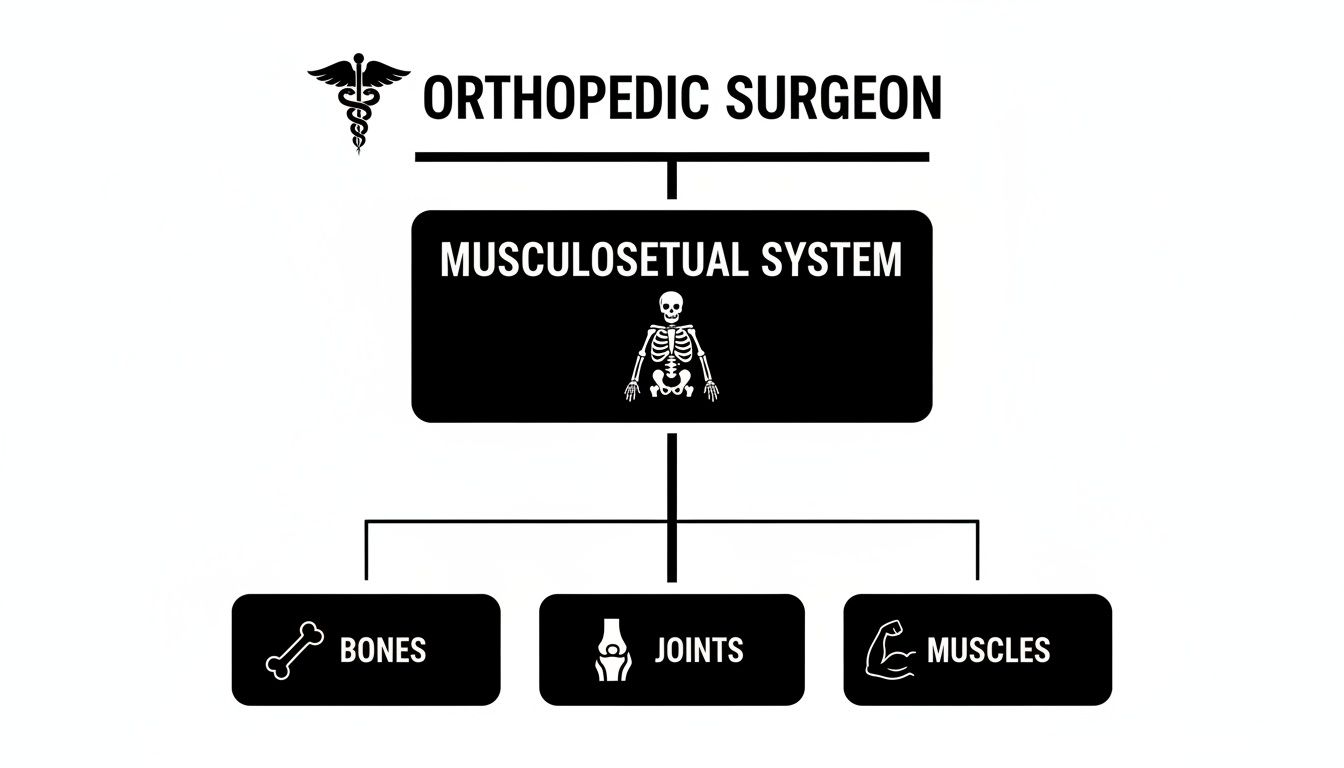
This hierarchy shows that while a surgeon’s foundation is the entire system, true mastery comes from an intense focus on one of its specific parts.
To help clarify these distinctions, the table below breaks down the major subspecialties and who they serve.
Quick Guide to Orthopedic Subspecialties
| Subspecialty | Primary Focus Area | Ideal Patient Profile |
|---|---|---|
| Joint Replacement | Degenerative joint diseases like osteoarthritis, focusing on hip, knee, and shoulder arthroplasty. | Individuals with chronic joint pain and limited mobility that hasn’t responded to conservative treatments. |
| Sports Medicine | Ligament tears (ACL, MCL), rotator cuff injuries, meniscus tears, and other athletic injuries. | Athletes of all levels, from professionals to weekend warriors, seeking to return to their sport. |
| Spine Surgery | Herniated discs, spinal stenosis, scoliosis, degenerative disc disease, and spinal fractures. | Patients with chronic back or neck pain, sciatica, or nerve compression affecting limb function. |
| Hand & Upper Extremity | Carpal tunnel syndrome, trigger finger, wrist fractures, arthritis of the hand and wrist. | Anyone with pain, numbness, or loss of function from the fingertips to the elbow. |
| Foot & Ankle | Bunions, Achilles tendon ruptures, ankle arthritis, plantar fasciitis, and complex fractures. | Patients with foot or ankle pain that limits their ability to walk, stand, or participate in activities. |
| Orthopedic Trauma | Complex fractures, dislocations, and severe soft-tissue injuries resulting from accidents. | Individuals who have sustained significant injuries from events like car accidents or serious falls. |
| Pediatric Orthopedics | Congenital deformities (e.g., clubfoot), scoliosis in children, and growth plate fractures. | Infants, children, and adolescents with musculoskeletal conditions. |
| Musculoskeletal Oncology | Benign and malignant tumors of the bones and soft tissues, such as sarcomas. | Patients diagnosed with primary or metastatic bone or soft tissue cancer. |
Each of these subspecialties represents a deep well of knowledge and experience. As we continue, we’ll dive into what makes each one unique and the specific conditions they treat.
Exploring the Core Orthopedic Subspecialties
While the world of orthopedics is vast, the profession is built on a bedrock of a few core subspecialties. These are the highly focused fields where surgeons dedicate years—sometimes entire careers—to mastering the treatment of specific joints, conditions, or parts of the body. Grasping what these different experts do is the first and most critical step in finding the right one for you.
Think of it like this: if your car’s engine has a complex, specific issue, you don’t just go to a general mechanic. You seek out a specialist who works on that exact engine model, day in and day out. The same principle applies to your body. When a particular joint or system is causing problems, a subspecialist brings a level of precision and deep experience that a generalist simply cannot match.
Let’s break down these foundational areas to see exactly what an orthopedic surgeon can specialize in.
Joint Replacement Surgery
One of the most recognized subspecialties is total joint arthroplasty, or what most of us know as joint replacement. These surgeons are the architects of motion restoration. They primarily work with patients whose joints have been severely damaged by osteoarthritis, rheumatoid arthritis, or a significant injury.
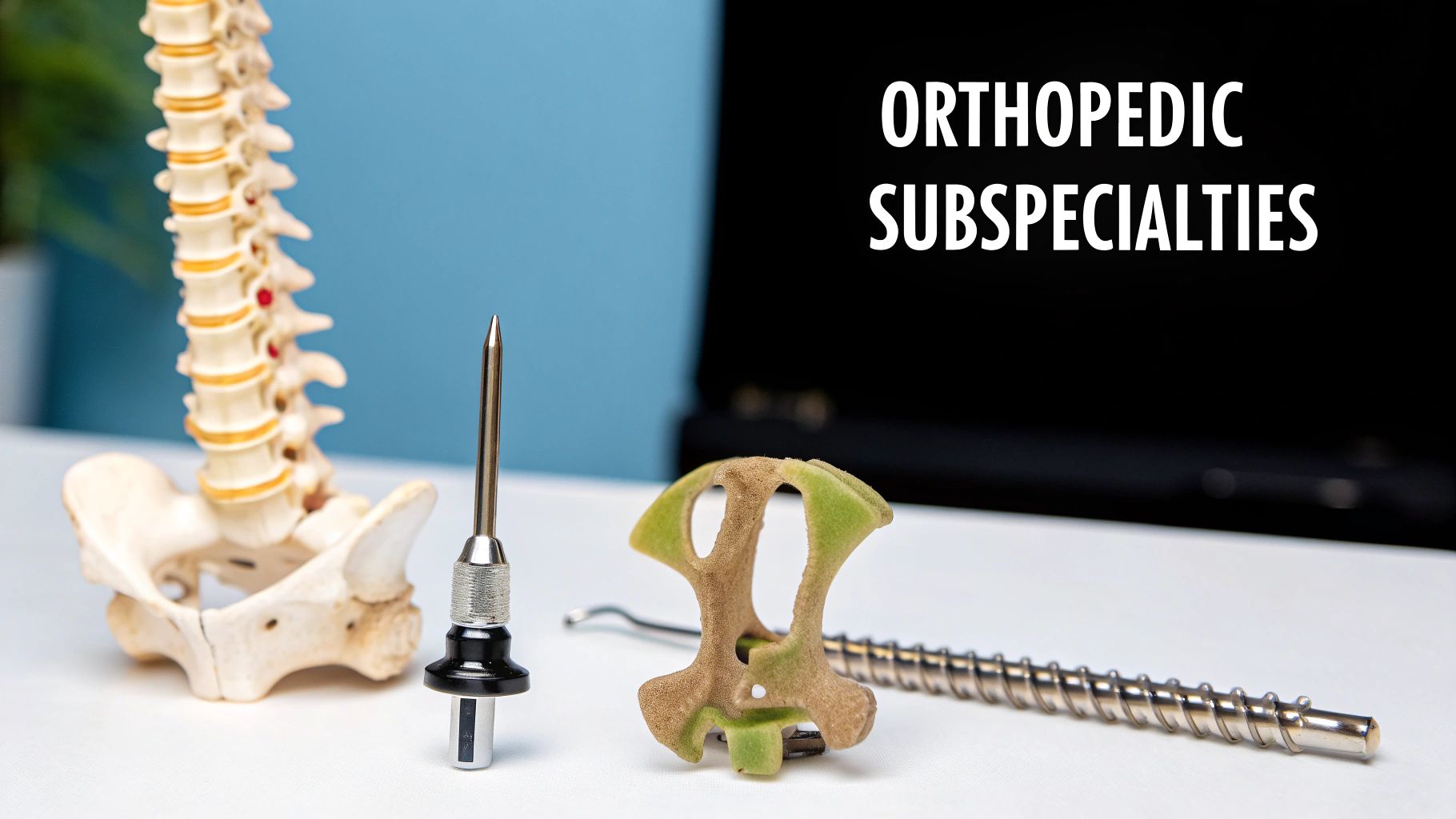
Their work is incredibly precise. It involves removing the damaged cartilage and bone and replacing it with a meticulously engineered prosthetic implant, usually crafted from advanced materials like titanium, cobalt-chromium, and specialized medical-grade polymers.
The most common procedures include:
- Total Hip Replacement: Relieving the debilitating pain of an arthritic hip and restoring the simple freedom of walking comfortably.
- Total Knee Replacement: A powerful solution for severe knee arthritis that has made climbing stairs or even just getting around an unbearable task.
- Shoulder Replacement: Addressing advanced arthritis or severe rotator cuff damage to bring back essential arm movement and function.
A top joint replacement surgeon does far more than just replace a joint; they customize the entire procedure to the patient’s unique anatomy and lifestyle demands. They use advanced techniques like robotic-assisted surgery to place implants with sub-millimeter accuracy, which can lead to a more natural feel, better long-term durability, and a quicker return to an active life.
This level of precision is crucial. The goal is an outcome where the new joint feels like a seamless, natural part of your body.
Sports Medicine
The field of sports medicine is dedicated entirely to treating injuries sustained by athletes and active individuals. These specialists have a deep understanding of the immense physical demands placed on the body during competition and training. Their ultimate goal is to get patients back to their peak performance level—safely and efficiently.
This dynamic field is the largest specialization within orthopedic surgery, making up 18.2% of all practice areas. It’s particularly popular among mid-career practitioners; a remarkable 61.4% of orthopedic surgeons aged 40 to 59 specialize in sports medicine, reflecting a massive focus on optimizing athletic recovery.
A sports medicine surgeon specializes in both operative and non-operative treatments for the injuries we see most often in active people, such as:
- ACL (Anterior Cruciate Ligament) Tears: A common injury in sports that involve sudden stops and quick changes in direction.
- Meniscus Tears: Damage to the C-shaped cartilage that cushions and stabilizes the knee joint.
- Rotator Cuff Tears: Injuries to the group of muscles and tendons that surround the shoulder joint, crucial for lifting and rotating the arm.
- Tendon Ruptures: Acute injuries like an Achilles tendon rupture in the ankle.
For those wanting to dive deeper into this area, our guide on finding a top-tier specialist in sports medicine offers more insight into their methods and the importance of their focused expertise.
Spine Surgery
Spine surgeons are among the most highly specialized of all orthopedic experts, and for good reason. They operate on the central pillar of the musculoskeletal system—the spinal column—which houses the incredibly delicate spinal cord and nerves.
Their practice addresses conditions that can cause chronic, debilitating pain and serious neurological problems, like numbness or weakness radiating into the arms or legs. A spine surgeon’s work demands immense precision, as they navigate critical neural structures where there is zero room for error.
Key conditions they treat include:
- Herniated Discs: When the soft, gel-like center of a spinal disc pushes through a tear in its tough exterior, often compressing a nerve root.
- Spinal Stenosis: The narrowing of the spinal canal, which can put pressure on the spinal cord and the nerves branching out from it.
- Scoliosis: An abnormal sideways curvature of the spine, most often diagnosed in adolescents.
- Degenerative Disc Disease: The natural, age-related breakdown of the spinal discs that leads to pain and instability.
Modern spine surgery has made incredible leaps forward, with a strong emphasis on minimally invasive techniques. These procedures use smaller incisions and specialized instruments to reduce muscle damage, minimize blood loss, and allow for a much faster and less painful recovery compared to traditional open surgery.
Hand and Upper Extremity Surgery
The hand is one of the most mechanically complex structures in the human body. It contains 27 bones and a dense, intricate network of ligaments, tendons, and nerves all working in perfect concert. A hand surgeon is essentially a microsurgeon who has mastered the anatomy of the entire upper limb, from the fingertips to the shoulder.
This subspecialty requires a unique blend of skills from orthopedics, plastic surgery, and neurosurgery. These surgeons are tasked with restoring function lost due to traumatic injury, arthritis, or congenital conditions.
Common treatments provided by a hand and upper extremity specialist include:
- Carpal Tunnel Release: A procedure to relieve painful pressure on the median nerve in the wrist.
- Trigger Finger Release: Correcting a frustrating condition where a finger gets stuck in a bent position.
- Fracture Repair: Meticulously setting the tiny, delicate bones of the hand and wrist.
- Tendon and Nerve Repair: Reconnecting delicate structures using sophisticated microsurgical techniques under a microscope.
Foot and Ankle Surgery
Much like the hand, the foot is an incredibly complex structure, containing 26 bones and 33 joints that work together to support the entire body’s weight. A foot and ankle orthopedic surgeon specializes in diagnosing and treating all conditions related to this foundational part of the body.
Their expertise is vital for anyone whose mobility is compromised by foot or ankle pain. They handle a wide spectrum of issues, from common deformities and sports injuries to severe trauma.
Their practice often focuses on:
- Bunion Correction: Realigning the big toe joint to relieve pain, correct the deformity, and improve foot mechanics.
- Achilles Tendon Repair: Surgically reattaching the body’s largest and strongest tendon after a rupture.
- Ankle Fusion or Replacement: Advanced procedures designed to address severe, end-stage ankle arthritis.
- Plantar Fasciitis Solutions: A range of both surgical and non-surgical treatments for chronic, stabbing heel pain.
Each of these core subspecialties showcases the remarkable depth and focus within the field of orthopedics. For any patient, understanding these distinctions is the key to finding a true expert who is perfectly matched to their specific condition.
A Look at Highly Focused Orthopedic Fields
While joint replacements and sports medicine grab most of the headlines, the world of orthopedics has incredibly focused disciplines designed for the most complex and high-stakes patient needs. These surgeons operate in niche areas where an extraordinary level of specific training is non-negotiable for achieving a successful outcome.
Think of it like an elite legal team. You don’t just have “a lawyer”; you have a specialist for international patent law, another for high-stakes M&A, and a third for appellate court arguments. Orthopedics is the same. There are experts for unique, life-altering conditions that fall far outside the scope of common musculoskeletal problems.
Let’s explore three of these hyper-specialized fields: orthopedic trauma, pediatric orthopedics, and musculoskeletal oncology.
Orthopedic Trauma Surgery
Orthopedic trauma surgeons are the masters of the emergency room. They handle severe, acute injuries to the musculoskeletal system—the kind that result from high-energy events like major car accidents, serious falls, or industrial incidents. Their work is a constant race against the clock to stabilize patients and reconstruct shattered bones and mangled soft tissues.
Unlike a surgeon who schedules a hip replacement weeks in advance, a trauma surgeon has to make critical, life-altering decisions in a matter of moments. They are masters of complex fracture care, meticulously piecing together bones that have been broken into multiple fragments. It’s a lot like solving an intricate, three-dimensional jigsaw puzzle under immense pressure.
Their expertise is centered on:
- Complex Fractures: Managing devastating breaks in major bones like the pelvis, femur, and tibia, especially when the joints are involved.
- Polytrauma Care: Working seamlessly with other surgical specialists to treat patients suffering from multiple life-threatening injuries at once.
- Post-Traumatic Reconstruction: Addressing the difficult aftermath of trauma, like fractures that won’t heal (nonunions) or bones that have healed in the wrong position (malunions).
For a trauma surgeon, the goal isn’t just fixing a bone. It’s about restoring the entire limb’s function and giving the patient a real chance to return to a normal, active life.
Pediatric Orthopedics
Here’s a fundamental truth: children are not just small adults. A pediatric orthopedic surgeon understands this better than anyone, possessing specialized knowledge of a child’s growing body, where bones are still developing and have unique structures like growth plates.
These growth plates are active areas of cartilage near the ends of long bones, and an injury here can have lifelong consequences if it’s not managed perfectly. These surgeons must blend exceptional surgical skill with a deep, compassionate understanding of how to care for both children and their understandably anxious families.
A pediatric orthopedic surgeon’s work demands a long-term vision. They have to fix the immediate problem while constantly considering how that treatment will impact the child’s growth for years to come, ensuring bones grow straight and strong all the way into adulthood.
Their practice covers a wide range of conditions seen only in childhood:
- Scoliosis: Diagnosing and surgically correcting abnormal spinal curvatures.
- Clubfoot: A congenital condition where a baby’s foot is twisted out of its normal shape or position.
- Growth Plate Fractures: Providing specialized care for delicate fractures that could otherwise stunt or alter a bone’s future growth.
- Cerebral Palsy: Managing the musculoskeletal effects of this neurological disorder to improve a child’s mobility and overall function.
Musculoskeletal Oncology
This is arguably one of the most specialized and demanding fields in all of medicine. Musculoskeletal oncology is dedicated to the surgical treatment of bone and soft tissue tumors. These surgeons operate at the critical intersection of orthopedics and oncology, tasked with removing cancers while preserving as much of the patient’s function and form as humanly possible.
It’s a discipline of immense complexity. A musculoskeletal oncologist performs intricate procedures to excise tumors, which might involve removing a large section of bone and then reconstructing the limb with a custom-designed prosthesis or a bone graft. Their primary mission is always twofold: cure the cancer and, whenever possible, save the limb.
They treat a range of rare and serious conditions, including:
- Osteosarcoma: A type of bone cancer that often appears in adolescents and young adults.
- Soft Tissue Sarcomas: Cancers that develop in muscles, fat, nerves, or other connective tissues.
- Metastatic Disease: Managing bone tumors that have spread from cancers elsewhere in the body, such as the breast, lung, or prostate.
Each of these hyper-specialized fields showcases the incredible dedication and expertise that exists within orthopedics. For patients facing these specific, daunting challenges, finding a true subspecialist isn’t just a preference—it is absolutely essential for achieving the best possible outcome.
The Modern Orthopedic Surgeon’s Toolkit
Once an orthopedic surgeon has a clear picture of what’s going on, the focus shifts from diagnosis to building a precise treatment plan. This isn’t guesswork. It’s a process that relies on a powerful combination of advanced diagnostic tools and a broad spectrum of therapies, from conservative, non-invasive methods all the way to groundbreaking surgical procedures.
Think of the diagnostic phase as creating a highly detailed architectural blueprint. Before any work begins, the surgeon needs to see the problem from every possible angle. This is where advanced imaging becomes absolutely essential. While X-rays give a good first look at bone structure, they don’t tell the whole story.
To get that deeper, more complete view, surgeons turn to more sophisticated tools:
- Magnetic Resonance Imaging (MRI): Using powerful magnets and radio waves, an MRI creates incredibly detailed images of soft tissues. It’s the gold standard for visualizing ligaments, tendons, cartilage, and muscles, making it indispensable for diagnosing issues like a torn rotator cuff or a meniscus injury in the knee.
- Computed Tomography (CT) Scans: A CT scan is like a high-tech version of an X-ray. It takes a series of images from different angles and combines them to create cross-sectional “slices” of your bones, blood vessels, and soft tissues. This provides exceptional detail about bone structure, making it the perfect tool for planning a complex fracture repair or a joint replacement.
From Conservative Care to Surgical Solutions
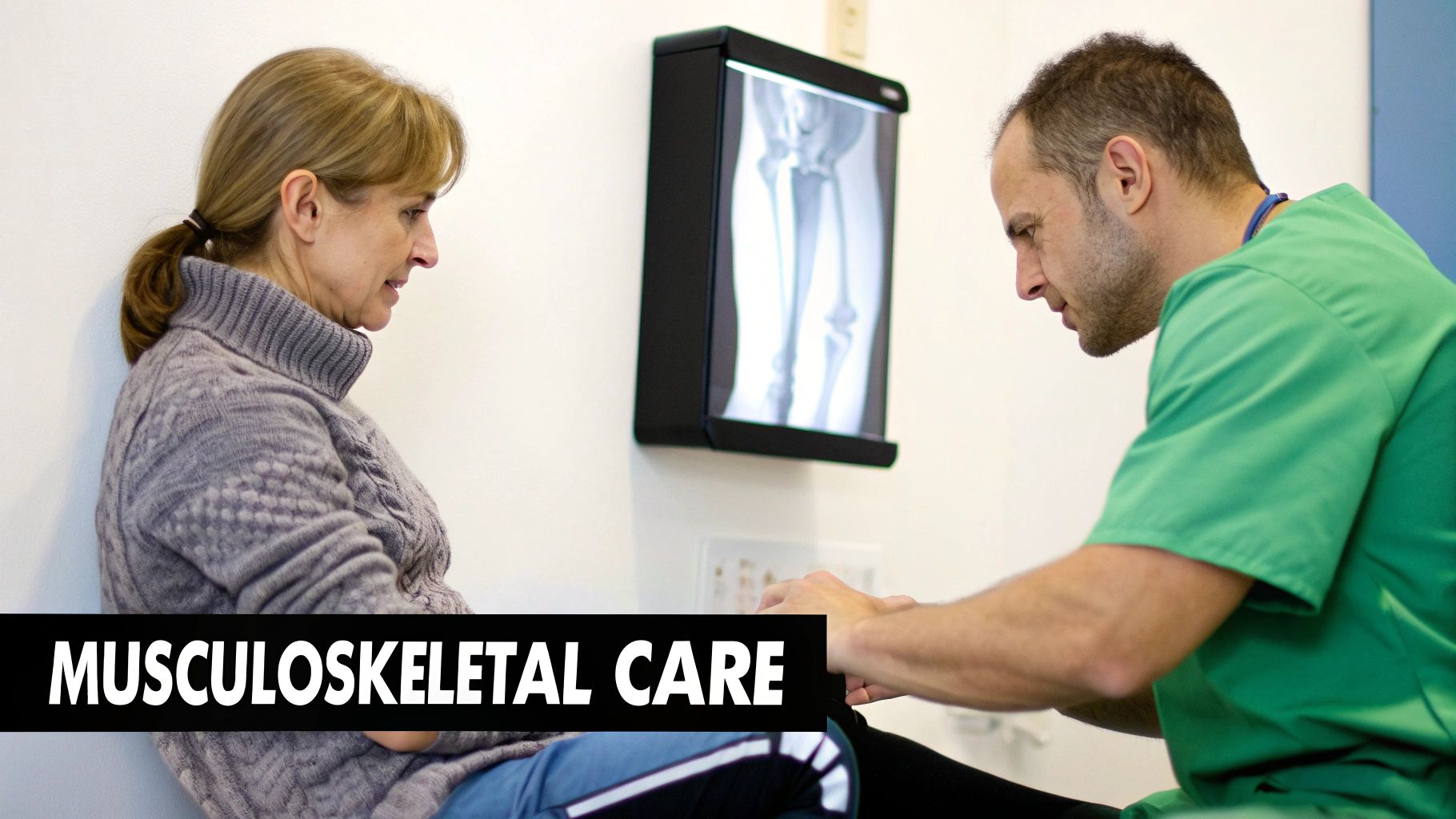
With a precise diagnosis in hand, the first step is almost always non-surgical. The guiding principle of modern orthopedics is to resolve the issue with the least invasive method possible. Conservative care is the foundation, and it includes a range of highly effective treatments.
Physical therapy is a cornerstone, employing targeted exercises to restore strength, flexibility, and proper function. This is often paired with anti-inflammatory medications or targeted injections, like corticosteroids, which can reduce pain and swelling right at the source of the problem.
Another exciting area is biologic treatments, which tap into the body’s own healing mechanisms to repair damaged tissues.
- Platelet-Rich Plasma (PRP) Therapy: This involves concentrating the platelets from your own blood and injecting them into an injured area to jump-start and accelerate healing in tendons and ligaments.
- Cell-Based Therapies: These innovative treatments use a patient’s own cells to help regenerate damaged cartilage and other tissues. You can learn more about these powerful methods by exploring the role of stem cell therapy for joints, a field showing immense promise for certain conditions.
When surgery does become necessary, the modern orthopedic specialist’s objective is to be as precise and minimally disruptive as possible. Today’s surgical techniques are designed to reduce recovery time, minimize pain, and produce better, more durable long-term outcomes for the patient.
Pioneering Surgical Interventions
When non-operative treatments just aren’t enough to get you back to your life, an orthopedic surgeon will turn to their surgical toolkit. The field has moved far beyond the large incisions of traditional open surgery, with a heavy emphasis on techniques that preserve as much healthy tissue as possible.
Arthroscopy is a perfect example of a minimally invasive procedure. Instead of a large opening, the surgeon makes several small incisions and inserts a tiny camera—an arthroscope—to see directly inside the joint. Using small, specialized instruments, they can perform the repair. The result? Less pain, minimal scarring, and a much faster return to your daily activities.
For bigger procedures like joint replacements or spine surgery, technology has raised the standard of care even higher.
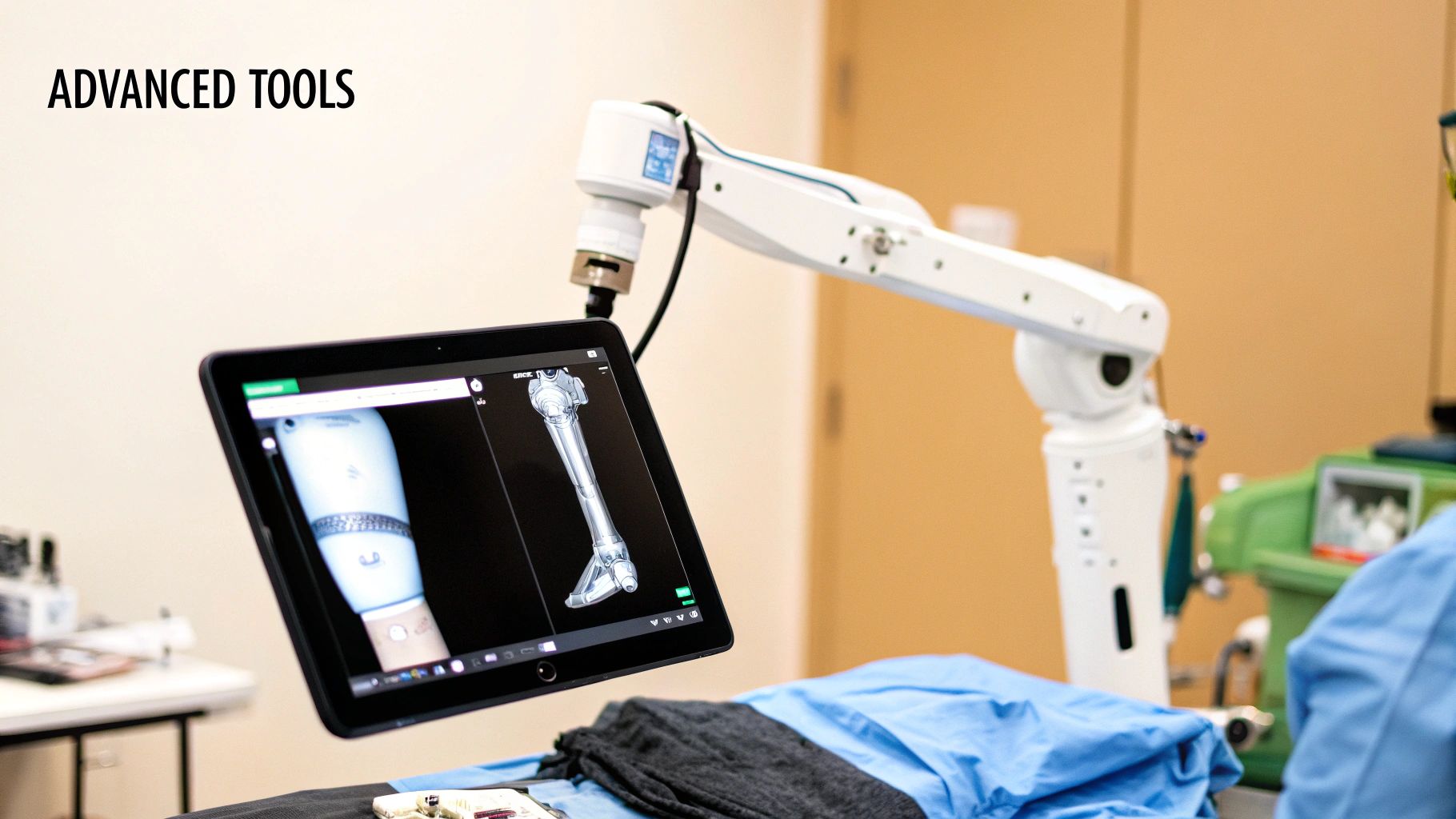
- Robotic-Assisted Surgery: In joint replacements, a surgeon can use a robotic arm as an extension of their own hands. This allows for the placement of implants with an incredible degree of accuracy, which helps create a more balanced, natural-feeling joint that’s built to last.
- Computer-Navigated Surgery: Think of this as a GPS for the surgeon, especially critical in delicate spine surgery. It creates a real-time 3D map of the patient’s anatomy, allowing the surgeon to navigate around nerves and other vital structures with exceptional safety and precision.
How to Select the Right Orthopedic Specialist
Choosing the right orthopedic surgeon is arguably the most important decision you’ll make for your musculoskeletal health. It’s a choice that has a direct, profound impact on your surgical outcome, your recovery, and your return to the life you want to live. The key is to look far beyond a medical degree and focus on the deep, specific experience that aligns perfectly with your condition.
Think of it like commissioning a bespoke timepiece. You wouldn’t go to a general watch repair shop; you’d seek out a master craftsman who specializes in the exact complex movement you need. In the same way, you need a surgeon whose practice is almost entirely dedicated to the specific procedure you require.
This means prioritizing a specialist who is not just board-certified, but also fellowship-trained in their subspecialty. That additional year of intensive, focused training is the dividing line between a generalist and a true master of a particular field, whether it’s spine surgery or advanced joint replacement.
Evaluating a Surgeon’s Experience
Credentials are the baseline, but the truest measure of expertise is surgical volume. A surgeon who performs hundreds of knee replacements a year has navigated a vast spectrum of patient anatomies and complexities. That high volume builds a level of instinct and technical finesse that simply cannot be replicated by someone who only performs the procedure occasionally.
You should feel completely comfortable asking a prospective surgeon direct, pointed questions about their experience. This isn’t the time for hesitation.
- How many of these specific procedures do you perform each year?
- What percentage of your practice is dedicated solely to this subspecialty?
- What advanced technologies, like robotic assistance or navigation, do you use to improve precision and outcomes?
This is especially critical in high-demand areas. For instance, total joint procedures currently make up 14.4% of all orthopedic practice areas. While the average specialist performs about 65.2 of these surgeries annually, demand is projected to double by 2050. This underscores the importance of finding a high-volume expert who is already at the forefront of the field. You can explore more about these orthopedic surgery trends to understand the landscape.
Choosing an orthopedic surgeon isn’t about finding someone who can do your surgery. It’s about finding the specialist who has mastered it—the one for whom your specific procedure is a routine and perfected art form.
A Framework for Your Search
To help structure your decision-making process, it’s useful to compare the standard qualifications most surgeons have with the elite criteria that signal truly superior care. A top-tier surgeon will easily meet all the standard benchmarks, but they will excel in the elite categories—and that difference is what translates directly into a better result and a smoother, faster recovery for you.
Checklist for Choosing a Top Orthopedic Surgeon
| Standard Criteria | Elite Criteria | Why It Matters for Your Recovery |
|---|---|---|
| Board-Certified | Fellowship-Trained | Fellowship training provides an extra year of deep, specialized practice in one area (like spine or hand), leading to higher mastery. |
| General Orthopedic Practice | Subspecialty Focus (>75% of practice) | A surgeon who performs your procedure daily or weekly has seen every variation and can handle any complexity with practiced ease. |
| Performs a Variety of Procedures | High Annual Volume of Your Specific Procedure | High volume directly correlates with lower complication rates, better outcomes, and more efficient surgery, which aids recovery. |
| Access to Standard Hospital Technology | Expertise with Advanced Technology (Robotics, Navigation) | These tools enhance precision, often leading to better implant alignment, less tissue damage, and potentially faster rehabilitation. |
| Good Bedside Manner | Commitment to Patient Education & Shared Decision-Making | An elite surgeon ensures you are a true partner in your care, fully understanding the “why” behind every decision for greater peace of mind. |
| Positive Online Reviews | Peer-Recognized Leader (Publications, Teaching Roles) | Recognition from other experts is a powerful signal of technical skill and leadership in the field. |
Using this checklist as a guide will help you confidently vet your options and find the best possible partner for your healthcare journey. Remember, a truly exceptional surgeon will not only welcome this level of diligence but will also have the transparent, verifiable answers you’re looking for.
Common Questions About Orthopedic Specialists
Navigating the world of orthopedics can bring up a lot of questions. Let’s tackle some of the most common concerns to help you make truly informed decisions about your musculoskeletal health.
When Should I See a Subspecialist Instead of a General Orthopedist?
While a general orthopedic surgeon is an excellent starting point for many common issues, you should absolutely seek out a subspecialist for complex problems. This is especially true for conditions requiring highly technical surgery, like intricate spine procedures or delicate hand surgeries.
Think of it this way: if you’re an athlete or an executive where a rapid, complete recovery isn’t just a preference but a necessity, a subspecialist’s focused experience can be a game-changer. Their depth of knowledge in one specific area often translates into more refined techniques, better outcomes, and a smoother road back to peak performance.
What Is the Difference Between an Orthopedic Surgeon and a Sports Medicine Physician?
This is a key distinction. An orthopedic surgeon who subspecializes in sports medicine is a surgeon—they are the ones who perform operations like ACL reconstructions or rotator cuff repairs.
In contrast, a primary care sports medicine physician is a non-operative doctor. They are experts in diagnosing and managing injuries with non-surgical treatments like physical therapy, advanced injections, and rehabilitation protocols. The two fields work hand-in-hand. You might see a sports medicine physician first, who then refers you to a surgeon if an operation is deemed necessary.
A productive consultation starts with great preparation. Walking in with the right questions ensures you leave with clarity and confidence. Our guide details the most important questions to ask an orthopedic surgeon to help you take control of your healthcare journey.
How Important Is Robotic-Assisted Surgery for Joint Replacement?
Robotic-assisted surgery isn’t about a robot doing the operation—it’s about enhancing a great surgeon’s precision. The technology acts as an incredibly accurate guide, allowing the surgeon to place implants with a higher degree of exactness and more effectively balance the surrounding ligaments.
For the patient, this precision often leads to a joint that feels more natural, has greater longevity, and supports a smoother recovery. If you’re seeking the absolute highest degree of accuracy for a joint replacement, finding a surgeon skilled in this technology should be a top priority.
Finding a top-tier specialist is the single most critical step in your treatment journey. The Haute MD network provides direct access to the nation’s leading, vetted orthopedic surgeons who are recognized for their subspecialty expertise and unwavering commitment to patient outcomes. Explore our directory to connect with an elite physician near you.