


Finding the right specialist in sports medicine is about so much more than just treating an injury. It’s about finding a true partner, an expert dedicated to elevating your peak performance and safeguarding your long-term health. Think of them less like a traditional doctor and more like a performance architect—someone who builds a comprehensive strategy for your recovery, resilience, and physical optimization.
The Role of a Modern Sports Medicine Specialist
Today’s elite sports medicine physician works with a surprisingly diverse clientele, from professional athletes and driven CEOs to dedicated weekend warriors who refuse to let an injury slow them down. Their role has evolved far beyond the old-school “rest and ice” playbook. Instead, they operate as strategic partners, diving deep into the intricate mechanics of the human body to not only repair damage but, more importantly, to proactively prevent future problems.
This modern specialist understands a critical truth: for high-achievers, physical capability is directly tied to professional success and personal fulfillment. Their expertise isn’t just in anatomy, but in the nuanced world of musculoskeletal function, biomechanics, and the specific demands your activities place on your body. Whether you’re a founder training for a marathon or a golfer trying to eliminate that nagging back pain from your swing, a top-tier specialist provides a highly personalized plan. This isn’t generic healthcare; it’s a bespoke medical strategy engineered to enhance your physical output and build a more durable, resilient body.
A Partnership in Performance
The relationship you build with a premier specialist is deeply collaborative. They take the time to actually understand your unique goals, your demanding lifestyle, and your complete physical history. This 360-degree view allows them to diagnose the root cause of an issue, not just chase the symptoms. For instance, that recurring knee pain might not be a knee problem at all. It could easily stem from hip instability or flawed foot mechanics, something a rushed appointment would almost certainly miss.
A true specialist doesn’t just fix what’s broken. They analyze the entire system to understand why it broke and then engineer a stronger, more efficient version to prevent it from happening again.
This forward-thinking approach is essential for anyone who simply can’t afford significant downtime. For many, seeing how top performers manage their health reveals the incredible benefits of this advanced level of care. You can learn more about how top athletes and CEOs optimize their bodies for peak performance. The goal is always the same: get you back to your life and your passions faster, stronger, and armed with the knowledge to maintain your physical edge for years to come.
Beyond Injury Treatment
Ultimately, the best sports medicine specialists offer a sophisticated blend of diagnostic precision, advanced non-surgical treatments, and preventative wellness. Their work is a fusion of science and strategy that includes:
- Advanced Diagnostics: Using powerful tools like musculoskeletal ultrasound for real-time imaging, allowing for pinpoint accurate diagnoses right in the office, without the wait.
- Performance Optimization: Analyzing your movement patterns and biomechanics to identify subtle inefficiencies that could lead to future injury or are currently limiting your performance.
- Regenerative Medicine: Employing sophisticated treatments that harness your body’s own natural healing processes to dramatically accelerate recovery from injury.
- Proactive Prevention: Developing customized strength, conditioning, and nutrition plans designed to build robust resilience against future injuries.
Decoding the Credentials of a Top Specialist
When you’re looking for a top specialist in sports medicine, you aren’t just looking for any doctor. You’re looking for an expert with a specific, rigorous background dedicated to the science of human movement. Not all physicians who treat sports injuries have this focused expertise, making it crucial to understand the credentials that truly set the elite apart.
The journey to becoming a specialist is a multi-step process that goes far beyond medical school. Think of it like this: a general practitioner knows how a high-performance engine works, but a fellowship-trained specialist is the master engineer who can tune that engine for maximum power, efficiency, and longevity. This advanced training is the key differentiator.
This specialist acts as a performance architect, building a complete strategy for physical excellence that covers recovery, resilience, and optimization.
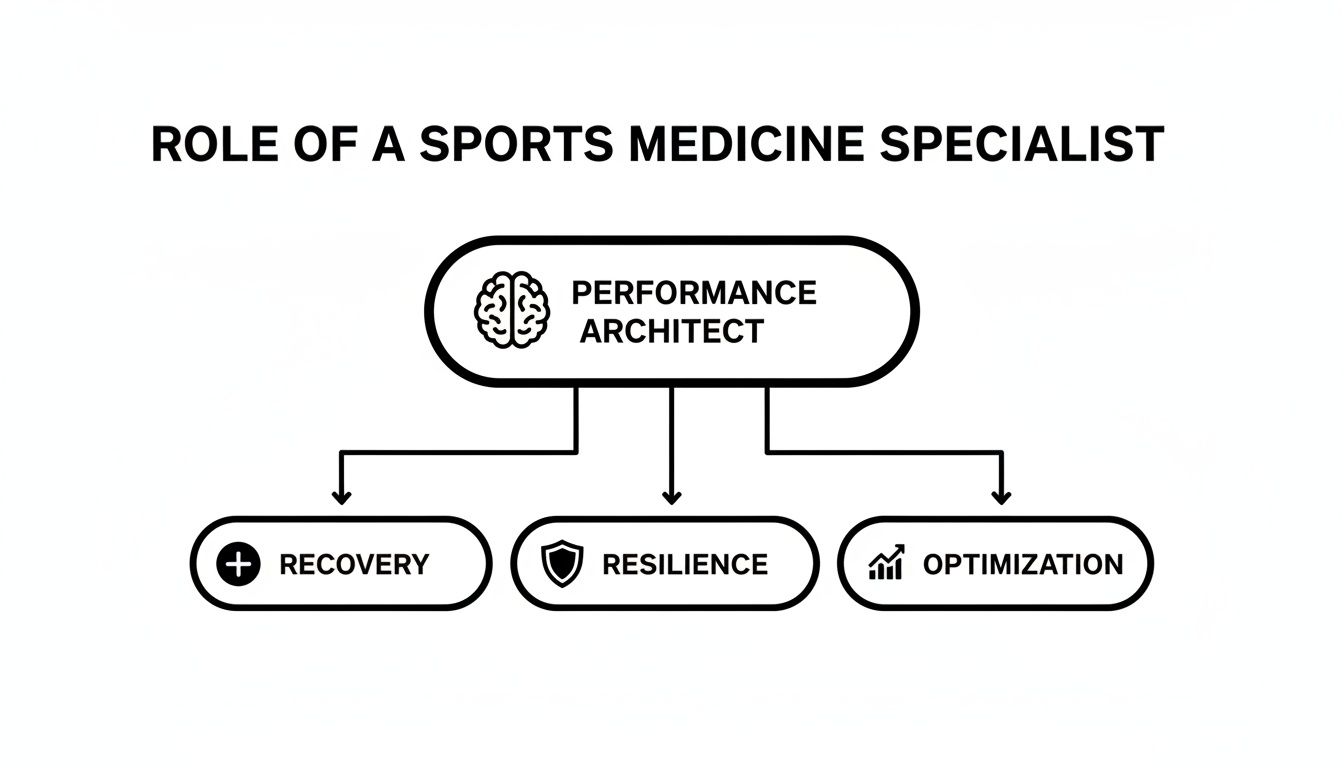
Their role isn’t just about fixing what’s broken; it’s about engineering a better, more durable you.
The Foundation: Board Certification
The first non-negotiable credential is board certification. This confirms that a physician has completed a residency in a primary specialty—like Family Medicine, Internal Medicine, Pediatrics, or Physical Medicine and Rehabilitation (PM&R)—and passed a demanding exam to prove their mastery.
Board certification is the baseline proof of competence. But for a true sports medicine specialist, it’s just the starting point.
The Gold Standard: The Sports Medicine Fellowship
After becoming board-certified, the most dedicated physicians pursue a sports medicine fellowship. This is an additional one to two years of intensive, sub-specialty training focused exclusively on athletic injuries and musculoskeletal conditions.
During their fellowship, physicians gain direct, hands-on experience with athletes at all levels, from high school teams to professional franchises. They master advanced techniques that simply aren’t covered in a general residency. This is where they learn the art and science of sports medicine at the highest level.
A sports medicine fellowship is the single most important credential to look for. It separates a physician with a casual interest in sports injuries from a true, dedicated specialist who has committed years to mastering the complexities of athletic care.
This distinction ensures your doctor has deep, practical knowledge in the areas that matter most for an active life.
Key Skills Acquired in Fellowship Training
Fellowship training provides a unique and powerful skill set designed specifically for the active patient. This includes:
- Musculoskeletal Ultrasound: They become experts in using ultrasound for real-time imaging of muscles, tendons, and ligaments. This allows for incredibly accurate in-office diagnoses and precise guidance for injections.
- Advanced Regenerative Procedures: Fellows train in cutting-edge, non-surgical treatments like Platelet-Rich Plasma (PRP) and other orthobiologics that stimulate the body’s natural healing capabilities.
- Biomechanics and Gait Analysis: They develop a keen eye for analyzing human movement, identifying the subtle flaws in mechanics that often lead to chronic or recurring injuries.
- Management of Medical Conditions in Athletes: This covers everything from concussion management to understanding how conditions like asthma or diabetes impact athletic performance.
This level of expertise is in high demand. The sports medicine workforce is experiencing significant growth, employing 133,635 professionals as of 2022 and projected to add 72,500 new jobs by 2029. This expansion is driven by a 2.6% average annual increase in demand, as more people seek out true experts for both injury prevention and management. You can explore more data on the growing demand for sports medicine professionals.
When you choose a fellowship-trained specialist, you’re partnering with a physician who is not just qualified but is at the forefront of their field, equipped with the latest knowledge to get you back to your peak.
To make it simple, here’s a quick-reference guide to the non-negotiable qualifications discerning patients should look for when selecting a specialist.
Essential Credentials of an Elite Sports Medicine Specialist
| Credential | What It Signifies | Why It Matters for You |
|---|---|---|
| Medical Degree (MD/DO) | Completion of four years of medical school. | This is the foundational degree for any practicing physician. |
| Residency Training | 3-4 years of training in a primary specialty like PM&R, Family Medicine, or Pediatrics. | Provides the core clinical skills upon which specialized knowledge is built. |
| Board Certification | Passing a rigorous exam in their primary specialty. | A national standard of excellence, proving mastery of their foundational field. |
| Sports Medicine Fellowship | 1-2 additional years of intensive, focused training in sports medicine. | This is the critical differentiator. It ensures deep expertise in non-operative orthopedics, biomechanics, and athlete-specific care. |
| CAQ in Sports Medicine | Certificate of Added Qualifications, a subspecialty board certification. | The highest formal recognition of expertise, confirming they have passed an additional exam specifically in sports medicine. |
Ultimately, these credentials aren’t just letters after a name. They represent thousands of hours of focused training dedicated to understanding the unique demands placed on the active body, ensuring you receive care that is not just adequate, but exceptional.
Advanced Treatments for Common Sports Injuries
A top-tier specialist in sports medicine moves far beyond the standard “rest and ice” prescription. Their toolkit is packed with sophisticated, non-surgical treatments designed to accelerate healing, slash downtime, and protect your joints for the long haul. This is where cutting-edge science gets real, delivering solutions that get you back in the game—and your life—faster.
Instead of just masking symptoms, these physicians dive deep to fix the underlying biological problems causing the pain and dysfunction. For those nagging overuse injuries like “Runner’s Knee” or “Golfer’s Elbow,” the goal is to kickstart the body’s own powerful repair mechanisms. It’s a fundamental shift from reactive damage control to proactive, intelligent regeneration.
Harnessing the Body’s Healing Power with Orthobiologics
One of the most powerful tools in the modern sports medicine arsenal is orthobiologics. This isn’t about introducing foreign substances; it’s about using materials found naturally in your own body to calm inflammation and jumpstart the repair of injured tendons, ligaments, and cartilage. A specialist uses these to create a super-concentrated healing event right at the injury site.
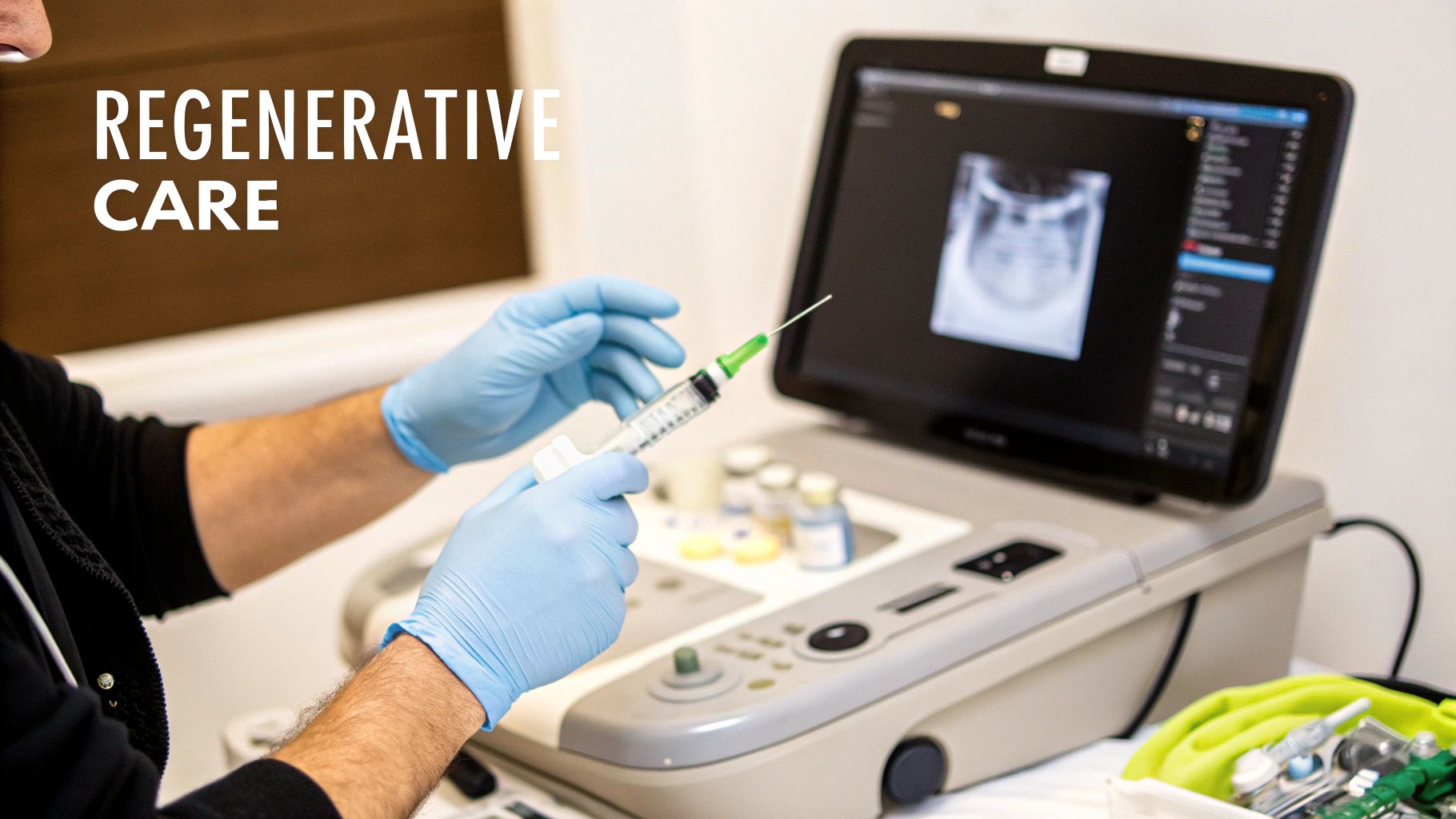
A perfect example is Platelet-Rich Plasma (PRP) therapy. The process is straightforward: a small amount of your blood is drawn, spun in a centrifuge to isolate the platelets and powerful growth factors, and this golden serum is then injected back into the damaged area. Think of it as deploying your body’s elite special forces—a highly concentrated team of repair cells—precisely where the battle is being fought.
By dramatically amplifying your natural healing cascade, PRP can significantly speed up recovery from chronic tendon injuries and certain joint problems. It’s about working with your body’s intelligence, not fighting against it.
This approach is a game-changer for conditions that can linger for months, like Achilles tendinopathy or rotator cuff issues, often helping patients sidestep more invasive procedures. Many are also exploring related techniques, and you can get an overview of the latest advancements by reading about stem cell therapy for joints.
The Critical Role of Ultrasound Guidance
An advanced treatment like PRP is only as good as its placement. This is why a fellowship-trained specialist in sports medicine almost always performs these injections using musculoskeletal ultrasound guidance. This technology acts as a real-time window into your body, letting the physician see the needle’s path and confirm it has reached the exact target.
Imagine trying to hit a tiny, specific target in a dark room versus hitting it with a high-powered spotlight and a laser sight. That’s the difference between a “blind” injection and one guided by ultrasound. This level of precision isn’t a luxury; it’s absolutely essential for safety and results.
This meticulous approach ensures two critical outcomes:
- Maximum Efficacy: The healing agents are delivered directly into the damaged tissue—not just somewhere nearby—unlocking the treatment’s full potential.
- Enhanced Safety: The physician can clearly see and steer around sensitive structures like nerves and blood vessels, dramatically lowering the risk of complications.
A Spectrum of Modern Interventions
Beyond PRP, an expert specialist has a whole range of other minimally invasive options. The choice is never one-size-fits-all; it’s always tailored to your specific injury, activity level, and recovery goals.
Here are a few other common interventions in their toolkit:
- Tenotomy Procedures: For chronic, stubborn tendon pain, a specialist may perform an ultrasound-guided tenotomy. This involves using a tiny instrument to break down and remove degenerative scar tissue, which in turn stimulates the growth of new, healthy tendon fibers.
- Viscosupplementation: This is a go-to treatment for osteoarthritis, especially in the knee. The specialist injects hyaluronic acid—a substance that mimics your body’s natural joint fluid—directly into the joint. It helps restore cushioning and shock absorption, leading to less pain and better movement.
Ultimately, these advanced treatments reflect a core philosophy. The focus is on finding the most direct, biologically sound path back to health. By choosing a specialist who commands these techniques, you’re not just treating an injury; you’re investing in a strategy for a swift, durable return to the life you love.
What to Expect from Your First Consultation
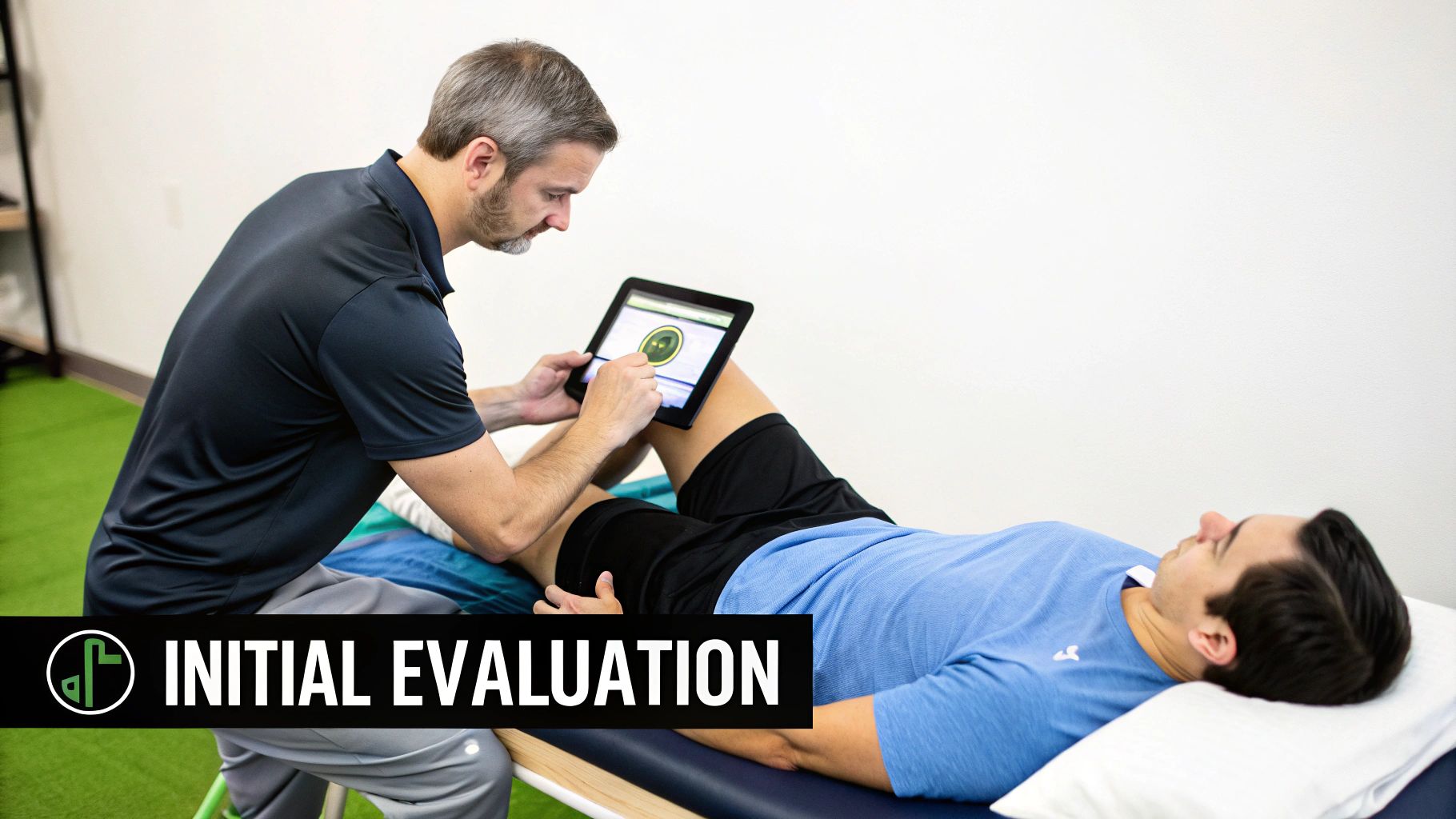
Your first evaluation with a top-tier sports medicine specialist should feel less like a standard doctor’s visit and more like a strategic planning session. This is where the partnership truly begins. Expect a deep, collaborative dive into your history, your goals, and the intricate mechanics of your body to build a personalized roadmap for recovery and peak performance.
Forget the rushed, impersonal experience you might be used to. An elite physician dedicates significant time to listening and understanding the full context of your issue. This first meeting is a comprehensive data-gathering mission designed to uncover the why behind your pain or performance plateau, not just to label the what.
The Deep Dive into Your History and Goals
The consultation starts with a detailed conversation that goes far beyond your immediate symptoms. Your specialist will want to know everything about your active life.
This discovery phase is absolutely crucial. A top specialist in sports medicine operates like a detective, piecing together clues from your athletic background, training regimen, and lifestyle to form a complete picture. They will likely ask about:
- Your Athletic History: What sports do you play? For how long? Are you a weekend warrior or a competitive athlete?
- Training Volume and Intensity: How often do you train? Have you recently changed your routine, increased your mileage, or added new exercises? Sudden changes are often a red flag.
- Past Injuries: Tell them about every previous injury, even if it seems unrelated. How you healed—or didn’t—provides valuable insight.
- Performance Goals: What are you actually trying to achieve? Are you training for a marathon, aiming to get through a round of golf without pain, or trying to prevent the next injury?
This thorough approach is designed to ensure one thing: that the final treatment plan is aligned perfectly with your personal objectives.
The Meticulous Physical Examination
After the conversation comes the hands-on assessment. This is far more than a simple reflex test or a quick look at the painful area. It’s a meticulous biomechanical evaluation designed to observe your body in motion and identify the underlying weaknesses or imbalances driving the problem.
The exam will likely include a series of specific movements, strength tests, and functional assessments. The physician will carefully watch how you walk, squat, or perform sport-specific actions to pinpoint subtle dysfunctions that could be the real root cause.
This hands-on evaluation is where expertise truly shines. A skilled specialist can identify kinetic chain deficiencies—like how weak glutes can cause knee pain—that are often missed in a standard orthopedic exam.
Additionally, many premier specialists use in-office diagnostic tools like musculoskeletal ultrasound. This allows them to see your muscles, tendons, and ligaments in real-time, providing immediate and precise diagnostic information without you needing a separate imaging appointment.
Asking the Right Questions
This consultation is a two-way street. It’s your opportunity to vet the physician and ensure they are the right partner for your health. Arming yourself with a few key questions is the best way to make an informed decision.
Consider asking these to gauge their expertise and philosophy:
- What is your fellowship training in? This confirms they have the specialized, post-residency background we discussed.
- What non-surgical treatment options do you specialize in for my condition? This reveals their command of advanced, minimally invasive techniques.
- Do you use ultrasound for diagnosis and to guide procedures? A “yes” indicates a commitment to precision, safety, and modern best practices.
- What is your experience with athletes in my specific sport? This helps determine their familiarity with the unique demands you place on your body.
- What is your overall treatment philosophy for helping patients achieve their goals? This gives you a feel for their collaborative style and long-term vision.
The demand for these highly trained experts is growing rapidly, but the supply has not kept pace. This creates a shortage of qualified professionals, giving elite, board-certified specialists a distinct advantage and allowing them to focus on providing premium, outcome-driven care. You can find more details on this trend by exploring the sports medicine market analysis for 2025-2033. By the end of this first visit, you should feel heard, understood, and confident that you have a clear plan of action.
The Rise of Concierge and Elite Care Models
For driven individuals whose most valuable asset isn’t capital, but time, the traditional healthcare model is fundamentally broken. Waiting weeks for an appointment or losing an afternoon in a crowded lobby isn’t just an annoyance—it’s a critical disruption to business and life. This friction is precisely why concierge and elite care models have become the new standard for anyone serious about getting the highest level of service from a specialist in sports medicine.
This isn’t just a minor tweak; it’s a complete redesign of the patient-physician relationship. The old way is reactive, dictated by brief visits and insurance billing codes. The concierge approach fosters a proactive partnership squarely focused on your long-term health and peak performance. It’s a deliberate shift from a high-volume system to a high-value one, where the real currency is personalized attention and immediate, unfiltered access.
The market reflects this demand. North America now commands approximately 40% of the global sports medicine market share, a dominance fueled by high sports participation rates and a sophisticated healthcare infrastructure that allows these premium care models to flourish. You can discover more insights about the global sports medicine market on Precedence Research.
The Unmistakable Advantages of Premium Access
So, what does this elevated care actually look like in the real world? It’s about systematically dismantling all the frustrating barriers of conventional healthcare.
Imagine you need an urgent consult with your specialist before a major ski trip, or you require expert medical coordination while traveling for a competition. In a concierge model, these aren’t problems to be solved; they are seamless, integrated parts of the service.
The core benefits are designed to build a medical experience around your life, not the other way around.
- Direct 24/7 Access: You have your doctor’s cell number. A text with a quick question, a late-night call about a sudden injury—you get a direct line to your specialist, bypassing gatekeepers entirely.
- Extended, Unhurried Appointments: Forget the 15-minute rush. Consultations can last 30, 60, or even 90 minutes. This allows for a real conversation about your goals, a meticulous exam, and a comprehensive explanation of your game plan.
- Same-Day or Next-Day Scheduling: When an injury or issue pops up, you are seen immediately. This rapid response is crucial for acute injuries, minimizing damage and kickstarting your recovery protocol without delay.
- Seamless Care Coordination: Your specialist becomes your personal health quarterback. They personally coordinate with other top-tier providers, from physical therapists to orthopedic surgeons, ensuring your care is perfectly integrated and ruthlessly efficient.
This structure allows for a caliber of service that is simply impossible within the constraints of a high-volume insurance practice.
Concierge sports medicine isn’t just about convenience; it’s a strategic investment in your health and performance. It moves care from a reactive, problem-fixing model to a proactive, forward-looking partnership dedicated to keeping you at your best.
By removing the typical barriers to care, a specialist can focus entirely on delivering one thing: exceptional outcomes.
Real-World Scenarios and Tangible Value
The true worth of this model crystallizes in high-stakes situations. Consider a CEO who feels a sharp pain in her shoulder two days before a major industry golf tournament. In a traditional setting, she might not get an appointment for weeks. With her concierge specialist, she gets an immediate evaluation, an ultrasound-guided diagnostic injection, and a targeted PT plan—all within hours, allowing her to compete with confidence.
Or think of the dedicated marathon runner who feels a nagging ache in his Achilles tendon. Direct access lets him address it instantly, preventing a minor strain from morphing into a chronic, race-ending injury. This kind of proactive intervention is the very cornerstone of the concierge philosophy.
This level of personalized medical attention is what high-performers now expect. For anyone curious about how the model works from the inside, you can learn more about what concierge medicine is and how it works in our detailed guide. It’s about ensuring your medical care is as ambitious and dedicated as you are, giving you the peace of mind to maintain your active lifestyle without compromise.
How to Begin Your Search for the Right Specialist
Finding the right medical partner can feel overwhelming, but the process gets much simpler when you know exactly what to look for. Your search for a top-tier specialist in sports medicine isn’t just about finding a doctor; it’s about identifying a strategic partner who understands the unique demands you place on your body.
First things first: never settle on credentials. The absolute baseline is a physician who is board-certified and, critically, has completed a dedicated sports medicine fellowship. This isn’t just another line on a resume—it’s the single most important indicator that a specialist has immersive, hands-on training in musculoskeletal care, biomechanics, and the art of non-surgical intervention. It’s what separates a true expert from a generalist.
Prioritize Advanced, Non-Surgical Solutions
Next, look for a practice that’s built around modern, minimally invasive solutions. You want a specialist whose toolkit includes orthobiologics like PRP and who uses ultrasound guidance for both diagnostics and injections as a matter of routine. This signals a commitment to precision and a philosophy centered on harnessing your body’s innate healing capacity, keeping you out of the operating room whenever possible.
Finally, for those who value their time and demand a higher level of personalized attention, the advantages of a concierge or elite care model are impossible to ignore. This isn’t just about convenience; it’s an investment in a medical relationship structured around your specific needs and ambitious recovery goals. It ensures your physician is a proactive partner, always accessible when you need them most.
Your search is about more than just credentials; it’s about finding a strategic partner dedicated to your long-term performance and well-being. This requires a physician who offers a blend of top-tier training, advanced technology, and a service model that respects your time.
To cut through the noise, the Haute MD network acts as a curated guide, connecting discerning patients with the nation’s most respected and rigorously vetted specialists. Our platform is designed to give you direct access to physicians who meet these exacting standards, so you can choose a provider who will not just meet, but exceed, your expectations for elite medical care.
Frequently Asked Questions
Even after mapping out the landscape of elite sports medicine, a few practical questions often come up. Let’s tackle some of the most common ones to give you complete clarity as you move forward.
Key Distinctions and Patient Scope
What’s the Difference Between an Orthopedic Surgeon and a Sports Medicine Specialist?
Think of it this way: the non-surgical sports medicine specialist is your primary care doctor for everything musculoskeletal. Their training is laser-focused on diagnosis, advanced non-operative treatments, and optimizing your body’s performance. They are the experts at getting you better without a scalpel.
An orthopedic surgeon, on the other hand, is a master of operative solutions. While many surgeons do complete sports medicine fellowships, their core expertise is fixing problems surgically. For the vast majority of injuries, from nagging tendonitis to acute muscle strains, the non-surgical specialist is precisely the right place to start.
Do I Need to Be a Professional Athlete to See This Type of Specialist?
Absolutely not. Top sports medicine specialists treat “weekend warriors,” driven executives who hit the gym hard, and young athletes just starting their journey. The principles they use to get a pro back on the field are the same ones they’ll use to help you get back to your spin class or morning run.
Their deep understanding of biomechanics and musculoskeletal function is invaluable for anyone who wants to stay active and perform at their personal best. The goal isn’t to win a championship (unless that’s your goal); it’s to help you maintain a vibrant, active, and fulfilling life, free from pain and limitation.
The core mission of a top sports medicine specialist is to apply the principles of elite athletic care to every patient, helping them return to their chosen activities safely and with greater resilience.
Understanding Premium Care Models
How Does a Concierge Sports Medicine Practice Work?
Concierge practices are built around a membership model designed to eliminate the frustrations of traditional healthcare. You pay a membership fee, and in return, you get unparalleled access and service. We’re talking about 24/7 direct access to your doctor via phone or text, longer appointments that are never rushed, and proactive wellness planning.
While insurance typically doesn’t cover the membership fee itself, it often still covers specific medical services like injections, imaging, or lab work. The concierge model is about investing in a high-touch, deeply personalized relationship with a physician who knows you, your body, and your goals inside and out.
Your search for a premier medical partner ends here. The Haute MD network provides direct access to the nation’s most respected and rigorously vetted specialists, ensuring you connect with a physician who meets the highest standards of care. Find your specialist on Haute MD today.