


Platelet-rich plasma (PRP) therapy is a medical treatment for hair loss where a concentration of your own blood’s healing components is used to wake up dormant hair follicles. When injected into the scalp, these powerful growth factors can help reduce hair shedding and encourage new growth, making it a compelling option for anyone dealing with thinning hair.
This guide will break down the science, the procedure itself, and the kind of outcomes you can realistically expect from this advanced treatment.
Unlocking Hair Growth with Platelet Rich Plasma Therapy
Hair thinning affects millions of people, and it often takes a toll on confidence and self-image. While there are plenty of treatments out there, platelet-rich plasma therapy for hair loss is unique because it uses your body’s own regenerative power to solve the problem. It’s not about introducing foreign chemicals; it’s about concentrating your natural healing mechanisms and directing them right where they’re needed most—your scalp.
Think of it like this: your blood is full of platelets, which are like tiny first responders that rush to heal any injury. These platelets are packed with powerful growth factors. PRP therapy works by isolating these platelets to create a potent serum. When this serum is injected, it acts like a high-octane fertilizer for your struggling hair follicles.
This guide will walk you through everything you need to know, giving you a clear, no-nonsense picture of how this procedure actually works. We’ll get into the science, what the patient journey looks like, and what to expect from your first consultation to your final results.
Setting Expectations for PRP
Before we dive deeper, it’s crucial to understand the core principles of what makes this treatment a solid option for so many people. It’s not an overnight miracle. Instead, it’s a biological process that unfolds over several months.
To give you a clear picture, here’s a quick overview of what to expect when considering PRP therapy.
PRP Hair Therapy at a Glance
This table offers a snapshot of the key aspects of the treatment, helping you understand the process from start to finish.
| Aspect | Description |
|---|---|
| Treatment Goal | To reactivate dormant hair follicles, increase hair thickness, and improve overall hair density. |
| Method | A three-step process: a simple blood draw, spinning the blood in a centrifuge to isolate the PRP, and a series of precise scalp injections. |
| Who It’s For | Best for individuals with early to moderate hair thinning. It is not effective for areas that are completely bald. |
| Timeline | You’ll typically need an initial series of 3-4 treatments, each spaced 4-6 weeks apart. |
| Results | Visible improvements usually start to appear within 3-6 months as your natural hair growth cycle responds. |
| Maintenance | To keep your results going strong, follow-up sessions are often recommended every 6-12 months. |
Having this foundation helps set realistic expectations from the get-go. PRP is a medical procedure designed to work with your body’s natural timeline, offering a gradual but significant improvement in hair health.
As we continue, we’ll break down every part of the process, from the science behind the growth factors to how to select a board-certified specialist who can deliver safe and effective results. This way, you’ll be fully informed and confident in making a decision about your hair restoration journey.
How PRP Uses Your Body to Regrow Hair
You don’t need a medical degree to understand how platelet-rich plasma works—just a simple analogy. Think of the platelets in your blood as your body’s elite, on-call repair crew. While their most famous job is clotting blood to seal a cut, their real talent lies in what’s packed inside them.
These tiny platelets are loaded with hundreds of powerful proteins called growth factors. These are the biological foremen, shouting commands at your cells to heal, regenerate, and grow. PRP therapy is all about gathering this highly-skilled crew, concentrating their power, and deploying them directly to your scalp where hair follicles are struggling.
The Science of Awakening Hair Follicles
The process starts by isolating these powerful platelets. We draw a small amount of your blood and place it in a centrifuge—a machine that spins it at incredibly high speeds. This separates the blood into three distinct layers: red blood cells at the bottom, a clear “platelet-poor” plasma on top, and a golden, concentrated layer of platelet-rich plasma, or PRP, in the middle.
This golden serum is the key. It contains 5 to 10 times the concentration of growth factors found in your regular blood. When this supercharged solution is meticulously injected into the scalp, it kicks off a powerful cascade of healing and regeneration right at the cellular level.
Platelet-rich plasma isn’t a foreign substance; it’s a biological stimulant. It’s your own body’s healing system, just amplified and delivered exactly where it’s needed most. It’s like sending a direct memo to your underperforming hair follicles, telling them it’s time to get back to work.
This approach—using the body’s own resources to heal itself—is a core principle of advanced medical treatments. In fact, you can see how this fits into a broader field by learning more about what is regenerative medicine and its focus on natural restoration.
Key Mechanisms of PRP Hair Restoration
So, what exactly happens when this flood of growth factors hits your scalp? They launch a multi-pronged strategy to reverse the hair thinning process.
- Waking Up the “Control Center”: At the base of every hair follicle are dermal papilla cells, which act as the command center for hair growth. Growth factors in PRP—like Platelet-Derived Growth Factor (PDGF) and Vascular Endothelial Growth Factor (VEGF)—directly switch these cells back on.
- Boosting Blood Supply: VEGF is a game-changer because it promotes angiogenesis, the formation of new blood vessels around the follicles. Better blood flow means more oxygen and nutrients can reach the follicle, nourishing it from a state of weakness back to health.
- Extending the Growth Phase: Every hair goes through a cycle: growth (anagen), transition (catagen), and rest (telogen). Hair loss happens when the growth phase gets shorter and the resting phase gets longer. PRP helps push follicles out of that prolonged resting state and back into a longer, more robust growth phase.
Think of it like trying to revive a struggling garden. You can’t expect weak, wilting plants to flourish in poor soil with no water. PRP therapy effectively enriches the “soil” of your scalp and rebuilds the “irrigation” system, giving your hair follicles everything they need to produce thicker, healthier hair.
It’s important to understand that PRP doesn’t create brand-new follicles. Instead, it’s about revitalizing the miniaturized, dormant ones you already have. By doing this, platelet-rich plasma therapy for hair loss triggers a visible increase in hair density and thickness, leading to a much fuller look over time. The results are gradual because they work in sync with your body’s natural hair growth cycle, ensuring a sustainable and natural-looking outcome.
What the Research Says About PRP Results
While personal success stories are encouraging, the real proof of any medical treatment is in the hard data. When it comes to PRP therapy for hair loss, we’ve moved well beyond promising theories and into the realm of rigorous clinical testing, giving us a solid scientific foundation for its effectiveness.
Controlled studies and systematic reviews have consistently shown that PRP isn’t just a passing trend; it’s a medically validated procedure with results you can actually measure. This research translates the complex biology of growth factors into the tangible outcomes that matter most to patients.
Translating Clinical Data into Real-World Outcomes
When researchers measure PRP’s success, they aren’t just looking for a vague sense of improvement. They’re laser-focused on specific, quantifiable metrics that prove the treatment is working at a physiological level. These are the key performance indicators that provide the hard data behind the visible changes you see in the mirror.
The most common metrics used in clinical trials include:
- Increased Hair Density: This is the gold standard for measuring success. It refers to the number of active, growing hair follicles per square centimeter of the scalp.
- Improved Hair Thickness: Scientists use micrometers to measure the diameter of individual hair shafts, confirming that existing hairs are becoming stronger and more robust.
- Reduced Hair Shedding: A positive hair pull test, where more than a few hairs come loose with a gentle tug, is a clear sign of active shedding. Successful PRP treatment dramatically reduces this.
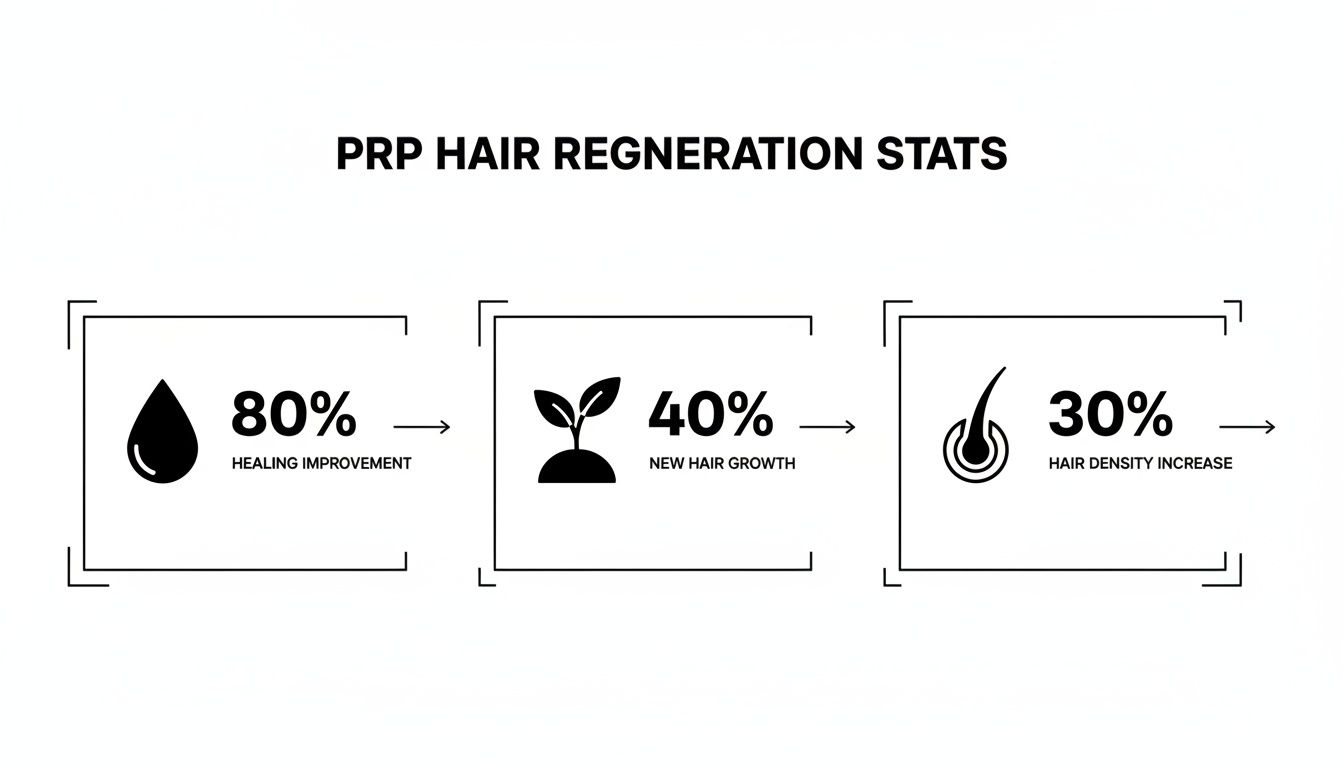
By tapping into your body’s own powerful healing components, PRP therapy works to awaken dormant follicles and thicken existing strands for a visibly fuller head of hair.
Key Studies and Statistical Proof
The body of evidence supporting PRP is substantial and continues to grow. Instead of cherry-picking single studies, experts look at meta-analyses and systematic reviews—which compile data from multiple high-quality trials to draw much stronger, more reliable conclusions.
For instance, a landmark systematic review in the British Journal of Dermatology, which analyzed 24 randomized controlled trials with 1,826 patients, reported a statistically significant 31% average increase in hair density after six months of PRP therapy. Another powerful meta-analysis showed PRP groups achieved a 25.09 hairs/cm² density surge over control groups. A separate trial noted 33.6 new hairs per target area after just three sessions. You can read the full research about these compelling findings.
These numbers are significant because they show a consistent pattern of positive results across a large, diverse patient population. The data confirms that when administered correctly to the right candidate, PRP therapy consistently outperforms placebos and delivers statistically meaningful improvements in hair health.
What These Numbers Mean for You
This clinical data paints a clear and reassuring picture of what you can realistically expect. An increase of 25 to 45 hairs per square centimeter might not sound like a lot on its own, but when you spread that across the entire scalp, it creates a visible and often dramatic improvement in fullness.
It confirms that the treatment isn’t just wishful thinking; it’s a science-backed procedure that works by:
- Reactivating Follicles: The growth factors send a direct signal to dormant follicles, telling them to wake up and re-enter the anagen (growth) phase.
- Strengthening Hair Shafts: By boosting nutrient supply through improved blood flow, PRP helps miniaturized, weakened hairs grow thicker and stronger.
- Slowing Down Hair Loss: The therapy helps to normalize the hair cycle, which reduces the excessive shedding often seen in conditions like androgenetic alopecia.
Ultimately, the research provides a strong vote of confidence. It shows that platelet-rich plasma therapy for hair loss is a reliable medical procedure grounded in solid evidence, offering a predictable path toward regaining hair density for the right candidates. This strong scientific backing is exactly why top-tier dermatologists and hair restoration specialists now consider it a primary treatment option in their practices.
The PRP Patient Journey from Start to Finish
Thinking about any new medical treatment can feel a bit intimidating, but the process for platelet-rich plasma therapy is surprisingly straightforward. It’s a journey designed from the ground up for patient comfort, safety, and—most importantly—results. Knowing what to expect demystifies the whole experience, giving you a clear roadmap from your first conversation to seeing new growth.
The entire procedure is built around a simple but powerful idea: using your body’s own healing factors to wake up your hair follicles.
Step 1: The Initial Consultation and Candidacy
Your journey kicks off with a detailed consultation with a board-certified specialist. This is a critical first step. Your doctor will analyze your hair loss pattern, go over your medical history, and take a close look at your scalp to see if you’re a good candidate. This isn’t just a formality; it’s a deep-dive diagnostic to make sure PRP is the right move for you.
You should expect a candid conversation about your goals and what kind of results are realistic. The best candidates usually have early to moderate hair thinning where the follicles are still active, just miniaturized. This meeting is also your chance to ask every question you have and get a clear picture of the treatment plan designed just for you. Choosing the right provider is everything, and it’s worth understanding why elite dermatologists outperform med spas before making a decision.
Step 2: Treatment Day—The Procedure Unveiled
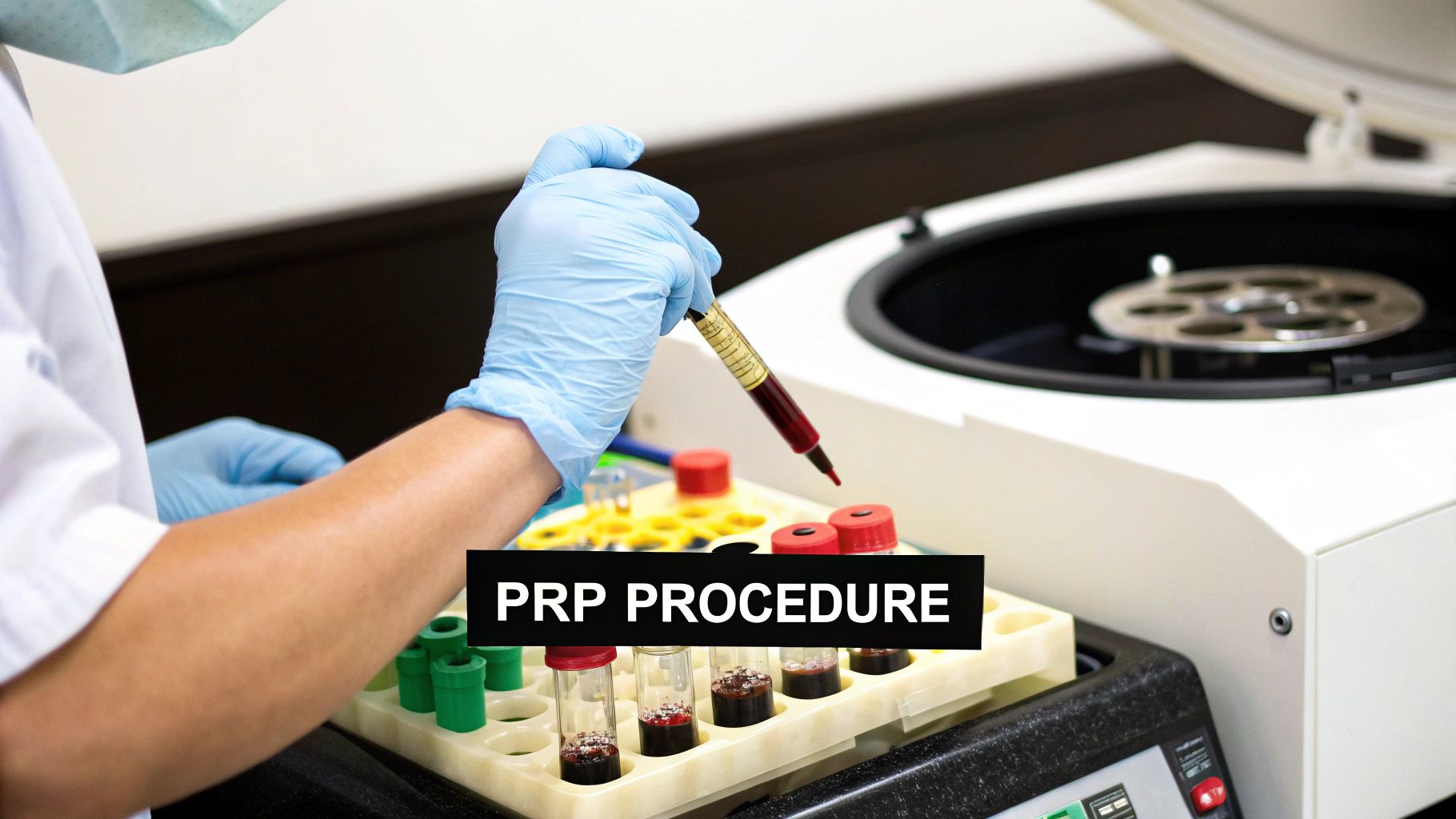
When you come in for your treatment, the procedure itself is quick and efficient, usually taking less than an hour from start to finish. It happens in three distinct phases, all handled with precision.
- The Blood Draw: It starts with a simple blood draw, no different than one you’d get at a routine physical. A small vial of blood is taken from your arm.
- Centrifugation: That blood sample goes straight into a centrifuge. This is a high-tech machine that spins the blood at incredible speed, neatly separating it into its core components. It isolates the golden, platelet-rich plasma from the red blood cells and platelet-poor plasma.
- Scalp Injections: The final step is injecting the concentrated PRP directly into the areas of your scalp where you’re experiencing thinning. To make sure you’re comfortable, a topical numbing cream is usually applied first, so the injections feel like little more than a quick pinch or minor pressure.
The entire process is minimally invasive and happens right in the doctor’s office. There’s no general anesthesia or intense prep needed, making it easy to fit into your schedule.
Step 3: Post-Treatment Care and Recovery
One of the biggest perks of PRP therapy is the minimal downtime. Most people head right back to their normal daily activities immediately after the session. You might notice some mild redness, a little swelling, or tenderness on your scalp, but these are temporary and usually fade within 24 to 48 hours.
Your doctor will give you some simple aftercare instructions, like avoiding heavy exercise, too much sun, or harsh hair products for a day or two. This easy recovery makes it a very manageable treatment.
The results speak for themselves. Studies show impressive outcomes for androgenetic alopecia, with 70-80% patient satisfaction rates. In one placebo-controlled study, an incredible 91.7% of patients receiving PRP achieved a negative hair pull test, signaling a dramatic stop to shedding. This kind of data is why finishing the full series of treatments—usually three to six sessions, spaced four to six weeks apart—is absolutely crucial for getting the best possible outcome.
Who’s a Good Candidate for PRP Hair Therapy?
Not everyone is the right fit for platelet-rich plasma therapy, and knowing who stands to benefit most is the key to setting yourself up for success. The treatment is really designed to wake up and strengthen the hair follicles you already have, not to create new ones out of thin air.
Think of it like this: PRP is a potent fertilizer for a garden with struggling plants. It can’t bring a completely barren patch of soil back to life, but it can absolutely make weak, thinning plants grow thicker and healthier. That’s why the best candidates are people who still have active, even if miniaturized, hair follicles.
The Best Candidates for PRP Hair Treatment
The most impressive results are almost always seen in people dealing with specific types of hair loss where the follicles are dormant but not totally gone. If you fall into one of these camps, PRP might be a fantastic option for you.
Ideal candidates are often those experiencing:
- Androgenetic Alopecia (Pattern Baldness): This is the most common reason for hair loss in both men and women. PRP works especially well in the earlier stages when you notice thinning but aren’t dealing with large, completely bald areas.
- Female Pattern Hair Loss (FPHL): Women often see diffuse thinning all over the scalp instead of a classic receding hairline. For this group, PRP has shown significant promise in boosting hair density and thickness.
- Recent Hair Thinning: If you’ve only started noticing thinning in the last few years, you’ll likely respond better. The simple truth is, the sooner you tackle the problem, the more follicles there are left to stimulate.
In fact, PRP therapy has become a true game-changer for women fighting hair loss. A major meta-analysis covering 21 different studies with 628 participants confirmed that PRP gives a significant boost to hair density and thickness for conditions like androgenetic alopecia and FPHL. You can dig into the details of these PRP findings yourself in the published research.
Who Should Steer Clear of PRP Therapy
Just as important as knowing who is a good candidate is knowing who should probably avoid the procedure. PRP isn’t a silver bullet, and certain health conditions can make the treatment either ineffective or unsafe. Any reputable clinic will run through a thorough medical screening to protect you.
It is absolutely critical to be upfront and honest about your medical history during your consultation. A top-tier specialist will always put your health first and won’t recommend a treatment if it poses any risk or has a slim chance of working for you.
PRP might not be a good fit if you have:
- Certain Blood Conditions: If you’re dealing with platelet disorders, clotting issues, or have a very low platelet count, it can interfere with how the treatment works.
- Active Scalp Infections: Any infection, like folliculitis or severe dermatitis, has to be completely cleared up before PRP injections can be done safely.
- Specific Medical Histories: A history of cancer, chronic liver disease, or certain metabolic disorders could be contraindications.
Ultimately, whether you’re a candidate comes down to a mix of your specific hair loss pattern, the current health of your follicles, and your overall medical profile. A detailed one-on-one with a board-certified specialist isn’t just a suggestion—it’s the essential first step to find out if platelet rich plasma therapy for hair loss is the right move for you.
Why Your Choice of Provider Is So Important
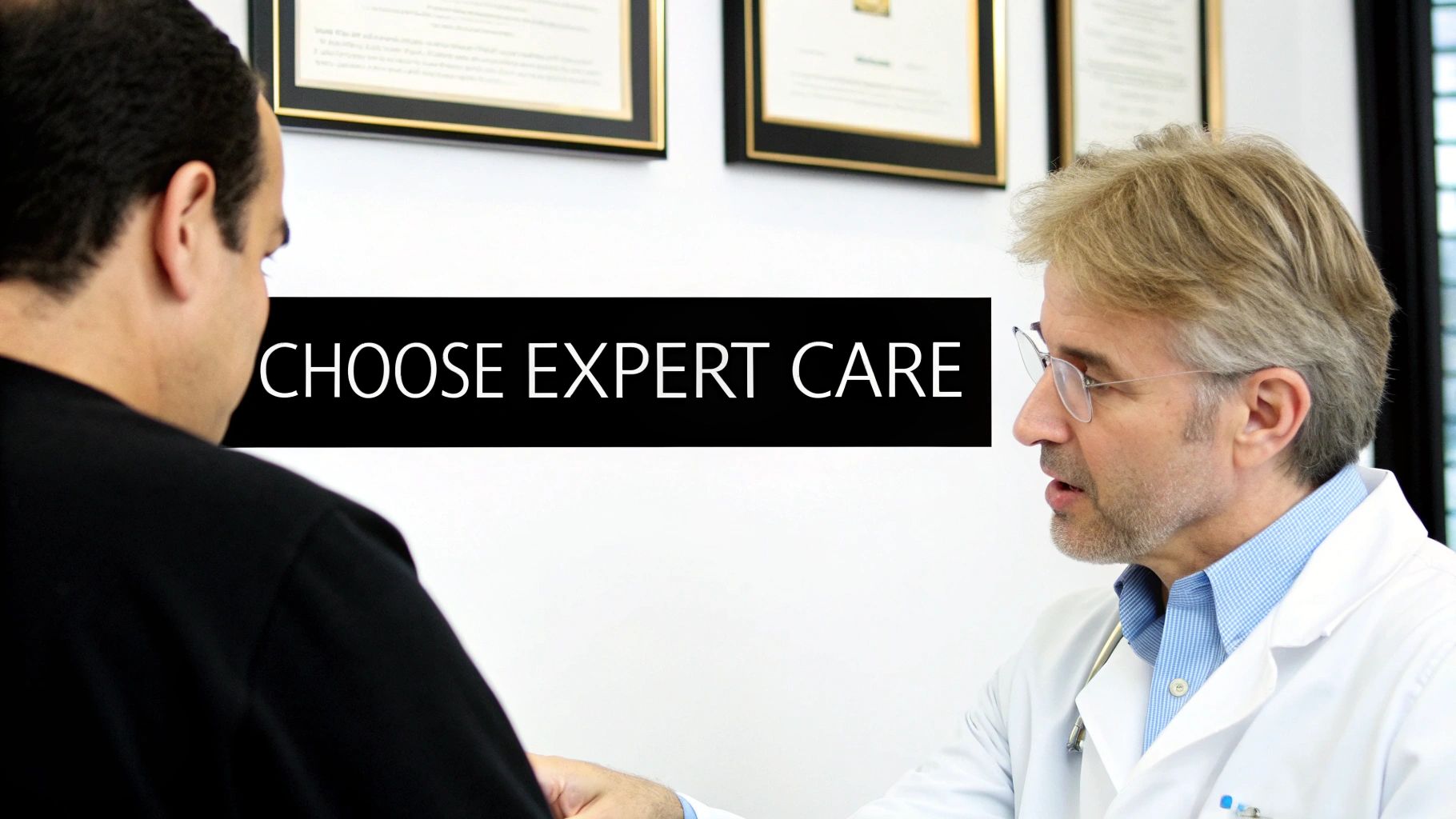
When you’re looking into platelet-rich plasma therapy for hair loss, it’s easy to get caught up in the science and the promise of results. But here’s the unvarnished truth: the single most important factor determining your outcome isn’t the technology itself. It’s the expertise and precision of the person holding the syringe.
The success of PRP is incredibly technique-dependent. This isn’t just another cosmetic service; it’s a medical procedure, and your choice of provider is the most critical decision you’ll make.
The difference between a board-certified dermatologist who specializes in hair restoration and a technician at a medspa is vast. It impacts everything from your initial diagnosis to the final concentration of growth factors in your injections. An expert’s touch ensures safety, comfort, and, most importantly, effectiveness.
Diagnostic Accuracy and Custom Protocols
A top-tier specialist, like a dermatologist, doesn’t just see “hair loss.” They begin with a comprehensive diagnostic evaluation to identify the specific cause—is it androgenetic alopecia, telogen effluvium, or an underlying autoimmune condition? This accurate diagnosis is fundamental because it dictates the entire treatment strategy.
Based on that diagnosis, a qualified physician creates a custom protocol. They determine the optimal platelet concentration, the precise depth and location for each injection, and the ideal treatment schedule for your specific condition. This level of personalization is something you simply won’t find outside of a dedicated medical practice.
The Quality of Medical Equipment
The equipment used to process your blood is another crucial variable. The entire goal is to produce the highest quality PRP with a concentrated payload of growth factors. Board-certified clinics invest in superior, FDA-cleared centrifugation systems designed for medical-grade separation.
In contrast, less specialized settings might use basic, lower-cost centrifuges that just can’t achieve the necessary platelet concentration. This directly sabotages your results. If the PRP isn’t potent enough, the treatment will be far less effective, no matter how well it’s administered.
Choosing a provider is not the place to cut corners. An experienced, board-certified physician ensures every step—from blood draw to injection—is performed with medical precision, maximizing both safety and the potential for significant hair regrowth.
When you start vetting potential providers, you need to look for specific credentials and qualities. Learning how to choose a dermatologist is an excellent starting point for understanding what separates the best from the rest.
Here are the non-negotiables to look for:
- Board Certification: Your provider absolutely must be a board-certified dermatologist or plastic surgeon with specific experience in hair restoration.
- Specialization in Regenerative Medicine: Ask them directly about their experience and training with PRP for hair loss. How many patients have they treated?
- Use of Advanced Technology: Inquire about the type of centrifuge system they use. You want to hear that it’s designed for high-yield PRP production.
- Transparent Consultation: A great provider will offer a thorough consultation, set realistic expectations, and answer every single question without making you feel pressured.
Ultimately, investing in a highly qualified specialist is an investment in your safety and the success of your hair restoration journey.
Your PRP Hair Therapy Questions, Answered
When you’re considering a treatment like PRP for hair loss, the practical questions are often the most important. What’s the real cost? Does it hurt? And how long will the results actually last? Getting straight answers is key to feeling confident about moving forward. Let’s break down what you can realistically expect.
How Much Does PRP for Hair Loss Cost?
The investment in PRP therapy isn’t one-size-fits-all; it depends heavily on where you live, the clinic’s reputation, and your specific treatment plan. Generally, you can expect a single session to cost somewhere between $750 and $1,500.
Since PRP works best as a series, most top clinics offer package pricing for the initial round of treatments. A typical starter series of three or four sessions will usually run from $2,500 to $5,000. It’s crucial to know that PRP is almost always considered a cosmetic procedure, which means insurance won’t cover it. This will be an out-of-pocket investment in your hair’s future.
Is the PRP Procedure Painful?
This is easily one of the most common concerns we hear, and the answer is usually a relief. While it does involve injections, any skilled specialist makes your comfort a top priority. Before anything starts, a powerful topical numbing cream is applied to your scalp to take the edge off.
Most people describe the sensation as a series of quick, light pinches or a bit of pressure, not outright pain. To make the experience even more comfortable, some clinics use tools like a small vibration device to distract from the injections. The whole process is over in just a few minutes.
Everyone’s pain tolerance is different, but the overwhelming majority of patients find the procedure completely manageable. Discomfort shouldn’t be a barrier to getting this treatment.
How Long Do PRP Results Last?
PRP isn’t a one-and-done fix for hair loss. Think of it as a long-term strategy for keeping your hair healthy and strong. After you finish the initial series—usually three or four sessions spaced about a month apart—you’ll transition into a maintenance phase.
To keep those great results going and ensure your hair follicles stay active, most experts recommend a follow-up treatment every 6 to 12 months. It’s a bit like maintaining a pristine lawn; you don’t just fertilize it once and walk away. Regular upkeep ensures your hair gets the ongoing nourishment it needs to thrive.
This commitment is what preserves the gains in hair density and thickness you worked to achieve. Stick to your maintenance schedule, and you can enjoy the benefits of your platelet rich plasma therapy for hair loss for years.
Finding the right specialist is the most critical step in your hair restoration journey. Haute MD connects you with a curated network of the nation’s top, board-certified physicians who specialize in advanced treatments like PRP. To find a vetted expert near you and begin your consultation, visit Haute MD.