


A full recovery from knee replacement surgery is a process, not a single event. While everyone’s journey is a bit different, the timeline generally spans six to twelve months. You’ll hit major milestones within the first three months, but reaching your full potential can take up to a year as your body completely heals and adapts to the new joint.
Understanding Your Recovery Journey at a Glance
Getting a new knee is a huge step toward a life with less pain and more freedom. But what happens after the surgery is just as important as the procedure itself. Thinking about your recovery in distinct phases helps you set clear, manageable expectations for the road ahead.
This guide breaks down the entire knee replacement recovery timeline, step-by-step. We’ll walk you through everything from your first day in the hospital to the long-term work of getting the most out of your new joint. Each stage builds on the last, setting you up for a successful return to an active, fulfilling life.
Key Recovery Milestones
The path from the operating room back to your daily life follows a fairly predictable pattern. Modern knee replacements mean surprisingly short hospital stays—most people go home within 1-2 days. For healthy patients with good support at home, even same-day discharge is becoming common.
The progress you’ll see is remarkable. By the 3-month mark, an incredible 90% of patients report significant recovery, feeling confident enough to handle most daily activities without major limitations. And the long-term results are even better: 82% of patients enjoy substantial pain relief and a much higher quality of life within the first year.
This visual timeline gives you a quick look at the key milestones you’ll be working toward.
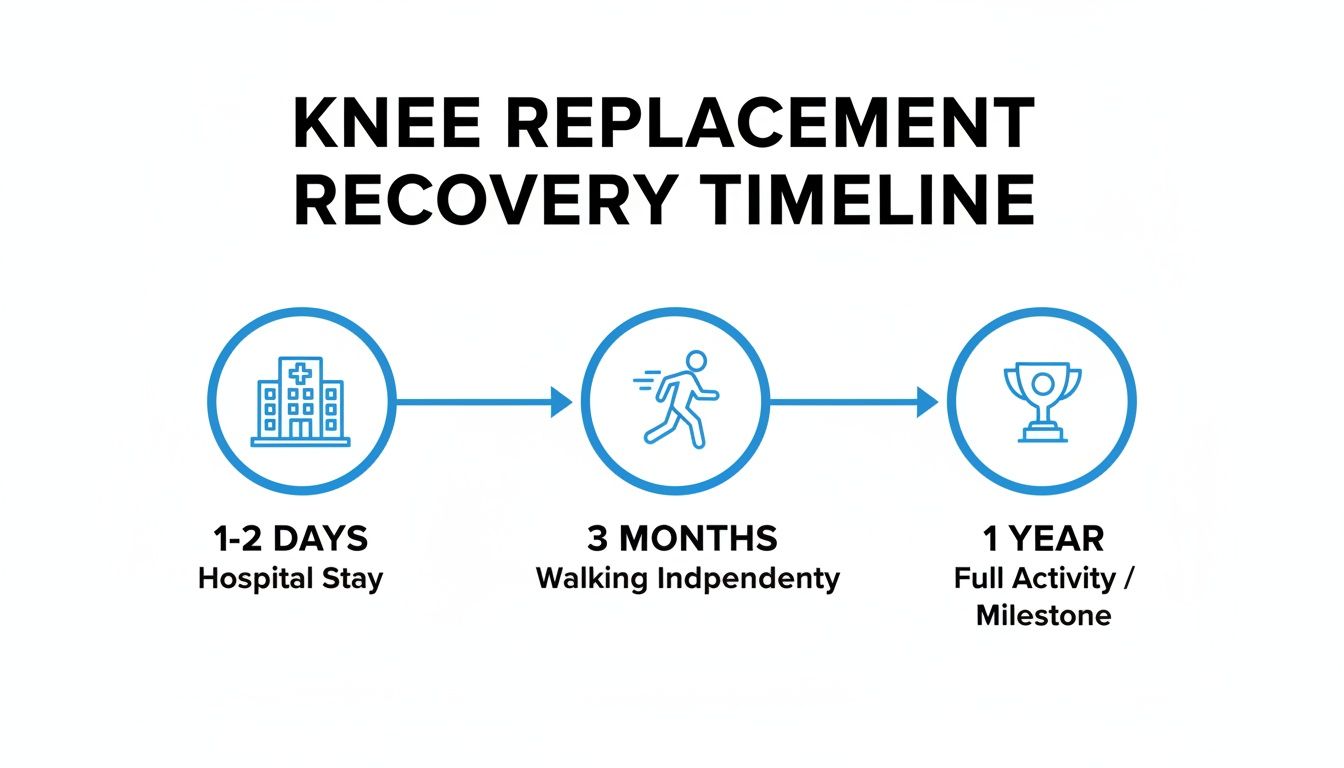
As you can see, the biggest functional gains happen in those first three months. That early work sets the stage for a full return to the activities you love by the one-year mark.
Your recovery is not just a passive healing process; it’s an active partnership between you, your surgeon, and your physical therapist. Your commitment to the rehabilitation plan is the single most important factor in achieving an excellent outcome.
To give you a clearer picture, this table breaks down what to expect at each phase—from your functional goals to how you’ll manage pain and what your physical therapy will look like.
Knee Replacement Recovery Milestones at a Glance
| Recovery Phase | Key Functional Milestones | Pain & Swelling Management | Primary PT Focus |
|---|---|---|---|
| Immediate Post-Op (Days 1-3) | Walking short distances with a walker. Bending the knee to 90 degrees. Getting in/out of bed. | IV/oral pain medication. Ice and elevation. Compression stockings. | Basic mobility. Range of motion (ROM) exercises. Ankle pumps. |
| Early At-Home (Weeks 1-6) | Walking independently with a cane. Climbing stairs. Dressing and bathing with less help. | Transitioning off narcotics to Tylenol/NSAIDs. Consistent icing. | Restoring full knee extension. Improving flexion. Strengthening quadriceps and hamstrings. |
| Strengthening (Weeks 7-12) | Walking without an assistive device. Returning to driving (if cleared). Resuming light recreational activities. | Minimal reliance on pain medication. Managing activity-related swelling. | Advanced strengthening. Balance and proprioception training. Stationary cycling. |
| Long-Term Optimization (3-12+ Months) | Returning to golf, swimming, hiking. Kneeling with more comfort. No functional limitations. | Pain is rare, usually only with overexertion. No significant swelling. | Sport-specific drills. High-level strengthening. Continued flexibility work. |
This framework shows how each stage logically progresses to the next, building strength and confidence as you go.
What to Expect at Each Stage
Your recovery journey can be broken down into several key phases, each with its own goals and challenges. Following this progression ensures a steady, safe return to full function.
- Immediate Post-Surgery (Days 1-3): The focus here is all about managing pain, getting you up and moving with assistance, and taking care of the incision.
- Early Healing at Home (Weeks 1-6): This is where the real work begins. You’ll be focused on reducing swelling, sticking to your prescribed exercises, and slowly becoming more independent, usually moving from a walker to a cane.
- Mid-Term Strengthening (Weeks 7-12): You’ll start to feel much stronger and build real endurance. Physical therapy gets more advanced, and you can get back to many of your normal daily routines.
- Long-Term Optimization (3-12+ Months): The final phase is about fine-tuning everything—strength, balance, and flexibility—so you can confidently get back to activities like hiking, golfing, or swimming.
Navigating these stages is much easier with the right medical team. Working with top doctors who treat arthritis ensures your care plan is perfectly matched to your specific needs right from the start.
The First 12 Weeks: Building Your Foundation for Mobility
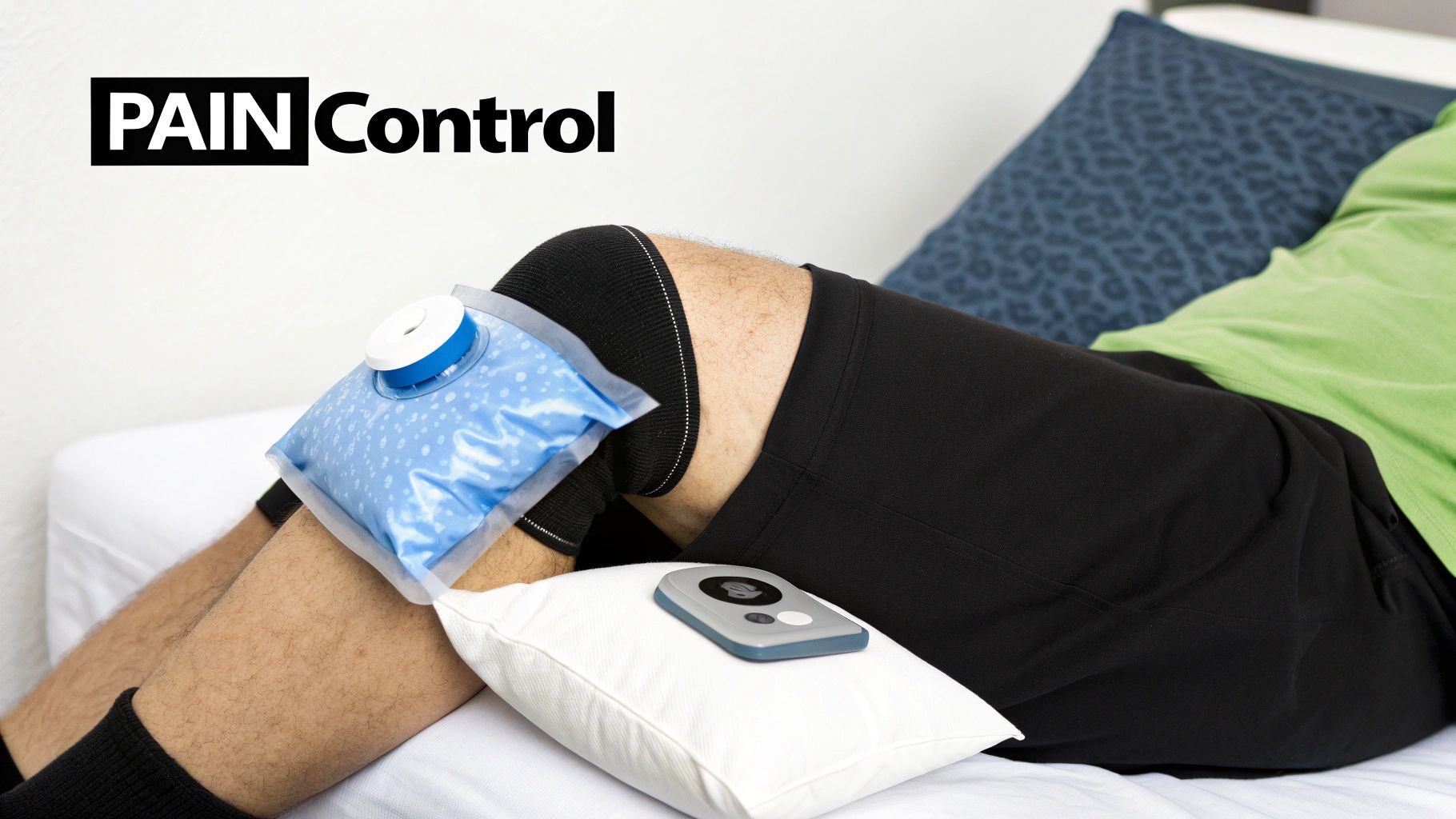
The first three months after your knee replacement are, without question, the most active and important part of your entire recovery. Think of it like pouring the foundation for a house; every single step, from icing your knee to grinding through your physical therapy, has to be done right. This is where you lay the literal groundwork for decades of stable, pain-free movement.
This phase of the knee replacement surgery recovery timeline is intense, no doubt about it. But it’s also incredibly rewarding. You’ll go from needing help with almost everything to reclaiming huge chunks of your independence. Let’s break this critical 12-week period down into manageable stages so you know exactly what’s coming.
Days 0-2: Your Hospital Stay
The journey starts the moment you’re out of the operating room. In the hospital, the goals are simple and urgent: get you moving, get your pain under control, and teach you the basics of caring for your new joint. You won’t be lying in bed for long.
Believe it or not, most patients are up and walking—with a physical therapist and a walker—on the very same day as their surgery. This isn’t about being tough; it’s about physiology. Early movement is one of the most powerful tools we have to prevent dangerous blood clots and kickstart the healing process.
Before they send you home, your medical team will make sure you can hit a few key benchmarks:
- Walk a short distance using a walker or crutches.
- Get in and out of bed and a chair without putting yourself at risk.
- Bend your new knee to at least a 90-degree angle.
- Climb a few stairs with support, a non-negotiable skill for safely navigating your home.
Pain management begins immediately with a combination of medications designed to keep you comfortable enough to participate in your own recovery. You’ll also get your first lessons in incision care to keep infection at bay.
Weeks 1-2: The Early Days at Home
Once you’re home, the focus shifts to managing your environment and giving your body what it needs to heal. The first two weeks are all about two things: controlling pain and swelling, and diligently performing the basic exercises you learned in the hospital. This stretch requires patience more than anything else.
Your best friend during this time is the RICE method: Rest, Ice, Compression, and Elevation. I can’t overstate this: consistently icing your knee and keeping your leg propped up above your heart will make a massive difference in swelling. Less swelling means less pain and better movement.
Staying ahead of the pain is non-negotiable. Take your prescribed medication on a strict schedule, even if you start to feel a bit better. If you wait for the pain to become severe, it’s ten times harder to get it back under control, and it will absolutely sabotage your physical therapy.
A physical therapist will likely visit you at home during these first couple of weeks, or you’ll begin outpatient sessions. The exercises will feel simple, but they are vital for waking up your muscles and preventing the joint from getting stiff.
Weeks 3-6: Gaining Real Independence
This is where you’ll feel a major corner being turned. The intense, constant post-op pain starts to fade, replaced by a more predictable soreness tied to your activity level. You’ll start to feel less like a patient and more like yourself again.
One of the biggest milestones here is graduating from a walker to a single cane. Psychologically, this is a huge leap. It represents a new level of confidence and freedom. Simple daily tasks like getting dressed or taking a shower suddenly become much, much easier.
Key goals for this period include:
- Walking more confidently indoors and starting short walks outside with a cane.
- Navigating stairs with more stability and less hesitation.
- Pushing your knee bend and extension further in physical therapy.
Your PT sessions will get more demanding. You’re no longer just activating muscles; you’re actively rebuilding them with exercises designed to strengthen your quadriceps and hamstrings.
Weeks 7-12: Building Strength and Endurance
By now, the improvements should be dramatic. Pain is way down, mobility is way up. The focus of your knee replacement surgery recovery timeline shifts from basic healing to building real-world functional strength and endurance. You’re moving past recovery and into performance.
Most people are walking without any help by this stage, though keeping a cane handy for long distances or uneven ground is smart. Swelling should be minimal, usually only showing up after a tough PT session or a very active day. This is the phase where you truly start to reclaim your life.
At this point, you can expect to:
- Get back to driving, as long as you’re off all narcotic pain meds and have your surgeon’s blessing.
- Resume most of your daily activities and household chores without much trouble.
- Begin low-impact exercises like stationary cycling or swimming—fantastic for building strength without hammering the new joint.
Your physical therapy will now feature more advanced drills that mimic the demands of daily life, including balance and proprioception training (retraining your brain’s sense of where your joint is in space). By the end of month three, most patients feel they are 80-90% recovered, having built a rock-solid foundation for the final phase of healing that will take place over the next year.
A Modern Approach to Managing Pain and Swelling
Pain management is the absolute cornerstone of a successful knee replacement surgery recovery timeline. The modern approach isn’t about chasing a mythical “zero pain” goal—it’s about keeping discomfort at a level where you can get up, move, and actively participate in your recovery. Think of it like this: you can’t rebuild your knee if you’re sidelined by pain.
The goal is to turn the volume down low enough so you can hear your physical therapist’s instructions and get the work done.
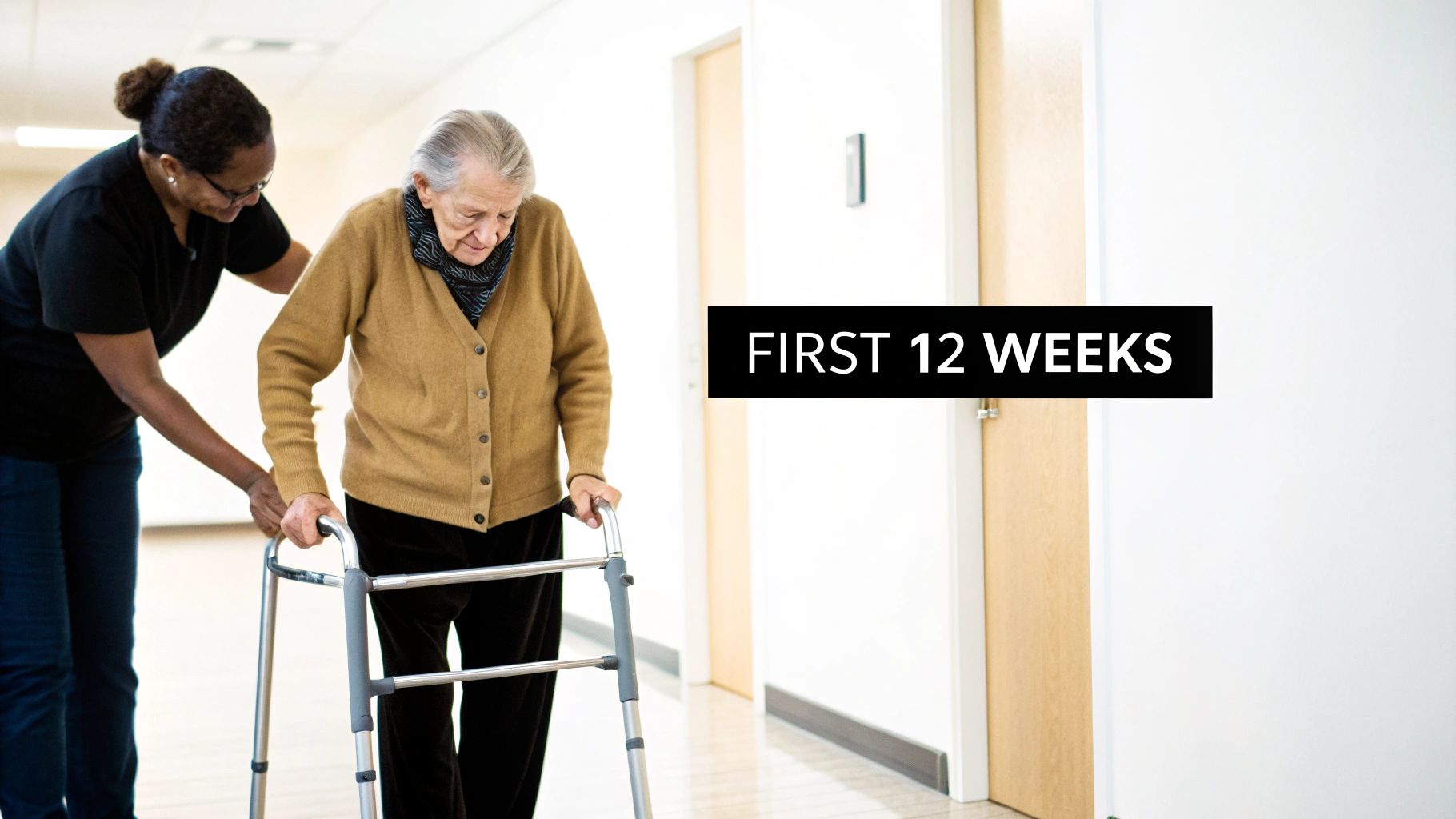
Surgeons now rely on a multimodal strategy, which is just a sophisticated way of saying we attack pain from multiple angles. This dramatically reduces the need for heavy-duty opioids, which come with a host of side effects. Instead of one big hammer, your plan will likely feature a combination of different medications working together in harmony.
The Layers of Pain Control
Understanding where the discomfort is coming from is the first step in managing it effectively. You’ll experience a few different kinds of pain, and your care team has a specific tool for each.
- Surgical Pain: This is the immediate, sharp pain from the incision and the work done on the bone. It’s most intense in the first few days and is what your scheduled pain relievers are designed to target.
- Inflammatory Pain: This is the deep, throbbing ache and warmth caused by swelling as your body’s natural healing response kicks into high gear. Anti-inflammatory drugs (NSAIDs) and, most importantly, ice are the MVPs here.
- Muscle and Soft Tissue Pain: As you fire up physical therapy, the muscles around your new knee will get sore. This is actually a “good” pain—it’s the signal that you are waking up dormant muscles and rebuilding strength.
This layered approach means you’re treating the specific cause of your discomfort, which leads to much better relief with fewer side effects.
The single most important rule of post-op pain management is to stay ahead of it. Waiting until the pain becomes severe before taking medication is like trying to put out a forest fire with a garden hose. Take your medication on the schedule your doctor provides, especially for the first few days.
Practical Strategies for Comfort and Control
Beyond medication, what you do to manage pain and swelling is absolutely critical. These non-drug methods are incredibly effective and put you squarely in the driver’s seat of your own recovery.
Scheduled Icing Applying ice is one of the most powerful anti-inflammatory tools you have. Don’t just wait until your knee feels swollen and hot; be proactive.
- Use a proper device: A dedicated ice pack, gel pack, or a cryotherapy machine provides consistent, deep cold without risking skin damage from direct ice.
- Stick to the schedule: Apply it for 20 minutes at a time, then give your skin at least an hour off to recover.
- Ice after every PT session: Think of it as the cool-down. It helps calm the inflammation you stirred up during your exercises, which is essential for progress.
Proper Elevation Just propping your foot on a coffee table isn’t going to cut it. For elevation to work, your knee must be above the level of your heart. This lets gravity do the work of draining fluid away from the joint, which significantly reduces swelling and that awful throbbing pain. The best way to do this is to lie down and place several pillows under your entire leg, from your calf to your foot.
By combining these simple but powerful techniques with your prescribed medication, you become an active partner in your recovery. This sense of control not only improves your comfort but also accelerates your progress, helping you move forward with confidence.
How Physical Therapy Rebuilds Your Strength
If your new knee implant is the hardware, physical therapy (PT) is the software that makes it run. It’s the engine powering your entire knee replacement surgery recovery timeline, transforming a passive healing process into an active, deliberate rebuilding project. PT isn’t just a checklist of exercises; it’s a strategic program designed to restore strength, stability, and—most importantly—your confidence in the new joint.
Think of your muscles after surgery like a skilled team that’s suddenly forgotten how to communicate. The operation, while essential, creates trauma and swelling that temporarily scrambles the signals between your brain and your leg muscles. Physical therapy works to systematically reboot these connections, retraining each muscle to fire correctly and provide the support your new knee needs to function.
This process is broken down into deliberate phases, with each one building on the successes of the last.
The Foundational Phase: Weeks 1 to 6
In the first six weeks, the mission is simple: protect the new joint while re-establishing basic function. Your physical therapist will guide you through gentle, controlled movements that accomplish several critical goals at once.
The initial exercises might seem almost laughably simple, but their impact is huge.
- Ankle Pumps: Flexing and pointing your foot is your number one defense against dangerous post-op blood clots. It activates your calf muscles, which act like a pump to keep blood circulating properly through your lower leg.
- Quad Sets: This is just tightening the large muscle on the front of your thigh (the quadriceps) and holding for a few seconds. It’s the first step in “waking up” this crucial muscle, which often goes dormant from surgical swelling and pain.
- Heel Slides: By gently sliding your heel toward your body, you begin working on knee flexion (bending). This simple motion helps prevent stiff scar tissue from forming and limiting your future range of motion.
These early exercises are all about laying a solid foundation. You’re controlling swelling, restoring basic muscle activation, and encouraging blood flow to speed up healing.
Your physical therapist is your coach and troubleshooter. Be brutally honest about your pain levels and challenges. They can modify exercises and provide techniques to help you overcome hurdles safely, ensuring you stay on track without pushing too hard, too soon.
The Strengthening Phase: Weeks 6 to 12
As you move into this next phase, the training wheels start to come off. Pain and swelling have hopefully settled down, allowing your therapist to introduce more challenging exercises designed to build real, functional strength. The goal is no longer just activating muscles; it’s about making them powerful enough for the demands of daily life.
This is where you’ll see a dramatic leap in what you can do.
Progressive Resistance Training Your therapist will start adding resistance with bands, light weights, or machines. This challenges your quadriceps, hamstrings, and glutes to work harder—essential for developing the strength to walk without a limp, climb stairs confidently, and get up from a low chair without a struggle.
Balance and Proprioception After surgery, your brain’s sense of where your knee is in space—a concept called proprioception—is temporarily scrambled. Your PT will have you do balance exercises, like standing on one leg or using unstable surfaces, to recalibrate this internal GPS. This is absolutely vital for preventing falls and building confidence on uneven ground.
Functional Movements Finally, you’ll start practicing movements you actually do in the real world. This means stepping over small objects, performing partial squats, and mastering the proper technique for navigating stairs. Every exercise directly translates to a task at home, making your recovery feel tangible and keeping you motivated. This phase solidifies all your gains, transforming you from a patient into an active participant in your life again.
Life After 3 Months: The Journey to Full Strength
Once you hit the three-month mark, you’ve officially turned a corner in your knee replacement surgery recovery timeline. The intense, day-to-day focus on healing starts to shift. Now, it’s all about the long game: rebuilding, refining, and reclaiming your life.
While you’re feeling mostly back to normal, this next phase—from three months to a year or more—is where a good recovery becomes a great one.
Think of the first 12 weeks as rebuilding the engine. This next stage is about fine-tuning it for peak performance. It’s where you get back to playing a round of golf, hiking your favorite trail, or just keeping up with the grandkids without a second thought.
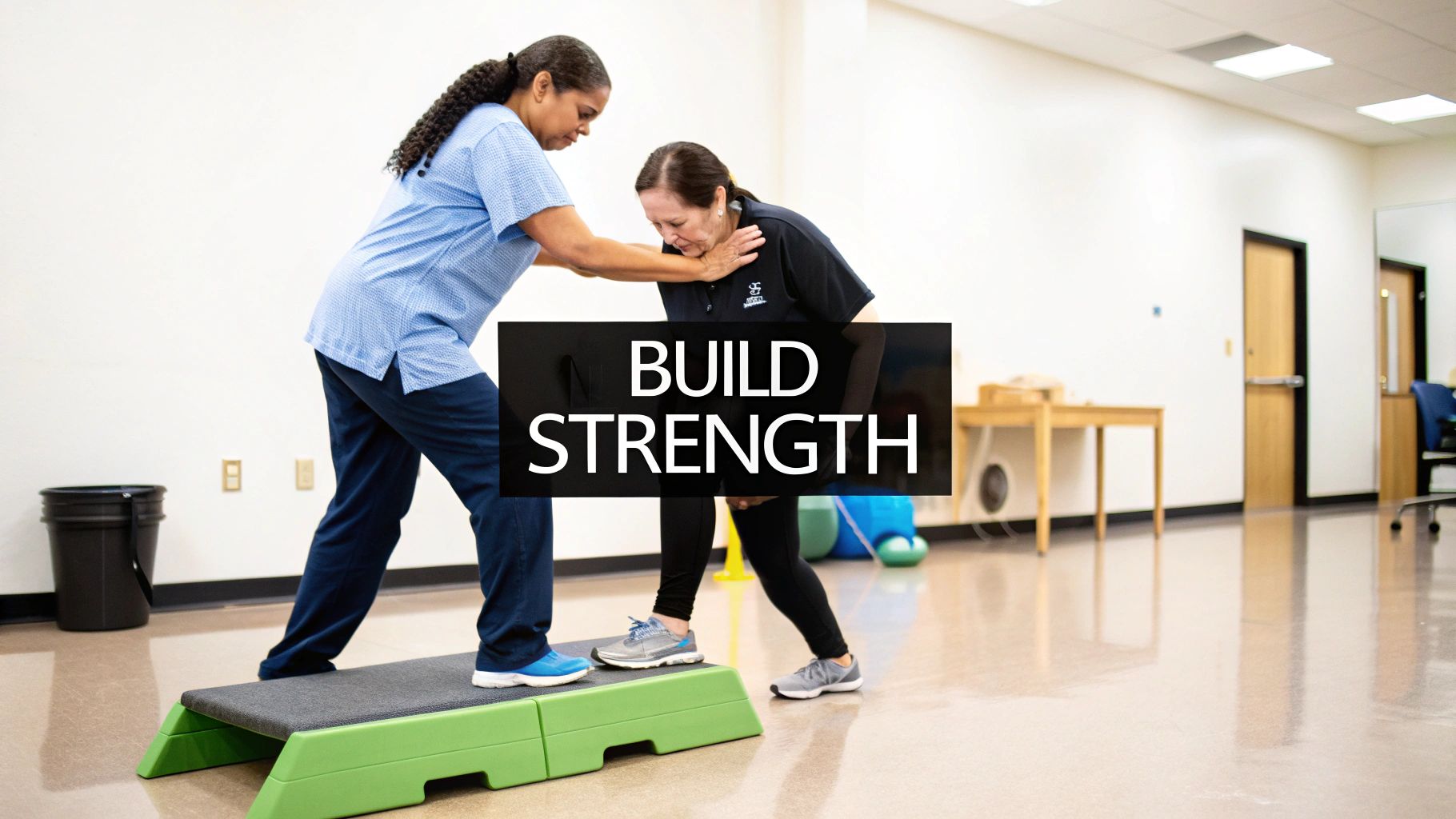
This period is less about dramatic weekly improvements and more about subtle but powerful gains in strength, balance, and endurance. It’s the final push to get you back to moving with total confidence.
Optimizing Strength and Function from 3 to 6 Months
During this window, your formal physical therapy sessions might be wrapping up, but the real work continues on your own. The goal now is to safely push your limits and build advanced strength. That scar tissue that caused so much stiffness early on is now maturing and becoming more flexible, unlocking a greater range of motion.
Your goals now shift to things like:
- Returning to higher-impact activities: With your surgeon’s green light, this is when you can start easing back into sports like doubles tennis, golf, or more challenging hikes.
- Building sport-specific strength: Your exercises will get more specialized. Think rotational movements for your golf swing or single-leg stability drills for navigating uneven trails.
- Improving balance and proprioception: Advanced exercises, often on unstable surfaces, help retrain your joint’s sense of position in space. This is critical for preventing falls and feeling sure-footed on any terrain.
This is the phase where your new knee truly starts to feel like your knee, not just an implant. Pain should be minimal, usually just mild soreness after you’ve really pushed yourself.
Fine-Tuning Your Recovery from 6 to 12 Months
The stretch between six months and a year is all about optimization. The biggest leaps are behind you, but this is where you solidify your gains for the long haul. Believe it or not, the muscles supporting your new knee can continue getting stronger for up to a year or even more after surgery.
Full recovery is a marathon, not a sprint. The consistent effort you put in during these later months pays dividends for years to come, ensuring your implant performs at its best and lasts as long as possible.
You’ll also have routine follow-ups with your orthopedic surgeon during this time. These check-ins are crucial. Your surgeon will likely take X-rays to check the implant’s position and make sure everything is functioning exactly as it should be.
The long-term data is incredibly encouraging. While most of your functional ability is established by six months, studies show small but meaningful gains continue for up to two years. Top-tier implants have exceptional survival rates, often hitting 97% at the 15 to 20-year mark.
More importantly, over 90% of patients report significant pain relief and a better quality of life. But getting there depends on you staying committed to your strength program to truly maximize what that new joint can do. Your new knee is a long-term investment in your mobility. Treating this final phase with dedication ensures you get the maximum return on that investment, enjoying an active life for decades to come.
Common Questions About Knee Replacement Recovery
Even with a clear recovery timeline, the day-to-day realities of life after knee replacement bring up a lot of practical questions. Let’s tackle some of the most common concerns patients have, giving you direct answers to move forward with confidence.
When Can I Drive After Knee Replacement Surgery?
Getting back behind the wheel is a huge milestone for your independence, but it’s one you absolutely can’t rush. Most surgeons will clear you to drive somewhere between 4 to 6 weeks after your operation, but this isn’t a hard-and-fast rule.
Before you even think about driving, two non-negotiable conditions must be met. First, you have to be completely off all narcotic pain medications. These drugs seriously impair judgment and slow your reaction time, making driving incredibly dangerous. Second, you must have enough muscle control and strength back in your surgical leg to slam on the brake without a second thought.
If you had a right knee replacement, this is your main hurdle. If your surgery was on the left knee and you drive an automatic, you might get the green light a bit sooner, but only if you’re off the narcotics. No matter what, you need explicit clearance from your surgical team before you get back in the driver’s seat.
How Much Should I Be Able to Bend My New Knee?
One of the central goals of your recovery is getting your range of motion back, especially when it comes to bending your knee (what we call flexion). The target for most people after a total knee replacement is between 110 and 120 degrees of bend. That isn’t just a random number; it’s the specific range you need for most of what you do every day.
Hitting that 110-to-120-degree mark allows you to:
- Get in and out of a car without a struggle.
- Stand up from a low sofa or chair easily.
- Walk up and down stairs with a normal rhythm.
- Ride a stationary bike for exercise and continued rehab.
In the first few weeks, pain and swelling are going to be your biggest enemies in this fight. But your physical therapy is designed to methodically chip away at that stiffness. By your six-week follow-up, most patients are getting very close to this goal.
What Are the Warning Signs of a Complication?
Complications after knee replacement are rare, but knowing the red flags is a crucial part of a safe recovery. Being vigilant helps you catch any potential problems before they escalate. If you notice any of the signs below, call your surgeon’s office immediately.
Trust your gut. If something just feels off—a sudden spike in pain, strange new swelling, or just a general feeling of being unwell—it’s always better to make the call. Getting reassurance or immediate guidance is far better than waiting and worrying.
Signs of Infection:
- A fever over 101°F (38.3°C).
- Shaking or body chills.
- Redness, warmth, or tenderness around the incision that’s getting worse.
- Any drainage from the wound that looks like pus or has a foul smell.
Signs of a Blood Clot (DVT):
- Major new swelling in your calf, ankle, or the whole leg that doesn’t go down with elevation.
- Pain in your calf that feels like a cramp or a persistent charley horse.
- Skin on the leg that looks reddish or is unusually warm to the touch.
If a blood clot breaks free and travels to the lungs, it causes a pulmonary embolism—a true medical emergency. Call 911 immediately if you experience sudden shortness of breath, a sharp pain in your chest (especially with deep breaths), or a racing heart.
How Long Should I Expect to Use a Walker or Cane?
Think of your walker or cane as temporary tools, not permanent fixtures. Most patients rely on a walker for the first 1 to 3 weeks for maximum stability while they get their balance back. Once your strength improves and you can walk with a more natural gait, your physical therapist will transition you to a single cane.
You’ll likely use the cane for another 2 to 4 weeks, especially as you start walking outdoors on different surfaces. By the six-week mark, many people are walking on their own without any help, at least for shorter distances inside. The most important thing is to progress at a pace that feels safe and steady for you.
A productive conversation with your surgeon is the foundation for a smooth recovery. To feel fully prepared, it’s a good idea to think through some key questions to ask an orthopedic surgeon well before your operation.
Finding the right specialist is the first step toward a successful outcome. On the Haute MD network, discerning patients can connect with the nation’s most reputable, board-certified orthopedic surgeons who are known for their precision, innovative techniques, and commitment to exceptional patient care. Discover an elite provider near you by visiting https://www.hauteliving.com/hautemd.