


Let’s get right to it: No, pure aloe vera does not clog pores. In the world of skincare, it’s officially classified as non-comedogenic, which is the technical way of saying it’s highly unlikely to cause pimples or blackheads.
Think of it less like a thick, heavy cream that sits on top of your skin and more like a refreshing drink of water that gets absorbed instantly.
Your Guide to Aloe Vera and Clear Pores
If you have acne-prone or oily skin, you’re right to be cautious. We’ve all been there—you try a new moisturizer hoping for hydration, and instead, you wake up with a fresh breakout. It’s a legitimate fear, since many moisturizing ingredients are just too heavy, creating the perfect storm for trapping oil and dead skin cells.
But aloe vera is built differently. Its secret weapon is its incredibly high water content.
The clear gel from an aloe leaf is over 90% water, making it an exceptionally lightweight hydrator that sinks into the skin almost immediately, leaving no greasy film behind. This is the key. Clogged pores happen when something physically blocks the opening of a hair follicle. Pure aloe simply doesn’t have the heavy, oily structure to do that. While some people assume all gel-like products are risky, aloe’s unique composition sets it apart.
Aloe Vera and Pores: Myth vs. Reality
To cut through the confusion, it helps to put the common myths side-by-side with the scientific reality. This little table should clear things up fast.
| Common Myth | Scientific Reality |
|---|---|
| Any gel-like product will clog pores. | Pure aloe vera is water-based and non-comedogenic, absorbing quickly without leaving residue. |
| All moisturizers are bad for oily skin. | Aloe provides lightweight hydration, which can actually help balance oil production, not worsen it. |
| “Natural” automatically means pore-friendly. | While pure aloe is safe, added ingredients in commercial products are often the real culprits. |
So, what’s the bottom line here? Pure, unadulterated aloe vera is an ally for clear skin, not an enemy.
Its unique combination of a lightweight texture and powerful anti-inflammatory properties makes it a fantastic choice for anyone who needs moisture without risking breakouts. The real trick, as we’ll get into next, is understanding the massive difference between pure aloe and the formulated products you find on store shelves. That’s where you need to pay close attention.
Understanding How Pores Actually Get Clogged
To get to the bottom of whether aloe vera is a friend or foe to acne-prone skin, we first have to understand the enemy: the dreaded clogged pore.https://www.youtube.com/embed/xbEqpYTkuXg
Think of your pores as tiny, open channels. When everything is running smoothly, they allow your skin’s natural oil—sebum—to flow up and out, keeping your skin moisturized and protected. It’s a brilliant, self-lubricating system.
But just like the drain in your kitchen sink, these channels can get blocked. And it’s not just one thing that causes the backup, but a sticky, stubborn mix of culprits that build up over time.
This pore-clogging process has a technical name: comedogenesis. It’s the very first step in the formation of almost every type of acne, from a simple blackhead to an angry, inflamed pimple. Knowing how this process starts is the key to choosing ingredients that help, not hurt.
The Main Causes of Clogged Pores
So, what’s actually creating this traffic jam inside your pores? It’s a perfect storm of factors that create an ideal environment for a breakout. The recipe for a clog is almost always the same.
The main culprits are:
- Excess Sebum: Your skin needs oil to stay hydrated, but things like hormonal shifts, genetics, or even stress can put oil production into overdrive. This extra oil makes the pore environment greasy and sticky, making it far easier for a blockage to form.
- Dead Skin Cells: Your skin is in a constant state of renewal, shedding millions of dead cells every single day. Most of the time, they flake off without you ever noticing. But sometimes, they get trapped inside the pore, adding bulk to the developing clog.
- External Debris: Everyday life throws a lot at your skin. Grime, pollution, and makeup residue can easily find their way into your pores. When this gunk mixes with all that excess oil and dead skin, it acts like cement, solidifying the blockage.
When these three elements—oil, dead cells, and debris—mix together, they form a dense plug known as a comedo. This plug effectively seals the pore shut, trapping bacteria inside and kicking off the inflammatory response that we see as a pimple.
This is exactly where the right skincare ingredients make all the difference. An ingredient like pure aloe vera, for example, can hydrate without adding heavy, pore-clogging oils. Better yet, its natural enzymes can gently help break down the dead skin cells that form the foundation of these plugs.
This is why simply asking “does aloe vera clog pores?” misses the bigger picture. When you understand the mechanics of a clog, you can see how aloe actually works to keep pores clear.
The Science of Aloe Vera for Acne-Prone Skin
To really get why aloe vera is such a trusted friend for clear skin, we need to stop thinking about what it doesn’t do (clog pores) and focus on what it actively does. It’s less like a simple moisturizer and more like a multi-talented specialist for your skin, armed with a natural toolkit of compounds that directly counter the root causes of acne.
This is crucial because acne isn’t just a simple clogged pore—it’s a whole cycle of excess oil, bacteria, and inflammation. When a pore gets blocked, it creates the perfect low-oxygen environment for acne-causing bacteria, specifically P. acnes, to throw a party. This triggers an immune response, leading to the redness, swelling, and soreness we know all too well. Aloe vera has the unique ability to step in at multiple points in this frustrating cycle.
A Soothing and Exfoliating Powerhouse
First and foremost, aloe vera is a phenomenal anti-inflammatory. It’s packed with compounds called polysaccharides, which are essentially long-chain sugars that work wonders to soothe irritation and calm redness. When you apply it to an angry, inflamed breakout, these polysaccharides dial down your skin’s inflammatory response, making blemishes look less aggressive almost immediately. That’s why it feels so instantly calming.
But it doesn’t stop there. Aloe vera also contains natural enzymes that provide a very gentle exfoliation. These enzymes help dissolve the “glue” that holds dead skin cells together on the surface, encouraging them to shed naturally. By preventing that buildup, aloe helps stop pores from getting blocked in the first place.
Key Takeaway: Aloe vera fights acne on two fronts. It calms existing inflammation with its polysaccharides while helping prevent future clogs with its gentle, enzyme-based exfoliating properties.
Scientific research backs this up. Since acne starts when dead skin cells and sebum block a hair follicle, creating a breeding ground for bacteria, aloe’s one-two punch is incredibly effective. The polysaccharides soothe the inevitable irritation, while the enzymes gently clear the path, preventing the clogs that lead to breakouts. You can read more about the natural healing power of aloe vera.
Natural Antibacterial Benefits
Beyond calming and clearing, aloe vera also brings natural antibacterial properties to the table. Studies have shown it can actually inhibit the growth of P. acnes, the main bacterial culprit in acne. It does this with a cocktail of its own ingredients, including small amounts of salicylic acid, saponins, and sulfur—all of which have mild antiseptic qualities.
By making your skin a less welcoming place for this bacteria, aloe vera helps reduce the odds of a simple clogged pore turning into a full-blown inflamed pimple. This is a game-changer for anyone dealing with persistent breakouts, especially the kind that flare up with hormonal shifts. If that sounds familiar, our guide on how to treat hormonal acne offers more targeted strategies. Combining a smart approach with the calming benefits of aloe can be a powerful way to manage breakouts and finally maintain clear, healthy skin.
Pure Aloe Vera vs. Commercial Aloe Gels
When we talk about aloe vera and clogged pores, the conversation almost always boils down to one critical question: are you using pure gel straight from the plant, or a product you grabbed off a store shelf?
This distinction changes everything.
Pure, unadulterated aloe vera is a non-comedogenic powerhouse. Many commercial gels, however, are loaded with additives that can completely cancel out its skin-clearing benefits. Think of it like a healthy salad. The pure aloe is your crisp, hydrating lettuce—light, clean, and beneficial. But commercial formulas can be like drenching that salad in a thick, creamy dressing full of heavy oils and synthetic binders. The good stuff is still in there, but it’s buried under ingredients that can cause major issues.
To avoid this, you have to become a savvy label-reader.
Watch Out for Pore-Clogging Additives
Many store-bought aloe products contain a cocktail of fillers, thickeners, and preservatives designed to improve the product’s texture and give it a longer shelf life. While not all additives are bad news, some are well-known culprits for triggering breakouts, especially if you have sensitive or acne-prone skin.
Here are a few common ingredients to be wary of:
- Thickening Agents: Ingredients like carbomers or certain polymers are often added to create that familiar gel consistency. While they do their job, some can leave a film on the skin that might trap debris and sebum.
- Artificial Fragrances and Dyes: These are notorious for causing irritation and sensitivity. That inflammation can easily trigger a breakout. A simple word like “Fragrance” or “Parfum” on a label can hide dozens of different chemicals.
- Certain Alcohols: Not all alcohols are created equal. Fatty alcohols like cetyl alcohol are generally fine, but harsh, drying alcohols like SD alcohol or denatured alcohol can strip your skin’s moisture barrier. This often causes your skin to overproduce oil to compensate, leading to more clogs.
- Heavy Oils: Some formulas add oils like mineral oil or even coconut oil for an extra dose of moisture. While great for someone with extremely dry skin, these are often highly comedogenic and a huge red flag for anyone prone to acne.
Pro Tip: Flip the bottle over and look for “Aloe Barbadensis Leaf Juice” as the very first ingredient on the list. The higher an ingredient is on the list, the more of it is in the product.
Ingredient Check: Pure Aloe vs. Common Additives
The difference becomes crystal clear when you compare pure aloe vera to the additives often found alongside it in commercial products. One is a skin ally; the others can be potential enemies.
| Ingredient | Effect on Pores | Commonly Found In |
|---|---|---|
| Pure Aloe Vera | Non-comedogenic; soothes inflammation and provides oil-free hydration. | Freshly harvested plants; products listing it as the #1 ingredient. |
| Silicones (e.g., Dimethicone) | Can create an occlusive barrier that may trap sweat, oil, and bacteria. | Many moisturizers and gels for a “silky” feel. |
| Mineral Oil | Highly comedogenic for many people; can form a film over the skin. | Older formulations, some heavy creams. |
| Artificial Fragrance | Can cause irritation and inflammation, leading to breakouts. | Scented lotions, gels, and body care products. |
| SD Alcohol 40 | Can be very drying, leading to rebound oil production and clogged pores. | Some toners and astringent-like gels. |
Ultimately, choosing the right product means prioritizing a simple, clean ingredient list where aloe is the star—not just a supporting actor.
The infographic below breaks down exactly what pure aloe does for your skin, showing how its natural properties work to keep things clear and healthy.
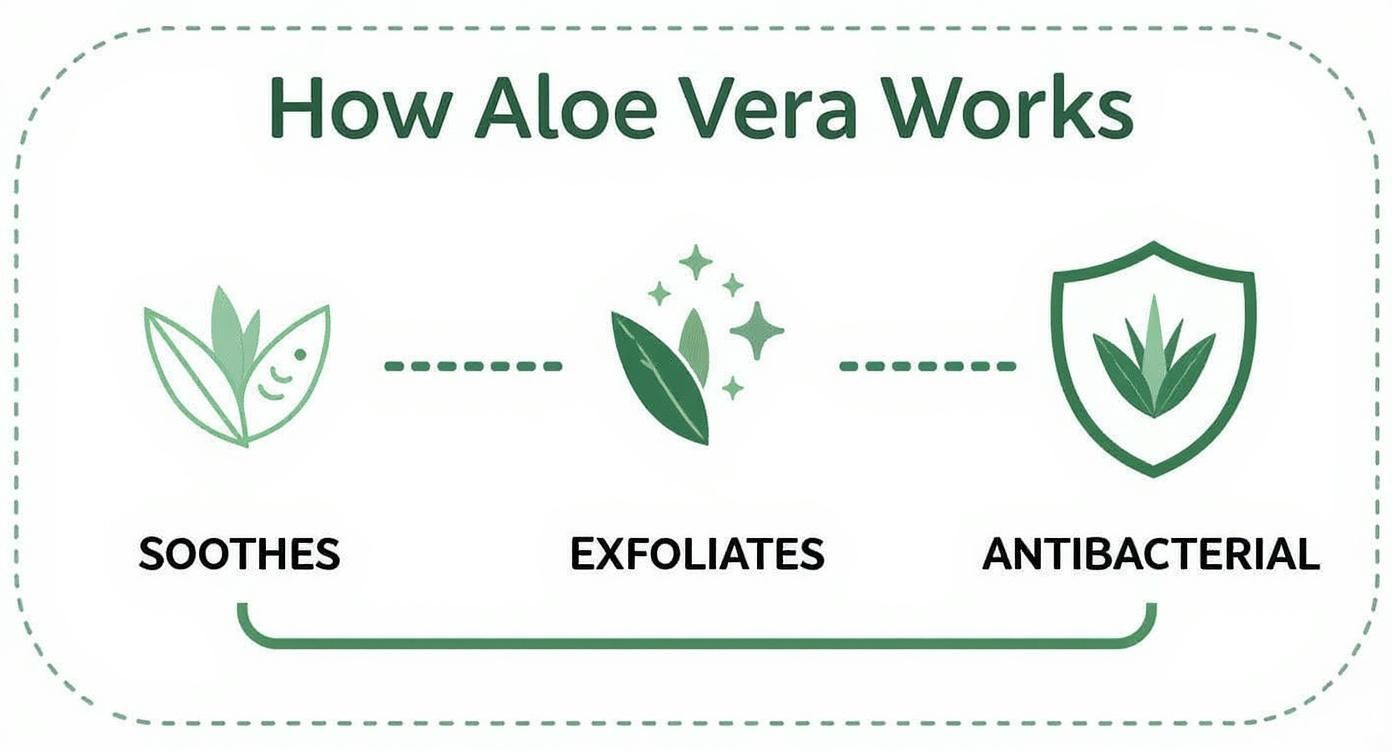
This visual really captures how aloe’s soothing, exfoliating, and antibacterial benefits work in concert to head off the problems that lead to acne. By picking a product that preserves these pure qualities—without tossing in a bunch of problematic extras—you give your skin all of the benefits with none of the risk.
To get a better sense of what makes a high-quality formulation, it’s helpful to see what experts look for. Exploring recommendations for something like a collagen bank moisturizer can offer great insight into the importance of a clean, effective ingredient list. It always comes back to what’s inside the bottle.
Using Aloe Vera for Your Specific Skin Type
Skincare is never a one-size-fits-all game. A product that’s a holy grail for one person might be a total dud for another, and this is especially true for an adaptable ingredient like aloe vera. How you use it should be dictated entirely by your skin’s unique behavior and needs.
The good news? Because pure aloe is non-comedogenic, it can slide into almost any skincare routine, regardless of type. The real question isn’t if you should use it, but how you can make it work best for you. This is about working with your skin, not against it.
Oily and Acne-Prone Skin
If you have oily or acne-prone skin, finding a moisturizer can feel like navigating a minefield. Most creams are too heavy, leaving behind a greasy film that feels like it’s suffocating your pores. This is where aloe vera has its moment. It’s the ideal lightweight, oil-free hydrator.
Its unique gel texture delivers a burst of moisture without adding a drop of extra oil to your skin’s surface. A thin layer can help rebalance things, sending a signal to your oil glands that they can calm down and don’t need to work overtime. Over time, this can actually lead to less oil production, helping your complexion stay clear and matte.
A controlled clinical study drove this point home, showing just how effective an aloe vera-based treatment can be for acne. After two months, participants saw a significant drop in both blemishes and hyperpigmentation, proving that aloe doesn’t just avoid clogging pores—it actively helps heal them. You can dive into these findings on acne recovery.
Dry or Combination Skin
If your skin is on the drier side, you might think aloe vera alone is too light to give you the deep, lasting hydration you crave—and you’d be right, mostly. While it provides a fantastic dose of water-based moisture, it doesn’t have the occlusive muscle to lock it all in.
For dry and combination skin types, aloe works beautifully as a hydrating serum. Start by applying a layer of pure aloe gel to clean, slightly damp skin and let it sink in. Immediately follow up with a richer, cream-based moisturizer. This layering technique, sometimes called a “moisture sandwich,” uses the aloe to pull water into the skin and the cream to create a seal, preventing all that good hydration from evaporating away.
Sensitive Skin
Sensitive skin demands the most caution. Even though aloe is famous for its soothing, calming abilities, any ingredient—even a natural one—can trigger a reaction. In commercial aloe gels, the real troublemakers are often the additives, like hidden fragrances, alcohols, or preservatives.
If your skin is reactive, these steps are non-negotiable:
- Insist on 100% Pure Gel: Scrutinize the label. You want a formula where aloe vera is the first and main ingredient, completely free from alcohol, artificial colors, and fragrance.
- Always Do a Patch Test: Before you put it anywhere near your face, test a small amount on your inner arm or just behind your ear. Give it a full 24 hours to see if any redness, itching, or irritation shows up.
By customizing how you use it, you can unlock the full potential of this incredible plant, ensuring it works in perfect sync with your skin’s specific demands.
Your Path Forward: Using Aloe Vera for Clear Skin
Navigating the world of skincare can feel like a minefield, but the answer to whether aloe vera clogs pores is refreshingly straightforward. On its own, pure aloe vera is a non-comedogenic champion. It offers lightweight hydration without the risk of the blockages that so often lead to breakouts, making it an incredible ally for calm, clear skin.
The real trick is learning to distinguish between the pure gel straight from the plant and the countless commercial products on store shelves. Your mission, should you choose to accept it, is to become a vigilant label-reader. You need to learn to bypass formulas loaded with pore-clogging additives like heavy oils, certain alcohols, or synthetic fragrances. Always prioritize products where Aloe Barbadensis Leaf Juice is the star of the show, not an afterthought.
Your Aloe Vera Checklist
To bring this botanical powerhouse into your routine with confidence, just follow these three simple steps for success:
- Choose Pure Formulas: Opt for 100% pure aloe vera gel or products with clean, minimal ingredient lists. This is the single best way to avoid potential irritants and pore-clogging fillers.
- Always Patch Test: Before slathering it on your face, test a small amount on your inner arm for 24 hours. This simple step ensures your skin is happy with the new addition and helps you avoid any surprise reactions.
- Adapt to Your Skin: Listen to what your skin needs. If you’re oily, aloe can work beautifully as a standalone lightweight moisturizer. If you’re on the drier side, think of it as a hydrating serum and layer a richer cream on top.
By following this simple approach, you can harness the true, skin-soothing benefits of aloe vera safely and effectively. For more expert guidance on building a routine for healthy skin, explore the latest insights from top specialists in the field of dermatology.
A Few Lingering Questions About Aloe
Even once you know pure aloe vera won’t clog your pores, a few practical questions always pop up. Getting the right answers here is the difference between simply using aloe and using it strategically to get the best possible results for your skin.
Let’s tackle some of the most common ones.
Can I Leave Aloe Vera on My Face Overnight?
For most people, absolutely. Applying a thin layer of 100% pure aloe vera gel and leaving it on overnight can be incredibly beneficial. Think of it as a lightweight, hydrating sleeping mask that won’t smother your skin.
As you sleep, its natural anti-inflammatory compounds get to work, calming any redness or irritation from the day. Plus, its high water content provides a slow, steady release of moisture that helps repair your skin barrier without any heavy, greasy feeling. It’s especially great for dry or combination skin types who wake up feeling tight—you’ll likely notice a much plumper, more refreshed complexion in the morning.
One crucial caveat: This advice is strictly for pure, unadulterated aloe vera. If you’re using a commercial gel loaded with thickeners, alcohol, or synthetic fragrances, you should always rinse it off. Leaving those additives on your skin all night is a recipe for irritation and, yes, potential breakouts.
Does Aloe Vera Help With Blackheads?
It can, though it plays more of a supporting role than a starring one. Blackheads are just open-air clogs—a mix of sebum and dead skin cells that has oxidized and turned dark. Aloe vera doesn’t “dissolve” them like an acid, but it helps prevent them from forming in the first place.
Here’s how it works:
- Gentle Exfoliation: Aloe contains natural enzymes that help gently break down and shed dead skin cells. Fewer dead cells hanging around means less material available to form a clog.
- Oil Balancing: By giving your skin the lightweight, water-based hydration it craves, aloe can help signal to your sebaceous glands that they don’t need to go into overdrive. Balanced oil production is key to keeping pores clear.
So, while you’ll still want something like salicylic acid to tackle existing blackheads, making aloe a regular part of your routine is a fantastic preventive strategy.
What if a Product With Aloe Vera Is Breaking Me Out?
If a product featuring aloe vera is causing breakouts, I can almost guarantee the aloe itself isn’t the villain. The culprit is almost always another ingredient hiding in the formula.
This is when you need to put on your detective hat. Flip the bottle over and scan that ingredient list for the usual suspects: pore-clogging silicones, heavy oils like mineral or coconut oil, artificial fragrances, or drying alcohols. These are far more likely to be causing the problem.
Also, check where “Aloe Barbadensis Leaf Juice” falls on the list. If it’s buried near the end, the product probably doesn’t contain enough aloe to offer much benefit anyway, and it’s definitely not the cause of your breakouts.
At Haute MD, we connect you with top-tier dermatologists who can provide expert guidance on building a skincare routine that delivers real results. Find a vetted specialist in your area to create a personalized plan for clear, healthy skin.