


Let’s get straight to it: a dermatologist is a highly specialized physician who treats conditions of the skin, hair, and nails. Their expertise covers everything from life-threatening skin cancers and chronic inflammatory diseases to the refined cosmetic procedures that enhance and restore your appearance.
Your Guide to Modern Dermatological Care
Most people think of a dermatologist as just a “skin doctor,” but that’s a massive understatement. Think of them as the expert physician for your body’s largest organ—the skin—as well as its related structures. Their work is critical because your skin often reveals the first clues about your overall health, acting as a window to underlying conditions that might otherwise go unnoticed.
The global impact of this specialty is staggering. According to a recent World Health Organization report, skin diseases are a huge public health issue, accounting for around 4.69 billion cases worldwide. This makes skin and subcutaneous diseases the eighth leading cause of disease burden globally, highlighting just how profoundly these conditions affect our health and quality of life.
The True Scope of a Dermatologist
It’s a common myth that dermatologists just handle acne and check suspicious moles. In reality, their field is incredibly diverse, covering a massive spectrum of care that maintains both your health and your confidence. A board-certified dermatologist is trained to identify and manage over 3,000 different conditions.
This work generally falls into three main buckets:
- Medical Dermatology: This is the diagnostic heart of the specialty, focused on treating diseases like psoriasis, eczema, rosacea, and complex skin infections.
- Surgical Dermatology: Here, the focus is on procedures. Think mole removals, skin biopsies, and highly precise surgeries to remove skin cancers.
- Cosmetic Dermatology: This branch is all about aesthetics, using treatments like injectables, advanced laser therapies, and chemical peels to improve the skin’s appearance and health.
Understanding the full range of what a dermatologist can do is the first step in knowing when to seek their expert opinion. From a sudden, inexplicable rash to proactive anti-aging advice, their knowledge is your single best resource for healthy, vibrant skin.
Whether you’re dealing with a persistent medical issue or exploring aesthetic enhancements, finding the right expert is everything. By exploring a curated network of elite dermatologists, you can connect with top-tier professionals who specialize in precise, outcome-driven care, ensuring you receive treatment from a physician whose skills are perfectly aligned with your goals.
The Three Pillars of Dermatological Care
To truly understand what a dermatologist treats, it’s best to see their practice as built on three core pillars: medical, surgical, and cosmetic dermatology. While they constantly overlap, each represents a distinct area of focus. This structure is what allows an elite dermatologist to offer complete, integrated care for the skin, hair, and nails.
Think of it like a master architect who can design the functional blueprint, oversee the structural construction, and then apply the final aesthetic finishes—all for your body’s largest and most visible organ.
This simple diagram shows how a dermatologist’s expertise covers the full spectrum of skin, hair, and nail health.
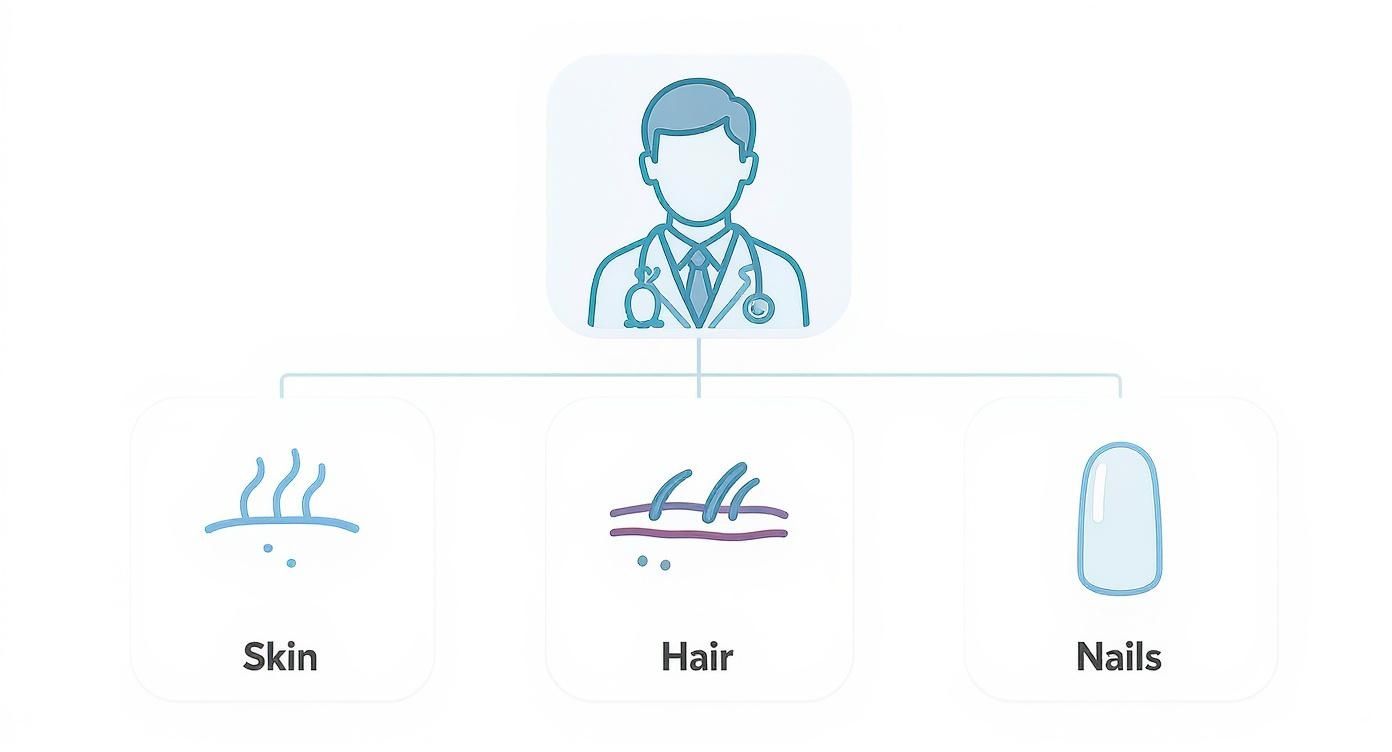
The visual makes it clear: a board-certified dermatologist is the central expert for any condition affecting these three interconnected areas of the body.
Medical Dermatology: The Foundation of Skin Health
Medical dermatology is the absolute cornerstone of the specialty. This is the detective work—the diagnosis and management of diseases affecting the skin, hair, and nails. Here, a practitioner uncovers the root cause of symptoms that might range from a minor annoyance to a life-threatening condition.
This pillar is all about restoring health and function. Dermatologists manage chronic conditions like eczema, psoriasis, and rosacea, which can deeply impact a person’s quality of life. They also diagnose and treat infections, whether bacterial (like cellulitis), viral (like shingles), or fungal (like ringworm).
Surgical Dermatology: Precision in Action
Surgical dermatology is where hands-on procedures are used to remove or repair skin tissue. This is far more than just cosmetic removals; it’s a critical component of treating skin cancer and other serious conditions. A dermatologist’s surgical skill is incredibly precise, demanding an intimate knowledge of skin anatomy.
Common procedures in this pillar include:
- Skin Biopsies: Taking a small sample of skin to diagnose a condition under a microscope. This is essential for confirming skin cancers or complex inflammatory diseases.
- Excisions: Surgically removing benign growths like cysts and lipomas or cancerous lesions like melanoma, basal cell carcinoma, and squamous cell carcinoma.
- Mohs Surgery: A highly specialized and precise surgical technique used to treat skin cancer. The surgeon removes thin layers of cancer-containing skin, examining each one until only cancer-free tissue remains. This technique boasts an up to 99% cure rate for certain cancers while preserving as much healthy tissue as possible.
This branch showcases the dermatologist’s role as a skilled surgeon, blending medical knowledge with procedural expertise to achieve the best possible health outcomes. It’s where immediate, definitive action is taken.
“Think of the three pillars as a continuum of care. Medical dermatology identifies the problem, surgical dermatology can physically remove it, and cosmetic dermatology refines and restores the appearance afterward. An elite dermatologist moves seamlessly between all three.”
Cosmetic Dermatology: The Art of Enhancement
Cosmetic dermatology is focused on improving the skin’s appearance, texture, and vitality. While these procedures are often elective, their power to boost a person’s self-esteem and confidence is profound. This pillar combines the science of skin aging and anatomy with an artistic eye for balance and natural-looking results.
It’s about helping patients look and feel their absolute best at any age. Popular treatments include:
- Injectables: Using neuromodulators like Botox to relax dynamic wrinkles and dermal fillers to restore lost volume and contour.
- Laser and Light Therapies: Employing advanced energy devices to treat everything from sun damage and redness to unwanted hair and scars.
- Chemical Peels and Microneedling: Procedures designed to improve skin texture, tone, and overall radiance by stimulating collagen and promoting healthy cell turnover.
To bring it all together, here is a quick overview of how these pillars function.
Dermatology Pillars at a Glance
| Pillar of Dermatology | Primary Focus | Common Conditions and Procedures |
|---|---|---|
| Medical Dermatology | Diagnosing and treating diseases of the skin, hair, and nails to restore health and function. | Acne, eczema, psoriasis, rosacea, skin infections, skin cancer screenings. |
| Surgical Dermatology | Using procedural techniques to remove or repair skin tissue, often for medical necessity. | Skin biopsies, cyst removal, mole excisions, and Mohs surgery for skin cancer. |
| Cosmetic Dermatology | Improving the skin’s appearance, texture, and signs of aging through elective procedures. | Botox, dermal fillers, laser treatments, chemical peels, and microneedling. |
Ultimately, these three pillars are not isolated silos. A single patient might see a dermatologist for a medical concern like acne, receive a surgical procedure for deep acne scarring, and later pursue cosmetic treatments to refine their skin’s texture. This integrated approach is what makes a dermatologist the definitive expert for your skin, hair, and nails.
Common Skin Conditions a Dermatologist Manages
While a dermatologist’s expertise covers a vast territory, most people book their first appointment to deal with a specific, visible concern. This is where the medical pillar of dermatology truly shines, delivering solutions for conditions that impact everything from physical comfort to self-confidence. Let’s walk through some of the most common issues that bring people into a dermatologist’s office.
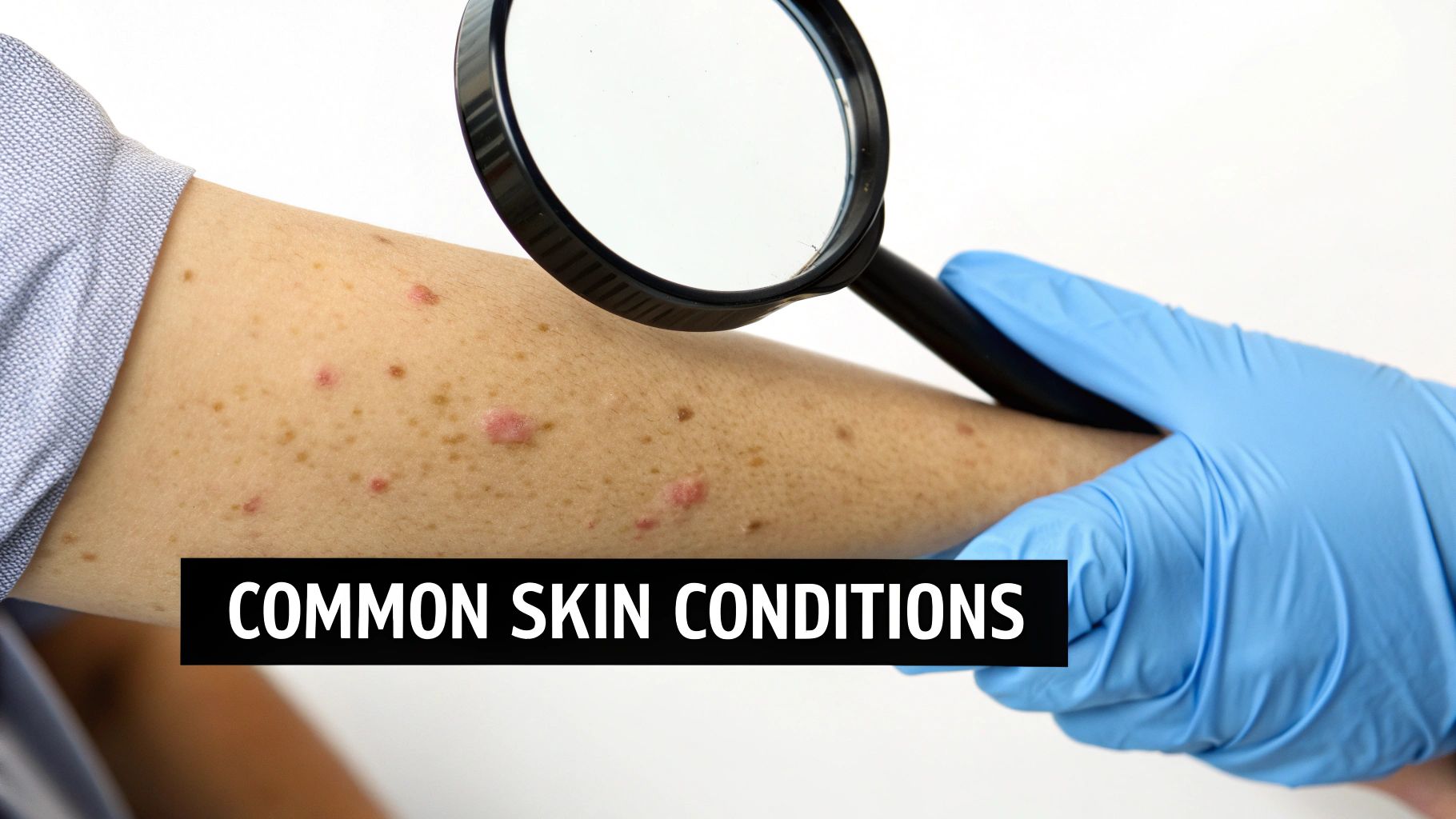
From inflammatory diseases to dangerous malignancies, a board-certified dermatologist is the definitive expert in diagnosing and managing the full spectrum of skin disorders.
The Challenge of Acne in All Its Forms
Acne is far more than a teenage problem; it’s a complex inflammatory condition that affects individuals of all ages. It crops up when hair follicles get clogged with oil and dead skin cells, leading to whiteheads, blackheads, pimples, and painful cysts. For many, it’s a persistent and frustrating battle.
A dermatologist digs deeper than surface-level creams to pinpoint the root cause, which can be anything from hormonal shifts and genetics to bacteria. Because it’s so widespread, they have an extensive arsenal of treatments ready to deploy.
In fact, acne vulgaris is the most common skin condition in the United States, impacting up to 50 million Americans annually. A dermatologist’s game plan depends entirely on your specific situation but might include:
- Topical Treatments: Medicated creams and gels with retinoids, benzoyl peroxide, or salicylic acid to unclog pores and calm inflammation.
- Oral Medications: Antibiotics to get bacteria under control, oral contraceptives to regulate hormones, or powerful retinoids like isotretinoin for severe, scarring acne.
- In-Office Therapies: Treatments like chemical peels, light therapy, or extractions that work alongside your daily skincare regimen.
Understanding what’s driving your breakouts is crucial. For instance, knowing how to treat hormonal acne demands a very different strategy than managing acne caused primarily by bacteria.
Inflammatory Conditions Eczema and Psoriasis
Eczema (atopic dermatitis) and psoriasis are two chronic inflammatory conditions that are often confused but are fundamentally different. Both can cause significant discomfort and require long-term management strategies designed by a specialist.
Eczema usually shows up as dry, intensely itchy, and inflamed patches of skin. It’s common in children but can stick around into adulthood, often flaring up in response to triggers like allergens, stress, or even dry weather.
Psoriasis, on the other hand, is an autoimmune disease. It makes skin cells build up way too fast, forming thick, silvery scales and itchy, dry, red patches. These plaques can appear anywhere but often favor the elbows, knees, and scalp.
A dermatologist can accurately diagnose the condition and build a personalized plan to keep it under control.
Both eczema and psoriasis are much more than just “dry skin.” They are complex medical conditions that benefit immensely from a dermatologist’s expertise in prescribing advanced topical steroids, systemic medications, and groundbreaking biologic therapies that target the underlying inflammation.
Rosacea and Other Common Rashes
Rosacea is another chronic condition defined by persistent facial redness, flushing, visible blood vessels, and sometimes bumps or pimples. It can easily be mistaken for acne or an allergic reaction, which is why a correct diagnosis is so critical for getting it managed effectively.
Dermatologists help patients identify and avoid their specific rosacea triggers—things like sunlight, stress, spicy foods, and alcohol. Treatment often involves a mix of gentle skincare, topical medications to reduce redness, and oral antibiotics to manage inflammation. For stubborn visible blood vessels, laser therapy can be a game-changer.
Beyond these specific conditions, dermatologists are the go-to experts for diagnosing any unusual or persistent rash, from allergic contact dermatitis to skin infections caused by fungi, viruses, or bacteria.
The Critical Role in Skin Cancer Detection
Perhaps the most vital role a dermatologist plays is in catching and treating skin cancer. It’s the most common form of cancer in the United States, and catching it early dramatically improves the outcome. Dermatologists are trained to spot the subtle, early signs of the three main types.
| Type of Skin Cancer | Common Appearance | Risk Factor Highlight |
|---|---|---|
| Basal Cell Carcinoma (BCC) | Often looks like a flesh-colored, pearl-like bump or a pinkish patch of skin. | Most common type, linked to cumulative sun exposure over many years. |
| Squamous Cell Carcinoma (SCC) | Typically appears as a firm, red bump, a scaly patch, or a sore that heals and then re-opens. | Also tied to sun exposure, it can grow deeper into the skin if left untreated. |
| Melanoma | The most serious type, often identified by the ABCDEs (Asymmetry, Border, Color, Diameter, Evolving). | Can develop from an existing mole or appear as a new dark spot. |
Regular skin cancer screenings are absolutely essential, especially if you have a history of sun exposure or a family history of the disease. During a full-body check, a dermatologist meticulously examines your entire skin surface for any suspicious spots, performing a biopsy on any area of concern to get a definitive diagnosis and map out the next steps.
Treating More Than Skin: Hair and Nail Disorders
It’s a common myth that a dermatologist’s world revolves solely around the skin. While that’s certainly their primary domain, their expertise runs much deeper, covering the complex structures of your hair and nails. These aren’t just cosmetic accessories; they’re extensions of your skin and often act as critical windows into your overall health.
When something goes wrong with your hair or nails, a dermatologist is the specialist best equipped to play detective, diagnose the root cause, and design an effective treatment plan. Ignoring these issues often means overlooking the first signs of a potential underlying medical condition.

Addressing Complex Hair and Scalp Conditions
Hair loss, known medically as alopecia, is one of the most emotionally distressing conditions a person can face. A dermatologist’s role is to pinpoint why the hair is thinning or falling out. The causes are incredibly varied, ranging from genetics and hormonal shifts to autoimmune disorders and nutritional gaps, making a precise diagnosis absolutely essential for any hope of successful treatment.
Their investigation digs deep, considering everything from your family history to your stress levels. By getting to the true source of the problem, they can offer targeted solutions that go far beyond the generic promises of over-the-counter products.
Common hair and scalp disorders a dermatologist treats include:
- Androgenetic Alopecia: The most familiar form of hair loss, often called male- or female-pattern baldness, driven by a combination of genetics and hormones.
- Alopecia Areata: An autoimmune disorder where the body’s immune system mistakenly attacks its own hair follicles, leading to patchy hair loss on the scalp and body.
- Telogen Effluvium: A temporary but dramatic shedding that follows a significant physical or emotional stressor, like major surgery, childbirth, or severe illness.
- Scalp Psoriasis: An autoimmune condition that causes red, scaly patches on the scalp. If left unmanaged, the inflammation can disrupt hair growth.
- Folliculitis and Scalp Infections: Bacterial or fungal infections that invade the hair follicles, causing inflammation, itchiness, and pustules.
A dermatologist’s approach to hair loss is deeply medical. They may order blood tests, perform a scalp biopsy, or use specialized tools to examine hair follicles up close, ensuring that the treatment plan is based on evidence, not guesswork.
Nail Disorders and Their Underlying Meanings
Your nails can reveal a surprising amount about what’s happening inside your body. Subtle changes in their color, texture, thickness, or growth patterns can be the first clue to a localized infection or even a more significant systemic disease. A dermatologist is trained to read these signs and connect them to the bigger picture.
For instance, what looks like a simple nail fungus might actually be a symptom of psoriasis or another inflammatory condition. That’s where a dermatologist’s expertise becomes crucial—distinguishing between these possibilities is the key to getting the right care.
Common nail conditions they manage include:
- Onychomycosis (Nail Fungus): A persistent fungal infection that can make nails thick, brittle, and discolored. Dermatologists have access to potent prescription topical and oral antifungal medications that are far more effective than store-bought remedies.
- Nail Psoriasis: This can cause pitting, ridging, discoloration, and even the separation of the nail from the nail bed.
- Ingrown Toenails: A painful condition where the edge of a nail grows into the surrounding skin, which a dermatologist can expertly and surgically correct.
- Nail Tumors: Both benign and malignant growths can develop in the nail unit, requiring an expert diagnosis and surgical removal.
Think of your nails as small but highly informative diagnostic windows. A dermatologist knows exactly what to look for, whether it’s a subtle change in color pointing to a nutritional deficiency or a more alarming sign that requires immediate medical attention. They are the definitive specialists for keeping your hair and nails just as healthy as your skin.
Knowing When to See a Dermatologist
Figuring out what a dermatologist treats is one thing; knowing when you personally need to see one is something else entirely. Many skin issues seem minor at first, but certain red flags are your cue to stop the “wait and see” game and schedule a consultation with an expert. Ignoring these signals can allow a perfectly manageable issue to spiral into something more serious.https://www.youtube.com/embed/J7IZ2HsVpYY
Think of your skin as a constant feedback system for your overall health. While a small pimple might clear up on its own, a sore that just won’t heal or a mole that’s suddenly changing shape requires a professional eye. The goal is to shift your mindset from reactive care—only calling a doctor when something is obviously wrong—to proactive health management.
Clear Signs You Need an Appointment
Some symptoms are simply too significant to ignore. If you experience any of the following, it’s a clear indicator that it’s time to get a dermatologist’s opinion. While not a complete list, these are some of the most urgent reasons to book a visit.
- A New or Changing Mole: This is the big one. Any mole that changes in size, shape, or color, or one that starts to bleed or itch, is a major red flag. It’s the single most critical reason to see a dermatologist, as it could be an early sign of melanoma.
- Acne That Won’t Quit: If over-the-counter products haven’t made a dent in your acne after several weeks, it’s time for a new strategy. A dermatologist can prescribe treatments that get to the root cause of the breakouts, something store-bought creams just can’t do.
- A Persistent or Painful Rash: A rash that spreads, blisters, causes real pain, or just won’t go away could signal a more complex condition. This isn’t just a simple irritation; it could be eczema, psoriasis, or a severe allergic reaction that needs professional diagnosis.
- Sudden or Significant Hair Loss: If you’re noticing clumps of hair in the shower drain or rapid thinning on your scalp, don’t just write it off. A dermatologist can diagnose the cause, which could be anything from extreme stress to an underlying autoimmune condition.
- Stubborn Nail Issues: Nails that are discolored, thickened, brittle, or pulling away from the nail bed often point to a fungal infection. These rarely resolve on their own and typically require prescription treatment to fully eradicate.
The Power of Proactive Skin Screenings
Beyond troubleshooting immediate problems, the most important reason to see a dermatologist is for prevention. An annual skin cancer screening is one of the most powerful tools you have for your long-term health, especially if you have known risk factors.
A full-body skin exam is a quick, non-invasive check that can literally save your life. Skin cancer is highly treatable when detected early, and a dermatologist is trained to spot suspicious lesions that you might easily overlook.
This proactive approach is especially vital for anyone with:
- A personal or family history of skin cancer.
- A large number of moles or any atypical (unusual-looking) moles.
- A history of significant sun exposure or blistering sunburns.
- Fair skin that burns easily.
Waiting for an obvious problem to appear is a gamble you don’t need to take with your health. By scheduling regular check-ups, you empower both yourself and your dermatologist to catch potential issues at their earliest, most treatable stage. This simple habit is the cornerstone of lifelong skin health—and a key part of what a dermatologist truly treats: your future well-being.
How to Find the Right Dermatologist for You
Choosing a specialist to manage your skin, hair, and nail health is one of the most important decisions you can make for your long-term well-being. This isn’t just about finding a doctor; it’s about forming a partnership with an expert who you trust implicitly with both your appearance and your health.
The key is to find an elite physician whose skills, aesthetic sense, and approach align perfectly with your unique goals. This requires more than a quick online search. It’s a deliberate process of vetting credentials, matching expertise to your needs, and ensuring a shared vision for the outcome.
Start with Board Certification
Let’s be clear: board certification is the absolute, non-negotiable starting point. It’s the gold standard in medicine for a reason.
A board-certified dermatologist has not only completed medical school but has also survived a grueling, multi-year residency program focused exclusively on dermatology. They’ve then passed a demanding examination administered by the American Board of Dermatology. This certification is your assurance that the physician possesses the deep knowledge required to accurately diagnose and treat the entire spectrum of skin, hair, and nail conditions—from complex skin cancers to the subtle art of cosmetic enhancements.
Match the Subspecialty to Your Needs
Dermatology isn’t a one-size-fits-all field. It’s a broad discipline with highly specialized artists and scientists. You wouldn’t see a cardiac surgeon for a knee injury, and the same logic applies here. Finding the right doctor means aligning their specific area of expertise with your goals.
Consider the different areas of focus:
- Medical Dermatology: This is the foundation, focusing on diagnosing and treating conditions like acne, eczema, psoriasis, rosacea, and performing critical skin cancer screenings.
- Procedural or Surgical Dermatology: If your primary concern involves the removal of skin cancer, moles, cysts, or scar revision, you need a dermatologist with advanced surgical training. A fellowship in Mohs surgery, for example, represents the pinnacle of expertise for treating certain skin cancers.
- Cosmetic Dermatology: For aesthetic goals like reducing wrinkles, restoring facial volume, or improving skin texture and tone, a cosmetic dermatologist is essential. This requires not just technical skill with injectables and lasers, but a true artistic eye.
Choosing a dermatologist is like hiring a master craftsman. You need to ensure their specific toolkit and skill set are perfectly suited for the job, whether it’s a delicate medical repair or a beautiful aesthetic enhancement.
Vet Potential Candidates Thoroughly
Once you’ve built a shortlist of board-certified specialists in the right subspecialty, it’s time to dig deeper. Go beyond the physician’s own website to get a complete, unbiased picture of their practice.
- Read Patient Reviews: Look for consistent themes in patient feedback across multiple platforms. Do reviews repeatedly praise the doctor’s meticulous approach, their communication style, and—most importantly—their results?
- Check Hospital Affiliations: Elite dermatologists are often affiliated with top-tier medical centers. This affiliation is another layer of vetting, indicating they have been approved by the hospital’s rigorous credentialing committee.
- Prepare for Your Consultation: Your first appointment is a two-way interview. Don’t be passive. Prepare a list of questions about their experience with your specific condition or desired procedure, the treatment options they recommend, and what you can realistically expect in terms of results and recovery.
Finding an expert you can trust is a crucial step in your health journey. For more guidance on this process, our guide on how to find the best dermatologist near you offers additional detailed tips. By taking a thoughtful and methodical approach, you can confidently select a top-tier professional who will help you achieve and maintain optimal skin health.
Your Questions, Answered
Navigating the world of dermatology often brings up a few key questions. Here are clear, direct answers to the most common queries we see, designed to give you the confidence to take the next step.
Do I Need a Referral to See a Dermatologist?
This really comes down to your insurance plan. The short answer is: maybe.
Many PPO (Preferred Provider Organization) plans give you the freedom to book an appointment directly with any specialist in their network. On the other hand, HMO (Health Maintenance Organization) plans almost always require you to get a referral from your primary care physician (PCP) first.
The smartest move is to make a quick call to your insurance provider before you schedule anything. Confirming their rules upfront is a simple step that can save you from a surprise bill and a lot of administrative hassle down the road.
What Is the Difference Between a Dermatologist and an Esthetician?
This is a critical distinction, and it all comes down to medical training and legal scope of practice. Think of it this way: a dermatologist is a medical doctor who diagnoses and treats disease, while an esthetician is a licensed professional focused on cosmetic skin care.
- Dermatologist: This is a physician who has graduated from medical school and completed an intensive, multi-year residency in dermatology. They are the only ones qualified to diagnose and treat the 3,000+ conditions affecting skin, hair, and nails, prescribe medications, and perform surgery.
- Esthetician: This is a trained and state-licensed professional who specializes in improving the skin’s appearance. They perform treatments like facials, extractions, microdermabrasion, and light chemical peels. They are experts in beautification, but they cannot diagnose medical issues or prescribe medication.
An esthetician is your go-to for routine skin maintenance and pampering, like getting a fantastic facial. A dermatologist is the medical expert you must see for any health-related concern—a suspicious mole, persistent acne, eczema, or an unexplained rash.
Will Insurance Cover Cosmetic Procedures?
Generally, no. Procedures that are considered purely cosmetic or elective are almost never covered by insurance. Treatments like Botox for wrinkles, dermal fillers for volume loss, or laser hair removal are typically paid for out-of-pocket because they aren’t deemed medically necessary.
However, the line can sometimes blur. For instance, a procedure to remove a mole might be fully covered if your dermatologist determines it’s medically suspicious and sends it for a biopsy. The key is medical necessity.
Always have a clear conversation about cost and coverage with both your dermatologist’s office and your insurance carrier before any procedure. This ensures you know exactly what your financial responsibility will be.
Finding an elite physician who can answer your questions with authority and genuine care is paramount. The Haute MD network is your direct link to the nation’s most respected, board-certified dermatologists and specialists, ensuring you connect with a provider who meets the highest standards of excellence. Explore the network at https://www.hauteliving.com/hautemd.