


Imagine medicine designed just for you—like a bespoke suit instead of something off the rack. For decades, the standard medical playbook has been to treat large groups of people with the same diagnosis in the same way. While this one-size-fits-all approach can work, it often ignores a fundamental truth: we are all biologically unique.
Our individual genetic codes, lifestyles, and environments mean we all respond to diseases and treatments in profoundly different ways. A drug that works wonders for one person might be completely useless—or worse, cause serious side effects—for another. This is precisely where personalized medicine is changing the game.
Moving Beyond One-Size-Fits-All Healthcare
Instead of treating a condition based on broad population averages, personalized medicine uses your specific biological data to guide every health decision. It’s a complete shift in thinking, moving from generalized reactions to individualized, proactive strategies. This empowers doctors to make smarter, data-driven choices about your health.
The core benefits spring directly from this precise, individual focus:
- Greater Treatment Effectiveness: Therapies are chosen based on your unique biological markers, which dramatically increases the odds of a positive outcome.
- Improved Safety and Fewer Side Effects: Genetic testing can flag your potential for adverse drug reactions, allowing doctors to sidestep harmful medications before they are ever prescribed.
- Proactive Health Management: By understanding your genetic predispositions, you and your doctor can build targeted prevention strategies long before a disease ever has a chance to develop.
This isn’t just about reacting to illness anymore. It’s about anticipating and managing health with a level of precision that turns medical decisions from trial-and-error into a data-driven science.
The Personalized Care Experience
This kind of detailed, individualized attention is the hallmark of modern patient-centered care. The principles of personalized medicine, for example, fit perfectly with the high-touch, proactive services you find in specialized medical practices. Many patients explore these models to get deeper insights into their health, and you can learn more about how concierge medicine works and how it facilitates this dedicated kind of care.
By moving away from generalized assumptions, we unlock a far more powerful way to manage health. Personalized medicine finally acknowledges that your health journey is entirely your own, giving us the tools to map it out with an accuracy that was once impossible. The result is better outcomes and the potential for a longer, healthier life.
How Your Unique Biology Guides Treatment
To really grasp the power of personalized medicine, you have to understand how it works. Think of your DNA as the body’s ultimate instruction manual—a biological blueprint that dictates everything from your eye color to how you metabolize a specific drug. For the first time, scientists and doctors are learning to read this manual with incredible precision.
This approach goes far beyond just treating surface-level symptoms. It dives deep, exploring the molecular drivers of your health. By using a few key tools to decipher your body’s unique language, we can turn abstract genetic data into concrete medical insights that shape your entire treatment plan.
This is where the real shift happens: medical decisions stop being educated guesses based on population averages and become a data-driven science tailored specifically to you.
Decoding Your Personal Health Blueprint
The core tools of personalized medicine give physicians a microscopic view of what’s happening inside your body. These aren’t just standard lab tests; they’re deep dives into your biological code.
- Genomics: This is the study of your complete set of DNA—your genome. It’s the foundational script for how your body is built and how it’s programmed to function.
- Proteomics: If genomics is the script, proteomics studies the actors—the proteins. It analyzes how the proteins made by your genes are actually behaving, which reveals the real-time status of your health.
- Biomarkers: Think of a biomarker as your body’s “check engine” light. It’s a measurable indicator, like a specific molecule or genetic variation, that signals a potential health issue, sometimes long before you ever feel a symptom.
This multi-layered view gives doctors a much richer, more complete picture of your health. It allows them to make proactive, informed decisions instead of just reacting to disease after it has already taken hold. For example, understanding your unique metabolic profile through advanced testing can lead to highly targeted weight loss strategies that actually work. To see this in action, you can explore our practical guide on using metabolic testing for weight loss.
This simple concept map shows how personalized medicine directly connects your unique biology to better health outcomes.
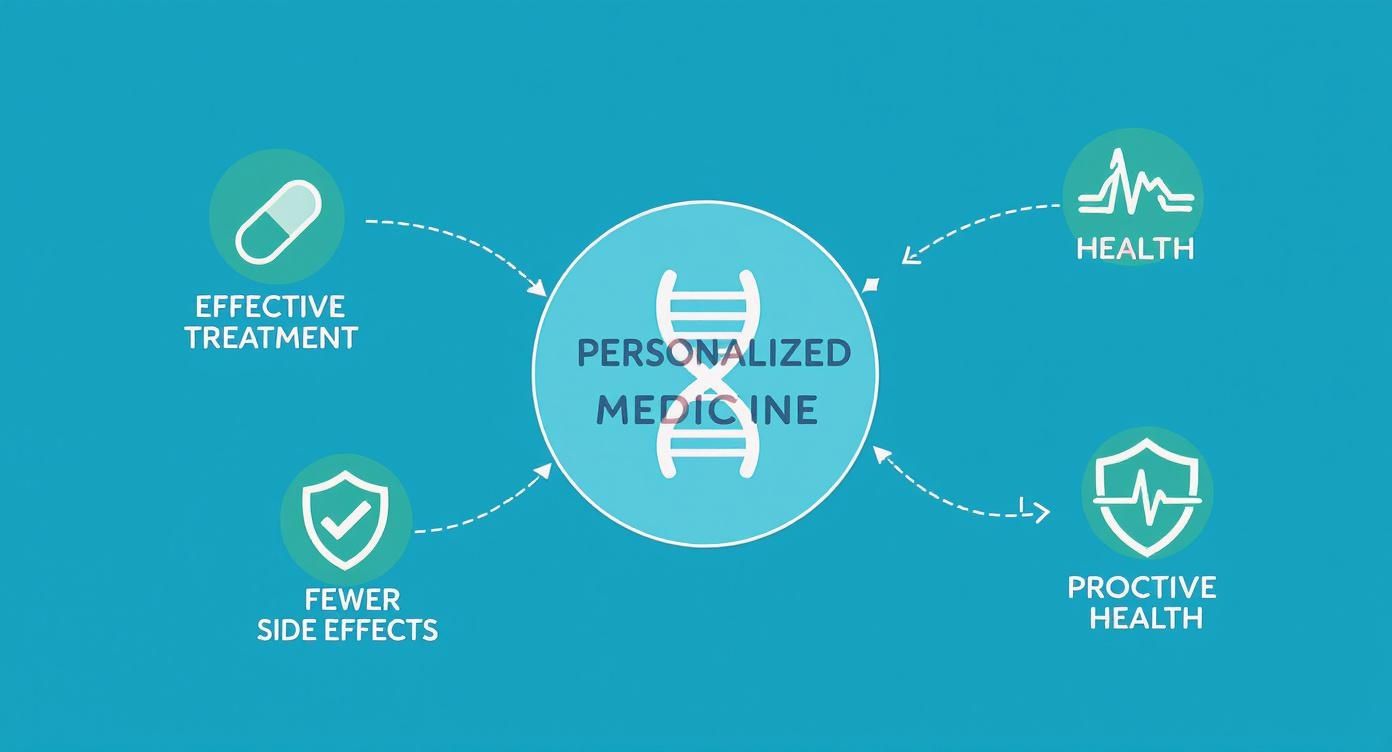
As you can see, starting with an individual’s unique biological data leads directly to more effective treatments, a sharp reduction in harmful side effects, and a much stronger focus on proactive, preventive health.
From Data to Diagnosis and Treatment
So, how does reading your biological manual actually change the care you receive? It all starts with genetic testing. A simple blood or saliva sample can unlock a wealth of information about your predispositions to certain conditions and how you’re likely to respond to various drugs.
This isn’t about predicting the future with 100% certainty. It’s about understanding probabilities and managing risk, giving you the power to influence your health journey with targeted, evidence-based actions.
Take pharmacogenomics, a key pillar of personalized medicine. It uses your genetic information to predict your response to specific medications. This helps your doctor select the right drug at the most effective dose from day one, completely avoiding the frustrating—and sometimes dangerous—trial-and-error process that plagues conventional medicine.
This shift toward precision isn’t just improving individual outcomes; it’s fueling a massive market. The global personalized medicine market, valued at approximately US$531.7 billion, is projected to soar to nearly US$869.9 billion by 2030, driven by these exact technological leaps and growing patient awareness.
By truly understanding your unique biology, personalized medicine provides a clear, logical path to better health, ensuring every decision is based on the one person who matters most: you.
The Real-World Health Benefits for Patients

This is where the complex science of genomics turns into tangible, life-changing results. By finally moving past the one-size-fits-all model, personalized medicine offers benefits that were simply out of reach just a decade ago. It fundamentally alters the dynamic between doctor and patient, creating a collaborative, data-driven partnership.
These advantages aren’t just theoretical—they are reshaping clinical outcomes in real time. For patients, this means care that is more effective, significantly safer, and proactively focused on long-term wellness.
To really grasp the difference, it’s helpful to see the two approaches side-by-side.
Comparing Traditional vs Personalized Medicine
This table highlights the key differences in approach and patient outcomes between the conventional one-size-fits-all model and the modern personalized medicine paradigm.
| Aspect | Traditional Medicine | Personalized Medicine |
|---|---|---|
| Approach | Reactive, one-size-fits-all treatments for the “average” patient | Proactive, tailored treatments based on an individual’s unique biology |
| Diagnostics | Based on symptoms and standard lab tests | Incorporates genetic, molecular, and lifestyle data |
| Treatment Model | Often trial-and-error | Targeted and precise from the start |
| Patient Role | Primarily a recipient of care | An active partner in health decisions |
| Focus | Managing symptoms and treating established diseases | Preventing disease and optimizing long-term health |
| Outcome | Variable efficacy and higher risk of adverse reactions | Increased treatment success and improved safety profile |
Ultimately, personalized medicine moves away from treating a disease and toward treating a person. The practical benefits of this shift are profound.
Maximizing Treatment Effectiveness
One of the most powerful benefits of personalized medicine is its ability to match the right treatment to the right person, dramatically improving the odds of success. It replaces the often frustrating trial-and-error cycle with a targeted, evidence-based strategy.
Think of it like having the exact key for a specific lock. Instead of trying dozens of keys that almost fit, you’re handed the one that works perfectly on the first try. This precision is most obvious in oncology.
For example, certain lung cancer drugs are only effective in the 10% of patients whose tumors have a specific epidermal growth factor (EGF) mutation. Genetic testing pinpoints these individuals, ensuring a potent therapy is given only to those who will benefit, while everyone else is spared an ineffective treatment and its side effects.
This targeted approach extends into many areas of medicine. For those exploring advanced health solutions, understanding these principles is key. Our guide explaining what regenerative medicine is is a useful next step in understanding how modern science is personalizing healing at a cellular level.
Enhancing Safety and Reducing Side Effects
Every medication carries a risk of side effects, but your unique genetic makeup can make you far more susceptible to adverse drug reactions (ADRs). In fact, a huge percentage of hospital admissions are tied to these negative reactions. Personalized medicine confronts this risk head-on.
The field of pharmacogenomics analyzes how your genes influence your response to drugs. By understanding how your body metabolizes certain compounds, your doctor can choose medications and dosages optimized for your biology.
This simple genetic insight can prevent serious, and sometimes fatal, complications from common medications. It transforms prescribing from a reactive process to a predictive science, prioritizing patient safety above all.
A classic example is the blood thinner warfarin. Genetic variations can drastically change how patients process this drug, making dosing a delicate balancing act. The FDA now recommends genetic testing before starting warfarin, allowing doctors to set a precise dose from day one and avoid the dangerous risks of excessive bleeding or clotting.
Shifting from Reaction to Proactive Prevention
Perhaps the most profound benefit is the shift from treating existing diseases to actively preventing them. By identifying your genetic predispositions, you gain the power to make targeted lifestyle and screening choices that can genuinely alter your health trajectory.
For instance, genetic testing can reveal an inherited risk for conditions like heart disease or certain cancers long before symptoms ever appear.
- Targeted Screening: If you carry a high genetic risk for colon cancer, your doctor may recommend earlier and more frequent colonoscopies.
- Preventive Measures: Women with specific BRCA1 or BRCA2 gene variants, which massively increase the risk of breast and ovarian cancer, can opt for enhanced surveillance or preventive surgeries.
- Informed Lifestyle Choices: Knowing you have a predisposition for cardiomyopathy can motivate specific dietary changes and exercise routines to protect your heart health.
This proactive stance empowers you to stay ahead of potential health issues, managing risk with precision and purpose. This shift isn’t just improving patient outcomes; it’s also driving substantial economic growth. The global personalized medicine market was valued at USD 567.10 billion and is projected to reach USD 1,196.18 billion by 2033, a clear sign of its expanding influence.
Personalized Medicine Success Stories

The real test of any medical breakthrough isn’t the complexity of the science, but its impact on real people. While the mechanisms behind personalized medicine are intricate, the results are refreshingly clear—better outcomes, fewer side effects, and a new sense of hope for patients.
When most people think of personalized medicine, they think of oncology. And while targeted cancer therapies are a major part of the story, the approach is now solving puzzles across nearly every specialty.
From cardiology to psychiatry, tailoring treatment to a person’s unique genetic code is changing lives every day. These aren’t far-off possibilities; they’re happening right now. Each case follows a similar arc: a frustrating problem, a precise diagnosis using personalized tools, and a dramatically better result.
Precision in Mental Health Treatment
Finding the right antidepressant is often a grueling process of trial and error. For many, it’s a journey that takes months, even years, cycling through different medications while grappling with crushing side effects and little to no relief. Pharmacogenomics provides a shortcut through the guesswork.
Consider a patient with severe depression who has already failed three different medications. The standard playbook would be to simply try a fourth and hope for the best. A personalized approach, however, starts with a simple genetic test.
This test reveals how the patient’s body metabolizes certain psychiatric drugs. The results might show they are a “poor metabolizer” for the exact class of antidepressants they’ve been trying. This means the drug isn’t being cleared properly, building up in their system to cause side effects without ever reaching a therapeutic level. Armed with that one piece of data, their psychiatrist can immediately switch to a different class of medication that their body can process effectively.
This simple genetic insight bypasses months of suffering. The patient gets the right medication at the right dose, the first time, leading to faster relief and a profound improvement in their quality of life.
Ensuring Safety in Cardiovascular Care
Millions of people depend on blood thinners to prevent life-threatening clots, but dosing these powerful drugs is a delicate balancing act. A dose that’s perfect for one person can be dangerously high for another, leading to severe bleeding, or so low it’s completely ineffective, risking a stroke.
Take the common blood thinner clopidogrel (Plavix), frequently prescribed after a cardiac stent is placed. A huge portion of the population carries a genetic variation in the CYP2C19 enzyme, which is essential to activate the drug. For these individuals, taking a standard dose is like taking a placebo—it offers virtually no protection against a clot forming in the new stent.
A cardiologist practicing personalized medicine will order a CYP2C19 genotype test before writing the prescription.
- If the test reveals the patient has the genetic variation, the doctor knows clopidogrel won’t work.
- They can immediately prescribe an alternative medication that functions through a different biological pathway.
- This proactive decision completely sidesteps the risk of stent thrombosis, a complication that can be fatal.
This is a perfect example of how personalized medicine shifts the paradigm from reaction to prevention, avoiding a devastating medical event before it has a chance to happen.
Solving Diagnostic Odysseys in Rare Diseases
For years, families dealing with rare genetic diseases often found themselves on a “diagnostic odyssey,” bouncing between specialists and enduring countless tests without ever getting a straight answer. The emotional and financial toll is immense. Today, whole-exome and whole-genome sequencing are putting an end to this uncertainty.
Imagine a child with unexplained developmental delays and seizures that have stumped a long list of doctors. All the traditional tests come back normal, leaving the family with no diagnosis, no prognosis, and no clear path forward.
By sequencing the child’s entire genetic code, physicians can pinpoint the problem: a single mutation in a specific gene known to cause a rare neurological disorder. This diagnosis does far more than just give the condition a name. It brings clarity, connects the family with crucial support networks, and often points directly to targeted therapies or management strategies that can fundamentally change the child’s future.
Navigating the Costs and Access to Care
While the benefits of personalized medicine are clear, one of the first questions people ask is about the bottom line: can I afford it? The conversation often gets stuck on the high upfront price tags for genetic testing or targeted drugs, but that view only tells half the story.
A much smarter way to look at it is through the lens of long-term value. Think of it as an investment in your health. When you avoid ineffective treatments, sidestep dangerous side effects, and prevent costly hospital stays, personalized medicine often ends up being far more economical over time. It’s a strategic shift from spending reactively on sickness to investing in precise, preventive health.
This isn’t just a niche idea; it’s driving serious economic momentum. The global personalized medicine market is already valued at an estimated USD 654 billion and is on track to blow past USD 1.3 trillion by 2034. You can explore more data on this expanding market to see just how significant this medical shift has become.
Understanding the Financial Landscape
Yes, the initial costs for things like comprehensive genomic sequencing or specialized biomarker tests can seem substantial. Targeted therapies, especially in oncology, also carry a heavier price tag than conventional drugs. But the financial equation flips when you consider the staggering costs of not using a personalized approach.
Let’s break down where the real value lies:
- Eliminating Ineffective Treatments: The old “trial-and-error” method means you pay for drugs that simply don’t work for you. Personalized diagnostics make sure you only invest in therapies with a high probability of success from the very beginning.
- Preventing Adverse Drug Reactions (ADRs): A shocking number of hospital admissions are due to bad reactions to medication. Pharmacogenomic testing can predict many of these, saving you from the expense—and trauma—of emergency care and a long recovery.
- Reducing Long-Term Complications: Proactively managing a genetic risk for heart disease is infinitely less expensive than undergoing emergency bypass surgery after a heart attack.
By focusing on precision and prevention, personalized medicine helps avoid the immense physical, emotional, and financial toll of ineffective or harmful treatments. The value it delivers over a lifetime is substantial.
Advocating for Your Care
Getting the most out of personalized medicine means being proactive, especially when it comes to insurance and out-of-pocket expenses. The good news is that the insurance landscape is evolving. As the clinical proof for genomic testing and targeted therapies grows stronger, coverage is expanding.
To advocate for yourself, you need to have a clear and informed conversation with both your physician and your insurance provider. Don’t be afraid to ask direct questions to get a handle on your options and what you might be expected to pay.
Here are a few key questions to get the ball rolling:
- Is this specific genetic test considered medically necessary for my condition?
- What is the estimated out-of-pocket cost for this test and the proposed treatment plan?
- Does my insurance plan have a list of preferred labs or providers for this type of testing?
- Are there any patient assistance programs or financial support options available from the lab or the drug manufacturer?
When you take an active role, you’re in a much better position to navigate the system and make smart decisions. Viewing personalized medicine not as a cost, but as a critical long-term investment in your health, completely changes the conversation and empowers you to get the best care possible.
Your Health, Your Future
Personalized medicine isn’t some far-off concept for another generation. It’s here, right now, fundamentally changing how we manage health, and we’re just scratching the surface of what’s possible.
By moving beyond one-size-fits-all treatments and focusing on your specific biological blueprint, this approach creates a clear path toward a healthier, more predictable future. It marks the definitive shift from reactive sickness care to proactive, data-driven wellness.
The entire premise is built on a simple but profound idea: you are biologically unique, and your healthcare should be, too. From ensuring the drugs you take will actually work for you to flagging health risks years before symptoms ever show up, every part of your care becomes sharper and more effective.
The Next Wave of Personalized Care
The momentum is building fast, powered by new technologies that promise to unlock even deeper insights into our individual health. These aren’t just incremental improvements; they’re making proactive care a seamless part of our daily lives.
Two major trends are leading the charge:
- Artificial Intelligence (AI) Integration: Our bodies generate an almost unfathomable amount of complex health data. AI algorithms are becoming indispensable for sifting through this information, finding subtle patterns in genomic data that would be completely invisible to the human eye. This allows physicians to make smarter diagnostic and treatment decisions with incredible speed.
- Wearable Technology and Real-Time Data: Smartwatches and other wearable sensors now deliver a constant stream of health metrics—everything from heart rate variability to sleep quality. When this real-time data is layered on top of your genetic profile, it creates a dynamic, day-to-day picture of your health, enabling immediate tweaks to your wellness strategy.
These tools are changing personalized medicine from a static, one-time snapshot into a continuous, evolving conversation with your own body. They give you and your physician the power to manage your health with an unprecedented level of precision.
Ultimately, this evolution is about putting you in the driver’s seat. When you understand your unique biology, you gain the knowledge to make truly informed decisions about your health—from nutrition and exercise to medical screenings and treatments. It’s the foundation for a new era of proactive and deeply personal healthcare.
Take Control of Your Health Journey
The single greatest benefit of personalized medicine is empowerment. It hands you the tools to stop guessing and start actively shaping your own health outcomes. And often, the first step is the most critical one.
Start a conversation with your physician about how a personalized approach could fit into your overall health strategy. Ask about genetic testing, biomarker analysis, or pharmacogenomics.
By exploring these avenues, you’re not just treating an illness—you are making a strategic investment in your long-term vitality and taking a decisive step toward a healthier future.
Frequently Asked Questions
As personalized medicine moves from the lab into the clinic, it’s natural to have questions. What does this really mean for my health? How does it work in the real world? Let’s tackle some of the most common queries.
The core idea is a fundamental shift in perspective—moving away from one-size-fits-all treatments to care that’s built around your unique biology. It’s about asking not just “what works for this disease?” but “what will work best for you?”
Is Personalized Medicine Only for Cancer Treatment?
Not at all. While oncology is where personalized medicine scored its first major victories, that was just the opening act. Targeted therapies have absolutely changed the game for many cancer patients, but the principles behind them are now reshaping countless other fields.
Today, this precise approach is being used to:
- Improve Mental Health Outcomes: Instead of months of trial-and-error, genetic testing can help psychiatrists predict which antidepressants are most likely to work for a specific person—and which ones might cause nasty side effects.
- Enhance Cardiovascular Safety: For patients on blood thinners like warfarin, getting the dose right is critical. Genetic insights allow cardiologists to prescribe the exact dose needed to prevent a dangerous clot or a bleeding event.
- Diagnose Rare Diseases: Many families spend years on a frustrating “diagnostic odyssey,” searching for answers. Whole-genome sequencing can often pinpoint the exact genetic cause of a rare disease, finally giving them a diagnosis and a path forward for managing it.
How Do I Know If This Approach Is Right for Me?
You don’t need to have a specific diagnosis to benefit. Personalized medicine is for anyone who wants to shift from a reactive to a proactive stance on their health. It starts with a simple conversation with your physician.
It’s a conversation worth having if:
- You have a strong family history of a condition like heart disease, cancer, or dementia.
- You’ve been diagnosed with a chronic illness and aren’t getting the results you want from standard treatments.
- You’re about to start a medication known for having variable effects or serious side effects.
The goal here isn’t complicated: it’s about using your own biological data to make smarter, more effective health decisions.
Is My Genetic Data Kept Private and Secure?
This is a critical question, and the answer is yes. Data privacy isn’t an afterthought in medicine; it’s a legal and ethical cornerstone. Your genetic information is some of the most sensitive data you have, and it’s heavily protected.
In the United States, the Health Insurance Portability and Accountability Act (HIPAA) establishes strict federal standards for protecting your health information.
These rules mean that healthcare providers and labs are legally barred from sharing your genetic data without your explicit consent. Beyond that, the Genetic Information Nondiscrimination Act (GINA) prevents health insurers and employers from using your genetic information against you for coverage or employment decisions.
Any reputable lab or healthcare system uses advanced encryption and robust security protocols to keep your biological blueprint confidential and safe from unauthorized access.
Finding a physician who not only understands these principles but is an expert in applying them is the key. At Haute MD, we connect discerning patients with the nation’s leading doctors who practice at the forefront of personalized, outcome-driven care. Explore our network of vetted specialists to take the next step in your health journey.