


Preventive cardiology isn’t about waiting for symptoms to appear; it’s about spotting trouble years before it starts. Think of it as treating your heart like a precision engine—requiring regular, specialized tune-ups to perform at its best over decades.
You won’t find generic checklists here. Instead, every test and recommendation adapts to your personal blueprint, keeping your cardiovascular system finely calibrated.
Strategic Health Investment That Protects Your Heart
Imagine owning a luxury car with a service plan that never lets warning lights pop on your dashboard. Preventive cardiology works the same way: you schedule proactive check-ins with sophisticated diagnostics, not react when a crisis hits.
- Advanced Lipid and Biomarker Panels that pinpoint the drivers of plaque formation
- Coronary Calcium Scores to gauge your arteries’ “biological age”
- Genetic Screening uncovering inherited risks before they manifest
- Dynamic Lifestyle & Medical Plans that adjust as your data evolves
How This Discipline Stands Apart
Most cardiology practices wait for chest pain or shortness of breath before stepping in. Preventive cardiology flips that script—merging insights from blood work, imaging, genetics and lifestyle metrics to extinguish risks in their infancy.
You’re not reacting to alarms; you’re preventing them. That early vigilance can mean the difference between a routine day and an emergency room visit.
Let’s contrast the two approaches at a glance:
Preventive vs General Cardiology At a Glance
| Aspect | Preventive Cardiology | General Cardiology |
|---|---|---|
| Focus | Identify and neutralize risks early | Diagnose and treat existing disease |
| Timing | Proactive and ongoing | Reactive upon symptom onset |
| Methods | Advanced panels, imaging, genetics | Standard tests, symptom-driven imaging |
This side-by-side view underscores why preventive care transforms your approach to heart health.
Why Early Action Matters
Cardiovascular disease claimed 19.2 million lives in 2023, accounting for one in three deaths worldwide. High systolic blood pressure alone was responsible for 10.85 million deaths in 2021. For full details, see the ACC site.
Investing in your cardiovascular health today pays dividends in vitality and longevity tomorrow.
Ideal Candidates For Preventive Care
Preventive cardiology isn’t just for those in crisis. It’s for anyone who sees value in staying ahead of their health curve:
- The Proactive Optimizer: family history or borderline blood pressure
- The High-Performing Executive: needs a mental edge under constant pressure
- The Committed Athlete: wants to monitor heart function through intense training
- The Longevity Enthusiast: aiming to extend a healthy 30-year healthspan
When you book your first visit, expect an in-depth review of your medical history, lifestyle habits and stress factors. You’ll then move through a suite of advanced tests and imaging, building a roadmap that not only adds years to your life but life to your years.
Choosing the right preventive cardiologist is critical. Haute MD connects you with specialists rigorously vetted for expertise in cutting-edge prevention, ensuring your heart receives maintenance worthy of a high-performance engine.
Real-World Outcomes
Data shows patients under preventive care can reduce heart attack risk by up to 72% through early statin therapy and tailored lifestyle changes. Regular check-ins keep markers like hs-CRP and LDL cholesterol consistently in target ranges. This continuous feedback loop creates true cardiovascular resilience.
- Schedule your evaluation directly through Haute MD.
- Review your personalized report and set your next milestones today.
The Modern Cardiovascular Risk Assessment Toolkit
A standard cholesterol test gives you a blurry, incomplete snapshot of your cardiovascular health. It’s like trying to judge a company’s financial stability by looking only at its total revenue—ignoring its debt, cash flow, and asset quality. Modern preventive cardiology moves far beyond this, deploying a suite of precise diagnostic tools to create a detailed, 360-degree view of your heart and arteries.
This approach is less like a simple photograph and more like a geological survey of your vascular system. It doesn’t just tell you if risk is present; it shows you its specific nature, location, and severity. This is the actionable intelligence needed to build a health strategy that’s truly your own.
Beyond Standard Cholesterol Numbers
The first step into this deeper analysis is the advanced lipid panel. A traditional test measures your LDL-C (low-density lipoprotein cholesterol), often called “bad cholesterol,” but it doesn’t tell the whole story. It only measures the total weight of cholesterol carried by your LDL particles, not the number of particles themselves.
Imagine two highways. One has a few massive eighteen-wheelers carrying a lot of cargo, while the other is jammed with hundreds of smaller delivery vans, each carrying a little bit. A standard test just tells you the total weight of the cargo, but what really causes the traffic jam—the plaque buildup—is the number of vehicles on the road.
An advanced panel gives you that crucial count with metrics like:
- Apolipoprotein B (ApoB): Think of this as a direct headcount of all the plaque-causing particles in your blood. Since every LDL particle has exactly one ApoB protein, this number is a direct measure of the “vehicles” on your arterial highway. A high ApoB count, even with a “normal” LDL-C, signals a much higher risk of plaque buildup.
- Lipoprotein(a) or Lp(a): Often called “L-P-little-a,” this is a genetically determined particle that’s both sticky and inflammatory. High levels dramatically increase your risk for heart attack and stroke, completely independent of other cholesterol markers. Because it’s genetic, lifestyle has little impact, making it a critical risk factor to identify and manage medically.
This infographic helps visualize the core principles of preventive cardiology—it’s about identifying risks, neutralizing threats, and optimizing function long before a problem occurs.
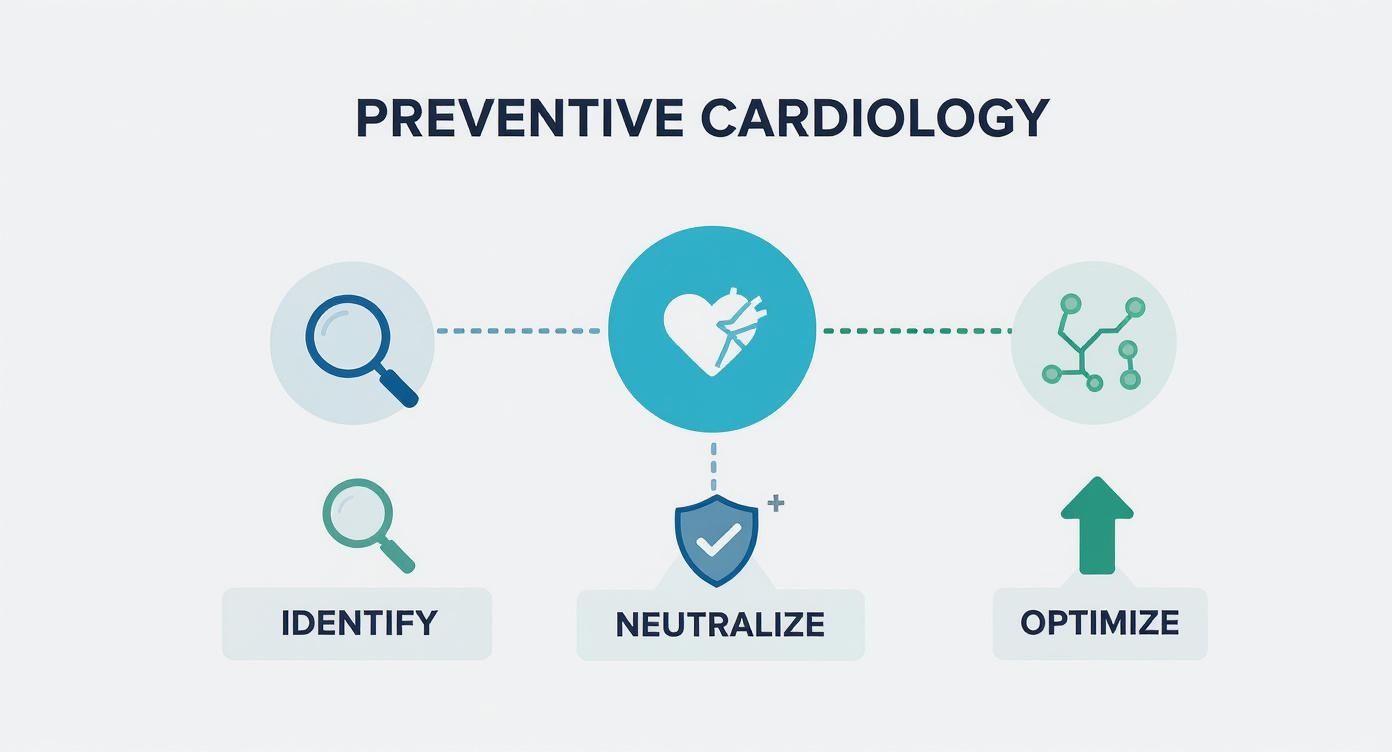
As you can see, a successful prevention strategy isn’t a one-time fix. It’s a continuous cycle of deep analysis followed by targeted, proactive intervention.
Imaging Your Arterial Age
While blood tests reveal the particles that cause plaque, advanced imaging shows if that plaque has already started to form. The most powerful tool we have for this is the Coronary Artery Calcium (CAC) score.
A CAC score is a quick, non-invasive CT scan of the heart that detects and measures calcified plaque in your coronary arteries. The result is a simple number:
A score of zero is fantastic news. It means you have no detectable calcified plaque and a very low risk of a heart attack in the next 5-10 years. A higher score, however, indicates a greater plaque burden and a higher risk, justifying more aggressive preventive action.
Think of it as a snapshot of your “arterial age.” You might be 50 chronologically, but a high CAC score could mean your arteries are behaving more like those of a 65-year-old. This data empowers you and your doctor to tailor therapies that match your true biological risk, not just your age. This specific focus on the heart’s physical structures is quite different from other specializations, like understanding its electrical system. You can learn more about electrophysiology cardiology in our guide to see how these disciplines work together.
Completing the Picture with Genetics and Inflammation
To round out the assessment, a top-tier preventive cardiologist examines two more critical layers of data: inflammation and genetics.
- Inflammatory Markers: We measure high-sensitivity C-reactive protein (hs-CRP), a key biomarker for systemic inflammation. Chronic, low-grade inflammation is a major driver of plaque rupture—the event that triggers most heart attacks. An elevated hs-CRP level acts as an early warning signal, prompting interventions to cool down this internal “fire.”
- Genetic Markers: Your DNA can absolutely predispose you to cardiovascular disease. Certain genetic variations, like those affecting your Lp(a) levels or how you metabolize cholesterol, are crucial to know about. Genetic testing uncovers these inherited risks, allowing for even earlier and more targeted preventive strategies, effectively getting you ahead of your own DNA.
By integrating these advanced lipids, imaging results, inflammatory markers, and genetic insights, a preventive cardiologist assembles a complete and nuanced risk profile. This is the foundation upon which a truly proactive and personalized health plan is built.
Evidence-Based Strategies for Heart Disease Prevention

Once we’ve mapped out your risk, the real work begins. Think of risk assessment as the architectural blueprint for your heart health; the prevention strategy is the actual construction plan. It’s where we move from identifying problems to taking decisive, calculated action.
Preventive cardiology builds cardiovascular resilience by layering precise interventions across several pillars. Each strategy reinforces the others, creating a powerful, synergistic effect that goes far beyond generic advice.
Medical Interventions and Their Impact
For many, medical therapies are the foundation of a robust prevention plan, directly targeting risk factors at their source. For instance, statins remain a cornerstone, capable of lowering harmful LDL cholesterol by over 50%. For those with stubbornly high or genetically driven cholesterol, PCSK9 inhibitors can slash LDL by an additional 60%.
We now have even more specialized tools. Next-generation drugs like bempedoic acid offer a potent alternative for those who experience muscle-related side effects from statins. It’s all about finding the right tool for your specific biochemistry.
- Statins: The workhorses that reduce cholesterol production and, just as importantly, stabilize existing plaque to make it less likely to rupture.
- PCSK9 inhibitors: A powerful class of injectables that act like a turbo-boost for your liver’s ability to clear cholesterol from the blood.
- Antihypertensives: Medications like ACE inhibitors or ARBs do more than just lower blood pressure; they improve the health and function of your arteries themselves.
This isn’t a “set it and forget it” approach. We conduct regular follow-up blood work to monitor both the effectiveness of the treatment and any potential side effects. It’s like recalibrating a high-performance engine, making constant micro-adjustments to keep every metric in its optimal range.
Advanced Diet and Supplements
In preventive cardiology, nutrition is a science, not a suggestion. Forget the generic “eat healthy” platitudes; we deploy specific, evidence-backed dietary protocols that deliver measurable results.
A diet rich in polyphenols and healthy, plant-based fats can measurably improve the function of your arterial lining—the critical endothelium—within weeks. We combine whole-food strategies with targeted, high-purity supplements to maximize the benefit.
- Mediterranean Diet Protocol: Emphasizes olive oil, nuts, fish, and a wide array of colorful produce to fight inflammation and support vascular health.
- DASH Protocol: Specifically engineered to lower blood pressure by reducing sodium while boosting potassium.
- High-Dose Omega-3s: We’re not talking about a single drugstore capsule. We prescribe 1 to 4 grams of pure EPA/DHA daily to powerfully reduce inflammation.
- Plant Sterols & Soluble Fiber: These natural compounds act like bouncers, blocking cholesterol from being absorbed in your gut.
- Flavonoid-Rich Foods: Think dark berries and high-cacao dark chocolate. These compounds boost nitric oxide, a key molecule that helps your blood vessels relax and stay flexible.
Supplement quality is non-negotiable. The market is flooded with low-potency, contaminated products. We only recommend brands that undergo rigorous third-party testing to guarantee purity and dosage.
The Power of Lifestyle Engineering
Medication and nutrition are powerful, but your daily habits are what truly lock in long-term success. Think of these behaviors as the daily maintenance that keeps your cardiovascular system running smoothly. Consistency is far more important than intensity, as small, smart shifts create massive compound returns over time.
- Targeted Exercise Routines: A mix of high-intensity interval training (HIIT) a couple of times a week with moderate activity on most other days is a proven formula.
- Sleep Optimization: We aim for 7 to 9 hours of quality sleep per night, using strategies like consistent bedtimes and creating a pitch-dark environment.
- Stress Modulation: Chronic stress is toxic to your arteries. Daily practices like biofeedback, meditation, or even 10 minutes of guided breathing can profoundly lower its impact.
- Wearable Analytics: We use data from devices that track heart rate variability (HRV) and sleep stages to guide daily decisions about training intensity and recovery.
“Effective prevention is a dynamic balance of medicine, nutrition, and lifestyle working in concert.”
A personalized prevention roadmap isn’t static; it evolves with you. The strategy for a time-crunched executive might prioritize short, intense workouts, whereas a competitive athlete might focus more on recovery metrics and advanced nutrition. Regular check-ins, informed by lab values, imaging results, and wearable data, ensure the plan stays perfectly aligned with your goals and your body’s needs.
Cardiovascular disease remains a staggering global burden. A 2023 study found it was responsible for 437 million disability-adjusted life years—a number that has climbed steadily since 1990.
For a deeper dive into the nutritional strategies that combat one of the biggest drivers of heart disease, you might be interested in our guide on how to reverse metabolic syndrome.
By integrating evidence-based medicine, strategic nutrition, and engineered lifestyle habits, we transform prevention from a simple checklist into an adaptable, data-driven system. This approach gives you a decisive edge against cardiovascular threats, protecting not just your health, but the high-performance life you’ve built.
Who Benefits Most From Preventive Cardiology
Preventive cardiology isn’t about responding to chest pain—it’s about reading the road ahead. Instead of waiting for numbers to spike or symptoms to appear, this specialty uses data-rich screenings and tailored strategies to nip risks in the bud.
With cardiovascular disease climbing worldwide, early action matters more than ever. By 2050, we’re looking at a 90% jump in prevalence and roughly 35.6 million deaths from heart conditions. Ischemic heart disease will stay the top killer, and high systolic blood pressure the chief culprit. Dive into these projections in this study for the full picture.
Most people think of heart care as reactive—doctor’s orders once something’s wrong. But preventive cardiology throws that playbook out the window. It’s for anyone who wants to optimize long-term health, and typically falls into four key profiles:
- Proactive Optimizer: Family history or borderline numbers spark early action.
- High-Performing Executive: Peak focus and sustained energy under pressure.
- Committed Athlete: Ensuring the heart keeps pace with intense training.
- Longevity Enthusiast: Building a strong heart as the foundation for extra decades of vitality.
Proactive Optimizer Profile
Imagine your cardiovascular system as a finely tuned race car. The Proactive Optimizer knows relatives faced early heart events, so they schedule advanced lipid panels, genetic screens, and detailed imaging—long before any dashboard lights flash.
Key Tactics:
- Advanced Lipid & Biomarker Testing
- Genetic Screening for Inherited Risks
- Personalized Nutrition & Supplement Protocols
“An ounce of prevention is worth a pound of cure when you know your genetic deck.”
High-Performing Executive Profile
Executives juggle back-to-back meetings, deadlines, and high-stakes decisions. A single cardiovascular setback can derail productivity. That’s why they track blood pressure, heart rate variability, and sleep patterns—then tweak exercise, breathing drills, and recovery routines on the fly.
Core Elements:
- Short, high-intensity daily workouts
- Stress relief (guided breathing, mindfulness breaks)
- Quarterly cardiovascular check-ins
Committed Athlete Profile
Athletes demand precision. They need to know exactly how training loads affect arterial health and recovery. Preventive cardiology delivers stress tests and imaging that reveal the fine details behind performance—long before fatigue or injury shows up.
| Metric | Purpose |
|---|---|
| VO2 Max | Measures aerobic capacity |
| Coronary Calcium Score | Detects early plaque buildup |
| Heart Rate Variability | Gauges recovery and stress resilience |
Longevity Enthusiast Profile
For those eyeing their 80s and 90s with vigor, the heart is the gatekeeper. Longevity Enthusiasts layer anti-inflammatory diets, sleep engineering, and periodic imaging to stay steps ahead of silent threats. They understand:
- A resilient heart supports cognition, muscle function, and metabolism
- Early plaque detection can translate into extra, healthy years
“Focusing on heart resilience today unlocks a healthier, longer tomorrow.”
If any of these profiles resonate, a preventive cardiology consultation is your next move. Haute MD connects you to vetted specialists who excel at precise, proactive heart care.
Next Steps To Book A Consultation
Ready to redefine your heart health roadmap?
- Visit Haute MD to explore preventive cardiology experts in your region
- Review physician credentials and sub-specialty expertise
- Schedule a comprehensive risk assessment to establish your baseline
Discover how preventive cardiology can transform your wellness journey today.
Navigating Your First Preventive Cardiology Consultation

Stepping into a preventive cardiology consultation is nothing like a standard doctor’s visit. This isn’t about reacting to symptoms; it’s a deep, collaborative dive into your unique cardiovascular blueprint. The entire experience is engineered to empower you with a clear, actionable strategy for long-term health and vitality.
The process starts with a comprehensive intake that goes far beyond the typical clipboard and questionnaire. Think of this initial conversation as a strategic briefing on your life.
The Initial Deep Dive
Your cardiologist will explore every factor that could possibly influence your heart health. This is a 360-degree review of your life, not just your labs, designed to connect your daily habits to your biological data.
Expect to discuss:
- Detailed Personal and Family History: We’re looking for genetic predispositions and inherited risk factors that standard check-ups often overlook.
- Lifestyle Analytics: This is a granular look at your nutrition, exercise patterns, sleep quality, and stress levels—the real drivers of health.
- Environmental Factors: Demanding work, frequent travel, and other life pressures all play a role in your cardiovascular resilience.
This conversation establishes the context for the advanced diagnostics that follow. It helps the specialist understand the why behind the numbers, ensuring the final plan is not only medically sound but also perfectly suited to your real-world circumstances.
The Advanced Diagnostic Phase
After the initial intake, you’ll move into the diagnostic phase. This is where we gather the high-resolution data needed to map your specific risks. Forget routine blood work; this is a specialized panel designed to uncover subtle threats that standard tests almost always miss.
A first consultation is a partnership. It combines your life’s narrative with precise medical data to create a roadmap for a longer, healthier future. Your input is just as valuable as the test results.
You can anticipate a suite of tests that may include:
- Advanced Lipid Panels: Measuring particle numbers like ApoB and critical genetic markers like Lp(a).
- Inflammatory Biomarkers: Assessing systemic inflammation with tests like hs-CRP, a powerful predictor of future events.
- Metabolic Health Markers: Evaluating insulin resistance and blood sugar control, which are foundational to heart health.
- Advanced Imaging: A Coronary Artery Calcium (CAC) score may be recommended to visualize plaque burden directly.
Each test is chosen for a specific reason—to provide a critical piece of the puzzle that builds your complete cardiovascular risk profile.
Creating Your Personalized Health Strategy
The final step is the follow-up consultation, where all the pieces come together. Your preventive cardiologist will synthesize your personal history, lifestyle factors, and all diagnostic data into a single, cohesive narrative. They’ll explain what the results mean, how they connect, and—most importantly—what you can do about them.
This is not a one-way lecture. It is a collaborative session where you and your doctor build your personalized action plan together.
You will walk away with a crystal-clear understanding of your current status and a precise, step-by-step strategy to optimize your heart health for decades to come. This plan is your blueprint for building true cardiovascular resilience.
How to Find a Top Preventive Cardiologist
Choosing a preventive cardiologist isn’t just another health decision; it’s one of the most critical investments you’ll ever make in your long-term vitality. The right expert doesn’t just manage risk—they become your strategic partner in building a future of peak cardiovascular performance and longevity.
But in this highly specialized field, expertise varies dramatically. Settling for a standard approach means you’re leaving invaluable health insights on the table and, worse, potentially missing the very risks you’re trying to eliminate. A true leader in the field operates at the frontier of cardiovascular science, integrating advanced diagnostics and hyper-personalized interventions into a cohesive, actionable plan.
Key Qualities of an Elite Specialist
As you vet potential cardiologists, you need to look past the credentials on the wall. The best in this field share a few non-negotiable traits that separate them from the pack.
- Obsessed with Advanced Diagnostics: They live and breathe data beyond the standard lipid panel. Look for a physician who routinely uses tools like ApoB, Lp(a), hs-CRP, and CAC scoring to build a high-resolution picture of your unique risk profile.
- Personalized, Not Protocol-Driven: Your health plan should feel like it was built from the ground up, just for you. It should be based on your specific biomarkers, genetics, and lifestyle—not a one-size-fits-all checklist handed to every patient.
- Committed to Emerging Science: An elite preventive cardiologist is a perpetual student, constantly integrating the latest validated research on nutrition, pharmacology, and longevity science into their daily practice.
The goal isn’t to find a clinician who just writes prescriptions. You’re looking for a strategic health advisor who is as deeply invested in optimizing your long-term healthspan as you are.
Why Meticulous Vetting Saves Time and Guarantees Confidence
In a world of endless Google searches and generic provider directories, trying to identify a genuinely elite specialist can be an exhausting and uncertain process. You need a trusted filter to separate the true experts from the masses. This is where a curated network becomes your most valuable asset.
For discerning individuals who demand the highest standard of care, finding a pre-vetted physician is the most efficient and reliable path forward. It cuts through the noise and connects you directly with practitioners who are recognized for their exceptional skill and superior patient outcomes. Haute MD was created to serve this exact purpose, offering a curated directory of top-tier specialists who meet a rigorous standard of excellence.
Platforms like Haute MD are especially powerful for busy professionals exploring the best executive health programs, where cardiovascular optimization is a cornerstone of the entire experience. By leveraging a trusted network, you save precious time while gaining the confidence that you are consulting with one of the absolute best in the field. Your health is your greatest asset; entrusting it to a rigorously vetted expert ensures it gets the strategic attention it deserves.
Frequently Asked Questions About Preventive Cardiology
It’s only natural to have questions when exploring a specialized field of medicine. Here are straightforward answers to some of the most common queries we hear, helping you understand why preventive cardiology is such a critical investment in your long-term health.
Is Preventive Cardiology Only for Older Adults?
This is one of the biggest misconceptions out there. While it’s true that cardiovascular risk climbs with age, the disease process itself—the slow, silent buildup of arterial plaque—often begins decades earlier, sometimes as early as your 20s or 30s.
Preventive cardiology delivers the most profound impact when started early. It’s not just for older adults; it’s for anyone with a family history of heart disease, those in high-stress careers, or simply individuals who refuse to leave their long-term health to chance.
How Is This Different from My Annual Physical?
Your annual physical is a valuable, broad snapshot of your health. But it was never designed for a deep, forensic investigation of your cardiovascular risk. A standard check-up gives you a basic cholesterol panel and a blood pressure reading, a combination that can miss up to 50% of people who will later have a heart attack.
A preventive cardiologist goes much, much deeper. They deploy a specialized toolkit including advanced lipid panels (measuring ApoB and Lp(a)), inflammatory markers like hs-CRP, and powerful imaging like a CAC score. This creates a high-resolution, multi-dimensional picture of your true risk.
Think of it this way: Your annual physical is like a standard car inspection—they check the tires and the oil. A preventive cardiology workup is like a full diagnostic scan from a Formula 1 engineering team, analyzing the engine, electronics, and structural integrity down to the millimeter.
Will My Insurance Cover a Consultation?
Coverage can be a mixed bag, varying widely based on your specific insurance plan. Many of the individual diagnostic tests may be covered if ordered to investigate known risk factors like a strong family history or hypertension. However, the comprehensive consultation and strategic planning session is often an out-of-pocket investment.
High-net-worth individuals and top executives almost universally view this as a non-negotiable expense. The investment in proactive prevention is minuscule compared to the devastating costs—financial, professional, and personal—of a major cardiac event down the line. It’s a strategic shift from reactive sick-care to proactive health optimization.
What If My Tests Come Back Normal?
That’s the best possible outcome. A clean bill of health from a truly comprehensive workup provides an incredibly valuable baseline and profound peace of mind. It doesn’t mean the work is done; it means your strategy pivots from intervention to meticulous preservation.
Your cardiologist will then build a personalized roadmap to keep you in that low-risk category for life. This involves fine-tuning your nutrition, dialing in your exercise regimen, and scheduling future monitoring to stay ahead of any changes that come with age. This is the ultimate goal: to confirm you’re in excellent health and then give you the precise tools to maintain it.
Finding an expert who shares your commitment to proactive, long-term health is the single most important step. Haute MD provides a curated network of the nation’s most respected, pre-vetted preventive cardiologists, connecting you with specialists renowned for their expertise in precision heart health. Explore the network and find your specialist on Haute MD.