

To have any real success treating hormonal acne, you have to go deeper than just the skin’s surface. It’s an inside job. A truly effective plan tackles the internal hormonal imbalances driving the breakouts, usually by combining targeted skincare with specific medical treatments. We’re talking about regulating oil production with things like retinoids while also addressing the hormones head-on with options like spironolactone or certain oral contraceptives.
But first, you have to be sure that’s what you’re actually dealing with.
What Is Hormonal Acne and Do You Have It?
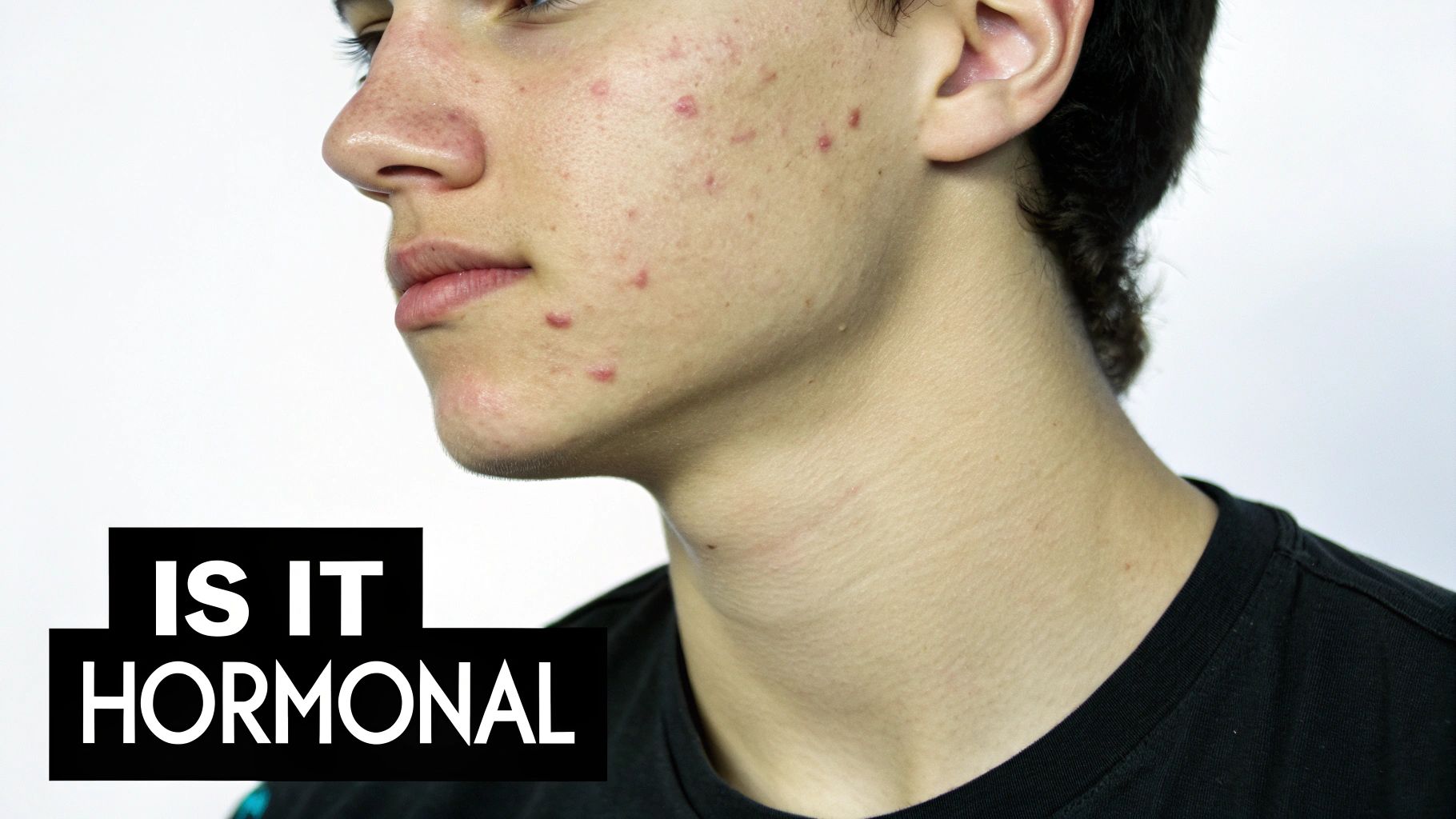
Before you can fix the problem, you need to correctly identify it. Hormonal acne isn’t just a random breakout; it’s a very specific subtype of acne vulgaris that’s triggered by fluctuations in your body’s hormones—particularly androgens like testosterone.
This is exactly why so many standard over-the-counter acne products fail to make a dent. They’re designed to handle surface-level symptoms, but they do absolutely nothing to address the internal root cause.
These androgen hormones flip a switch in your skin’s sebaceous glands, kicking oil production into overdrive. When that flood of excess oil mixes with dead skin cells, you get the perfect storm for clogged pores. From there, bacteria move in and thrive, leading to the deep, painful, and inflamed blemishes that are the hallmark of hormonal breakouts.
The Telltale Signs of Hormonal Breakouts
So, how can you be sure your acne is hormonal? The clues are almost always in the “who, where, and when” of your breakouts. It’s a stubborn issue that often persists long after the teenage years are over.
In fact, the prevalence of hormonal acne in women is staggering. Roughly 50% of women in their 20s, 33% in their 30s, and 25% in their 40s are dealing with it. Recent data even shows that cases of adult female acne have been on the rise globally over the past decade. You can discover more insights about this trend and its impact on women’s health here.
Look for these distinct patterns:
- Location is Key: Hormonal acne loves to set up shop in the lower third of the face. Think jawline, chin, and neck. These areas are packed with oil glands that are particularly sensitive to hormonal signals.
- The Type of Blemish Matters: Instead of small whiteheads, hormonal acne tends to present as deeper, more painful cysts or nodules. These are the tender, under-the-skin blemishes that seem to take forever to heal and rarely come to a head.
- Cyclical Flare-Ups: This is the big one. A predictable pattern that syncs up with your menstrual cycle is a major giveaway. Many women see a surge of breakouts a week or so before their period starts, right when hormone levels are shifting.
Expert Insight: It’s a common myth that you need “high” testosterone to have hormonal acne. For many women, the real issue is that their oil glands are simply more sensitive to normal, healthy levels of androgens. This is why a targeted treatment plan is so crucial.
Differentiating From Other Acne Types
Not all breakouts are created equal. Knowing the difference between hormonal acne and other forms, like bacterial or comedonal acne, is the key to choosing a treatment that will actually work.
While other types might clear up with a good topical antibacterial or a simple exfoliant, hormonal acne demands a more strategic approach—one that gets to the underlying hormonal driver.
Take a look at how your breakouts present. If you’re mostly seeing blackheads and small whiteheads scattered across your forehead and nose (the T-zone), you’re likely dealing with comedonal acne. If you have random pustules that don’t follow a monthly pattern, the cause might be more related to bacteria or even a new product you’re using.
Use this quick comparison to see if your symptoms align with a hormonal pattern.
Identifying Hormonal Acne vs Other Breakouts
| Characteristic | Hormonal Acne | Bacterial or Comedonal Acne |
|---|---|---|
| Primary Location | Lower face (jawline, chin, neck) | T-zone (forehead, nose), cheeks, back |
| Blemish Type | Deep, painful cysts and nodules | Whiteheads, blackheads, smaller pustules |
| Timing | Cyclical; flares before menstruation | Random or constant; less predictable |
| Primary Cause | Androgen hormone fluctuations | Bacteria, clogged pores, excess oil |
Understanding these key differences is the absolute foundation of a successful treatment plan. Once you recognize that your deep, cyclical jawline cysts are hormonal, you can finally move past the ineffective surface treatments and toward solutions that create real, lasting change from the inside out.
Building Your Topical Treatment Routine
While hormonal acne is an internal issue, your first and most powerful line of defense is a smart, consistent topical routine. This isn’t about waging war on your skin with harsh, drying products; it’s about creating a supportive environment that calms inflammation, prevents clogged pores, and amplifies the effects of any systemic treatments you might be using.
Think of it as building a strong foundation. The biggest mistake I see patients make is over-stripping their skin with aggressive cleansers and astringents. This approach almost always backfires, triggering even more oil production and irritation. A well-designed routine should calm, not attack.
The Non-Negotiable Basics
Before we get to the high-impact active ingredients, you have to nail the fundamentals. These three steps are the absolute bedrock of any successful plan for treating hormonal acne and need to become a daily habit.
- Gentle Cleansing: Your day should start and end with a mild, pH-balanced cleanser. Look for formulas that are sulfate-free and non-comedogenic to effectively remove makeup, oil, and impurities without wrecking your skin’s delicate moisture barrier. This simple step resets your skin for everything that comes next.
- Strategic Moisturization: Let’s clear this up: even oily, acne-prone skin desperately needs hydration. When your skin gets dehydrated, its immediate response is to pump out even more oil to compensate. The trick is finding a lightweight, oil-free, and non-comedogenic moisturizer that hydrates without clogging pores. For a deeper dive on choosing the right one, exploring a dermatologist’s skincare essentials can offer some great clues, like in Dr. Bertha Baum’s breakdown of a collagen-boosting moisturizer.
- Daily Sun Protection: This might be the single most crucial step. Many of the best acne-fighting ingredients make your skin more sensitive to the sun. On top of that, sun exposure significantly darkens those red or brown marks left behind after a blemish heals (post-inflammatory hyperpigmentation). A broad-spectrum SPF 30 or higher is non-negotiable, every single day, rain or shine.
Introducing High-Impact Active Ingredients
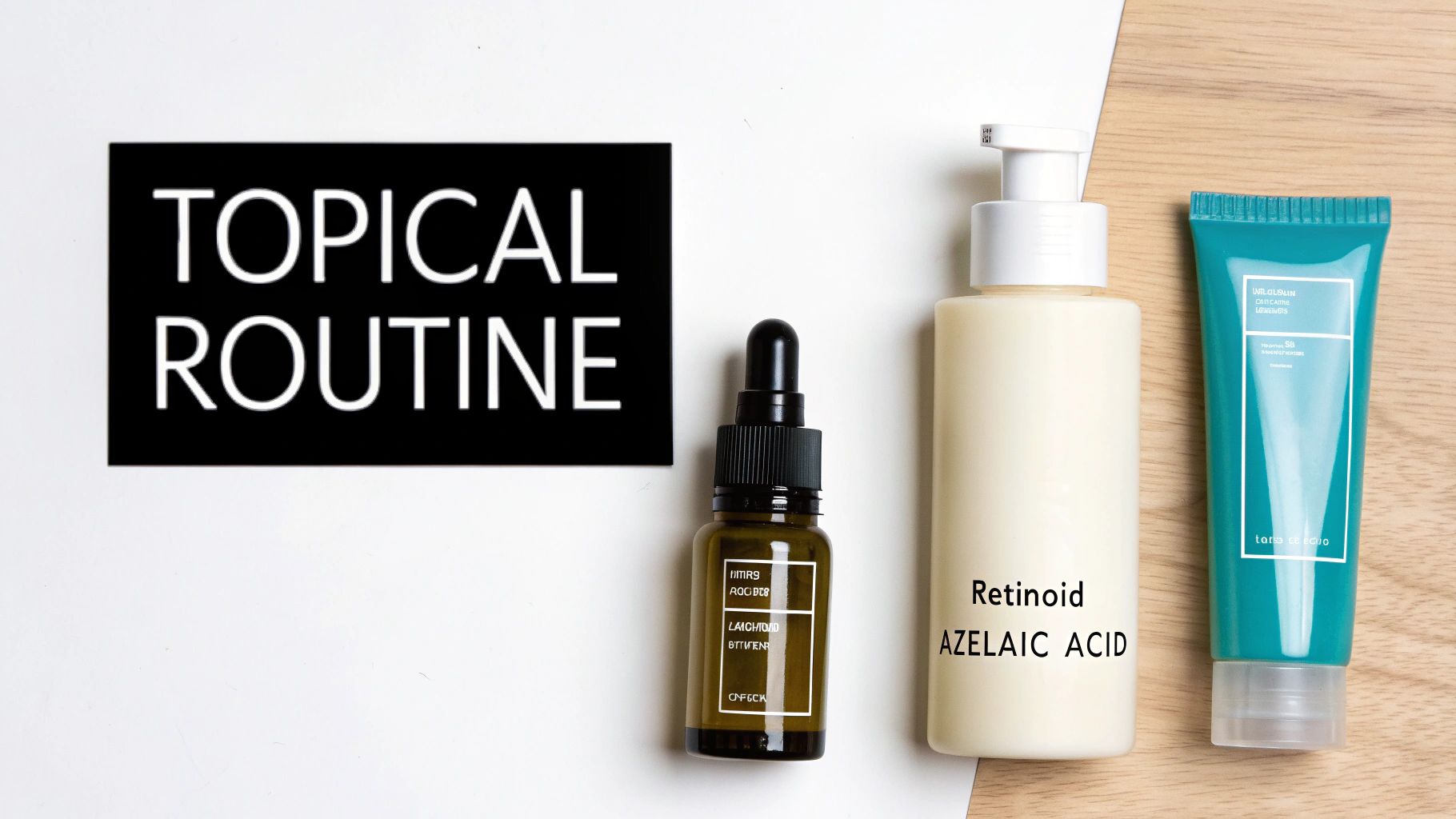
With your foundational routine locked in, it’s time to bring in the ingredients that do the heavy lifting. When it comes to topicals for hormonal acne, two power players stand out: retinoids and azelaic acid. They work through different, yet highly complementary, pathways to tackle pore congestion and inflammation head-on.
Retinoids for Unclogging Pores
Retinoids are vitamin A derivatives—and they are phenomenal at treating acne. The prescription-strength gold standard is tretinoin, and it works by dramatically accelerating your skin’s natural cell turnover process.
By speeding up how quickly your skin sheds dead cells, retinoids essentially prevent those cells from getting trapped inside your pores and forming clogs. It’s like keeping the drains clear before a backup ever has a chance to happen.
This mechanism doesn’t just help clear existing breakouts; it’s incredibly effective at preventing new ones from forming. With consistent use, retinoids also work wonders on skin texture and help fade the appearance of old acne marks.
Azelaic Acid for Calming Inflammation
Azelaic acid is another top-tier ingredient, and it’s particularly brilliant for the red, angry, and inflamed nature of hormonal cysts. It’s a dicarboxylic acid that launches a multi-pronged attack on acne.
It has powerful anti-inflammatory properties that directly target the redness and swelling of deep blemishes. It also has antimicrobial effects against acne-causing bacteria and acts as a gentle exfoliant to keep pores clear. For sensitive skin or those dealing with redness, it’s a true game-changer.
How to Introduce Actives Without Irritation
These ingredients are potent. If you jump in too quickly, you’ll likely face dryness, peeling, and irritation—a phase often called “retinization.” The key is a slow, steady approach that allows your skin to build tolerance over time.
- Start Low and Go Slow: Begin by applying your active ingredient just two or three nights a week. See how your skin responds. If it’s handling it well after a couple of weeks, you can slowly increase the frequency.
- Try the “Sandwich” Method: This is a great hack for sensitive skin. Apply a thin layer of your moisturizer first, wait a few minutes for it to absorb, then apply your retinoid or azelaic acid. Wait again, and then seal it all in with another layer of moisturizer. This creates a protective buffer that minimizes potential irritation.
- A Pea-Sized Amount Is Plenty: More is not better. A small, pea-sized dab is all you need for your entire face. Applying too much won’t speed up your results, but it will definitely increase the chance of side effects.
Building an effective topical routine is a marathon, not a sprint. By focusing on a gentle foundation and strategically introducing powerful actives, you create the best possible external conditions for managing your hormonal acne and finally achieving clearer, healthier skin.
Targeting Hormones from the Inside Out
When even the most diligent topical routine isn’t enough to stop those deep, painful cysts from forming, it’s a clear signal that the battle needs to be fought on a different front. This is where we shift our focus from the skin’s surface to the internal hormonal signals driving the breakouts. Systemic treatments, taken orally, can directly address these underlying causes in ways that creams and serums simply can’t.
For many people dealing with persistent hormonal acne, this is the turning point. It’s where the most significant and lasting changes finally happen. Instead of just chasing symptoms as they appear, oral medications work to regulate the entire system, preventing breakouts before they even have a chance to start.
The Role of Oral Antibiotics as a Bridge
Before we dive into true hormonal therapies, it’s worth talking about oral antibiotics like doxycycline or minocycline. These are often prescribed for moderate to severe inflammatory acne, but it’s crucial to understand their purpose. Antibiotics don’t actually fix the hormonal imbalance; their main job is to reduce inflammation and kill off excess acne-causing bacteria.
Think of them as a short-term bridge. They get severe inflammation under control quickly, providing relief while we wait for a more targeted hormonal treatment to kick in. While effective for calming those angry, painful breakouts, they are absolutely not a long-term solution. Relying on them for extended periods can lead to antibiotic resistance, which is why we typically use them for just a few months.
Comparing Oral Medications for Hormonal Acne
Choosing the right oral medication involves weighing the mechanism of action against your specific needs and health profile. Here’s a quick breakdown of the heavy hitters in our arsenal.
| Medication | How It Works | Best For | Common Side Effects |
|---|---|---|---|
| Oral Contraceptives | Regulate monthly hormone fluctuations by suppressing ovulation and increasing SHBG to bind free testosterone. | Women seeking both contraception and acne control, particularly with cycle-related breakouts. | Nausea, breast tenderness, breakthrough bleeding, mood changes. |
| Spironolactone | Blocks androgen receptors in the skin, preventing testosterone from stimulating oil glands. | Women with classic hormonal acne (jawline cysts), especially if OCPs are contraindicated or ineffective. | Increased urination, menstrual irregularities, breast tenderness, lightheadedness. |
| Oral Antibiotics | Reduce inflammation and kill P. acnes bacteria. Does not address hormonal cause. | Short-term use to quickly calm severe inflammatory acne while a long-term therapy begins. | GI upset, sun sensitivity, risk of antibiotic resistance with long-term use. |
Ultimately, the best choice is a collaborative decision made with your physician, who can tailor the treatment to your unique hormonal and metabolic landscape.
Regulating Cycles with Oral Contraceptives
For many women, one of the most direct ways to treat hormonal acne is with combination oral contraceptive pills (OCPs), or what most people just call “birth control.” These pills contain both estrogen and progestin and work by smoothing out the monthly hormonal peaks and valleys that trigger breakouts.
They do this in a few key ways:
- They suppress ovulation, which helps stabilize hormone levels throughout your cycle.
- They increase a protein in the blood called sex hormone-binding globulin (SHBG).
- This protein then binds to free testosterone, reducing the amount of androgens available to overstimulate your oil glands.
By creating a more stable hormonal environment, specific types of birth control can dramatically reduce oil production and clear up acne. But not all birth control pills are created equal. Only certain formulations are actually FDA-approved for acne, so it’s essential to work with a physician to find the right one.
It’s a common misconception that all birth control helps with acne. In fact, some progestin-only options can actually make acne worse. Choosing a pill that has a low androgenic effect is the key to success.
Spironolactone: The Androgen Blocker
When birth control isn’t an option or just isn’t getting the job done, spironolactone often becomes the star player. This medication was originally designed as a diuretic to treat high blood pressure, but dermatologists have been prescribing it off-label for decades to treat hormonal acne in women—with remarkable success.
Its power lies in its ability to directly block the effects of androgens on the skin. Spironolactone works by competing with testosterone for the androgen receptors in your oil glands. Think of it like putting a cover over a keyhole; if the key (testosterone) can’t get in, it can’t unlock the door that triggers excess oil production.
This direct action makes it incredibly effective for the deep, cystic breakouts that plague the jawline and chin. By turning down the hormonal “noise” right at the skin level, it helps bring the oil glands back into balance. This is a perfect example of why understanding how hormone optimization and metabolic medicine are key to overall wellness is so important—your skin is often a direct reflection of that internal state.
The research backs this up. One study showed a daily dose of spironolactone reduced acne scores by 62% over six months, outperforming some traditional antibiotics. In another group, nearly a quarter of adolescent females achieved complete acne clearance, with a median response time of just three months.
What to Expect with Spironolactone
Starting spironolactone requires patience. It’s not an overnight fix; the medication needs time to build up in your system and start working its magic.
Dosages usually start low, around 25-50 mg per day, and are gradually increased based on your response and how well you tolerate it. Most people find their sweet spot somewhere between 50 mg and 150 mg daily.
Because it’s a diuretic, you might notice you need to use the restroom more often, especially at first. Staying well-hydrated is key. Other potential side effects include breast tenderness, irregular periods, or feeling a bit lightheaded. These are usually mild and often go away as your body adjusts, but it’s an important conversation to have with your doctor.
You can typically expect to see initial improvements within 3 to 4 months, with more significant clearing often visible around the six-month mark. Consistency is everything here—taking it every single day is crucial for getting and keeping your skin clear.
How Diet and Lifestyle Impact Your Skin
Medication is a powerful, often essential, tool for getting hormonal acne under control. But if you want to achieve truly lasting clear skin, you have to look beyond the prescription pad.
The choices you make every day—what’s on your plate, how you manage stress—have a direct line to your hormones. Think of it this way: your medical treatments are working from the outside in, while smart lifestyle adjustments work from the inside out. They support each other, often boosting the effectiveness of your medications and paving the way for more sustainable results.
The Food and Hormone Connection
What you eat can directly influence the hormones that drive acne, especially insulin and androgens. Years of research have pointed to two main dietary factors that can be problematic for acne-prone individuals: high-glycemic foods and, for some, dairy.
High-glycemic foods are simple carbs your body burns through quickly, causing a sharp spike in blood sugar and, in response, insulin. We’re talking about things like white bread, sugary drinks, pastries, and some breakfast cereals. This sudden insulin surge can ramp up androgen production, leading to more oil and more clogged pores.
A Practical Tip: This isn’t about cutting out carbs entirely. It’s about making smarter swaps. Instead of white rice, try quinoa. Trade the morning bagel for a bowl of oatmeal with berries. These lower-glycemic choices help keep your blood sugar—and by extension, your hormones—on a much more even keel.
Dairy is the other big one. Some studies have found a link between acne and milk consumption, particularly skim milk. The leading theory is that milk contains certain hormones and growth factors that can overstimulate your oil glands. This connection is highly individual, though. Not everyone who drinks milk will break out.
If you suspect dairy might be a trigger, an elimination experiment is the best way to find out.
- Cut out all dairy for at least three to four weeks. Be strict and watch your skin closely.
- After that period, slowly reintroduce one type of dairy, like Greek yogurt.
- Wait a few days and see what happens. Does a new breakout appear? This process can help you pinpoint if a specific type of dairy, or all of it, is a problem for you.
Managing Stress to Manage Breakouts
Ever noticed a deep, painful cyst pop up during a brutal week at work or right before a big presentation? It’s not your imagination. There’s a direct physiological line connecting your stress levels to your skin.
When you’re under pressure, your adrenal glands pump out hormones, most notably cortisol. This infamous stress hormone cranks up inflammation throughout your body and can kick your oil glands into overdrive. The result is a perfect storm for an inflammatory acne flare. This is why any effective roadmap for treating hormonal acne must include stress management.
Folding some simple stress-reduction techniques into your daily routine can make a profound difference.
- Mindfulness and Meditation: You don’t need to sit for an hour. Just five to ten minutes with a guided meditation app can tangibly lower cortisol and calm your nervous system.
- Prioritize Sleep: Sleep is when your body repairs itself and regulates hormones. Aiming for seven to nine hours of quality rest is non-negotiable for skin health. Poor sleep throws your cortisol rhythm out of whack, keeping it elevated.
- Gentle Movement: Activities like yoga, walking, or a light jog are fantastic for de-stressing. They lower cortisol without putting the kind of intense strain on your body that can sometimes trigger its own stress response.
By making these mindful adjustments, you’re actively supporting your body’s hormonal equilibrium. This holistic approach—combining targeted medical treatments with strategic lifestyle choices—is the most effective path to not just clearing your skin, but keeping it that way for good.
Advanced Treatments and When to See a Dermatologist
Even with a flawless at-home routine, some hormonal acne just won’t budge. If you’ve been diligently applying topicals and making lifestyle tweaks without seeing the clear skin you deserve, it’s not a failure. It’s simply a sign that it’s time to call in a specialist.
Knowing when to escalate your treatment is arguably one of the most important steps toward finally getting control of your skin.
So, what’s the tipping point? It’s different for everyone, but there are some clear signals. If you’re battling deep, painful cysts that seem to take up residence for weeks, or if you’re starting to see any signs of scarring, it’s time to book a consultation. And frankly, if your acne is taking a serious toll on your self-esteem, you don’t have to keep fighting that battle alone. A dermatologist offers a level of expertise and an arsenal of treatments that just aren’t available over the counter.
What to Expect at Your Dermatology Visit
Walking into a dermatologist’s office for the first time might feel a little intimidating, but it’s an empowering, proactive step. The main goal of this initial visit is for the specialist to get a 360-degree view of your skin’s history and your overall health.
You should be ready to talk about:
- Your Breakout History: When did the acne start? Have you noticed any specific patterns, like flare-ups around your cycle?
- Previous Treatments: What have you tried so far? Be honest about what worked, what didn’t, and what you couldn’t tolerate.
- Your Menstrual Cycle: A good dermatologist will almost certainly ask about the regularity and timing of your period to confirm the hormonal link.
- Your Full Skincare Routine: Don’t be shy. Bring a list (or even photos) of the products you use every single day.
This conversation is all about connecting the dots to create a truly personalized plan. Finding the right partner in this process is critical, and understanding how to find a good dermatologist the right way ensures you’re teaming up with a physician who genuinely gets it. This is a collaboration, not just a quick prescription handout.
Powerful In-Office Procedures
Beyond prescribing stronger topicals or oral medications, dermatologists have access to in-office procedures that can seriously accelerate your results. Think of these as strategic boosts to your daily routine, targeting acne from different angles to deliver faster relief and address long-term concerns like texture and discoloration.
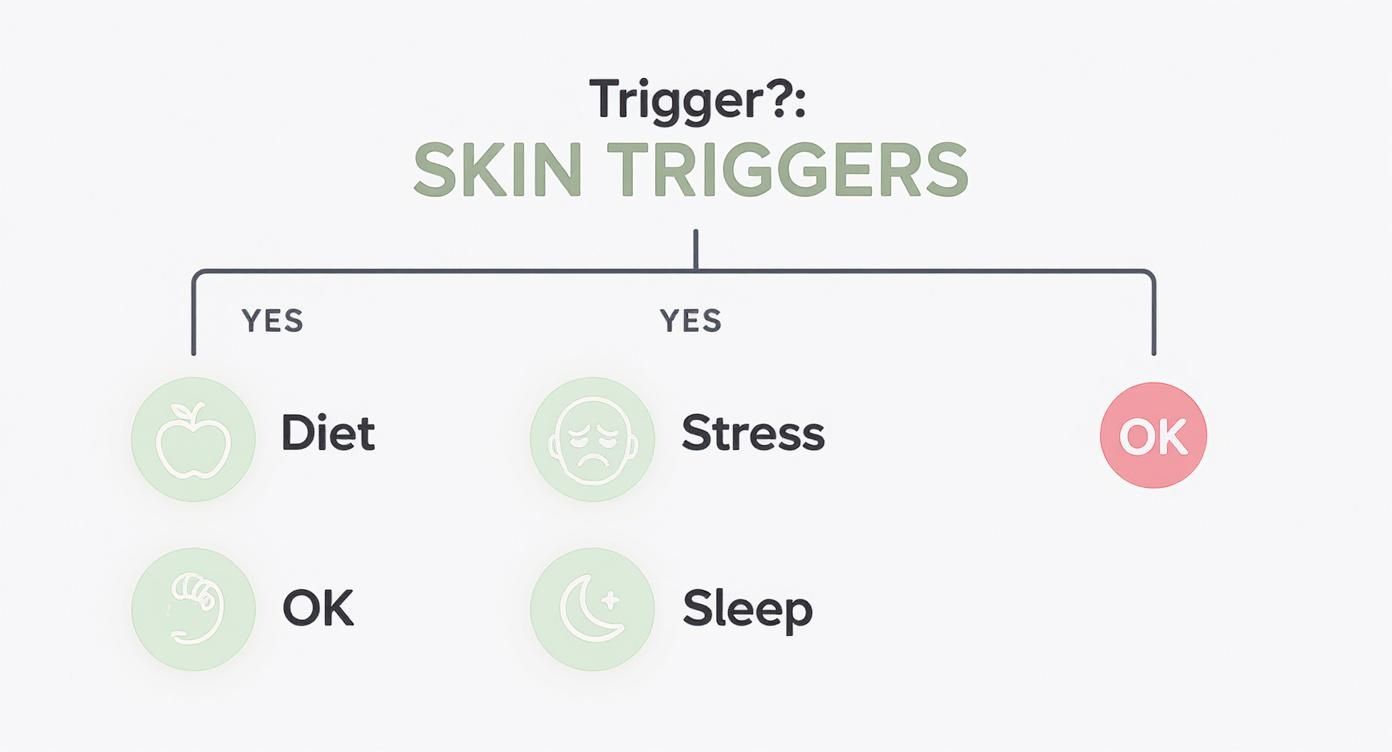
The decision tree below highlights some of the common triggers your dermatologist will likely want to discuss, as lifestyle factors often play a huge role.
Here are some of the most effective in-office treatments for stubborn hormonal acne:
- Chemical Peels: Forget the harsh, skin-shedding peels you’ve seen in movies. Modern medical-grade peels use acids like salicylic, glycolic, or mandelic acid to gently exfoliate, unclog pores, calm inflammation, and fade post-acne marks. A series of these can make a dramatic difference in your skin’s clarity and texture.
- Laser and Light Therapies: This is where the technology really shines. Certain lasers can actually shrink overactive oil glands, reducing sebum production at the source. Other light-based therapies work by killing the P. acnes bacteria on the skin. These are fantastic options for persistent acne that has been resistant to other treatments.
- Corticosteroid Injections: Consider this the ultimate emergency fix for a single, massive, painful cyst. A dermatologist can inject a diluted corticosteroid directly into the blemish, and the anti-inflammatory power is incredible. It can shrink a deep, angry nodule in just 24 to 48 hours, giving you immediate relief and minimizing the risk of a nasty scar.
When to Consider Injections: A cortisone shot is a targeted spot treatment, not a solution for widespread acne. It’s the perfect tool for an isolated, severe cyst that pops up before a big event or is causing you significant pain.
These advanced options show just how far acne care has evolved. By pairing a solid home routine with professional guidance and targeted in-office procedures, you can build a truly comprehensive strategy. If you feel like you’ve hit a plateau, connecting with a specialist at a trusted network like Haute MD opens up a whole new world of possibilities for finally getting your hormonal acne under control.
Your Hormonal Acne Questions Answered
Navigating the world of hormonal acne treatment often brings up a lot of questions. As you start this journey, it’s completely normal to wonder about timelines, safety, and what comes next. Here are some straightforward answers to the most common concerns we hear from patients, designed to give you clarity and confidence.
How Long Until I See Results from My Treatment?
Patience is probably the hardest, but most critical, part of any successful acne plan. Let’s be clear: there are no overnight fixes. Consistency is your most powerful tool.
Topical treatments, like the prescription retinoids we often recommend, need time to work their magic on cell turnover. You’ll typically need to stick with it for a solid 8-12 weeks before seeing a meaningful improvement. In fact, you might even go through a “purging” phase or experience some initial irritation—that’s why we always advise starting slow.
Oral medications work from the inside out, which takes even longer. For hormonal therapies like spironolactone or specific oral contraceptives, it generally takes around three months to see significant clearing. The medication needs that time to build up in your system and really start balancing the hormonal signals hitting your skin.
Can I Treat Hormonal Acne if I am Pregnant?
This is an absolutely critical question, and the answer requires careful medical guidance. Many of the gold-standard treatments for hormonal acne are not safe to use during pregnancy or if you’re trying to conceive.
Here are the key treatments to avoid:
- Spironolactone: This androgen blocker is strictly off-limits during pregnancy due to potential risks to a developing fetus.
- Topical Retinoids: Both prescription-strength (like tretinoin) and many over-the-counter retinols should be discontinued immediately.
- Most Oral Contraceptives: These are obviously stopped when trying to conceive, but it’s an important part of the conversation.
If you are pregnant or even just planning a pregnancy, talking to your dermatologist is non-negotiable. They can help you build a safe and effective routine using pregnancy-friendly alternatives. One great option is topical azelaic acid, which helps manage inflammation and breakouts without posing a risk.
Will My Acne Return if I Stop My Medication?
Because hormonal acne is directly tied to your body’s natural hormonal rhythms, it’s best to think of it as a chronic condition needing long-term management, not a one-time cure. For many people, stopping a systemic medication like spironolactone can, unfortunately, lead to a return of breakouts.
The real goal is to find a sustainable maintenance plan that works for you. Your dermatologist will collaborate with you to create a long-haul strategy. This might involve gradually tapering your dose of an oral medication or transitioning to a robust topical routine to keep your skin clear once the initial breakouts are under control. The aim is always to maintain your results with the least amount of intervention necessary.
When you need a trusted expert to guide you through your skincare journey, the Haute MD network provides direct access to the nation’s top, board-certified dermatologists. Find a specialist near you who can create a personalized and effective plan for your hormonal acne.