


When you hear the term “aesthetic medicine,” what comes to mind? For many, it’s a bit of a mystery, sitting somewhere between a day spa and a surgeon’s office. Let’s clear that up. Aesthetic medicine is a medical specialty focused on enhancing your appearance through non-invasive to minimally invasive treatments. It’s not about radical transformations. Instead, think of it as a personalized wellness plan designed to refine your natural beauty, boost your confidence, and address specific concerns like fine lines, unwanted hair, or an uneven complexion.
Defining Aesthetic Medicine and Its Goals
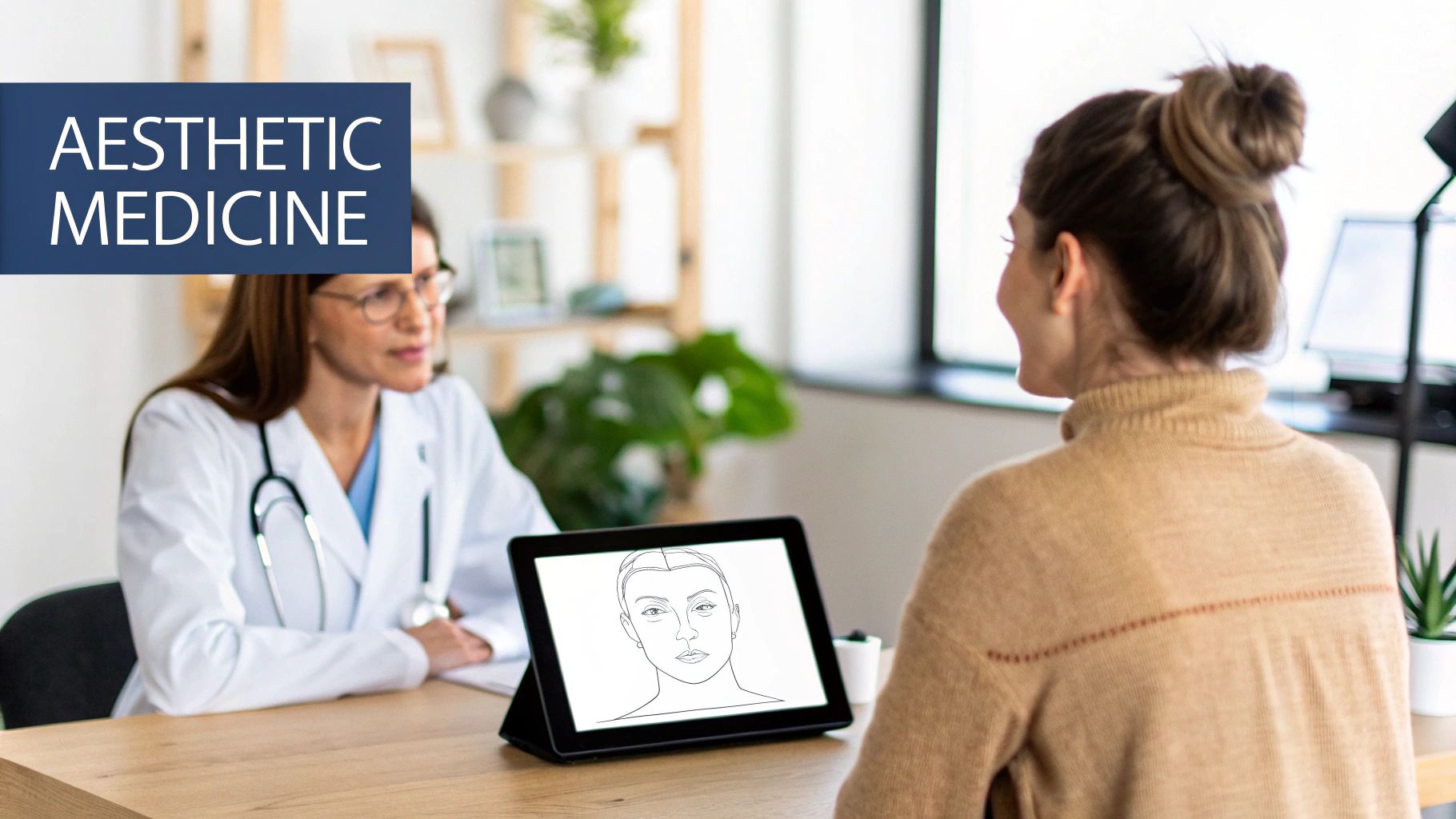
At its heart, aesthetic medicine is the bridge between beauty and modern healthcare. The entire field is built on the principle that feeling good about how you look is a crucial part of your overall well-being. It uses scientifically proven procedures to rejuvenate the face and body, always with an eye toward subtle enhancements, not drastic changes.
The real goal is to achieve results that look and feel completely natural. A great practitioner wants you to look like a refreshed, vibrant version of yourself—not like a different person. This is where the artistry comes in, using precision to address your unique concerns.
Key Focus Areas in Aesthetic Medicine
This specialty is broad, but the treatments almost always target common cosmetic issues. The focus is on procedures that demand little to no downtime, letting you get back to your life without missing a beat.
Common goals include:
- Improving skin quality by tackling issues with texture, tone, and sun damage.
- Reducing the signs of aging, like fine lines, wrinkles, and lost facial volume.
- Contouring the body by targeting stubborn pockets of fat or tightening loose skin.
- Treating specific conditions such as unwanted hair, visible veins, or excessive sweating.
This patient-first approach has lit a fire under the industry. The U.S. aesthetic medicine market was valued at USD 23.15 billion and is on track to hit USD 60.10 billion in the next decade. In fact, North America currently holds 36% of the global market share. You can explore more data on the aesthetic medicine market to see just how much consumer demand is shaping this field.
Distinguishing from Plastic Surgery
While both fields aim to help you look your best, their approaches and philosophies are worlds apart. Aesthetic medicine is all about less invasive techniques, while plastic surgery typically involves more extensive, surgical procedures.
The core difference really comes down to the approach. Aesthetic medicine refines and enhances with minimal disruption. Plastic surgery reconstructs or alters using surgical methods. Getting this distinction right is the first step in choosing the path that aligns with your goals.
To make it even clearer, let’s break down how the two specialties really stack up.
Aesthetic Medicine vs Plastic Surgery At a Glance
The table below gives you a quick snapshot of the primary differences between aesthetic medicine and traditional plastic surgery. It’s a great tool for understanding the scope of each field at a glance.
| Aspect | Aesthetic Medicine | Plastic Surgery |
|---|---|---|
| Invasiveness | Non-invasive to minimally invasive | Primarily invasive and surgical |
| Anesthesia | Local or topical anesthesia | General anesthesia or deep sedation |
| Downtime | Minimal to none | Weeks or months of recovery |
| Typical Concerns | Wrinkles, volume loss, skin tone | Structural changes, reconstruction |
| Examples | Botox, dermal fillers, laser resurfacing | Facelifts, rhinoplasty, breast augmentation |
Ultimately, deciding between the two comes down to your personal goals, how you feel about invasiveness, and the amount of recovery time you can realistically set aside.
The Journey From Ancient Ideals to Modern Science
The desire to look our best isn’t a new trend born from social media; it’s a deeply human instinct woven through history. Ancient Egyptians and Romans used cosmetics, herbs, and early procedures to chase their era’s ideals of beauty. While these methods were based on tradition, not science, they lit the spark for what would one day become a sophisticated medical field.
The real evolution began when this artistic pursuit collided with hard science. For centuries, medicine was focused almost entirely on treating disease and reconstructing injuries. But as our understanding of human biology deepened, a new question emerged: could medicine be used not just to heal, but to actively enhance a person’s well-being by improving their appearance?
The Serendipitous Discovery of Neurotoxins
One of the biggest leaps forward came from a completely unexpected place. Botulinum toxin, a substance once known only for its dangers, was being studied for medical conditions like muscle spasms. In the late 1980s, doctors running these trials noticed a fascinating side effect—patients were losing their frown lines.
This accidental discovery was a game-changer. It proved that a deep understanding of physiology could be used for cosmetic goals with predictable, repeatable results. The idea of using a purified protein to temporarily relax specific facial muscles and smooth out wrinkles was born, marking a massive shift from surgical alteration to targeted biological tweaks.
The Rise of Light and Energy
Another revolution arrived with our ability to harness light and energy. The first laser experiments in the mid-20th century were clumsy, but they planted an idea. Scientists and physicians began digging into how controlled beams of light could interact with skin tissue.
Decades of research refined this idea into the incredibly precise laser technologies we have today. Clinicians figured out how to target specific components within the skin—like the melanin in a hair follicle or the pigment in a sun spot—while leaving the surrounding tissue completely untouched.
This led to breakthroughs that are now cornerstones of the field:
- Laser Hair Removal: A long-term solution that gets to the root of the problem by targeting the follicle itself.
- Skin Resurfacing: Using lasers to gently remove damaged outer skin layers, which in turn kicks collagen production into high gear.
- Treating Vascular Lesions: Precisely zapping and eliminating visible facial veins and broken capillaries without surgery.
These weren’t just technological wins; they represented a whole new way of thinking.
The story of aesthetic medicine is a story of moving from surface-level creams and potions to a deep, cellular-level understanding of the skin. Today’s treatments are the direct result of decades of clinical research into skin biology, the aging process, and the body’s own amazing healing powers.
This solid scientific foundation is what separates modern aesthetic medicine from its ancient predecessors. Every procedure offered by a board-certified provider today is backed by evidence, rigorous safety testing, and a clear understanding of what it’s actually doing inside your body. It’s a journey from ancient art to modern science, all focused on one thing: delivering safe, effective, and natural-looking results.
Exploring Today’s Most Popular Aesthetic Treatments
Dipping your toes into the world of aesthetic medicine can feel a bit like learning a new language. With a dizzying array of treatments out there, it’s easy to get overwhelmed. The good news? Most procedures fall into just a few key categories, each designed to address specific concerns with incredible precision.
Getting a handle on these groups is the first step to cutting through the noise and figuring out what might be a good fit for you. The goal isn’t about dramatic, sweeping changes; it’s about targeted enhancements that help you look—and feel—like your best self.
A Focus On Injectable Treatments
Injectables are often the first thing that comes to mind with aesthetic medicine, and for good reason. These minimally invasive treatments deliver big results with little to no downtime, making them a true cornerstone of the field. They generally break down into two main types.
- Neurotoxins (Like Botox®): Think of these as a “pause button” for the tiny muscles that cause dynamic wrinkles—those lines that show up when you frown, smile, or squint. By temporarily relaxing these specific muscles, neurotoxins soften expression lines for a smoother, more rested look. They’re the go-to for frown lines, crow’s feet, and forehead lines.
- Dermal Fillers: While neurotoxins relax muscles, dermal fillers are all about restoring volume. Usually made from hyaluronic acid—a substance your body produces naturally—fillers can plump lips, soften deep creases like smile lines, and bring back youthful contours to the cheeks. They essentially act like a subtle scaffold under the skin, lifting and smoothing the area from within.
The real art of these treatments is in their subtlety. A skilled provider achieves a refreshed, natural appearance, not an “overdone” look. To get a better sense of this specialty, you can find great insights by reading about the world of aesthetic dermatology from an expert in the field.
Harnessing Light and Energy
Beyond injectables, a huge part of modern aesthetics involves sophisticated devices that use focused energy to treat the skin. These technologies can tackle everything from skin texture and tone to unwanted hair, all without a single incision.
These energy-based devices work by creating a controlled therapeutic effect deep within the skin, which in turn stimulates the body’s own healing and regeneration processes. It’s like waking up your skin’s built-in repair crew.
Here are some of the most common applications:
- Laser Skin Resurfacing: This treatment uses concentrated beams of light to remove damaged outer skin layers. This not only diminishes the look of wrinkles, scars, and sun damage but also triggers a major boost in collagen production, leading to firmer, smoother skin over time.
- Laser Hair Removal: A popular and highly effective fix for unwanted hair. The procedure uses laser energy to target the pigment in hair follicles. The heat damages the follicle, stunting future hair growth and leading to a major reduction in hair after a series of sessions.
- Intense Pulsed Light (IPL): Often called a photofacial, IPL uses broad-spectrum light to address pigmentation problems. It’s fantastic for reducing sun spots, redness from rosacea, and broken capillaries, leaving you with a clearer, more even complexion.
This infographic gives a great visual of how aesthetic treatments have journeyed from ancient practices to the science-backed approaches we have today.
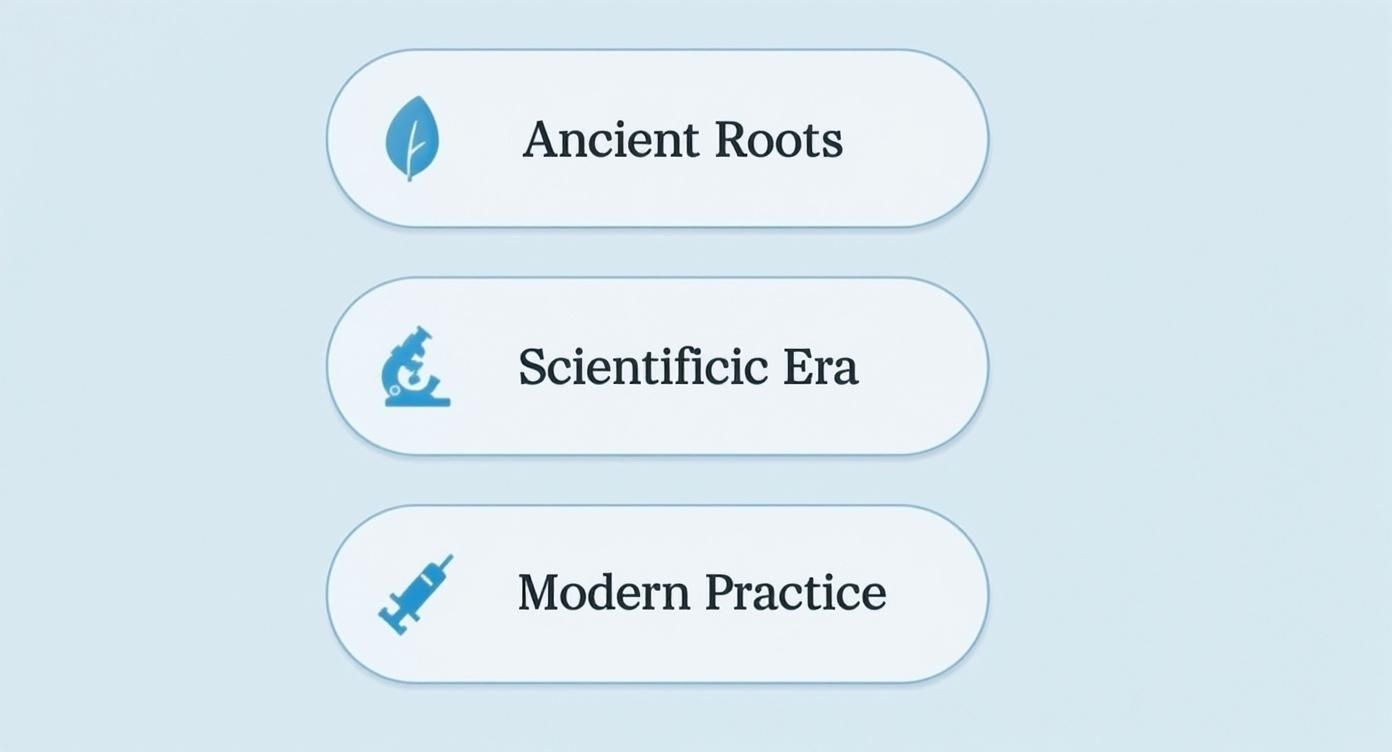
This timeline really highlights the shift from simple, surface-level applications to the precise, evidence-based procedures that define modern aesthetic care.
Advanced Skin Resurfacing and Rejuvenation
The third major category of treatments zeros in on improving the skin’s surface and overall health through controlled exfoliation and regeneration. These procedures are brilliant for refining skin texture, shrinking pores, and giving your complexion a vibrant, healthy glow.
Instead of light or needles, these methods use mechanical or chemical means to kickstart the skin’s renewal cycle. They are incredibly effective for maintaining skin health and tackling more superficial concerns.
The principle behind resurfacing is simple but powerful: by creating a controlled, micro-level “injury” to the skin, we prompt the body to heal itself by producing fresh collagen and healthy new cells. That natural response is what creates the visible improvement.
Popular resurfacing treatments include:
- Chemical Peels: A specially formulated solution is applied to the skin, causing the top layers to exfoliate and eventually peel away. This uncovers the smoother, less wrinkled skin underneath. Peels can be customized in strength from very light to deep, depending on a patient’s goals.
- Microneedling: This procedure uses a device with tiny, fine needles to create thousands of microscopic punctures in the skin’s top layer. These micro-channels don’t just stimulate collagen production; they also dramatically enhance the absorption of therapeutic skincare products applied during or after the treatment.
These options demonstrate the industry’s clear trend toward less invasive procedures. In fact, non-invasive procedures now dominate the global medical aesthetics market, holding the largest share and showing a clear worldwide preference for treatments that deliver excellent results with minimal disruption to daily life. This highlights how aesthetic medicine is becoming an integral part of modern healthcare and personal wellness.
Weighing the Benefits and Potential Risks
Every medical decision is a trade-off, a balance between the outcome you want and the potential downsides. Aesthetic medicine is no different. While these procedures are overwhelmingly safe and effective, going in with a clear-eyed view of both the rewards and the realities is what separates a good outcome from a great one.
The benefits often go far deeper than what you see in the mirror. Yes, the goal is to enhance your physical appearance, but the psychological impact can be profound. I’ve seen countless patients walk taller and feel a major surge in self-esteem after finally addressing a concern that has bothered them for years. That newfound confidence can ripple out, positively influencing everything from social interactions to professional life.
The Upside of Aesthetic Care
Beyond the confidence boost, modern aesthetic treatments deliver tangible improvements with surprisingly little interruption to your life. In fact, the non-invasive and minimally invasive nature of these procedures is one of their biggest draws.
Here’s what people are usually thrilled about:
- Natural-Looking Results: A skilled practitioner isn’t trying to make you look like someone else. The goal is subtle enhancement—making you look like a refreshed, revitalized version of yourself.
- Minimal Downtime: Most popular treatments, like injectables or laser hair removal, let you get right back to your daily routine, often on the same day.
- Preventative Power: Starting certain treatments early, particularly neurotoxins like Botox, can actually help prevent deeper wrinkles from setting in down the road. It’s proactive aging.
- Long-Lasting Improvements: While not always permanent, the results from many procedures can last for months or even years, especially when you stick to a good maintenance plan.
This combination of visible results and a psychological lift is a powerful one, making aesthetic medicine a valuable tool for overall well-being.
Understanding the Potential Side Effects
Just as we celebrate the benefits, we have to have an honest conversation about the risks. The good news is that when you’re in the hands of a board-certified, experienced provider, serious complications are incredibly rare. Most of what people experience are mild, temporary side effects that are a predictable part of the healing process.
These common side effects are typically confined to the treatment area and clear up on their own within a few days to a week.
It’s helpful to think of common side effects not as complications, but as the body’s normal response to a procedure. Temporary redness after a laser treatment or mild bruising from an injection is often a sign that the body’s healing mechanisms have been activated as intended.
You can generally expect things like:
- Redness and Swelling: This is the most common reaction you’ll see, especially with lasers and injectables.
- Bruising: Particularly common with dermal fillers and Botox, though it’s often minimal and can easily be covered with makeup.
- Tenderness: The treated area might feel a bit sensitive or sore for a day or two.
These reactions are a normal part of the deal, and your provider will give you specific instructions on how to manage them for a smooth recovery.
The Most Important Factor: Your Provider
While minor side effects are par for the course, more significant issues—like infection, asymmetry, or just plain bad results—are a possibility. Here’s the critical takeaway: the single most important factor in ensuring a safe and successful outcome is the person holding the needle or laser.
A highly trained, board-certified provider has a deep understanding of the complex anatomy of the face and body. Their expertise dramatically slashes the risk of something going wrong. They know how to choose the right treatment for your specific goals, use the proper technique, and handle any side effects that pop up.
Choosing a qualified professional isn’t just a smart move; it’s the most crucial safety measure you can take. It’s what empowers you to make an informed, confident decision about your care.
How to Choose a Qualified Provider You Can Trust

Choosing a provider for your aesthetic treatments is the single most important decision you’ll make. Think of it like hiring a master artisan to restore a priceless piece of art—in this case, your face and body. The provider’s skill, training, and eye for detail directly dictate your safety and the quality of your results.
In a field with wildly different levels of regulation, the responsibility to be a discerning consumer falls squarely on you. Not everyone offering injections or laser treatments has the same depth of medical training. Understanding credentials isn’t just smart; it’s a critical safety measure.
Decoding the Credentials
When you start your search, you’ll find a confusing mix of titles—dermatologists, plastic surgeons, nurse practitioners, and aestheticians at medical spas. Each has a different scope of practice determined by their education, training, and state licensing. The key is to match the complexity of the procedure with the provider’s qualifications.
For any treatment that involves injecting substances, using medical-grade lasers, or altering tissue beneath the skin, a board-certified physician should be your first and only choice.
- Board-Certified Dermatologists and Plastic Surgeons: These are the specialists. They have completed years of intensive residency training focused specifically on skin, anatomy, surgical principles, and aesthetics. Board certification is the gold standard, proving they’ve passed rigorous exams and are held to the highest ethical and safety standards.
- Other Medical Professionals: Experienced nurse practitioners (NPs) and physician assistants (PAs) can perform many aesthetic procedures safely, but they should always work under the direct supervision of a board-certified physician in the same practice.
The difference in expertise is massive. You can learn more about why elite dermatologists often outperform med spas when it comes to delivering safe, high-quality outcomes.
Your Vetting Checklist
To choose with confidence, you need a clear framework for evaluating potential providers. Use this checklist during your research and consultation phase to cut through the marketing fluff and focus on what truly matters.
A provider’s confidence should come from their credentials and results, not a slick sales pitch. A great practitioner will welcome your questions and be completely transparent about their qualifications, experience, and approach to patient safety.
Your goal is to find someone whose expertise makes you feel completely secure.
Questions to Ask During Your Consultation
The consultation is your opportunity to interview the provider. Don’t be shy or intimidated; this is your health and your appearance on the line.
- “Are you board-certified, and in which specialty?” This is non-negotiable. You can—and should—verify their status on official websites like the American Board of Dermatology or the American Board of Plastic Surgery.
- “How many times have you performed this specific procedure?” Experience matters. A provider who performs a treatment daily has a level of finesse and skill that someone who only does it occasionally simply cannot match.
- “Can I see before-and-after photos of your actual patients?” Look for consistent, natural-looking results that align with your goals. Be wary of practices that only show stock photos from device manufacturers.
- “What are the most common risks, and how do you handle complications?” A trustworthy provider will be upfront about potential side effects. More importantly, they will have a clear, established protocol for managing any adverse events if they occur.
Taking these steps ensures you place your trust—and your well-being—in the most capable hands.
What to Expect From Consultation to Recovery
Taking the first step into aesthetic medicine is exciting, but it’s completely normal to feel a little uncertain about what happens next. Knowing the road ahead can make the entire experience feel more comfortable and predictable. The whole process, from that initial chat to your final results, is built around your goals, your safety, and your well-being.
The journey always kicks off with a detailed consultation. This is much more than a quick chat; think of it as a collaborative strategy session between you and your provider. This is where you’ll dive into your concerns, review your medical history, and define what you’re hoping to achieve. A truly great provider won’t just tell you what to do—they’ll listen carefully and work with you to create a personalized treatment plan that respects your unique anatomy and goals.
The Day of Your Procedure
Once you have a plan, you’ll come in for the procedure itself. Every treatment is different, of course, but the setting should always feel professional, sterile, and calming. For most non-invasive treatments like injectables or laser hair removal, the process is pretty quick. Your provider will start by cleansing the area and may apply a topical numbing cream to keep you comfortable.
As they perform the procedure with meticulous care, a good clinician will explain each step, so you’re never left wondering what’s happening. The entire focus is on making your experience as smooth and stress-free as possible.
Your initial consultation is the bedrock of your entire aesthetic experience. It’s where trust is built, expectations are aligned, and a safe, effective roadmap is created. This step is indispensable for achieving the beautiful, natural-looking results you deserve.
Recovery and Post-Treatment Care
Recovery is a crucial part of the process, and it varies widely depending on the treatment. Minimally invasive procedures are so popular because their downtime is often, well, minimal. After Botox, for instance, you might just be asked to skip your workout for 24 hours. Following a chemical peel, you’ll need to be extra vigilant with sunscreen.
It is absolutely vital to follow your provider’s post-treatment instructions to the letter. These guidelines are designed to minimize side effects like swelling or bruising, protect your skin while it heals, and ensure you get the best possible return on your investment. This dedication to aftercare is what makes great results last.
The demand for these efficient procedures is fueling massive industry growth; the global aesthetic medicine market is projected to hit USD 239.98 billion largely because people want treatments with shorter recovery times. This step-by-step approach, guided by an expert you trust, is the key to a positive and rewarding experience. For more on finding that expert, check out our guide on how to find a good dermatologist the right way.
Burning Questions About Aesthetic Medicine
As you get more familiar with the world of aesthetic medicine, a few questions always seem to pop up. It’s a field that’s moving fast, so let’s tackle some of the most common ones to give you a clearer picture.
Are Aesthetic Treatments Just for Anti-Aging?
Not a chance. While turning back the clock is a huge part of what we do, the field is so much bigger than just wrinkles and fine lines. Many treatments are designed for adults of all ages, targeting a whole range of concerns.
Think of it this way—aesthetic medicine is incredibly effective for:
- Clearing up active acne and softening the appearance of old acne scars.
- Evening out skin tone by treating sun spots or melasma.
- Achieving long-term hair reduction on the face or body.
- Even tackling medical issues like hyperhidrosis (that’s excessive sweating).
Ultimately, it’s about boosting confidence and improving quality of life, no matter how many candles were on your last birthday cake.
How Much Discomfort Is Involved in These Procedures?
Honestly, most people are surprised by how comfortable modern treatments are. We have a lot of tools in our toolkit to make sure the experience is smooth. This often means using a strong topical numbing cream before injectables or firing up the built-in cooling systems on our laser devices.
You might feel a quick pinch, a bit of warmth, or some light pressure, but the procedures are generally very easy to handle. If you’re ever worried about pain, just say something. A good provider can always adjust their technique to keep you comfortable.
The fear of pain is almost always worse than the reality. In the hands of a skilled provider, and with today’s comfort measures, most treatments are a breeze. Your comfort is priority number one in any top-tier practice.
How Long Do Results From Aesthetic Treatments Last?
This is the classic “it depends” question. How long results stick around comes down to the specific treatment, the products used, and your own body—things like your metabolism and lifestyle play a big role.
Here’s a rough guide to give you an idea:
- Neurotoxins (like Botox): You can typically expect results to last for 3 to 4 months.
- Dermal Fillers: The longevity here varies a lot, from 6 months to over two years, depending on the filler type and where it’s placed.
- Energy-Based Treatments (Lasers, IPL): These can deliver incredibly long-lasting improvements, especially if you commit to great skincare and sun protection. We usually recommend maintenance sessions to keep the results looking fresh.
Is There a Right Age to Start Aesthetic Treatments?
There’s no magic number. The decision should be driven by what you see in the mirror, not your age. Some patients in their 20s are all about “prejuvenation”—getting ahead of aging before it starts. Others don’t even think about treatments until their 40s or 50s.
A qualified, board-certified physician will listen to your goals and assess your skin to figure out if a procedure is right for you, right now.
Finding a provider who gets your vision is everything. Haute MD is your connection to the nation’s top board-certified physicians, so you can be sure you’re getting expert care from a specialist you can trust. Explore our network to find a vetted provider in your area. Find a Top Doctor on Haute MD.