


When you hear people talk about Direct Primary Care vs Concierge Medicine, it’s easy to get them mixed up. On the surface, they look similar—both offer a more personal relationship with your doctor. But dig a little deeper, and you’ll find they operate on fundamentally different philosophies and financial models.
The simplest way to think about it is this: Direct Primary Care (DPC) throws out the traditional insurance model for primary care. You pay an affordable, flat monthly fee directly to your doctor for a specific set of services. That’s it. No copays, no deductibles, no insurance claims for your routine care.
Concierge medicine, on the other hand, is a premium add-on to the existing insurance system. You pay a hefty annual retainer for exclusive access and five-star service, but your insurance is still billed for every visit and procedure.
Choosing Your Personalized Healthcare Path
Patients and doctors alike are growing tired of the conventional fee-for-service grind—the one that shoves appointments into 10-minute slots and makes you feel like just another number. This frustration is exactly why membership-based models like DPC and concierge medicine have gained so much traction. They put the focus back on the doctor-patient relationship.
But they cater to very different people. One is built for affordability and accessibility; the other is designed for the highest level of service and convenience money can buy.
This guide will break down the real-world differences. We’re moving past the marketing jargon to look at what you actually get for your money—from costs and services to the day-to-day patient experience—so you can decide which path truly fits your health needs and financial priorities.

DPC vs Concierge Medicine at a Glance
Before we get into the weeds, here’s a quick side-by-side look at the core differences between these two approaches to healthcare. This table lays out the fundamentals at a glance.
| Feature | Direct Primary Care (DPC) | Concierge Medicine |
|---|---|---|
| Primary Cost Model | Low monthly membership fee (typically $70-$150/month). | High annual retainer fee (typically $2,000-$10,000+ per year). |
| Insurance Integration | Does not bill insurance for primary care services. | Bills insurance for visits in addition to the retainer fee. |
| Patient Panel Size | Small (typically 400-600 patients per doctor). | Very small (typically 50-300 patients per doctor). |
| Core Focus | Affordable, accessible, and comprehensive primary care. | Premium, high-touch service, and advanced care coordination. |
| Best For | Individuals, families, and small businesses seeking affordable, relationship-focused primary care without insurance hassles. | Executives, individuals with complex health needs, or those who demand the highest level of convenience and physician access. |
As you can see, both models are designed to give you more time and attention from your doctor. The key is understanding how they achieve this and what it means for your wallet and your healthcare experience. Choosing the right one comes down to what you value most—is it budget-friendly simplicity or unparalleled, on-demand service?
Why Membership Medicine Is Gaining Ground
The traditional healthcare model feels fundamentally broken. Patients wait weeks for appointments that last mere minutes, while doctors drown in administrative work tied to insurance billing. It’s a system that leaves everyone feeling rushed, frustrated, and unheard.
This shared dissatisfaction is the real engine behind the rise of membership medicine. Models like direct primary care and concierge medicine are surging in popularity because they offer a direct antidote to the failings of the fee-for-service world, putting the doctor-patient relationship back at the center of care.
For physicians, it’s a lifeline. By shrinking their patient panels from a staggering 2,500 down to just a few hundred, doctors can escape the crushing burnout that plagues the industry. This isn’t just about a better work-life balance; it’s about practicing medicine the way it was intended—with enough time to listen, think, and focus on prevention instead of just reacting to illness.
The Physician Shortage Is an Accelerant
This shift is happening against the backdrop of a much larger crisis: the United States is running out of primary care doctors. Projections from the AAMC paint a grim picture, with a potential shortfall of up to 124,000 physicians by 2034. Primary care is one of the hardest-hit areas.
This scarcity creates a vicious cycle in the traditional system—longer waits, shorter appointments, and less access.
When quality care becomes a scarce resource, the value proposition of membership medicine becomes incredibly compelling. Patients are more willing to invest in guaranteed access and a higher standard of care because the alternative is becoming increasingly inadequate.
Patient Expectations Have Changed
Today’s patients, especially busy professionals and those managing complex health issues, demand more from their healthcare. They expect convenience, direct lines of communication, and a doctor who acts as a proactive partner in their long-term health. These are qualities almost impossible to find in a standard medical practice.
Membership models are built to deliver exactly that. They transform healthcare from a frustrating transaction into a personal service. This means:
- Unhurried Appointments: You get real time with your doctor, often 30-60 minutes, to discuss everything thoroughly.
- Direct Access: You can text, email, or call your doctor directly, bypassing gatekeepers and phone trees.
- Proactive Wellness: The focus shifts from simply treating sickness to building a long-term strategy for optimal health and prevention.
The growth in the direct primary care vs concierge medicine debate isn’t a fleeting trend. It’s a deliberate move by both doctors and patients away from a system struggling under its own weight and toward a more personal, effective, and frankly, more human model of care.
Inside the Concierge Medicine Experience
If Direct Primary Care strips healthcare back to its essentials, concierge medicine dresses it up in a tuxedo. This is the premium, white-glove end of the medical world, built for people who see exceptional access and proactive health management not as a luxury, but as a necessity. Think of it less as a replacement for the traditional system and more as a first-class upgrade.
Concierge medicine works by layering a significant annual retainer fee on top of traditional insurance billing. This dual model is the key—it gives practices the financial freedom to shrink their patient panels to an almost unheard-of size, often fewer than 300 people for a single doctor. The retainer unlocks a world of personalized services, while your insurance continues to cover the nuts and bolts of medical visits and procedures.

This approach is an elegant solution for busy executives, individuals managing complex or chronic health issues, or frankly, anyone who wants a physician to function as their personal health quarterback.
What the Retainer Unlocks
That annual fee, which can range from a few thousand dollars to well into five figures, is an investment in unparalleled access and meticulous care coordination. It’s what transforms the entire experience.
- 24/7 Physician Access: This isn’t a promise to call you back. It’s your doctor’s personal cell phone number for direct texts, calls, and emails—anytime. The gatekeepers are gone.
- Same-Day or Next-Day Appointments: Urgent issues are handled with urgency. The days of waiting weeks for an appointment are over. Even better, these appointments are long, unhurried conversations that last as long as they need to.
- Specialist Coordination: A concierge doctor does more than just write a referral. They actively manage it. They’ll often leverage their network to get you priority appointments and will personally brief the specialist on your case before you even walk in the door.
- Executive Wellness and Physicals: Most plans feature incredibly thorough annual physicals that make a standard check-up look superficial. They often include advanced diagnostics and sophisticated wellness planning. You can explore the top benefits of concierge medicine to understand just how deep this proactive approach goes.
The demand for this level of service is exploding. The global concierge medicine market hit US$ 17.40 billion in 2023 and is on a trajectory to reach US$ 44.28 billion by 2034. This growth is fueled by patients who are more than willing to pay a premium for a genuine, lasting relationship with their doctor.
Ultimately, concierge medicine puts healthcare on your schedule. The physician becomes your dedicated health CEO, overseeing everything from routine care to navigating a complicated hospital stay. They ensure you get seamless, high-quality attention at every single turn. This is a powerful distinction when looking at direct primary care vs concierge medicine.
How The Direct Primary Care Model Works
Imagine walking into a clinic where insurance billing is nowhere in sight. Direct Primary Care (DPC) replaces the paperwork maze with a simple monthly subscription you pay straight to your doctor.
No co-pays. No deductibles. Just one flat fee that covers your routine care. By sidestepping traditional insurance for day-to-day visits, DPC practices shed administrative overhead and devote their energy to what matters most: your health.

That focus on simplicity is the biggest contrast when comparing Direct Primary Care vs Concierge Medicine. Both models boost access, but DPC is designed from the ground up to be affordable and transparent—tailored for patients who want high-value primary care without the hefty price tag.
What Your Monthly Fee Covers
DPC membership feels more like joining a wellness community than signing an insurance form. Here’s what you typically get:
- Unlimited Office Visits: Drop in as often as you need—no extra charges.
- Extended Appointment Times: Expect 30–60 Minute visits so you never feel rushed.
- Direct Physician Access: Text, call, or email your doctor’s personal line or secure app.
- Minor In-Office Procedures: From skin tag removals to joint injections and simple sutures.
By removing insurance from the equation for primary care, DPC practices drastically reduce their overhead. These savings are passed directly to the patient through lower fees and wholesale prices on labs and medications.
Most DPC plans start at under $100 per month, a stark contrast to concierge memberships that can top $2,000 annually. That affordability is one reason self-insured employers are adding DPC to their benefits package—keeping workforces healthier without breaking the bank. For a deeper dive into cost nuances, check out the differences between direct primary care and concierge medicine.
The Role Of Health Insurance
It’s a myth that DPC patients go without insurance altogether. Your DPC subscription covers routine primary care only. You still need a health plan for hospital stays, specialist consults, major surgeries, and any catastrophic events.
Most members pair their DPC membership with a high-deductible health plan (HDHP). This combo often lowers total healthcare spend because minor issues get handled in-house, sparing you from tapping into that deductible. Think of your DPC physician as the first responder for everyday health concerns—managing what they can and only referring out when absolutely necessary.
To understand how this fits within the broader care spectrum, learn more about the difference between internal medicine and primary care explained.
Breaking Down Cost Insurance And Services
When you’re weighing Direct Primary Care against Concierge Medicine, the biggest distinctions lie in how you pay and what you get in return. Both models promise deeper doctor–patient relationships, but they arrive there by very different routes.
Understanding those routes—and matching them to your priorities—will help you decide which path fits your lifestyle and budget.
Cost Structure And Payment Models
Direct Primary Care keeps things straightforward. You pay one flat monthly membership—usually between $70 and $150—and that covers nearly every routine service. No surprise copays. No hidden fees for office visits, basic procedures, or messaging your doctor.
Concierge Medicine takes a premium approach. You invest an annual retainer—typically $2,000 to over $10,000—purely for elevated access. That fee doesn’t cover visit charges or lab work; it’s your ticket to same‐day appointments, longer consultations, and proactive health planning.
Insurance Integration And Billing
These models part ways when it comes to insurance.
Direct Primary Care
• Operates outside of insurance for primary care services.
• Keeps overhead low and administrative hassles minimal.
• Encourages patients to carry high‐deductible plans for emergencies and specialist care.
Concierge Medicine
• Bills your insurance for every visit, test, and procedure—just like a traditional practice.
• Adds the annual retainer on top of any copays, deductibles, or coinsurance.
• Blends personalized service with conventional billing workflows.
“In DPC, your membership fee is your payment for primary care. In concierge medicine, your retainer fee is the price of admission before standard insurance billing even begins.”
Scope Of Services And Patient Experience
Both models deliver longer visits and direct physician access, but their service lists diverge in scope and depth.
Direct Primary Care Focuses On:
- Unlimited office visits and follow-ups
- Text and email access for quick questions
- In-office procedures like minor suturing or skin biopsies
- Wholesale pricing on labs and generic medications
Concierge Medicine Adds On:
- 24/7 direct cell phone access
- Personalized care coordination (specialists, hospitals)
- Executive‐style annual physicals with advanced screening
- House calls and airport lounge consultations
Feature Breakdown DPC vs Concierge Medicine
Here’s a detailed comparison table breaking down the specific differences in cost, insurance use, and service levels between the two models.
| Comparison Point | Direct Primary Care | Concierge Medicine |
|---|---|---|
| Membership Fee | $70–$150/month | $2,000–$10,000+/year |
| Visit Billing | Included in membership | Billed through insurance |
| Insurance Role | Bypassed for primary care | Integrated for all services |
| Appointment Access | Same-day or next-day (varies by practice) | Guaranteed same-day, extended hours |
| Communication | Text, email, phone | Direct cell access 24/7 |
| Procedures | Basic in-office procedures | Comprehensive, including advanced diagnostics |
| Care Coordination | Minimal referrals to specialists | Full advocacy and coordination with top specialists and hospitals |
| Preventive Screening | Standard labs and exams | Executive physicals, advanced imaging, genetic testing |
This snapshot highlights how each model allocates cost, leverages insurance, and structures services.
Ultimately, the right choice hinges on what you value most: an affordable, all-in-one primary care membership or an all-encompassing, high-touch experience that elevates every aspect of your health journey.
Which Healthcare Model Is Right for You?
So, how do you decide? The choice between Direct Primary Care and Concierge Medicine really boils down to your personal circumstances—your budget, your lifestyle, and what you demand from your doctor.
To make it tangible, let’s look at two real-world scenarios. Each one sketches out a different set of priorities and financial realities, leading to a clear recommendation for one model over the other.
This decision tree gives you a quick visual guide. Follow the path, and you’ll see how your budget is often the biggest factor steering you toward the right fit.
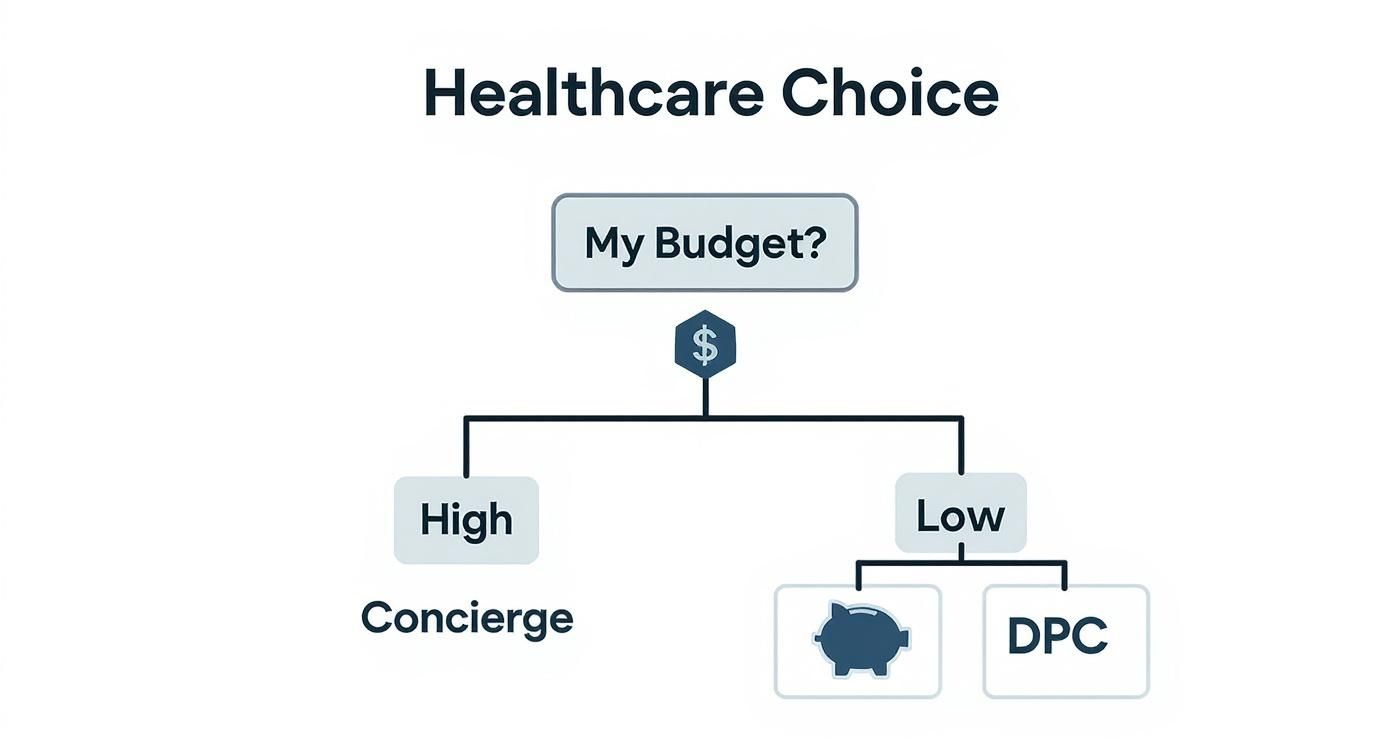
As you can see, a high budget naturally points toward the comprehensive, always-on service of concierge medicine. In contrast, a more moderate budget aligns perfectly with the value and accessibility of DPC.
The Busy Executive Persona
Think of a high-powered executive or entrepreneur. Their schedule is relentless, and their health is a non-negotiable asset. They need a physician who operates at their speed—someone who offers proactive health strategies, not just reactive sick care. For them, waiting days for an appointment is a non-starter.
- Priorities: Immediate physician response, in-depth wellness planning, and direct cell phone access 24/7.
- Budget: Prepared for an annual retainer of $5,000+.
For this individual, concierge medicine isn’t a luxury; it’s a necessity. The investment guarantees the kind of seamless, high-touch access that protects their most valuable resource: their time and well-being.
You can explore our curated network of concierge internal medicine doctors to find providers who deliver this exact level of elite service.
The Growing Family Persona
Now, picture a family with young children. Their primary goal is consistent, reliable, and affordable healthcare. They want to see a doctor for fevers, check-ups, and minor stitches without worrying about a surprise copay for every single visit. Predictable costs are paramount.
- Priorities: Unlimited office visits, unhurried appointments, and completely transparent pricing.
- Budget: An annual membership around $1,000.
Direct Primary Care is the perfect solution here. It provides everything this family needs—preventive care, quick virtual consults for minor issues, and basic procedures—all within a manageable, fixed budget.
The right choice ultimately comes down to matching what you can afford with the level of access and personalization you truly value.
For affluent executives demanding an unparalleled service experience, concierge medicine is the clear winner. Meanwhile, families focused on affordability and consistent, high-quality primary care will find DPC to be an ideal fit.
Your Decision Checklist
Still weighing your options? Run through these key questions to clarify which path is yours:
- Evaluate Your Budget: Are you comfortable spending over $3,000 annually on primary care access?
- Define Your Access Needs: Do you require 24/7 physician contact, or are extended business hours sufficient?
- Consider Care Depth: Is your focus on core primary care, or are you seeking advanced services like executive physicals and wellness optimization?
- Assess Family Dynamics: How many people need coverage, and how frequently do you anticipate needing appointments?
- Factor in Chronic Conditions: If you’re managing an ongoing health issue, will you benefit from more frequent, direct communication with your doctor?
- Think About Your Lifestyle: Do you travel often and need reliable telehealth options to stay connected to your physician from anywhere?
Mapping your answers to these points will cut through the noise. It transforms the “Direct Primary Care vs. Concierge Medicine” debate from a theoretical comparison into a practical, personal decision. A clear picture of your budget and access needs is the key to choosing your healthcare model with confidence.
Frequently Asked Questions
What’s the real difference between Direct Primary Care and Concierge Medicine?
At its core, the difference is in the financial model and the scope of service.
Direct Primary Care (DPC) is built around a straightforward, low monthly membership, typically $70–$150. This fee covers all your routine primary care visits, bypassing insurance billing entirely for those services. It’s designed for simplicity and affordability.
Concierge Medicine, on the other hand, layers an annual retainer—often $2,000–$10,000—on top of your existing insurance. That retainer buys you premium, 24/7 access and a much deeper, more comprehensive level of service and care coordination.
Who is the ideal patient for DPC?
DPC is a fantastic fit for families, entrepreneurs, or self-insured individuals who want predictable healthcare costs and unhurried appointments. If your primary goal is to have a strong relationship with your doctor for routine care without worrying about copays for every visit, DPC is likely your answer.
This model is perfect for patients who value 30–60 minute appointments and direct access to their doctor via messaging, all for one transparent monthly fee. Think of it as:
- Unlimited Visits: Every office visit is already covered by your membership.
- Extended Time: You get up to an hour with your doctor to dive into complex issues.
- Transparent Pricing: No hidden fees or surprise bills beyond the monthly rate.
“DPC excels at delivering high-quality routine wellness and chronic care management at a fraction of the cost of a traditional concierge retainer.”
Do I still need insurance with one of these models?
Absolutely, yes. Both DPC and concierge medicine are designed to cover primary care, not catastrophic events. You’ll still need a health insurance plan—often a high-deductible one—to cover hospitalizations, major surgeries, specialist visits, and emergencies. Think of DPC or concierge as the foundation, and your insurance as the essential safety net.
How flexible are the membership terms?
This is a key differentiator. DPC plans are almost always month-to-month, offering you the flexibility to cancel if your needs change. Concierge contracts, however, often require a full one-year commitment to secure your spot in the physician’s limited practice.
How do I decide which model is right for me?
Start by mapping your priorities. Are you optimizing for budget predictability, the absolute highest level of access, or comprehensive wellness management for your entire family?
Consider these three steps to bring clarity to your decision:
- Evaluate your budget and determine what you’re willing to invest annually for primary care.
- Align the care model with your preferences for appointment length, after-hours access, and care coordination.
- Compare the membership fees against how often you anticipate needing to see a doctor over the next year.
This simple exercise will quickly reveal whether the efficient, affordable DPC model or the high-touch, comprehensive concierge model is the better fit for your lifestyle and health goals.
Haute MD offers a network of elite physicians who can guide you to the healthcare model that best matches your goals. Explore the Haute MD network to find the right fit for you.