



When you’re staring down joint pain, the single most important move you can make is finding the right medical partner to guide you. The two main specialists in the arthritis world are rheumatologists, who are the experts on inflammatory and autoimmune types, and orthopedists, who deal with the structural and mechanical damage to your joints.
But your journey almost always starts in one place: your primary care physician’s office. They’re the first stop for an initial diagnosis and the crucial referral that gets you to the right expert.
Your First Step in Managing Arthritis Pain
Living with arthritis can feel like a constant battle against your own body, a daily grind of stiffness and pain. But identifying the correct specialist is your first—and most powerful—step toward taking back control.
Think of it like building a custom home. Your primary care physician (PCP) is your general contractor. They’re the one who first assesses the entire situation, draws up the initial plans, and knows exactly which specialized subcontractors are needed to get the job done right. They are your first point of contact and will get the ball rolling.
Based on their initial findings, your PCP will refer you to a specialist who has the precise tools and deep expertise for your specific type of arthritis.
The Key Medical Specialists
Your PCP is going to connect you with one of two main types of doctors, each with a very different focus:
- Rheumatologists: These doctors are essentially disease detectives. They specialize in diagnosing and managing complex systemic autoimmune conditions like rheumatoid arthritis, where the body’s own immune system is mistakenly attacking the joints.
- Orthopedists: Think of these specialists as expert joint mechanics. Their world is the musculoskeletal system—bones, joints, ligaments, and tendons. They treat the “wear-and-tear” of conditions like osteoarthritis and are the ones who step in to repair physical damage with everything from targeted injections to joint replacement surgery.
To help you get a clear picture of how these roles fit together, here’s a quick guide to the primary specialists you’ll encounter.
Quick Guide to Arthritis Specialists
| Specialist Type | Primary Role in Arthritis Care |
|---|---|
| Primary Care Physician | Your first point of contact. Conducts initial diagnosis, manages overall health, and refers to specialists. |
| Rheumatologist | Diagnoses and treats inflammatory arthritis (e.g., rheumatoid arthritis, psoriatic arthritis) with medications and systemic therapies. |
| Orthopedist (Surgeon) | Manages structural joint damage, performs joint repairs, injections, and joint replacement surgeries. |
| Pain Management Specialist | Focuses on alleviating chronic pain through advanced interventions when other treatments aren’t enough. |
| Physical Therapist | Designs exercise and movement programs to improve joint function, strength, and mobility. |
Understanding who does what is the first step toward building the right team for your care.
This infographic helps visualize how finding the right partner is truly the foundation of any successful treatment plan.

As the visualization shows, a strong, trusting doctor-patient relationship is what allows you to navigate the complexities of arthritis treatment. This partnership is more critical than ever, especially when you consider the scale of this condition. In fact, with over 350 million people worldwide suffering from arthritis as of 2021, the demand for highly skilled, empathetic specialists is absolutely immense.
Navigating the medical world can feel overwhelming, but you don’t have to do it alone. The right doctor acts as your trusted guide, helping you understand your condition and co-creating a treatment plan that actually fits your life.
Finding this kind of expert partner is so much easier when you have the right resources. Using a curated network cuts through the noise and connects you directly with top-tier, vetted physicians. You can begin your search for leading specialists in your area and find a doctor who will become your strongest ally on this journey.
The Rheumatologist: Your Disease Detective

When your joint pain isn’t just from wear and tear but from your own body’s immune system going rogue, a simple painkiller won’t cut it. You need a specialist who can solve the underlying mystery. This is the world of the rheumatologist, one of the most important doctors who treat arthritis, especially complex, inflammatory types.
Think of them as a detective for your immune system. They are expertly trained to uncover why your body is mistakenly attacking its own healthy tissues, causing the inflammation and pain you feel. For conditions like rheumatoid arthritis (RA), psoriatic arthritis, and lupus, a rheumatologist is your most critical ally.
Uncovering the Root Cause
A rheumatologist’s investigation goes far beyond just looking at a sore joint. It’s a meticulous, multi-faceted process designed to piece together clues from all over your body, creating a complete picture of your unique biology.
This diagnostic deep dive usually includes:
- Detailed Blood Tests: They’re looking for specific inflammation markers and antibodies, like rheumatoid factor (RF) and anti-CCP. These are the tell-tale fingerprints of an autoimmune response.
- Advanced Imaging: X-rays, MRIs, and ultrasounds give them a look inside the joint, revealing erosion, swelling, or fluid buildup that you can’t see from the outside.
- Thorough Physical Exams: A hands-on assessment of joint swelling, tenderness, and range of motion helps pinpoint exactly which areas the disease is targeting.
This systematic approach is essential. It’s what separates true inflammatory arthritis from dozens of other conditions, ensuring you get the right treatment right from the start.
A rheumatologist doesn’t just treat symptoms; they manage the disease itself. Their goal is to interrupt the disease process, prevent long-term damage, and preserve your quality of life.
Advanced Treatments to Halt Disease Progression
Once they’ve cracked the case, a rheumatologist becomes your long-term partner. They are experts in prescribing sophisticated medications that do more than just dull the pain—they actively slow, and in some cases stop, the disease in its tracks.
These powerful therapies often include:
- DMARDs (Disease-Modifying Antirheumatic Drugs): These are foundational medications. They work to suppress the overactive immune system, dialing down the inflammation and preventing permanent joint destruction.
- Biologics: Think of these as a more targeted class of DMARDs. Biologics are genetically engineered proteins that block the specific inflammatory pathways your body is using for its autoimmune attack.
Getting on these treatments early is absolutely critical. The global impact of these conditions is growing fast. Between 1990 and 2021, the worldwide prevalence of rheumatoid arthritis shot up by a staggering 157.59%, with huge increases among the elderly. You can read the full research about these global trends right here.
By working with a rheumatologist, you get ahead of the disease. You can safeguard your joints from irreversible damage and secure a healthier, more active future.
The Orthopedist: Your Body’s Master Mechanic
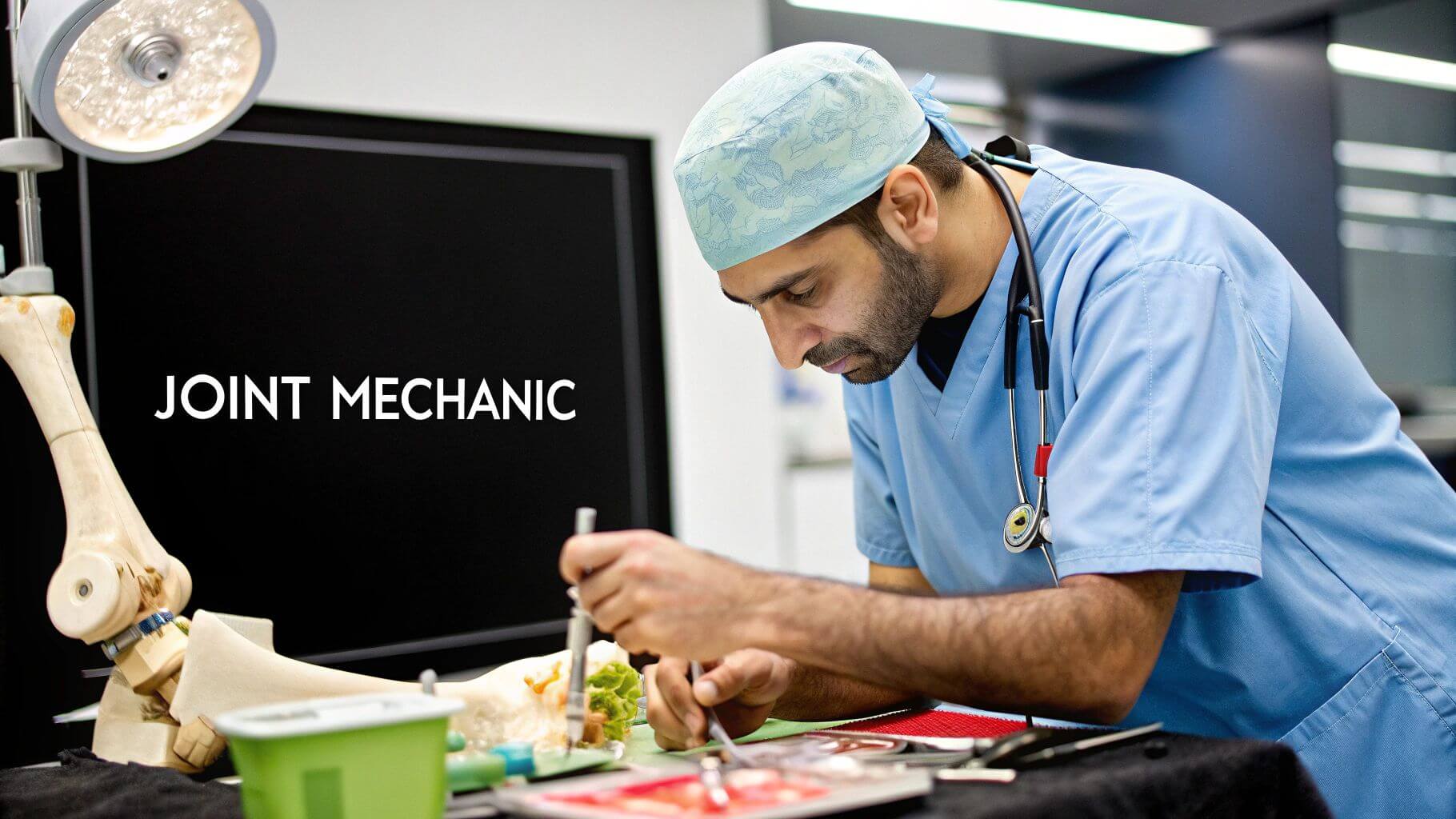
While a rheumatologist tackles the systemic disease driving your joint inflammation, there’s another crucial expert in your corner. If the rheumatologist is the disease detective, think of the orthopedist as the master mechanic for your joints. They are the surgical and non-surgical specialists who step in to repair the physical damage arthritis leaves behind.
Orthopedists are the primary doctors who treat arthritis when the problem becomes structural. They’re the go-to experts for osteoarthritis (OA), the common “wear-and-tear” type where protective cartilage simply erodes over time. Their entire focus is on the hardware—the bones, cartilage, and ligaments—and how to restore function when things break down.
They also play a critical role for those with inflammatory arthritis. Once a rheumatologist gets the underlying autoimmune disease under control, it’s the orthopedist who can address any lasting joint damage that happened before the inflammation was stopped.
A Focus on Restoring Function
An orthopedist’s toolkit is all about directly addressing the source of mechanical pain and immobility. They assess the physical condition of your joints and recommend interventions designed to give you tangible relief and get you moving freely again. It’s an approach grounded in biomechanics and structural repair.
Their treatment options span a wide spectrum, always starting with the least invasive methods possible:
- Corticosteroid Injections: These are powerful anti-inflammatory shots delivered directly into the affected joint. They offer rapid, targeted relief from pain and swelling right where you need it most.
- Viscosupplementation: Often used for knee osteoarthritis, this involves injecting a gel-like substance (hyaluronic acid) into the joint to act as a lubricant and shock absorber, essentially giving the joint back some of its lost cushion.
- Physical Therapy Referrals: Orthopedists know that strong muscles protect joints. They work closely with physical therapists to design exercise programs that strengthen the muscles supporting the joint, improving stability and taking the strain off damaged cartilage.
This step-by-step approach ensures that more intensive treatments are reserved only for when they are truly necessary.
When conservative treatments can no longer keep up and joint damage severely impacts your daily life, an orthopedist offers a clear path to reclaiming your mobility. Their surgical expertise can turn back the clock on years of joint deterioration.
The Surgical Path to Pain-Free Movement
When the damage is simply too severe for injections or therapy to manage, an orthopedist can perform life-changing surgeries. Joint replacement is one of the most successful procedures in all of modern medicine, with over one million hip and knee replacements performed each year in the United States alone.
These procedures involve removing the worn-out, damaged joint surfaces and replacing them with durable, precisely engineered artificial components. For many people, this isn’t just a last resort—it’s a definitive solution that erases chronic pain and restores the ability to walk, climb stairs, and live an active life again.
This is where the collaboration between your rheumatologist and orthopedist becomes seamless. The rheumatologist manages your systemic condition while the orthopedist fixes the mechanical issues, both working together toward the shared goal of your long-term health and mobility.
Building Your Comprehensive Arthritis Care Team
Managing arthritis effectively is rarely a one-person show. While a rheumatologist or orthopedist often leads the charge, assembling a full support team is what creates truly lasting success. Think of your main doctor as the head coach; they call the key plays, but winning the game requires a roster of specialists, each bringing a unique skill set to the field.
These allied health professionals are some of the most important doctors who treat arthritis because they focus on function, adaptation, and day-to-day quality of life. They work alongside your primary specialist to make sure every aspect of your well-being is addressed, moving beyond just medication to practical, real-world solutions.
This collaborative approach is critical because arthritis impacts more than just your joints—it changes how you move, work, and live your life.
The Role of Physical and Occupational Therapists
Two of the most valuable players on your team will be physical therapists (PTs) and occupational therapists (OTs). While their titles might sound similar, they have distinct—and perfectly complementary—roles in helping you thrive.
A physical therapist is like a personal trainer for your joints. Their primary goal is to improve your strength, flexibility, and range of motion. They design targeted exercise programs that build up the muscles surrounding your joints, which act as natural shock absorbers and take the strain off the cartilage.
An occupational therapist, on the other hand, is like a life-hacker for your daily routines. They focus on adapting your environment and activities to protect your joints and conserve precious energy.
- Physical Therapy Focus: Strengthening exercises, improving balance, and increasing mobility.
- Occupational Therapy Focus: Modifying tasks, using assistive devices, and protecting joints during daily activities.
For instance, a PT might have you do specific leg lifts to strengthen a knee, while an OT shows you the best way to get out of a chair without putting stress on that same joint. It’s a powerful one-two punch for managing symptoms.
To clarify how these specialists fit into your overall plan, here’s a quick breakdown of the core team members you might work with.
Your Arthritis Care Team Roles and Responsibilities
| Specialist | Area of Focus | Common Treatments or Therapies |
|---|---|---|
| Rheumatologist | Diagnosing and managing inflammatory and autoimmune arthritis (e.g., RA, PsA) | Disease-modifying drugs (DMARDs), biologics, steroid injections, lab monitoring |
| Orthopedist | Treating joint damage and structural issues, particularly in osteoarthritis (OA) | Joint replacement surgery, arthroscopy, bracing, corticosteroid injections |
| Physical Therapist (PT) | Improving joint function, strength, and range of motion | Customized exercise programs, manual therapy, balance training, pain relief modalities |
| Occupational Therapist (OT) | Adapting daily activities to reduce joint strain and improve independence | Assistive devices, joint protection techniques, home/workplace modifications |
| Pain Management Specialist | Addressing chronic pain that doesn’t respond to standard treatments | Nerve blocks, radiofrequency ablation, spinal cord stimulation, advanced medications |
| Primary Care Physician | Overseeing overall health, coordinating care, managing comorbidities | General health monitoring, medication management, specialist referrals |
This table illustrates how each specialist brings a unique perspective. True success in arthritis care comes from having these experts work together, sharing information and aligning their strategies to support you.
Your care team should function like a well-oiled machine, with each specialist communicating to ensure your treatment plan is perfectly aligned. This integration is a hallmark of high-quality, patient-centered care.
When Pain Management Specialists Are Needed
For some, even with excellent medical and therapeutic care, chronic pain remains a significant daily battle. This is where a pain management specialist can step in to offer more advanced options.
These doctors have specialized training in treating persistent pain that doesn’t respond to standard therapies. They might use sophisticated interventions like nerve blocks or other targeted procedures designed to interrupt pain signals at their source, offering relief when other methods fall short.
Ultimately, your primary care physician often serves as the coordinator—the quarterback—for this entire team. This is one of many reasons why high-level internal medicine is so crucial for managing chronic conditions. For more information, you can explore the benefits of partnering with top-tier concierge internal medicine doctors who can oversee your complete care strategy.
By bringing together these different experts, you create a powerful, multi-pronged strategy that addresses your arthritis from every possible angle.
How to Choose the Right Arthritis Doctor
Googling a list of doctors is the easy part. The real work is finding the right partner for your long-term health—a journey that matters immensely when you’re dealing with a chronic condition like arthritis.
Choosing between the different doctors who treat arthritis goes way beyond scanning credentials on a website. It’s about finding a specialist whose philosophy aligns with your goals and whose communication style makes you feel heard. This isn’t a one-off transaction; it’s a long-term collaboration.
Think of it like hiring a general contractor to build a house you plan to live in for the rest of your life. You need someone with proven expertise, absolutely. But just as important, you need someone you trust, who listens to your vision for the future, and who explains the blueprint in a way you actually understand. Your doctor should be your most dedicated ally, not just a dispenser of prescriptions.
The right specialist will see you as a whole person, not just a collection of symptoms. They’ll take the time to understand how your joint pain is impacting your career, your hobbies, and your overall quality of life.
Key Factors to Consider
As you start your search, you need to look past the resume and focus on the practical realities of this partnership. The goal is to find a physician who is not only clinically exceptional but also a genuine fit for you. A strong doctor-patient relationship isn’t just a nice-to-have; it’s directly linked to better health outcomes, especially when managing a condition for the long haul.
Keep these essential factors in mind during your search:
- Specific Expertise: Does the doctor have a deep focus on your type of arthritis? A rheumatologist with extensive experience in psoriatic arthritis will bring a different level of insight than one who mainly treats lupus. Dig into their specific focus.
- Communication Style: Do they really listen, or are they just waiting for their turn to talk? Can they break down complex medical information into clear, actionable advice? You should leave an appointment feeling more knowledgeable, not more confused.
- Treatment Philosophy: Do they see you as a partner in your own care? A great doctor will present you with options, discuss the pros and cons of each, and value your input when creating a treatment plan. It should feel like a team effort.
The best doctors don’t just treat their patients—they empower them. They provide education and support alongside prescriptions, ensuring you feel confident and in control every step of the way.
Questions for Your First Appointment
That initial consultation is a two-way interview. You’re sizing them up just as much as they’re diagnosing you. Preparing a short list of questions ahead of time is the best way to make an informed decision and lay the groundwork for a successful partnership.
Having your questions ready ensures that first visit is productive. Consider bringing a list that includes questions like these:
- How do you typically approach building a treatment plan with a brand-new patient?
- What is your philosophy on using newer medications like biologics compared to more traditional therapies?
- How does your office handle coordinating care with other specialists I might need, like a physical therapist or an orthopedist?
- What role do you believe lifestyle factors like diet and exercise should play in managing my condition?
Taking control of your health journey begins with asking the right questions. To make your search simpler, you can find a doctor who meets these high standards through a network of vetted, top-tier specialists.
Frequently Asked Questions About Arthritis Doctors
Trying to figure out the medical system when you’re in pain is overwhelming. But once you understand the key players, the whole process gets a lot clearer. Getting answers to the right questions is the first step toward building your care team with confidence.
Knowing who to see—and when—is how you take control of your health and get on the fastest track to feeling better. It’s all about connecting with the right expert at the right time.
Should I See a Rheumatologist or an Orthopedist First?
Your journey should almost always start with your primary care physician (PCP). They’re your first line of defense, the initial health investigator who does the first evaluation to figure out what’s really causing your joint pain.
If they suspect an underlying inflammatory or autoimmune condition—like rheumatoid arthritis—they’ll send you to a rheumatologist. Think of this specialist as a “disease detective” who manages the root cause of the inflammation throughout your body.
But if the problem looks more mechanical, like the “wear-and-tear” of osteoarthritis or a specific injury, your PCP will likely refer you to an orthopedist. This specialist is the “joint mechanic,” focused on repairing the structural damage.
What Is the Main Difference Between Osteoarthritis and Rheumatoid Arthritis?
The real difference is the root cause. Osteoarthritis (OA) is a degenerative, mechanical problem. It’s what happens when the protective cartilage cushioning your joints wears down over many years, a lot like the tread on a tire wearing thin after too many miles.
On the other hand, rheumatoid arthritis (RA) is an autoimmune disease. This means your own immune system gets confused and starts attacking the linings of your joints by mistake, sparking widespread inflammation and damage.
Osteoarthritis is about wear and tear on the joint’s hardware. Rheumatoid arthritis is about the body’s internal software—the immune system—malfunctioning and attacking itself. This fundamental difference is why they require entirely different specialists and treatments.
Because RA is an immune system problem, a rheumatologist is absolutely essential for managing the underlying disease. OA, being a structural issue, is often managed by PCPs and orthopedists whose main goal is to relieve pain and get the joint working again.
How Can I Best Prepare for My First Specialist Appointment?
You want that first visit to be as productive as possible, and that means showing up prepared. A little organization beforehand helps your doctor get a clear picture of what’s going on right from the start, which leads to a faster, more accurate diagnosis.
To make sure the appointment is a success, you should:
- Document Your Symptoms: Keep a detailed log of your joint pain. Write down when it started, what time of day it’s at its worst, and which activities make it feel better or worse.
- List All Medications: Make a complete list of everything you’re taking. This includes prescriptions, over-the-counter meds, vitamins, and any herbal supplements.
- Note Your Family History: Let them know if any close relatives have been diagnosed with arthritis or other autoimmune diseases. This can be a huge clue for your doctor.
- Prepare Your Questions: Jot down any questions you have ahead of time. This makes sure you don’t forget anything important and can leave the appointment feeling informed and confident about what comes next.
Finding a specialist who truly understands your unique situation is the most critical part of this journey. Haute MD connects you with a curated network of the nation’s top, board-certified doctors, ensuring you partner with a trusted expert dedicated to your long-term health and well-being. Discover a leading physician in your area today.