
Haute Living Miami Dec/Jan 2012
Dress For Success
by Stephanie Wilson

Miamians, rejoice. High season is almost upon us. The winter season is jam-packed with cultural and social events that encourage fashionistsas to don their finest and dance the night away for various good causes. Lucky for us, we don’t have to wait for Art Basel Miami Beach in December to kick-off the good times. Dress for Success Miami, with co-chairs Irene Korge, Norma Jean Abraham and Amaris Jones, announced its “Dress to Impress II Gala” featuring an elegant evening of fashion, fine auction, entertainment and gourmet cuisine to benefit disadvantaged women in South Florida. The event, which will take place at The W Hotel, South Beach on Saturday, October 24, will honor internationally renowned jewelry designer Judith Ripka. The evening will begin with a cocktail reception and auction at 7:00 p.m. with the main event commencing at 8:00 p.m.

Dress for Success Miami is dedicated to empowering a community of people to share their knowledge, experience and passion for a great cause since this evening will raise much needed funds to support disadvantaged women in South Florida who are struggling to attain economic self-sufficiency.

The host for the evening is Louis Aguirre, entertainment reporter for WSVN-TV and anchor for Deco Drive. Entertainment and music will be provided by celebrity DJ, DJ Irie.  The Webster Miami will be providing an informal fashion show during the cocktail reception.

The evening’s honoree, Judith Ripka, entrepreneur and jewelry designer is renowned for creating wearable, versatile jewelry for every woman.  Celebrated by the red carpet elite for its modern elegance and sophistication, each piece of jewelry Judith creates reflects her passion for design.

Auction items include a Fashion Week VIP Experience in NY for two, a trip to The Grammys in LA for two, Churchill Downs (Kentucky) VIP Experience for two, Superbowl XLIV tickets including autograph sessions for two, a 14 day cruise on Celebrity Cruises through European ports-of- call and a piece of 18k gold and diamond jewelry by Judith Ripka.

For more information, visit Dress For Success

Sep 29, 2009 1:06 PM
Skull Candy For Sale
by Sarah Locke

The term “starving artist” has definitely influenced certain people’s hopes, dreams and aspirations of becoming a professional artist. Years ago, it was even frowned upon if you dreamt of creating art for a living. Although art is more appreciated today and well-loved, you can’t ignore the fact that the economy has put a damper or strain on the wallets and income of artists worldwide. Sure, there will always be dedicated collectors like you, our readers, who are willing to spend whatever amount in order to snag the perfect piece or final item in a collection. However, though your impeccable taste and yearning for all things magnificent may help these “starving artists” to a degree, in current times, it’s simply just not enough. So to make ends meet, artists have been really getting their creative juices flowing and finding loopholes around this unfortunate economic season.

Damien Hirst, who has previously designed for Louis Vuitton and is a respected artist in other arenas as well, has even created an auction house. Hirst dumped all of his work into the auction site hoping to receive interested parties with even more interesting and impressive bank accounts. Phillips de Pury is currently auctioning off two lithographs of one of Hirst’s most famous pieces, “For the Love of God, Laugh; The Diamond Skull.” In case you didn’t already know, Phillips de Pury & Company deals with all things art. They hold auctions, have private collections, private sales, and even hold exhibitions. The skulls range in price from $16,000 up to $24,000. But Hirst’s original skull was offered at an astonishing $100 million.

Now I don’t know about you, but that’s a lot of money for a skull, I mean, unless you’re into that sort of thing. And if you are, hey, no worries, everyone has their tastes, but for $100 million, that thing better come with diamond encrusted everything-I want the entire skeletal body encrusted with diamonds for that price. Toes, hands, knees, everything!

Polish artist Peter Fuss has created a knock-off skull at a much more reasonable price titled, “For the Laugh of God,” which consists of 9,900 pieces of glass created to look exactly like Hirst’s diamonds. The asking price for this piece is around $399, an impressive price when you consider the 18 hours of work put into creating it. For, $399, I’ll settle for the skull but for $100 million or even $24,000, I want a plethora of collection pieces. And in my particular case, I’ll take three Piaget pieces, two Chopard, and several customized pieces. That’s not too much to ask, right? I think not.

Via Luxist

Sep 29, 2009 12:35 PM
Whats Haute: Union Square
by Kelsey Karp

An area once used for rallies and demonstrations in support of the Union Army during the Civil War has transformed into a shopping mecca featuring one of the grandest collections of flagships and upscale boutiques on the West Coast. Bordered by Geary, Powell, Post, and Stockton Streets, Union Square remains the heart and soul of retail in San Francisco. Defined by public concerts, events, art showings, annual Christmas tree and Menorah lightings, and many other festivities, the plaza continuously awes residents and visitors alike with its uncommon zest. Haute Living readers demand the best of the best. So we are here to serve as your guide to the gems that stand out amongst the crowd at Union Square with their exquisiteness, charm, and grandeur.

Surrounding the Dewey Monument, native San Franciscans can be seen lounging and relaxing on any given day side by side with tourists taking in the many delectable restaurants located within the square. But it is the luxurious boutiques, with their intricate storefront facades complementing the distinguished neighborhood history, that make this such a sought-out destination. After a $25 million improvement project, which was completed seven years ago, the square is more enchanting than ever, attracting the most elite names in luxury retail. Take, for example, the new Bulgari boutique, opening in December 2009. The Italian luxury jeweler will be moving from a smaller location on Post Street to the corner of Stockton and Geary streets, which previously housed Gucci. While details have yet to be unveiled about the design of the interior, knowing the brand’s reputation as a fashion master, it is safe to say the outcome will not disappoint.

Bulgari is not the only store getting a fresh start. Other boutiques are undergoing extensive renovations to keep up with growing client bases and posh reputations. The redesigned Chanel boutique in San Francisco, described as one of the brand’s most enticing locales worldwide, will be unveiled on Maiden Lane this November. New York architect and Chanel collaborator Peter Marino designed the three-floor, 7,900-square-foot modish, feminine environment, which will showcase the Cruise 2009-10 Collection upon opening. The collection is inspired by Venice, and a handbag and shoe are exclusive to the San Francisco multiplex. Shoppers will be swept away by the custom-created, hand-plastered walls and ivory cabuca stone flooring that creates the perfect backdrop for the stunning handbags, watches, and jewelry. On the second floor, guests are greeted by tweed-inspired carpets that were custom designed for the San Francisco shop. Plush woven pink, beige, and white fabric chairs add to the elegance and magnetism the store emits. While there are 151 Chanel boutiques worldwide, this particular locale has a distinct charisma and glamour that is truly unrivaled.

Gucci, the historical fashion staple founded in Florence in 1921, brought its excellence and prestige to San Francisco with a boutique prominently located on Stockton Street. The 11,000-square-foot land of luxury takes on a persona a bit different than other, traditional Gucci storefronts. The double-height main floor, glowing bronze glass and metal façade, geometric lines, and symbolic detailing make this an architect’s dream destination. Creative Director Frida Giannini infused spectacular visual displays with light and transparency, paving the way for an innovative new look that embodies 21st-century Gucci. Like other shops from the revered brand, dark rosewood and marble remain intertwined in the aesthetic, but the Union Square boutique offers an added touch of flare with the introduction of new materials such as ribbed glass, warm polished gold, and smoked mirror and glass, evoking memories of the Art Deco era. Gucci’s striking signature shoes, jewelry, timepieces, accessories, and full selection of men and women’s ready-to-wear looks, coupled with this architectural haven, transforms what could be a normal shop into one of the most tantalizing boutiques in Union Square.

Dedicated to owning a presence in all of the most prestigious shopping locations, it is entirely understandable why Prada found itself a home at Union Square. Superseding a smaller, women’s-only Prada boutique on Geary Street, this flagship store designed by architect Roberto Bacicchi has grand entrances on three of the major shopping boulevards: Post Street, Grant Avenue, and Maiden Lane. Passersby can see the latest fashions simply by looking through the 10 shop windows on the ground floor and 13 on the first, each outfitted with black retro-painted glass. The main entrance to such a grandiose store must be equally impressive. In tribute to the original Prada store, opened in 1913 in Milan’s Galleria Vittorio Emanuelle II, the premier entrance on Post Street features black and white checkered marble flooring and luxurious crystal furnishings, and opens to a slightly raised central area dedicated to handbags and accessories. The high ceilings, unusual design, and intricate fashions establish a sophisticated, enthralling tone.

Another longstanding flagship with recent renovations is Saks Fifth Avenue. The extensive and noteworthy upgrades to the already largest shoe department in San Francisco were completed in September 2008, enhancing Saks’ astounding and exuberant presence in the square. The designer shoe salon, dubbed 10022-SHOE after the famous New York flagship’s zip code, features legendary designers including Chanel, Christian Louboutin, Fendi, Givenchy, Gucci, Jimmy Choo, Miu Miu, and Prada. A goal behind the renovation was to create a more intimate feeling for the new shoe salon, which is emphasized by the warm, light neutral hues accentuated by gold and silver, with jewel-toned upholstery. The space, adorned with a variety of chandeliers and vintage furniture pieces, aims to draw customers’ eyes to the footwear, which is delicately displayed on white glass, antique mirror limestone with white Carrera marble, and gray-stained wood. rest assured, the remainder of the store itself is just as impressive as the shoe collection. With handbags and cosmetics on the first floor, American and European designers on the third, and contemporary collections on the fifth, Saks Fifth Avenue is guaranteed to satisfy every shopper’s needs with the latest fashions from the most recognized luxury brands.

Unveiling its first boutique in San Francisco, world-renowned French jeweler Van Cleef & Arpels graces Neiman Marcus with its esteemed presence. British designer Anouska Hempel created a warm, friendly space featuring mid-gray armchairs, bold gray flooring accented by black lacquer, and green-gray walls in a 500-square-foot area on the first floor of the department store. Since a Van Cleef & Arpels boutique is nothing without the brand’s unparalleled collections, this locale includes the iconic Alhambra in all incarnations, diamond pieces from the Snowflake and Envol collections, and the Poetic Complication watch collection. Since Van Cleef’s launch in 1906, supreme craftsmanship, unchallenged quality, brilliant stones, and incredible design have been vital characteristics to the highly recognized trademark name.

Since its debut in Union Square a little more than a year ago, the 2,659-square-foot De Beers shop, located on Post Street, is the diamond destination.Guests perusing the interiors will be mesmerized by the lights reflecting off the precious stones and creating a sparkle throughout the store. The environment features open spaces, ebony walls, and etched-glass paneling strategically placed to enhance the jewelry. With high display counters reachable from all sides, there are no intimidating barriers, allowing the client to enjoy an up-close experience when selecting these prized possessions, and for those desiring private presentations, there is an exclusive VIP room. In addition to displaying new collections designed by De Beers creative director Raphaele Canot—including Talisman, Ice on Fire, and Radiance—the store also offers the De Beers Beauty Scan, which show buyers instant visual proof of a stone’s allure. De Beers’ diamonds are unique in that the cuts are not optimized for carat weight but rather for beauty. A special and distinct serial number, invisible to the naked eye, is engraved on every diamond more than .3 carats to provide security to the customer.

The iconic Cartier originally opened its Union Square doors in 1984, and since has become an integral part of the San Francisco community. The newly expanded boutique on Post Street is double the size of the previous shop, accommodating—and welcoming—the crowds in Union Square. Designed by Paris-based architect Bruno Moinard and executed by Barteluce Architects & Associates, the space increased from 2,700 square feet to 6,000. Along with the renowned Fifth Avenue mansion in New York and the Rodeo Drive boutique in Beverly Hills, this outpost is Cartier’s third official flagship. Boasting a unique design, the store combines traditional and avant-garde elements to create a striking and engaging retail space. Grand ceilings allow for more light, providing an airy, spacious ambiance. Adorned with oak paneling and a muted palette, the entryway features a one-of-a-kind glass Murano chandelier. The additional space allows for a timepiece salon featuring a dedicated horologist who is happy to show popular Cartier collections such as Tank, Santos, Roadster, and Pasha, as well as the intricate watches from the Privée collection and the brand new Ballon Bleu. In addition to offering more timepieces, the boutique has a plethora of engagement rings, bridal jewelry, and a new bridal salon. For men that need advice on selecting the perfect engagement ring, a bridal specialist will serve as an aide, offering suggestions to help select the perfect piece. For those who want to view jewelry and watches sans the prying eyes of other clients, an intimate, private viewing room is now available.

Another colossal giant amongst the chic Union Square shops, Montblanc offers jewelry, eyewear, fragrances, and leather products to go with their infamous writing instruments. The white marble floor, which displays the Montblanc symbol in the store’s center, is a sharp contrast to the onyx colored cabinetry. Cufflinks, wallets, and belts are displayed as if in a museum in brilliant glass cases. Patrons are offered savory chocolates and Champagne to enjoy while waiting for an associate to engrave the pieces.

Despite the recession, tourists and residents have continued flocking to Union Square, relishing in the remarkable and rare shopping experienc. The current superfluity of luxury stores has not deterred other posh brands from migrating to the area, adding their staple designs and veteran prowess to the significant historical sector. Without a doubt, the magnificent square will endure and continue to grace society with its whimsicality and flare. For an online shopping guide to these haute boutiques and many more, visit www.UnionSquareShop.com.

Sep 29, 2009 12:00 PM
Sci Sci Opening in Brickell
by Stephanie Wilson

Sci Sci is a welcome addition to the exploding Brickell scene. Specializing in traditional Southern Italian fine dining, Sci Sci returns to Miami after 10 years, again being one of the few establishments immersed in Italian heritage. Mixing gourmet cuisine, specially fused drinks and a plethora of international wines, Sci Sci is also diverse in its transition from restaurant to lounge after midnight. Catering to the desire of young business professionals and Miami’s elite nightlife aficionados, Sci Sci has a little something for everybody.

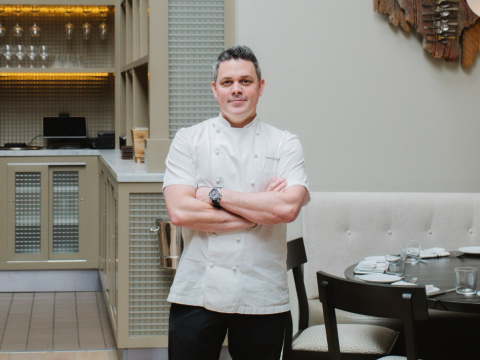
The establishment’s chef, Fabio Vaccarella, has a philosophy that “A perfect meal is prepared not only with the freshest and finest ingredients, but must include a sense of well-being derived from both the service and ambience.” Vaccarella was born in Sicily with a strong gastronomic background; his father was a culinary teacher at the University in Sicily. At first, Mr. Vaccarella was schooled at home in the traditional manner of culinary arts. Eventually, at the young age of 14 he was already taking classes from his father and working at local restaurants during his school lunch breaks.

In 1999, at age 22 Mr. Vaccarella graduated from the Scuola di Cucina per Avviamento Professionale in Rome, Italy. Shortly thereafter he made his way to Miami where he worked at the gourmet Italian restaurant Escopazzo in South Beach. However, in 2003 other interests persuaded him to transfer his employment to Munich, Germany. His employment began with the position as executive chef at La Stanza Ristorante. Mr. Vacarella quickly demonstrated his ability of organizing and running the kitchen in a most professional way. With his experience and management skills he also preceded to take over the role of executive chef in the boutique Hotel La Maison in Germany.

His foray at the helm of Sci Sci’s kitchen has already garnered the attention of Brickell’s culinary crowd, who have packed the restaurant since its soft opening. Tonight marks the establishment’s Grand Opening, which will be celebrated during an invitation-only affair.

1053 SE 1st Ave.
Miami, FL 33131
305.381.4420

http://www.sciscigroup.com/

Sep 29, 2009 11:57 AM
Fall Favorites
by Chef Ron Siegel

“Those are part of the scary vegetable family,” my daughter said to me recently, scrunching up her nose and lips as she eyed the kabocha squash sitting on the kitchen counter. I was forced to chuckle but understood her sentiments. Sweet and with hints of chestnut, the taste of the Japanese squash is delightful, but the look of it could stand for a makeover. The outer layer of the green skin is quite thick, hard, and knotted and it takes time and effort to break it down. Based on aesthetics, marina di chioga squash is no beauty either, but the flavor is one of my favorites. It is watery and sweet and perfect for raviolis. Another prizewinner in the taste category is the hubbard squash, which I will use at the restaurant this fall to concoct lobster stock. The hubbard squash helps thicken the consistency of the stock, complements the natural sweetness of the lobster, and provides a beautiful orange coloring.

This autumn, pink pearl apples will certainly not fall victim of any scary food family stereotype. Each time I work with the fall fruit I have to stare at it with amazement because once cut open, the contrast of the coloring is so electric, it’s hard to believe it is not fake. Recently I have been juicing them with my own homegrown fresh coriander seed, which delivers a nice cilantro flavor.

The bounty that this season has to offer is certain to bring mouthwatering delights not only to my own kitchen, but to your fall dining tables as well. Here are a couple of favorites that will be making an appearance at The Dining Room this fall, as well as an excellent wine, selected by Sommelier Stephane Lacroix.

Cheers,

The Dining Room at the Ritz-Carlton, San Francisco
600 Stockton Street
San Francisco, CA 94108
415.296.7465

Lamb Chops, Globe Squash Blossoms, Elephant Garlic Chips

Serves 4
• 2 French lamb racks
• 12 squash blossoms
• 1 head of elephant garlic
• 6 globe squash
• 3 tablespoons olive oil
• 2 cups vegetable oil
• 1 bunch basil
• 2 ounces Parmesan cheese
• 4 cloves regular garlic
• 2 large shallots
• 1 ounce unsalted butter
• Salt and pepper to taste
Preheat oven to 425 F.
Mince the garlic and shallots together. Sweat in olive oil in sauté pan. Split globe squash in half, then in half-moons. Add to garlic and shallots. Tie the bunch of basil with string and add to squash. Cook until squash breaks down. Add butter and Parmesan cheese. Season to taste and remove from heat.
Stuff squash blossoms with prepared stuffing and set aside.
Split lamb racks into chops. Season with salt and pepper on both sides. Sear in hot pan with olive oil. Cook until desired temperature is reached. Set aside.
Slice elephant garlic on Japanese mandolin and place in pot of cold water. Bring to a boil and blanche. Remove and place on paper towels.
Heat 2 cups of vegetable oil to 325 degrees in large pot. Add chips and cook until lightly golden brown. Remove and season with salt.
Meanwhile, heat stuffed squash blossoms on sheet pan in hot oven. Serve each blossom with lamb chops. Place garlic chips on top of each chop and serve immediately.

Veal Cheeks With Pink Pearl Apple Reduction

Serves 4
Four 3-ounce pieces of veal cheek
• 24 green coriander seeds
• 1 cup pink pearl apple juice
• 1 cup mache
• 2 gravenstein apples
• 2 cloves garlic
• 2 cups chicken stock
• Salt and pepper to taste
• 2 tablespoons vegetable oil
• 1 tablespoon olive oil
Preheat over to 350 F.
Season veal cheeks lightly with salt and pepper on both sides. Put in hot pan with vegetable oil, sear on both sides for 2 to 3 minutes on each side. Let cool.
Take 2 cloves of garlic, smash them with a knife and put in a pot with the 4 veal cheeks. Add chicken stock to cover. Bring to a boil. Cover with foil. Place in heated oven for approximately 3 to 4 hours. Once veal is tender, remove from oven, away from the braising liquid and set aside.
Meanwhile, reduce the pink apple juice over heat by half to three-quarters. Take the apples and slice into 4 thick “steaks.” Season with salt, pepper, and a little olive oil. On a grill or grill pan, grill the apple steaks until tender.
Add the grilled apple on a plate, scatter 6 green coriander seeds on each plate. Slice the veal cheeks, place on top of apples. Cover with mache and drizzle the pink pearl apple reduction on top and around the plate as desired.
Serve.

Domaine Serene, Pinot Noir, Evenstad Reserve, Willamette Valley, 2005

As a perfect complement to the veal cheeks, Sommelier Stephane Lacroix has selected this 2005 Pinot Noir because of the sensual aromas of dark cherry, red raspberry, fresh pomegranate, and earth. The palate has been described as lithe in texture, ripe and smooth, expressing black currant, violet, and spice notes, with a persistent and seamless finish.

Sep 29, 2009 11:56 AM
Touring New York City Architecture
by Christina Bohnstengel

Openhousenewyork will present the 7th Annual openhousenewyork Weekend, October 10 and 11, with an opening party on Friday, October 9, at The Visionare. OHNY will provide free access to sites that showcase New York City’s rich architectural, design, engineering, and cultural heritage. More than 175,000 people are expected to participate in the event, which in past years has drawn audiences from beyond the five boroughs to encompass all 50 states and many nations around the world.

The Center for Architecture will serve as the OHNY Welcome Center and host of the two-day OHNY Weekend Family Festival, sponsored by Target. The festival will include hands-on activities and workshops organized by groups like the Friends of the Upper East Side Historic Districts, The Noble Maritime Center, Solar One, South Street Seaport Museum, Greenwich Village Society for Historic Preservation, and the Trust for Architectural Easements, as well as Center for Architecture Foundation, among others.

Some of the participating sites include tours The Visionaire, a new participating site and the greenest residential development in the United States; Apollo Theater, recently renovated by Beyer Blinder and Belle Architects; the Atlantic Avenue Tunnel, the world’s oldest subway tunnel; High Line designed by James Corner Field Operations with architects Diller Scofidio + Renfro; the Standard Hotel by Todd Schliemann of Polshek Partnership Architects; the Richard Meier and Partners Model Museum; the Slot House in Fort Greene, Brooklyn by noroof architects; and Brooklyn Makes, a self-guided tour that features a series of video projections on building facades that depict what goes on in these buildings.

Radio City Music Hall will be one of the other perennial favorites that will be opening their doors to the public, among 13 others.

Tickets are $30 each when purchased in advance or $40 at the door.

Sep 29, 2009 11:53 AM
Luxury Events and Travel
by Olivia Hsu Decker

While the opening nights of the San Francisco Opera and Symphony in early September officially mark the beginning of our social season, all summer my calendar has been packed with events and globetrotting adventures. I am happy to share details with you from my travels, as well as offer a preview of the two magical evenings that will usher in the beginning of the four-month period when high-society itineraries will be laden with fabulous gatherings benefitting worthy causes.
Pebble Beach Concours d’Elegance
Pebble Beach, California
www.PebbleBeachConcours.net

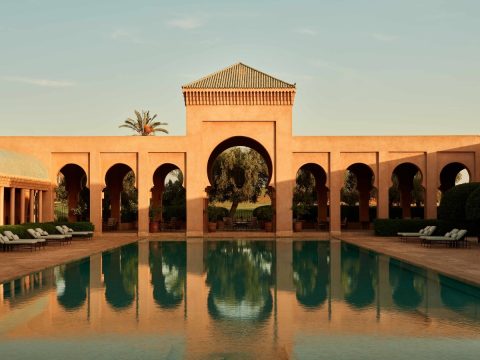
For the past 59 years, the Pebble Beach Concours d’Elegance has served as a Mecca for car aficionados the world over. The annual vintage car show is held on the beautiful 18th hole of the prestigious Pebble Beach Golf Links at the Pebble Beach Lodge, with the blue sea and green fairway serving as a picturesque backdrop for the fine autos. Car collectors and dealers from around the world come to exhibit their vintage cars and participate in competitions with proceeds going to various local charities. In recent years, new deluxe models from the likes of Bentley, Rolls-Royce, Bugatti, Spyker, and Maybach have added to the side events, which also include several vintage car auctions.

I was first introduced to this event in 1979 by my client and world-class vintage car collector Arturo Keller, and I have been paying an annual visit ever since. It’s not easy to resist falling in love with the amazingly elegant driving machines that, for the most part, are hand-made works of art from a bygone era.

This year, I also attended the Gooding & Company Pebble Beach Auction on Saturday evening, August 15, and had to wonder, “What recession?” as I watched more than $100 million worth of vintage cars being sold in one evening. A fellow spectator gasped, “They don’t even drive these cars!” Indeed, these prized vintage autos are mostly for display as if in an art museum, never taken out on the roads. But just like works of art, fine wines, or luxury homes, fine vintage cars appreciate in value, making them a sound investment.

Opening Night of the Symphony
San Francisco, California
www.SFSymphony.org

On September 9, San Francisco Symphony Music Director Michael Tilson Thomas’ 15th-anniversary season opens with classical music sensation Lang Lang. This 27-year-old piano virtuoso electrifies audiences around the globe, and on this night will bring his mastery to the stage of Davies Symphony Hall. My niece Kimberly, who “dated” Lang Lang when she studied at Harvard, remains good friends with him. I am looking forward to meeting him off stage.

The celebration starts with a pre-concert Champagne Promenade amidst the sparkle and glow of the Davies Symphony Hall’s grand lobbies. Following the concert, the party will continue with cocktails, savories, live entertainment, and dancing at the post-concert party open to all ticketholders. This is the biggest fundraising event for the San Francisco Symphony. All proceeds benefit the Orchestra’s education and community programs, providing music education to more than 75,000 Bay Area children each year. The Opening Night Gala Chair, Jessa Wu, is also profiled in this issue where she discusses the programs’ impact in more detail.

Opera Ball

San Francisco, California
www.SFOpera.org

Once a year in early September, the San Francisco Opera Guild kicks off the social season with the Opera Ball, the Bay Area’s most glamorous annual event. The guests dress in their finest black-ties and evening gowns to celebrate a good cause; 100 percent of Opera Ball proceeds benefit much-needed music education for more than 50,000 Bay Area children each year.

On September 11, Opera Ball 2009 will open the San Francisco Opera’s 87th season and honor the incoming music director, Nicola Luiotti, with a magical evening of fine dining, dancing, and world-class opera. The festivities start at 5 p.m. with a welcome reception of savory hors d’oeuvres, cocktails, and wines, at the historic Veterans Memorial Opera House. Immediately following the performance of Verdi’s Il Trovatore, guests will adjourn to the stunning grandeur of City Hall, which will be lavishly decorated by former Haute Ambassador Stanlee Gatti for this special occasion.

This year’s Opera Ball is co-chaired by Teresa Medearis and Adrianna Pope Sullivan, who are profiled in this edition. I was co-chair of Opera Ball 2002, following the 9/11 tragedy and recession in 2001 when nobody was in the mood for partying and spending. To this day, it remains the most unforgettable event I have ever organized. With the help of the Opera Guild staff and fellow members of the board of directors, co-chair Marie Massocca and I worked tirelessly for nearly 10 months to accomplish the goal of a “sold out” Ball, despite ticket prices that ranged from $850 to $2,500 each.

Cruising the Croatian Coast

The Croatian Coast has developed into a major attraction for the yachting world and global tourists in recent years. The long and scenic seaboard and the dozens of beautiful islands teaming with Dalmatian culture were the focus of my August trip to the region. I was invited by a client as guest on one of his three yachts he took out for this trip, the 176-foot  Sea Force One (www.SeaForceOneYacht.com).

I began the journey in the historic Dubrovnik (www.Dubrovnik.hr), one of the most beautiful and best-preserved medieval cities in Europe. I was impressed by how clean and well kept this 1,400-year-old city is, and how friendly (and mostly English-speaking)the residents are. The entire city, as well as the splendid walls surrounding it, is made of ancient stones that blessedly endured over the centuries during various wars.

Our next stop was Split, the second largest city in Croatia and the main harbor for boats en route to the most popular island Hvar, a high-life party resort often referred to as the Saint-Tropez of Croatia. We bypassed Hvar and headed north to Kornati Islands National Park, where most of the islands are barren, with only rocks and simple tiny villages on small bays. We anchored out in a peaceful bay, and discovered the next morning that we were the “scandal” on the front page of the local newspaper. Our three yachts were blamed for disturbing the sheep, which were hesitant to drink the bay water due to our presence.

My final stop was in the region of Sibenik and Skradin (www.npkrka.hr). We docked at the picturesque Skradin Marina and explored the charming village and the Krka National Park, home to the Krka Waterfalls. There are seven falls in all, with a total drop of nearly 800 feet. The seventh and the longest of these at Skradinski Buk has a network of walkways, bridges, and raised viewing points to help visitors appreciate one of Croatia’s most breathtaking natural beauties. Local boats leave from the Skradin Marina for the park every half-hour. Visitors are not only allowed to walk up to the top of the waterfall, but also to swim right underneath the cascading waters. One week is certainly not enough time to enjoy and fully appreciate this beautiful country. I regretted I didn’t accept my client’s eight-week invitation!

Happy Travels,

Olivia Hsu Decker
www.SanFranciscoFineHomes.com
www.FrenchVacation.com
Olivia.HsuDecker@SothebysRealty.com

Sep 29, 2009 11:52 AM
Through the Grape Vine
by Genevieve Janssens

In Napa Valley, we have such interesting weather that I honestly believe the region stands amongst the best in the world for producing incredible wines. Our proximity to the Pacific Ocean allows for a distinctive climate during the growing season consisting of warm days and cool evenings. In the summer months we see heavy fog in the morning hours, which protects the fruit from dehydration during the hot days. Winter and spring rainfall levels determine the viticultural practices that are needed in each vineyard throughout California’s renowned wine country. But regardless of where the wine is produced, a complete and comprehensive relationship must exist between viticulturalists and winemakers to nurture the vineyards all the way up to picking.

Napa Valley vintages are evolving with time and each year I recognize superb qualities. Although I can’t claim an absolute favorite, I do have cherished memories that include the long, cool growing season we saw in 1991. This allowed winemakers the luxury to let the fruit hang and develop flavors in the skin. We had a long harvest season so it was a very rewarding vintage that tastes excellent today.

On the contrary, 1999 was the coolest year of the decade, until the end of September, when it became the hottest. The pace of the harvest that year changed from one day to the next, rapidly transitioning from slowly to very fast. We harvested 60 percent of our crop in only 10 days in late September, something that had never been done before.  We produced beautiful wines that are showing well right now.

In 2004, we had a moderately rainy, warm winter followed by a dry spring, giving an early start to the growing season. Temperatures throughout the summer were relatively mild with fog lingering until late morning. This condition fostered high quality grapes. The harvest finished earlier than usual with no bad weather events, again producing an outstanding tasting wine.

The beauty of our To Kalon vineyard is that it is located in Oakville Appellation, in the center of Napa Valley. It is a highly recognized region for producing great Cabernet Sauvignon and Sauvignon Blanc.

Here are some of the standouts that I have been indulging in lately.

Cheers,
Genevieve Janssens
Director of Winemaking at Robert Mondavi Winery

1999
Cabernet Sauvignon Reserve
Napa Valley

I adore all of the Robert Mondavi wines, but I must admit a special place in my heart for the To Kalon Vineyard varietals. With some vineyards that were planted in 1945, ’55, and in the ’70s, the age of the vineyard gives the grapes uniqueness in depth and complexity. This was one of Mr. Mondavi’s favorite varieties as well, and it leaves me with fond memories of the great master.

The 1999 Cabernet Sauvignon Reserve tastes very fresh and young at the present time. It reflects the brightness of the vintage. It posses an engaging nose with a wonderful mature black olive and dark ripe blackberry aromas woven with hints of cigar ash and spicy notes.

The structure is very powerful with soft tannins adding breadth to the lengthy finish. The wine is also smooth and balanced, leaving a wonderful memory.

2004
Fumé Blanc Reserve
To Kalon Vineyard

Quality is always my motto when considering my favorite wines. Mr. Mondavi’s recommendation was to “Follow your passion. Pour your heart and soul into it. And settle for nothing less than excellence.” For me, this Fumé Blanc Reserve is a perfect depiction of that motto. In 2000, we built a special cellar that houses both this wine along with the Cabernet Sauvignon Reserve.

It is a sophisticated wine that demonstrates the power and grace of To Kalon Vineyard’s terroir. It is a complex, multilayered interplay of floral-tinged fruit aromas and flavors supported by underlying minerality and crisp acids.

2005
Cabernet Sauvignon
Oakville, Napa Valley

Overall, 2005 was significantly cooler than usual. This cool weather brought seductive aromas of juicy berries mingled with violets and earthy black truffle.

In the mouth, muscular tannins are sheathed in rich fruit–blackberry and plum interwoven with subtle oak and a touch of chocolate on the long finish. This is a wine of harmony and generosity with excellent density.

Sep 29, 2009 11:50 AM
Renaissance Man
by Stephanie Wilson

Tad Taube entered the American workforce almost 70 years ago when he first stepped in front of a camera for a role in a feature film. He played an immigrant child who was bullied by the neighborhood kids during an epic pickup baseball game. The character prevailed over the adversity, and hit the game-winning homerun, thus also winning over the affections of his contemporaries.

It’s a common tale that has had many reincarnations throughout cinematic history. The reason for the story’s prevalence is because it so often mirrors real life; in fact, it could be used as a sweeping synopsis of the life of that former child actor himself.

Taube was born in Poland in 1931, a child of a middle- to upper-class family. But when the Nazi invasion took place, his family and foundation were rocked to the core, and they eventually immigrated to the United States, settling first in New York before moving west to Los Angeles, which is where he got his early start in the film industry. It was the first of many careers, all of which would teach Taube invaluable life and business lessons that are being applied today in his work at his three San Francisco-based philanthropies dedicated to the benefit of Bay Area communities and Israel, the Koret Foundation and his two Taube Foundations.

After attending Stanford, war once again shaped his life path. The Korean War was raging, and Taube was eligible for the draft. A deferment was available for engineering students, so he opted to enter the program. In graduate school, Taube pursued a degree in industrial management, a hybrid program between the engineering and business schools. Upon graduation, a career venture that included installing heating equipment piqued his interest in the real estate market. “There were a lot of programs being offered by utility companies that provided incentives to builders to have all gas or all electric homes,” he states. “I was actually in charge of those programs, and learned a lot about the building process, so I started constructing apartment buildings while I was still employed in other pursuits.”

He built a successful real estate empire throughout the San Francisco Bay area, which attracted the attention of the impressive Joe Koret, whom Taube describes as “like me, the beneficiary of the American Dream.” Koret’s family had immigrated to the U.S. from Eastern Europe. Along with his wife Stephanie, Joe owned and operated an apparel company, Koret of California, which was responsible for the development of the first permanent press process. The innovation was a lucrative advancement for the Korets, who began to search for investment opportunities for their newfound wealth. This was when they encountered Taube.

In Tad Taube, they found a worthy advisor and confidant; in the Korets, Taube found lifelong friends and a source of inspiration. “We got to be very close,” Taube explains. “I became part of their extended family, and I really think it’s safe to say that I became involved in every aspect of their lives.” This is especially true for the business aspects. Koret of California evolved into Koracorp Industries, and Taube assumed a role on the board of directors. When the firm hit some rocky financial roads, Taube stepped in as the company’s CEO. While it may have seemed like a risky choice to appoint a real estate professional with the daunting task of turning around a floundering international textile and apparel company, his business background provided him with the skills to know how to handle the situation. A few years (and a bit of legal entanglement with the FCC) later, Koracorp was once again in the black. Exhausted from the arduous climb back to the top, Taube planned a group exit for the Korets and himself from the fashion conglomerate that resulted in a fruitful merger with Levi Strauss & Co.

While the reason for his exit from the apparel industry was to free up time to once again focus on his main passion—real estate—Taube says it wasn’t long before he was “bitten a little bit by the diversity bug.”

This was at the same time that his friend, the late real estate developer Jim Joseph, was helping to develop the now-defunct United States Football League. Taube and Joseph were involved in the planning stages of the spring and summer league, which was to have 12 teams. Taube’s well-honed business eye immediately saw the profitable possibilities of the USFL. “I joined Jim and started going to league meetings, started to get to know the other owners. I started becoming familiar with the business plan, and became intrigued with what I thought was a positive plan. I felt it had a very high chance of success.”

The USFL was announced to the American public during a highly televised press conference at Club 21 in New York City. The evening was presided over by the late Howard Cosell, who later became the voice of Monday Night Football for the NFL. More than a dozen television cameras were trained on the U-shaped table that had 12 seats for the owners. “However, I learned the night before that we only had 11 owners,” recalls Taube. “And that’s not good if you’re going to do a national media blitz announcing a new league!”

The owners prevailed upon Taube to fill the 12th seat for the initial conference as a temporary solution. Upon landing back in San Francisco following the announcement, it quickly became apparent his role was not going to be a fleeting one. “There were at least 50 cameramen with flashbulbs going off in my face, wanting to meet this new Bay Area owner of the local franchise. There was intense interest and publicity at the time. I was locked in at that point—there was no graceful way out.”

The league was launched to provide football fans with their pigskin fix when the NFL was in offseason. For the entire three-year duration of its existence, Taube served as the owner of the Oakland Invaders. The league eventually dissolved, but Taube was involved from inception through the end.

If he was hesitant at the beginning of the USFL to take on a full-time role, it was because he had his hands full with a venture that occupies him to this day. Joe Koret’s wife Stephanie had passed in 1979, and the couple’s communal property and assets were extremely high. During this trying time, Taube and Joe were attempting to preclude the government from taking a large chunk of the fortune in death taxes (at the time, the laws would have left Joe with a mere 25 percent of her estate). Because the Korets had no children, the decision was made to let her estate pass into a charitable trust, The Koret Foundation, which today benefits Bay Area communities, as well as Israel. “When Stephanie’s share went into the Koret Foundation, very significant assets in the range of $40 to $50 million were passed, which was the initial corpus of the Koret Foundation.”

Taube, estate planning attorney Richard Greene, Eugene Friend, and Stanley Herzstein were the initial founding directors, and were eventually joined by Joe’s second wife Susan. Joe worked as the foundation’s first chairman until his death in 1982, at which time his portion of the family’s estate also flowed into the foundation and Taube assumed the role of president and CEO. Under his watchful eye, the foundation’s assets ballooned from $100 million at the time of Joe’s death to more than $400 million today.

Taube’s ample business experience provided him with a strong basis for running the philanthropy, but he does say that it is a complicated field. “Initially there is a lot of excitement about having the ability to give away all of this money, but you learn pretty quickly that actually earning it may be easier than giving it away intelligently.”

Inspired by his work with the Koret Foundation, Taube launched the Taube Family Foundation and, more recently, the Taube Foundation for Jewish Life and Culture. Explaining the relationship between the three foundations, he says, “I learned a lot from the Koret Foundation. It gave me a model—an example—of what could be done.” The foundations’ missions intersect often, and these are collaborations that allow them to accomplish more than if they were trying to make a difference separately. “The whole philanthropic process doesn’t function unless the project funded has a significant impact,” he explains. “And the way that you tend to get impact more often—although I am not suggesting this is the only way—is by the amount of funding that you can commit. So by having collaborative relationships with other funders and philanthropies, the partners in those collaborations each gain a greater level of impact than they could achieve by themselves.”

One of the joint projects that is making quite the impact is the Taube Koret Campus for Jewish Life in Palo Alto. The center is a multigenerational destination where individuals and families can live, learn, play, and connect. “It’s probably the largest Jewish project ever conceived in Northern California….It pretty much spans the gamut of Jewish communal life. The Koret and Taube philanthropies each made a $10 million commitment to that project, and we are the lead donors with a combined commitment of $20 million.” They are also teaming up with significant commitments to the Contemporary Jewish Museum in San Francisco, the Hoover Institution at Stanford University, and the California Academy of Sciences in Golden Gate Park.

Taube is able to pursue his own passions through the Taube Foundations, and he gets most excited when speaking of the work on the renaissance of Jewish culture and life in his native Poland, much of which was eradicated during the Nazi invasion in 1939. To help restore the culture’s 1,000-year history in the area, the Taube and Koret foundations are involved in building what will be one of the most important Jewish museums in the world—The Museum of the History of Polish Jews, in Warsaw, Poland. “It will not be a Holocaust museum; it will be dedicated to that golden era of Jewish history, that 1,000 years that did so much to shape Western culture.”

Taube’s life story is most certainly an example of the American Dream. He came to the U.S. while dire circumstances raged in his homeland, but was able to persevere and grow elaborate careers in a variety of fields. But he never forgot his roots; the latest chapter in his long life has been dedicated to the betterment of his native people, which helps complete his circle of life.

Sep 29, 2009 11:47 AM
The Master of Joie de Vivre
by Christina Bohnstengel

Just what is the value of a Stanford education amounting to these days? Ask Chip Conley his opinion, and it may have prospective MBA students flooding Stanford’s admissions office with application requests.

Today Chip Conley is a successful entrepreneur who has taken the skills he learned at the prestigious West Coast school, combined them with his innate enthusiasm for uncovering the true joys of life, and created an empire that umbrellas everything from his luxury boutique hospitality chain to a collection of business motivational materials aimed to inspire other innovative entrepreneurs to experience a similar level of success.

Joie de Vivre Hospitality is the second largest independent boutique hotel chain in the U.S and the largest independent hospitality company in the State of California. Headquartered in San Francisco, Conley’s luxury lodging kingdom includes more than 40 hotels, day spas, and restaurants throughout the state. And while many hotels are facing financial difficulties in 2009, Conley’s Joie de Vivre is succeeding and expanding during a time when retraction is the fiscal tactic that many employ.

Ask Conley, the founder and CEO of Joie de Vivre and the author of PEAK: How Great Companies Get Their Mojo, to describe the business model of Joie de Vivre and he will tell you that the purpose behind each of his lifestyle companies is to introduce a venue “full of soul and personality.”

What started in 1987 as just one hotel, inspired by and designed after Rolling Stone magazine, today is a collection of landmark destinations that attract the hippest trendsetters from Hollywood and beyond. Drawing upon his Stanford education, Conley, a Long Beach native, unlocked a secret to building a brand based on connecting with his guests on an emotional level. Instead of employing the standard business approach of pinpointing the demographic profile of his guests, he has created a psychographic method for catering to their wants and needs. He has clearly tapped into a winning formula, as he was named one of four finalists in 2008 for the “Corporate Hotelier of the World” award by Hotels magazine.

At a mere 26 years old, Conley first ventured into the hospitality industry after determining that a career in massage therapy was not the best use of his educational background. Without the safety net of a trust fund or inheritance assets, he took a leap of faith and, with no industry experience, opened the doors to the legendary Phoenix Hotel, and thus thrust open the doors to a whole new life. “I reached a point where I was very unsatisfied with the ‘business as usual’ approach to the corporate world. My options were to be a massage therapist with an MBA, be a screenwriter, or start a hotel. It was just a strange turning point and I had a monumental life decision to make,” explains Conley. “The Phoenix was in foreclosure and fortunately I was able to take the skills that I learned at Stanford, solicit investors, and buy it out of bankruptcy. I took quite a chance because that location is where lots of seedy things were going on. But I decided to go for it, knowing that I had other skills to fall back on if it failed.” Fortunately failure was not an option in the life and career of Chip Conley, and he was able to transform a sleazy hotel in a sordid neighborhood into one of the hottest hotels in San Francisco, catering to some of the biggest names in the music industry.

The Phoenix redefined the way that celebrities and the elitist of trendsetters spend their evenings away from home. Reminiscent of a retro hotel in Palm Springs, the focal point is the small, heated pool in the center of the courtyard, with mural art from Francis Forlenza and a modern sculpture garden. The self-proclaimed rock ‘n’ roll hotel employs Conley’s model for all of his design motifs, which is to fashion each one after a specific magazine. But Conley warns that The Phoenix isn’t for everyone. “It is certainly funky, bold, and eclectic,” he says, “but it’s at the edge of the Tenderloin neighborhood, which is a bit too edgy for some.” But it is undoubtedly a good fit for the subjects profiled in the pages of its print inspiration. Some of the music industry’s greatest avant-garde legends have rested their weary heads on The Phoenix’s beds. From David Bowie, Joan Jett, the Red Hot Chili Peppers, and Psychedelic Furs, to sizzling up-and-comers like The Killers and Bloc Party, to urbanite hipsters like Moby, Franz Ferdinand, and Interpol, The Phoenix has reigned as one of the cooler-than-thou crashing pads for pop culture icons visiting the City by the Bay.

While Hotel Avante in Silicon Valley is a Wired-inspired masterpiece and Hotel Rex in Union Square aims to embody the New York Times, it is Hotel Vitale, the upscale venue located across from the historic Ferry Building Marketplace in the Embarcadero waterfront region that is the flagship of the prospering Joie de Vivre brand. Following a Dwell-meets-Real Simple design motif, the circular suites tout infinity views of the San Francisco Bay. “Hotel Vitale is one of my favorites in the Joie de Vivre collection,” explains Conley. “I see it as the perfect fit for that guest who is ready to graduate from what the W has to offer, but still wants something less stuffy than the Four Seasons.”

At a time when small businesses and large corporations alike are scaling back, cutting corners, and saving expansions for the second decade of the 21st century, Conley is taking Joie de Vivre Hospitality to new heights through the unique restaurants and innovative day spas that grace the interiors of his boutique hotels. In June, the company announced the completion of the extensive 18-month-long renovations to the Dream Inn, the only beachfront hotel located in Santa Cruz. The multimillion-dollar upgrades converted the property into a four-star oceanfront hotel, which also included the new 2,900-square-foot Aquarius restaurant, a sophisticated version of the American bistro designed by DPS Interiors, which opened this summer. Conley explained that the inspiration behind Aquarius was to incorporate California’s culture of embracing sustainably harvested seafood, organic produce, and the appreciation of fine wines. “I wanted to create a soft and inviting destination restaurant for any guests coming to the area, whether staying at Dream Inn or not. It is a restaurant for anyone with a palate for the finer things in life, from the ambiance to the menu ingredients.”

Another restaurant to open under Joie de Vivre’s California umbrella in 2009 was midi, a French-style brasserie situated at what San Franciscans identify as the “mid-district,” the crossroads of Union Square and the financial district. Former “Rising Star Chef” Michelle Mah is serving up old-world classic dinner entrées that incorporate her 21st century twist, such as braised lamb shoulder with eggplant caviar, roasted toybox squash, roasted peppers, and olive tapenade butter.

In addition to the restaurant openings, Conley’s innovative day spas are the newest integration in the Joie de Vivre brand. Currently there are four: Allegria Spa at Ventana Inn & Spa, in Big Sur; Kabuki Springs & Spa, in San Francisco’s Japantown; Spa Elia, in Hotel Los Gatos; and Hotel Vitale’s luxe Spa Vitale.

Other bold expansion plans along the West Coast that have recently been completed include his newest hotel property in Venice Beach, Hotel Erwin, which celebrated a grand opening in the summer of 2009. The location of the hotel, overlooking Muscle Beach and the famous Jim Morrison mural, is reflected in the design with pop-inspired furnishings and graffiti-style art lining the halls and guestroom doors. And Joie de Vivre spent nearly $20 million on renovations to Hotel Maya, the 11-acre waterfront property that is sure to become Long Beach’s most exquisite four-star hotel.

The last year has proven to be quite the successful one for Conley and Joie de Vivre. In addition to his freedom of expansion, he also celebrated the success of San Francisco’s Hotel Carlton, which won the “2009 Innovation Award” from the Hotel Hero Awards.

With nearly $250 million in revenues, more than 3,000 employees, and an advertising budget that is often less than $50,000 annually, Conley’s award-winning formula for enjoying life and business has earned his company the title of the “Second Best Place to Work in the San Francisco Bay Area in 2008” and multiple mentions in well-respected national publications such as TIME, Fortune, and the Wall Street Journal. “It is not by accident that the mission statement of Joie de Vivre, ‘Creating opportunities to celebrate the joy of life’ was created by the staff members,” says Conley. “They embody my philosophies on the best methods and tactics for succeeding in business and embracing everything spectacular that life has to offer. At Joie de Vivre, we want to create more joy in the lives of our guests, knowing that when they leave one of our venues with more joy in their own hearts, they can’t help but pass it on. It’s what we like to think of as ‘karmic capitalism.’”

Sep 29, 2009 11:45 AM
Related Posts
Joie de Vivre, California's hottest boutique hotel company, is expanding to Scottsdale, Arizona. The expansion marks the company's first property outside of California and the launch of their sweep through the country with plans for openings in Seattle, Miami, and Chicago in the coming years. The co...
by Haute Living, Jul 9, 2011 5:04 AM
 
Since 2001, trendy women's clothing label Joie has been filling the closets of the fashionable elite with its contemporary style and modern designs. The company started with its signature cargo pants, but has now has added more feminine tops, dresses, and cashmere sweaters while keeping its signatur...
by Rochelle Fletcher, May 26, 2011 11:08 AM
 
In this issue, the woman behind Vivre and its various related businesses (Vivre.com, Vivre Signature Collections, V by Eva, to name a few) shares a typical day’s events with us. Three things dominate the ultra-chic entrepreneur’s busy schedule: her kids, her Blackberry, and plenty of espresso.
by Alexandra Delgado, Aug 11, 2011 1:23 PM
 
John Pritzker of the Chicago family and New York City's Pomeranc family have officially decided to unite their hotel businesses.
by Amanda Lang, Oct 4, 2011 2:48 PM
 
John Pritzker and New York’s Pomeranc family have combined their high-end hotel businesses into a single operator of hotels that will range from West Coats boutiques to East Coast luxury properties.
by Alison Agudo, Oct 4, 2011 8:22 AM
 
Paris is a magical city, where anything seems possible. There is a feeling in Paris that is very different from that in London or Milan. The city is rich in history, and preserves a sense of classic elegance.
by Haute Living, Aug 4, 2011 3:37 AM
 
This issue of Haute Living Miami features a look inside the home of construction entrepreneur Raul Casares, the man behind Apogee, Icon South Beach, Trump Towers and more. Read about what makes Casares’ home a reflection of himself and his company.
by Alexandra Delgado, Aug 17, 2011 10:45 PM
 
by Haute Living, Aug 4, 2011 10:49 AM
 
Eva Jeanbart-Lorenzotti is the visionary behind Vivre, the first editorially-rich catalogue-magazine that reaches more than two million customers a year. She’s also the creator of Vivre.com, Vivre Signature Collections, V by Eva and boutique and lifestyle concepts for leading hotels.
by Casey Brooks, Jun 22, 2011 2:29 AM
 
In this issue, the woman behind Vivre and its various related businesses shares a typical day’s events with us. Three things dominate the ultra-chic entrepreneur’s busy schedule: her kids, her Blackberry, and plenty of espresso.
by Alexandra Delgado, Jul 31, 2011 4:52 AM


CURATORS
 
TOP 5
 
Los Angeles Jan/Feb 2012
 
HAUTE 100
Grammy-nominated songwriter Denise Rich has put her 12,000 square foot apartment on the market for $...
 
HAUTE SECRETS
Wendy Williams is a former 20 plus year radio veteran and now is the host of the successful daytime ...

You need to install or upgrade Flash Player to view this content, install or upgrade by clicking here.

Haute Videos: Eva Longoria Video
FASHION :: COUPLES’ RETREAT COUPLES’ RETREAT With the resort collections oozing throw back references, a high-society escape to the confines of a once-again-new Eden Roc Renaissance Miami Beach is the perfect scene of the crime for two couples to get caught up in the swing of things.
© HAUTE MEDIA GROUP 2011