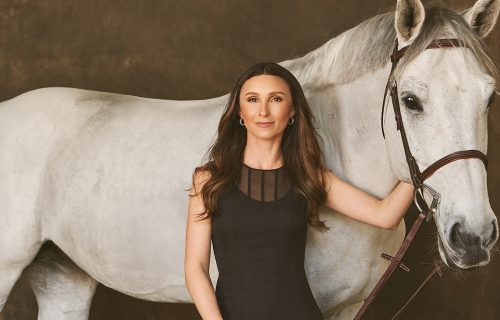

Rosalina inherited her mother’s talent and eye for beauty, putting them to good use with the launch of the acclaimed line, Jewelry by Rosalina. Her celebrated and highly unique collections are coveted by the likes of entertainment royalty Elton John, Danielle Steele, and Gisele Bundchen, so it was fitting that the Miss Universe Pageant selected the designer to create the crown for the 2008 winner.
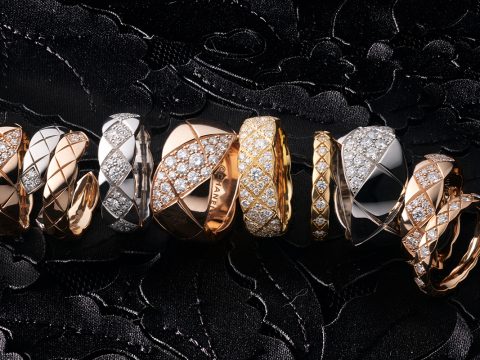
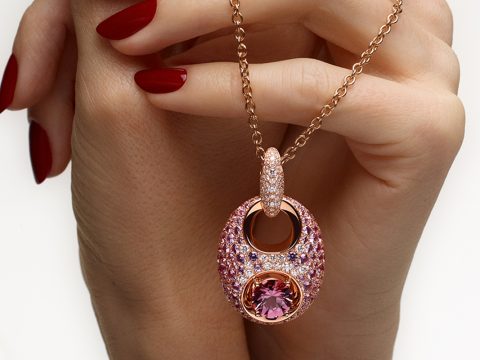
Rosalina’s pieces are lavish and intricate, made with only the finest stones and precious metals available. Beyond the classical settings and styles, Rosalina often plays with the whimsical; her line ranges from striking pendants of fire-breathing dragons to eye-catching cocktail rings depicting wild animals such as a gaping-mouthed gorilla or a black-diamond toucan bird clutching a yellow sapphire in its beak. Clients are just as likely to encounter hibiscus-shaped earrings dripping in diamonds and sapphires as they are to find classic chandeliers made from diamonds and pearls. From the weaving bracelets and cuffs to one-of-a-kind necklaces and pins, all of the jewelry is designed to be a conversation starter. And that discussion typically begins with, “Wow, where did you find that?” The answer: Neiman Marcus, which carries her line across the country. Custom creations are also Rosalina’s forte, and feel free to dream big and wild-it is what she does best.
Jewelry by Rosalina
415.981.9066
www.jewelrybyrosalina.com
By Natasha Dorsainvil
If a waft of motor oil sends you into a welcomed, dreamy daze and the sight of a classically-restored piece of automotive machinery sends a wave of chills up your spine, a visit to Pebble Beach and Monterey this August will be teeming with many reasons to faint.

For an extended weekend this summer, two prominent golf courses and a private airport in Northern California will host three elite auto events. More than just glittery car shows, the exhibitions will showcase an auto enthusiast’s dream menu of yesterday’s classic models and tomorrow’s ultra sophisticated concepts.
Pebble Beach Automotive Weekend will kick off on Wednesday, August 12, and will conclude on Sunday, August 16, with the 59th Annual Pebble Beach Concours d’Elegance. Set on the scenic 18th fairway of the world-renowned Pebble Beach Golf Links, this year’s event aims to add to the $12 million already secured from years of fundraising efforts, with Pebble Beach Company Foundation, United Way Monterey County, and Boys & Girls Clubs of Monterey County designated as the 2009 nonprofit beneficiaries. The start of the celebration of all things auto will be marked by the VIP-only McCall Motorworks Revival 2009, which will support the efforts of the California Highway Patrol Foundation and the Naval Postgraduate School Foundation. Just east of these events, the Concorso Italiano plans to showcase approximately 1,000 of the best in Italian automobiles and motorcycles at its Laguna Seca Golf Ranch location on Friday.
But these are not the only events that will have auto aficionados salivating. Stay on track of all the week’s happenings with this daily guide to all things auto.
WEDNESDAY, AUGUST 12
Pebble Beach Motoring Classic Exhibit and Auction Viewing
Long before your arrival to Pebble Beach, a caravan will have embarked upon a 1,500-mile journey from just outside of Seattle, Washington. The elegant automotive train, which consisted of up to 30 entrants from past and present Pebble Beach Concours events, departed on August 3 and, during the course of 10 days, wound through the Cascades with views of the Pacific Coast as a constant driving companion. The journey ends today, with a grand entrance at The Lodge at Pebble Beach before an audience of auto lovers, who will, no doubt, be eagerly awaiting the arrival with childlike expectation.
After celebrating the end of the Motoring Classic, stop by the Pebble Beach Equestrian Center to admire the automotive masterpieces that will be entered in the Pebble Beach Auction, presented by famed auction house, Gooding & Company. Last year’s lots included a 1963 Shelby 289 Cobra, a 1925 Rolls-Royce Phantom I, and a 1965 Ferrari 275 GTB. The participating vehicles will be on display through Sunday, August 16, though the bidding starts on the 15th.
McCall Motorworks Revival 2009
Celebrating its 18th year, the McCall Motorworks Revival is billed as the area’s most exclusive luxury lifestyle annual event during the busy week. Held on charming Monterey Peninsula, the location is idyllic for the discriminating VIP crowd of more than 2,500. The Monterey Jet Center will treat guests to an evening packed with elegant, yet powerful autos and jetcraft from Porsche, Gulfstream, Bombardier, Piaggio, and others. The select invitees will enjoy free rein of the generous hangar and tarmac venue, mingling alongside racetrack legends like Jim Hall, Wayne Rainey, and Jim Busby, just to name a few. The region’s renowned chefs will be showcasing their own culinary delights, paired with award-winning wines and French Champagne.
THURSDAY, AUGUST 13
Pebble Beach Tour d’Elegance and Exhibits
To continue your ultimate auto aficionado week, begin your Thursday with motorized art appreciation. The cars featured in this Rolex-sponsored driving event will also rev their engines for the Concours D’Elegance. For tour drivers, part of the parade route will include the scenic 17-Mile Drive, offering breathtaking views of the Pacific Ocean, rolling emerald courses, and perhaps a peek at a pod of seals. A scheduled stop at Carmel-by-the-Sea will energize entrants with a gourmet lunch and camaraderie that is sure to provide ample shoptalk while perusing the Ocean Avenue displays. The tour ends at 3 p.m. with a Champagne welcome for participants at Pebble Beach.
Thursday also marks the start of the highly anticipated auto exhibitions. For those not taking part in the Tour d’Elegance, the special manufacturers’ displays always prove to be quite the crowd-pleaser. Ferrari, Infiniti, Lexus, and Mercedes-Benz are just some of the revered names who will be eager to whet your automotive appetite. The exhibitions will continue through Sunday, August 16.
FRIDAY, AUGUST 14
Pebble Beach RetroAuto
Buy, sell, and appreciate memorabilia from the world of automobilia at the RetroAuto pavilion. From historic auto parts to luxury add-ons designed to boost the driving experience, to fine art and photography, an abundance of retail temptations will goad you into boosting the economy until the exhibit ends on Sunday.
Concorso Italiano in Monterey
For those with a weakness for Italian craftsmanship, Concorso Italiano in nearby Monterey should be the first agenda item for Friday. In its 24th year, the Concorso will celebrate the 25th anniversary of the 288 Ferrari GTO and the 50th anniversary of the DeTomaso Pantera at the 2009 event.
Because of the outdoor venue, parking is on the fairway, and flat-soled footwear is highly recommended. While the Concorso will occupy four fairways, the entire Laguna Seca Golf Ranch will be open to participants and spectators. Indulge in sensory overload in your admiration of the exotic Lamborghinis, Fiats, Ferraris, and Maseratis as touching and testing the luxury sensations are encouraged. The Concorso Centerpiece Display will feature rare and unique gems like the Bertone-designed BAT 11, an Alfa Romeo prototype, and a 1965 Ghia Gilda. The Concorso won’t be limited to luxury cars, though. Expect a large presence of Ducati motorcycles and look out for the fuselage of a Piaggio Aero display on the greens. Perhaps the most talked about exhibit is the stunningly lavish Alfa 8C Competizione. Concorso owner Tom McDowell calls the new Alfa 8C an “outside of the box” design that will stir much of enthusiasm among car lovers.
VIP guests can dine on delectable treats at the lunch buffet at Concorso, while spectators and other participants will have plenty of their own divine culinary options from which to choose. Although the event has an Italian theme, the cuisine will follow a mainstream menu to satisfy the varied tastes of those in attendance. After lunch, guests can enjoy a 45-minute fashion show featuring designs from local boutiques.
In the afternoon hours, after showcasing a Fiat from his legendary personal collection, Jay Leno will be awarded the “La Bella Macchina” award in honor of his fervent automotive pursuits. This will be the first time the award is presented to a collector and Leno is sure to bring the bellyaching laughter to the show. During the ceremony, officials will also crown the day’s best car as “Best in Show”. Since 1992, best showing winners have included classes like a 1967 Lamborghini 400 GT, a 1939 Alfa Romeo 6C2500 Super Sport, and a 1953 Maserati A6GCS.
SATURDAY, AUGUST 15
Pebble Beach Auction
Looking for another prized addition to your toy collection? If you’re familiar with the Pebble Beach Auctions from years past, then you know to expect hefty competition from fellow car collectors on this day. Past auctions have pulled in world-record lot sales. A 1936 Duesenberg SJ Speedster once sold for more than $4.45 million and a 1967 Ferrari 275 sold for more than $3.9 million. If other Concours events keep you from staking claim on your vehicle of choice today, be sure to stop by the Equestrian Center for an auction schedule. Sunday will be your last chance to participate in the paddle wars.
SUNDAY, AUGUST 16
Pebble Beach Concours d’Elegance and AFAS Exhibition
Finally, the big day has arrived-the culminating event of Pebble Beach Automotive Weekend. Plan to make your way to the Pebble Beach Golf Links’ 18th fairway by dawn to mark your party’s preferred spot. And though it’s not our style to recommend sensible shoes, for the Concours d’Elegance flats will prove to be your best friend. Grass friendly clothes are also recommended, as the cars on display will be dotted around the fairway waiting to be judged, adored, or purchased, if the price is right. Additionally, don’t forget the picnic gear-an untimely trip for a refill on refreshments might mean you miss one of your favorites in the seemingly endless parade of Bentleys, Bugattis, Audis, Morgans, Ferraris, and antique Packards. If you did not heed our advice and indeed left the picnic back in your luxury suite, pick up a sandwich from the Pebble Beach Market near The Lodge at Pebble Beach conference center or, if you’re in the mood for a sit-down meal, visit the Tap Room or the Gallery Restaurant on The Lodge’s grounds. Just make sure your timing is right because the award presentation begins after 1 p.m. and runs to 4:30 p.m.
Although the Concours d’Elegance is the centerpiece of the Pebble Beach car event, other activities are still running through Sunday. The Automotive Fine Arts Society Exhibition is a good way to wind down what could be called an exhausting week. Still outdoors, you’ll be able to check out the latest works from some of today’s most skilled industry craftspeople and perhaps purchase something that you’ll want show off at next year’s Concours.
By Christina Bohnstengel
Haute Living’s Guide to the Good Life in Sin City

The lights shine brightly in Vegas. So brightly in fact, that from space, it is the most well lit metropolis on the blue planet. And while Parisians may choke on their fois gras when they hear Las Vegans call their fair town “The City of Lights,” the allure of all that sparkles in the Nevada desert cannot be denied.
Las Vegas began the shedding of its reputation as a seedy town for lowbrow hustlers long ago, and like a phoenix rising from the ashes, Vegas has soared to the tops of luxury lifestyle radars. From the award-winning resorts that claim the top stars and diamonds from Mobil and AAA, to shopping venues that have secured some of the most finicky and discerning labels, to the restaurants helmed by America’s accolade-laden celebrity chefs, Las Vegas has evolved beyond being the Entertainment Capital of the World; it has become one of the premier destinations in luxury travel.
Getting There
The first rule in the luxury guide to globe trekking is to arrive in style. This means set your flight plans for a landing at Signature Flight Support at the McCarran International Airport. As a BBA Aviation company, Signature Flight Support boasts itself as the largest fixed base operation and distribution network in the world. Just minutes from the Four Seasons and Mandalay Bay, the LAS FBO offers a 30,000-square-foot hangar that can support a Global/GV, first class pilot and passenger amenities, world-class business aviation terminals, executive conference and meeting areas, comprehensive crew information services, and complimentary aircraft cleaning. Supporting business aviation for more than 60 years, Signature prides itself on a well-earned reputation as specialists in aviation services.
Also on site at LAS is Atlantic Aviation Services. From snooze rooms to conference rooms to the personalized concierge, Atlantic has paid attention to the emerging new world order where quality and service have replaced over-the-top excess as the defining marks of true luxury. Operating an extensive network of FBOs throughout the U.S., Atlantic is ready to meet the needs of pilots, private passengers, and flight crews.
And don’t forget about Haute Jets, our newly launched private charter service that works with all models of luxury air travel, which has access to an amazing fleet that flies to Las Vegas. The company offers on-demand charter, with access to more than 5,000 jets leaving from airports around the world with as little as 12 hours notice. We also provide full concierge service that will arrange catering and ground transportation upon arrival. More information on all of these services can be found on our web site, www.HauteJets.com, where you can explore all of the charter options.
By Christopher Garland
Perry Dye, one of the most prominent golf course designers in the U.S., shares his insight on the creation of the source of so much heartache and pleasure.

The great Bobby Jones, one of the golfing world’s all-time legends, best summed up the omnipresent challenge of golf with one succinct statement:
“Golf is assuredly a mystifying game. It would seem that if a person has hit a golf ball correctly a thousand times, he should be able to duplicate the performance at will. But this is certainly not the case.”
A simple truth, yes, but it matters more when Bobby Jones says it.
Jones, the founding father of the Augusta National Golf Club, home of the Masters Tournament and the U.S course with arguably the greatest sense of history and tradition, didn’t limit himself to only becoming the greatest player of his generation. After his retirement, Jones was one of the first golfers to transition from his career on the greens to a career in designing them. He was instrumental in attracting Dr. Alister Mackenzie, a Scotsman who is one of the world’s most influential course architects, to serve as the head designer of Augusta National.
While Jones’ oft-repeated pronouncement about the difficulty of golf deals directly with the golfer’s ability to “correctly” connect the club head with that maddeningly small white ball, he could have talked about the other major factor: the shape and overall environment of the golf course itself. This, in reality, might be the ultimate obstacle in golf. Not the striking of the ball, but the movement of the ball across a particular space. With the bunkers and fairways, greens and trees, it is the spectacle of this human-crafted nature that fills the eye and delights-or, when things are going bad, haunts-the golfer’s imagination.
The creation of the golf course, the transformation of “unused” space into an area for the activity that Winston Churchill, borrowing liberally from Mark Twain, said was “the best way to ruin a good walk,” is a combination of heavy-duty landscaping, an ability to work in the subtleties that make a course unique, and, maybe more than anything else, a deep love for, and knowledge of, the game of golf.
In an attempt to unravel some of the mysteries of golf course design, Haute Living had the opportunity to speak with Perry O’Neal Dye, one of America’s top course architects, about the process of creating a golf course. Dye’s experience as a course designer is unique in the sense that it is truly a family business, stretching back almost 100 years. Today, the Dye family name is attached to the design of more than 200 golf courses around the world.
In 1922, Perry Dye’s grandfather started the family tradition by designing and constructing a nine-hole course in Urbana, Ohio. However, it was Perry’s father, Paul “Pete” Dye, who would later go on to design courses around the country, including those pictured in this article, and pursue a successful playing career (he finished ahead of both Jack Nicklaus and Arnold Palmer in the 1957 U.S. Open and was inducted into the World Golf Hall of Fame in 2008), and who gave his son a start in the business when Perry was only 12 years old.
This tutelage continued through Dye’s college years, where he was involved in the development of The Country Club of Colorado in Colorado Springs and the Oak Tree Golf Club in Edmond, Oklahoma. From there, Dye and his father have designed numerous courses together, including the Firethorn Golf Club in Lincoln, Nebraska, the Red Mountain Ranch Club in Mesa, Arizona, and the Fuego Maya at La Reunion outside of Antigua, Guatemala. (The last is the course that Dye is most proud of, for a number of reasons including the fact “the property is in the midst of four volcanoes, two of which are active.”)
Dye credits his family and their shared love of golf as two of the primary guiding principles in his career. “My design philosophy is a direct result of my experience,” Dye says. “A major part of that comes from my mother, who taught me about designing golf courses that are playable for women.” This education continues today, due to his family’s continuing love affair with the game. “With a wife and two daughters who are players, I see how important making golf accessible and fun for women has been to our industry.”
Aside from his design philosophy, Dye prides himself on a direct involvement with the growth of a course from an idea on paper to playable holes on grass. When asked what is the first step in designing a golf course, Dye attests that the only way to start is literally from the ground up.
“For me, I need to really get in touch with the ground I am building on. I never want golf holes to seem contrived. I use the natural elements of the land to create the ebb and flow of a golf course,” Dye says. “After I see how the holes will fit into the landscape, I go back and create a preliminary design base map.”
Although the base map is the basic vision for the overarching course design, this does not mean that it is a static plan. This, Dye argues, is what makes it necessary to possess a different mindset for golf course architecture than any other kind of landscape or building design. “My maps are more guides than they are exact maps,” says Dye. “This is a major difference between course design and other forms of architecture. We can dictate where the holes go, but as things start to take shape, they often change.”
Dye works from the position of a golfer and refutes the idea that golf course design is a largely theoretical proposition, despite the philosophy that underlines all of his designs. “Great inspiration always comes in the field,” he says. “Not in front of a computer.”
The other element of course architecture that Dye stresses is the individual touch. Like when one enters a building designed by Zaha Hadid or Frank Gehry, Dye has a desire to spread the Dye course style. “I want every golfer who steps on one of my courses to instantly know who designed it, and to have a memorable experience,” Dye says. “Whether you play well or terribly, you always remember a Dye design.”
In our second installment of The Legendary Estates of Beverly Hills, Jeffrey Hyland gives Haute Living readers an insider’s peak at the history of two of these spectacular properties. For more of the goods, the 430-page, 12-inch by 16-inch book can be ordered on www.thelegendaryestatesofbeverlyhills.com.

The Buster Keaton Estate
Beverly Hills
In Hollywood’s “Golden Age” of the 1920s, any actor or actress worth “top billing” lived in a showplace Beverly Hills estate. One of those favored stars was Buster Keaton, the sad-faced comedian and talented film director.
When Keaton showed guests around his 20-room Italian Renaissance-style mansion, three blocks behind the Beverly Hills Hotel, he sometimes joked, “I took a lot of pratfalls to build that dump.”
Keaton had mixed emotions about the 3.5-acre estate, which was completed in 1926. He had worked with the architect on its design, and he proudly showed off the mansion in his film, Parlor, Bedroom and Bath (1931). Yet, he also felt forced into this very expensive residence by his wife Natalie, who was desperate to keep up with her sisters Constance and Norma Talmadge, who were major stars in the 1920s. Natalie-the least attractive and least famous of the three sisters-refused to be photographed in the same outfit twice, and she reportedly spent $1,000 a week ($12,000 in 2009 dollars) on clothes.
With these spendthrift ways, Natalie Talmadge was not only indulging herself, she was getting back at Buster. Before moving into the mansion with their two young sons, Joseph and Robert, Natalie told Buster that she hated him and refused any further conjugal rights.
The 29-year-old Buster, in turn, informed his wife that he would accept her decision and have affairs outside the marriage. He kept his word and regularly slipped out of the house by an exterior staircase off his bedroom. Natalie had him followed by private detectives.
Despite their charade of a marriage, the Keatons kept up the celebrity lifestyle of showy cars, clothes, and entertainment. At some events, Buster shouted out to guests from the second-floor balcony overlooking the two-story-tall entrance hall, then grabbed a specially reinforced drapery that allowed him to swing from the staircase landing down to the first floor living room. Guests always loved Keaton’s grand entrance.
Buster entertained his many actor friends at the estate. “We used to have poker parties where a man would win or lose $50,000 ($600,000 today) in an evening and either way didn’t worry about it,” Buster recalled years later. “He could always make another picture.” Keaton even owned a little-used yacht that cost $120,000 ($1.5 million today).
Such extravagance proved to be Buster Keaton’s downfall. He lost most of his fortune in the 1929 stock market crash, and films were not going to be his financial salvation, because his career was spiraling downward. In 1932, Buster moved out of the mansion, Natalie divorced him, and he declared bankruptcy. Keaton-always the trooper-relaunched himself on a more modest career as a comedy coach, writer, and director for several more decades. His unlikely second marriage to an MGM contract dancer, who was 23 years his junior, lasted until his death in 1966.
And what of his Beverly Hills estate?
After Natalie sold the property two months following their divorce in 1932, the estate had half a dozen owners. Several residents updated some rooms. One owner, actress Pamela Mason, sold off the lower gardens and swimming pool for three house lots. Still, the Keaton estate survived at a time when so many 1920s movie star mansions were being bulldozed out of existence.
In 2002, new buyers purchased the Keaton estate, and they carried out significant restoration work, thereby reclaiming much of the original beauty that had been lost in the previous decades. The story had a happy ending after all.

Frederick Weisman Art Foundation
Holmby Hills
Rags-to-riches entrepreneur Frederick Weisman became one of the greatest late 20th-century art collectors.
Starting in the 1950s, he and his wife Marcia purchased paintings, drawings, and sculptures by Helen Frankenthaler, Alberto Giacometti, Willem de Kooning, Barnett Newman, Jackson Pollock, Mark Rothko, Clyfford Still, and Andy Warhol. Two of the Weisman’s favorite Warhol works were their own portraits.
The Weismans bought boldly. They recognized-and purchased-Abstract Expressionist works and Pop Art before those styles became popular. When the Weismans could not choose between two de Kooning paintings-Pink Angels and Dark Pond-they famously purchased both works together.
In 1981, the Weismans were amicably divorced. When it came time to split the art collection, they flipped a coin. Marcia won the toss, and she got the first choice. Then they quickly selected their favorite items, one after another. The entire process reportedly took only 45 minutes.
Weisman did not allow a major life event like divorce to stand in his way of collecting. In 1982, he moved into the Holmby Hills estate that is now the Frederick Weisman Art Foundation.
He couldn’t spend money on art fast enough. The source of this new wealth came from his daring 1970 purchase of the Middle Atlantic States distributorship for a little-known Japanese car company…Toyota. He became the largest U.S. importer of Japanese cars.
His Holmby Hills estate was soon overflowing with art. When Weisman ran out of wall space, he started displaying works on the ceilings. He delighted in creating provocative inconsistencies, like hanging his latest East Village “find” next to the work of an acknowledged contemporary master.
He placed sculptures around the mansion and estate grounds to delight visitors, or, more often, catch them off guard. Duane Hanson’s Florida Shopper-the statue of a typical polyester-clad Florida tourist-stood near the 1920s, Spanish-style staircase. Hanson’s Old Man Dozing slept in Weisman’s study.
Since Weisman’s death in 1994, the Frederick Weisman Art Foundation has loaned works to museum shows, and it offers appointment-only tours of the mansion and art pavilion. Seeing a small portion of this large and very personal collection, visitors are easily reminded of one of Weisman’s favorite sayings: “I don’t think there is anything that communicates better than art. It is quicker than language and clearer than philosophy.”
By Twink Caplan

A photograph is a miracle. It is the living past captured forever, of scenes vanished and people long dead, springing out with a flawlessly truthful image frozen in time. Tatijana Shoan’s cover portrait of Michael Jackson is such an image, capturing the soft and delicate person within and the sweet elusive smile that only becomes apparent by looking into his eyes. It is the suspended transitional portrait of a man in the latter stages of transformation.
Shoan was discovered as a model in high school and became the cover girl for the Harlequin Romance novels. Turning down a modeling contract in Argentina, she opted instead to study classical theater in London, England. After receiving her degree, she moved to New York City where she performed in several theater productions. However, it was landing the now infamous makeover gig for Monica Lewinsky that drew her into the spotlight as a makeup artist. This experience, and the many that followed, gradually steered her course away from the stage and back to the camera, only this time it was behind the lens. Shoan began working with distinguished photographers like Timothy Greenfield-Sanders, Annie Leibovitz, Henri Cartier-Bresson, Michel Comte, and the late Richard Avedon. It was working with these masters that inspired Shoan to take her passion for photography and turn it from a hobby into a career.
Inside her studio, I am immediately taken by the high ceilings, marble floors, and vintage European posters, but most impressive is the artwork by Gilbert and George, Ronnie Cutrone, and Helmut Newton. Tatijana emerges with two rose petal teas in Moroccan glass cups. She is a tall blonde who laughs at all my jokes, so naturally I love her right away. In fact, I’ve known her for more than a decade and witnessed her evolution. Her photographs are enticing, intelligent, and at times controversial. I sat down with my long-time friend for this exclusive interview for Haute Living Los Angeles.
TWINK CAPLAN How did this extraordinary opportunity to photograph Michael Jackson come about?
TATIJANA SHOAN I seized the moment. I was living at Robert Evans’ house at the time and the interesting thing about his home was that you never knew who was going to be there. This particular night, amongst the guests was Michael Jackson. I’ve been a fan of his since grade school. Every Sunday my favorite show would air a Michael Jackson video. My mother and I would watch it religiously and practice all his moves. Then the neighbors started coming over and it became a regular thing. When I met him, he was sitting on the sofa, just observing the crowd. He didn’t have a slew of people surrounding him. As I approached him, he smiled so sweetly and said, “Hi, I’m Michael,” in a soft, Disney-like whisper. I told him what a huge fan I was and how his music and dancing shaped my upbringing. “Thank you, thank you so much,” he chimed. I said I would be honored if he would allow me to take his photograph and he demurely said, “Of course.”
TC That was very generous of him. Did you move into the light or direct him in any way?
TS No. I wanted to capture what was in front of me and not recreate something that wasn’t there. Meeting him was like seeing a unicorn because over the years he’s become a fairytale legend, something that’s based in fantasy.
TC What have you learned about life through the faces of the people you photograph?
TS Oh, that’s a good question. I think my biggest lesson has been to accept myself, which sounds cliché. I admit my eye is drawn to physical beauty for the sheer rarity of it, but when there is a subject in front of my camera who is comfortable in their skin, their soul comes through and that is not something fake or fleeting. Does that make sense? I have also learned that self-consciousness is not attractive. When there is someone in front of my camera who is very insecure I see how important it is to be sure of oneself.
TC I think a conventional looking person who exudes the freedom that comes from confidence is open and becomes beautiful.
TS Absolutely. More importantly, they are compelling.
TC Michael Jackson was endearingly vulnerable in life, yet on stage he radiated confidence. Did you feel he was self-conscious when you photographed him?
TS Actually, no he wasn’t. He was meek, he was kind and fragile and yet the biggest superstar in the world! He’s a dichotomy; he’s like no one else.
TC I agree. How do you make your subjects feel comfortable?
TS To be honest, I don’t try to make them feel comfortable. I try to feel the energy between us and work the light and camera around that. I don’t want moments to be contrived. Somehow in just allowing the natural energy to happen they end up feeling comfortable.
TC When you shoot people of great accomplishment, are they different from others in their demeanor or comfort zone?
TS For the most part I’ve noticed my subjects of stature exude strength and confidence and it’s no surprise that they are where they are. Though the photo of Michael Jackson, for instance, I think is very vulnerable. It depends on the person, not their station in life.
TC How do you see the difference between fashion and portraiture, and what are the challenges with both?
TS I love fashion because the creativity is endless, but it’s very important to create a beautiful silhouette. For me, fashion is about shape and form and how to creatively express that. When I’m taking a portrait, my focus must be on who they are and why they are. I can’t have my imagination draw attention away from my subject; it must illuminate aspects of them. There are challenges to both. I studied portraiture with one of the greatest living portrait photographers, Timothy Greenfield-Sanders, whose work hangs in museums around the world. I watched how he would interact with his subjects, how he angles the light and camera, and how he would wait for the exact moment when the muscles in their face would relax. He would engage them at all times.
TC I adore the portrait you did of Timothy! He simply owned the photo and was master of his domain. He looks so at ease.
TS I gave him a Xanax…just joking.
TC I think in every artistic endeavor one has to let go of control in order to find the greatness. What is it like for you to be the one in control behind the lens?
TS I go from being a participant to being a voyeur. When I’m being a voyeur I watch them through my camera and don’t say anything and they start to forget about me. It’s the moments when they are waiting for me that they leave themselves alone and I get truthful images. The times I’m being a participant I will interact with them and get spontaneous reactions, which are fresh.
TC Describe your chemistry with photography.
TS It’s probably the one reason I’m still single (laughs). It dominates 99 percent of my mind. I have hundreds of shoots in my head and I’m always searching for opportunities to express them. I haven’t left much room for anything else. So I’d say my relationship with photography is one of an obsessed lover.
More of Tatijana’s work can be viewed on her website: www.tatifoto.com
As soon as the untimely and sudden death of superstar Michael Jackson hit the airwaves, the rumors began flying. From the highly suspicious to the utterly ludicrous, falsehoods spread through the media like wildfire. Michael Jackson-a superstar with unmatched talent and charisma, a national treasure under a glaring global spotlight from the time he was 10 years old-was an incredibly private person. And though millions revered the man behind the pop-king mask, few really knew him.
Al Malnik, the famous lawyer, businessman, and restaurateur whom Haute Living referred to as a “Living Legend” during our cover profile in the January/February 2008 Miami edition, was one of the few people whom Michael trusted wholeheartedly. In fact, Malnik is the godfather of Michael’s youngest son, Blanket, a piece of reality that got twisted and misconstrued in the weeks following his death. The rumor mill warped the truth so much that it was claimed that Malnik was actually the biological father of Blanket-a completely fabricated falsehood. Malnik appeared on The Today Show to answer the claims, which he called a “Ripley event,” considering he didn’t meet Blanket until the boy was a year old. Speaking out for only the second time since Michael’s passing, Al Malnik shares his personal history with Michael Jackson with Haute Living in hopes of setting the record straight about the private life of this public figure.

I first met Michael about nine years ago. I was told that he had heard about me and was interested in meeting, and in particular wanted to request a tour of my house in Palm Beach. Michael was an architecture buff, and he had admired the property from afar. He was in L.A. at the time, and expressed interest in discussing several different business ideas and plans. He finally asked [director] Brett Ratner, whom I refer to as my 11th son, to call me and ask to meet with him. I initially said no because I was not a fan, so I really didn’t see the point in inviting him to come over and entertain him.
When I told my wife Nancy about it, she raised holy hell! She said, “Are you kidding? Michael Jackson! I grew up with him! His posters were on my wall! You have to let him come over, I want to meet him.” So to please her, I invited him to the house, and from that first meeting we all developed a beautiful friendship.

Throughout the past decade or so, Michael would come and stay at the house quite a bit, sometimes with the children, and sometimes alone. It was an extraordinary time. Michael was an amazing houseguest because he really didn’t require any attention. He liked to clean his own room and make his own bed, and he taught his kids to do that, too, much to our amazement.
Michael soon became close friends with my son Shareef, along with Brett Ratner and Chris Tucker. The four of them spent a great deal of time together at our house, always having a ball, filled with a lot of laughs. I also have triplets that are around the same age as Michael’s two older children, Prince and Paris, who are 12 and 11 now. We would travel often with Michael and the family, going down to Acapulco or other family vacation spots. We also have fond memories of our times out at Neverland Ranch. The most important bungalow there is called the Elizabeth Taylor suite, which is where we stayed. The first night, he had Elizabeth Taylor herself call me, welcoming me to her suite at Neverland Ranch! The kids, of course, loved Neverland; they went around with Michael’s children and saw the zoo and rode the train. It was such a magical time.
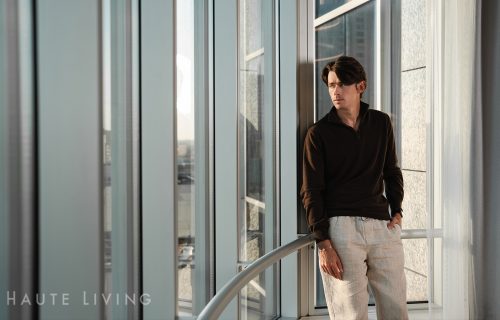
FASHION :: COUPLES’ RETREAT
COUPLES’ RETREAT
With the resort collections oozing throw back references, a high-society escape to the confines of a once-again-new Eden Roc Renaissance Miami Beach is the perfect scene of the crime for two couples to get caught up in the swing of things.