Haute Living San Francisco Jan/Feb 2012
The B-List 
by Daniel Boulud

boulud.jpg

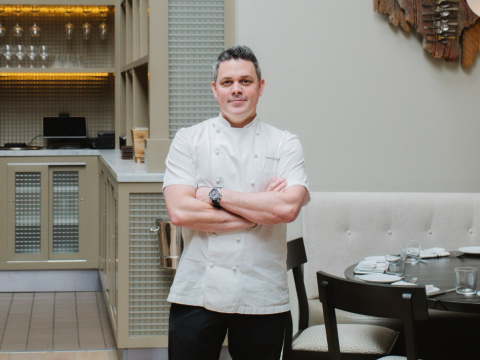
Restaurant DANIEL is considered such an elegant destination that most people don’t realize my own personal style is actually pretty casual. So it wasn’t much of a stretch for me to make blue jeans the required attire at my annual Citymeals gala this past March. I made it an evening of “Black Truffles, Burgundy, Blue Jeans & Blues”. It’s the only time I’ve seen my restaurant filled entirely with denim-clad guests. We may have lost a good part of our 401s but we were comfy in our 501s and still managed to enjoy an all-black-truffle menu, thanks to the generous sponsorship of my truffle suppliers. The crowd had so much fun, it may be hard to get them back into their jackets and ties.

We gathered to raise money for Citymeals-on-Wheels, an organization I’ve been working with for over a decade. It’s really an honor to raise money for them to deliver meals to New York’s homebound elderly. While it was a charitable event, I wanted it to be a low key and fun spirited evening. I felt it was not the time to pressure guests with too much aggressive fundraising. My goal was to reach out to the Citymeals board members and supporters who have been faithful to the charity for so many years—and to welcome a few new guests who have shown interest in supporting this incredible organization.

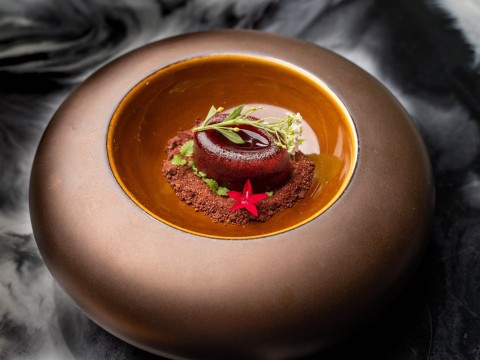
Despite the dip in the DOW, the 140 guests managed to raise $460,000—enough to hand-deliver 70,000 meals to elderly New Yorkers in their homes. That’s something that makes us pretty proud. But I didn’t do it on my own. I had a stellar pair of guest chefs at my side: the legendary Michel Troisgros of Maison Troisgros in Roanne, France, started things off with his flocons de chataignes aux brisures de truffe Noir, while Daniel Humm of Eleven Madison Park prepared Nova Scotia lobster with celery and black truffle. I served a poularde en demi deuil with sunchokes, salsify, prawns and albufera sauce. Finally my pastry chef, Dominique Ansel, crowned the menu with a hazelnut-chocolate truffle, chestnut mousse, and caramel-black truffle ice cream.

Michel Troisgros regaled the auction bidders with a stay at his new inn, La Colline du Colombier, a beautiful 200-year-old farmhouse he has lovingly restored, combining the historic buildings with stunning contemporary architecture, a uniquely pastoral setting on the banks of the Loire, and a very forward thinking ecotourism approach. It also doesn’t hurt that the inn serves the incredible cooking the Troisgros family has been known for, for more than three generations.

The celebration was also a tribute to my dear friend, Sirio Maccioni. For those of you who don’t know him first hand, Sirio is the renowned owner of Le Cirque and one of New York’s most famed restaurateurs. He is also the man who gave me my start here by making me executive chef at Le Cirque back in 1987. I had good fun roasting Siro lightly, but mostly I was honored to express what an incredible role model and mentor he has been to me.

By the end of the evening we had already cooked up our next Citymeals event. My dear friend Scott Kasen stepped up and offered to host an opening party to benefit Citymeals at the new restaurant I’m opening on the Bowery. So I’ll see you downtown at DBGB Kitchen & Bar on May 12th. What does DBGB mean? You tell me—but I’m thinking American diner meets French Brasserie with a distinctly downtown vibe. A bientôt.

Apr 8, 2009 5:19 PM
Riva Home Couture
by Cheryl Clark

riva.jpg

The name Riva is synonymous with the utmost levels of sophistication and luxury, and discerning yacht owners have been looking for a way to capture the allure of the water-bound brand in the home. As an answer, the company introduced the Riva Home Couture collection at the end of 2008. The line consists of fine leather bags, cashmere pillows and blankets, silk and cotton sheets, fur rugs, wood and stainless steel boxes, and small pieces of furniture.

Created by Milanese designer Odilia Prisco, each piece in the line is made-to-order in Italy. The items were inspired by the clean, sophisticated look of the Riva yachts, and are meant as a perfect accompaniment onboard or off. The epitome of chic, the leather beach bag is lined with linen printed with archival Riva images from the golden era of the Italian Riviera, when Brigitte Bardot owned Rivas. Only one home couture collection will be introduced each year.

Apr 8, 2009 5:14 PM
The Chairman
by Cheryl Clarke

chairman.jpg

Ulysse Nardin and SCI Innovations have joined forces to create a technologically advanced hybrid smart phone known as the Chairman, marking the first occasion of an Ulysse Nardin-branded product. This sleek, hand-made phone/watch combination includes customized Ulysse Nardin features, incorporating the first mechanical watch rotor into a phone’s design. With the integral designs of an automatic watch, the smart phone offers the ability to charge a built-in battery using the kinetic energy of its moving rotor. This hybrid, which will be offered in solid gold, steel/gold, and steel versions, showcases a 2.8-inch touch screen with a user-friendly interface. The fingerprint recognition security feature prohibits phone access to anyone except the owner. A set of stringent tests for quality control will limit the number of phones produced to maintain strict requirements. The Chairman, which will be compatible with most GSM networks around the world, will be available for purchase this fall.

877-uncell5
www.unchairman.com

Apr 8, 2009 5:11 PM
BeoVision 4 103
by Cheryl Clark

beovision.jpg

When not in use, the screen sits mere inches above the floor, reducing its dominating stature, but when turned on, the BeoVision 4 103 rises to optimum viewing height with the touch of a button on the Beo5 remote control. Created by Bang & Olufsen, the BeoVision also uses a BeoLab 10 center speaker that surfaces from under the screen as it elevates.

The 18-second elevation is perfectly timed with the surround sound startup and the opening of the electronic curtains, which epitomizes this device’s high-end performance as a home theater. Other features include an anti-reflection coated contrast screen with automatic picture control and Adaptive Sound Technology that incorporates Digital Signal Processing to adjust for direct sound from anywhere in the room. Due to the immense size, the piece will be available for special order only.

Apr 8, 2009 5:08 PM
Arnage Vs. Maybach
by Sean Ballent

arnage_final_series_3_11.jpg

The increasing popularity of super luxury sedans has forced automakers to roll out a new generation of innovative and powerful driving machines that go beyond the extraordinary. The Bentley Arnage Final Series and the Maybach 62S Landaulet effortlessly deliver the ultimate in comfort and technological sophistication. Suitable for an evening out or a morning drive through wine country, these four-door sedans will make you feel like royalty while delivering dynamically breathtaking performance.

maybach_landaul-img_3361.jpg

Maybach 62S Landaulet

The 2009 Maybach 62S Landaulet concept is beyond extraordinary. Based on the Maybach 62S sedan and powered by its 612-horsepower Biturbo V12, the Landaulet is what some like to call “business class on wheels.” The front seats are fully enclosed and separated from the rear passenger compartment by a removable divider. While the chauffeur’s section has the workings of most high-end luxury sedans, it is the rear section that inspires awe.

The most noticeable feature is the sliding soft roof. Controlled from the driver’s compartment, the roof takes only 16 seconds to fold and allows passengers to enjoy the clear blue sky. When fully descended, the retractable roof hides behind the back seat allowing for maximum trunk space. Even under adverse climatic conditions, two ultra-modern climate control systems ensure a pleasurable open-air experience.

Thanks to a liquid crystal membrane embedded in glass, the partition between the driver’s cabin and the passengers’ section can be turned opaque at the push of a button, allowing passengers to sit back in privacy. Fully reclining armchair seats allow even the tallest passenger to lounge in first-class comfort. The Landaulet features exclusive seychelles white leather, white fabric, and white velour, which are accented with either black piano lacquer trim or black granite with gold detailing. The entertainment system includes a DVD-player, six disc CD-changer, cooler compartment with its own electric compressor, and an intelligent system that holds glasses, goblets, and champagne bottles safely in position.

Despite being labeled as a concept, the rumored 20-vehicle production run of the world’s most exclusive luxury car is near an absolute lock.

Arnage Final Series

Since 1998, the Arnage has combined first-class luxury and exquisite design, making it the four-door flagship of the Bentley range. Over the last decade the car has undergone constant refinement in order to maintain its position at the front of the luxury market. By combining the performance of the 500-horsepower Arnage T with the refinement of the Arnage R, the 2009 limited edition Bentley Arnage Final Series is the grand finale of the grandest Bentley.

The Arnage Final Series is one monster of a super-luxury sedan. Its twin-turbocharged 6.75-liter V-8 boasts 500-horsepower at 4200 rpm. A six-speed ZF automatic transmission channels power to the Arnage’s rear wheels, propelling the car zero to 60 mph in 5.2 seconds.

Muscular lines and discreet exterior cues enhance the luxurious appearance of the car’s exterior. While 20-inch alloy wheels are awash in chrome, the overall “bling” of the sedan’s exterior is minimal. Key ingredients of the car’s distinctive appearance include a dark-tinted Bentley matrix radiator and lower grille with a retractable flying-‘B’ hood ornament.
The interior of the remarkably spacious cabin is made of superb, handcrafted quality, giving a feel of exclusivity. The Final Series is trimmed entirely with the customer’s choice of 25 different colors of leather hides. Bentley adds custom contrast stitching to the seats, including a hand-embroidered Bentley emblem on each seatback. Unlike previous editions, the sedan adds chrome to the doorsills, speaker grilles, and inlays the material within the custom wood trim. Stored neatly in the seatback compartment, which doubles as a seatback table, is a limited-edition chrome flask accompanied by two shot glasses.

The Final Series’ surprisingly advanced audio system not only employs an iPod interface, but a receiver that reads digital files from an SD card. A 1,000-watt amplifier powers high-end Naim speakers, rounding out the system. Production of the hand-built Arnage Final Series is limited to 150 cars, and the vehicles will be priced around $249,000 each.

Apr 8, 2009 4:56 PM
What’s Haute Tribeca
by Cheryl Clark

tribeca.jpg

RESTAURANTS

Megu
62 Thomas Street
212.964.7777

During the almost two-week extravaganza of the 2009 Tribeca Film Festival, silver screen aficionados can dine on the delicacies of Megu’s organic and sophisticated cuisine. The 13,000-square-foot restaurant incorporates a blend of traditional and modern, with established and emerging Japanese fare. A tasty array of the finest sushi is presented using umibi aburiyaki, a purifying grilling technique that adds an exceptional flavor to the food. But that is not the only way Megu stands out from the restaurant crowd. Upscale lounges like M by Megu and the Living Room in the Megu New York and Megu Midtown locations, respectively, have transformed the brand venue into a unique restaurant with a popular nightlife milieu. With its flair for international cuisine, it seems fitting for Megu, which imports a majority of its ingredients from Japan, to have opened a third restaurant, Megu Hong Kong, in 2007. Porcelain columns made of intertwining rice bowls and sake vases drape the interior of Megu New York in Tribeca. Megu also has a vast selection of more than 600 wines and 60 varieties of sake along with its eye for style and lavish locales.
HOTELS

Tribeca Grand Hotel
2 Avenue of the Americas
212.519.6600

The floor-to-ceiling windows of the Tribeca Grand Hotel Grand Suite and Rooftop Terrace capture an awe-inspiring view of the Manhattan city nightlife. This panoramic venue tempts guests with even more luxury to add to the splendor of the already striking hotel upon which it is perched. The suite’s terrace, which is twice the size of the interior space, adds a significant backdrop for entertaining. Not to be outdone, the suite itself boasts rich textures of wool carpeting and grass cloth wall coverings with organic colors from designer Bill Sofield’s vision of lavish rooftop living. The Grand Suite features high-end amenities like flat-screen plasmas, the iMac G5, and a state-of-the-art SoundDock digital music system by Bose, putting to shame amenity lists from competing hotels. A pillar-laden, Zen-like pergola tops off the elegant features of the Rooftop Terrace, which is only accessible from the Grand Suite staircase, and provides a comforting escape with a limitless view of the downtown scenery.

FILMS

The Girlfriend Experience
2009 Tribeca Film Festival
Wednesday, April 29, 8:00 pm
SVA Theater (333 West 23rd Street)
Theater 2

Director Steven Soderbergh ventured into rarely chartered territory when he cast adult actress Sasha Grey as the lead in his indie flick, The Girlfriend Experience. However, it is an appropriate role for the porn star’s first foray outside of the flesh film industry, as her character is a $2,000-an-hour upscale Manhattan prostitute. This film is garnering attention for reasons other than garter belts though. Brian Koppelman and David Levin, of Ocean’s Thirteen fame, wrote the screenplay, while Marc Cuban and Todd Wagner financed the film through their HDNet label. The plot follows call girl Christine throughout five days, cutting between her business-life and boyfriend-life. Some are describing it as a period piece due to themes related to the economic woes occurring in 2008. After the showing, Soderbergh, along with lead actors Sasha Grey and Chris Santos, will share their thoughts and experiences about making the film.

RESTAURANTS

Chanterelle
2 Harrison Street
212.966.6960

Celebrating its 30th anniversary this year, Chanterelle has been one of the most inviting and highly acclaimed dining hot spots in the city since its move from Soho to Tribeca. David Waltuck and wife, Karen, own the elegant French eatery. He prepares the mouth-watering cuisine, including his signature Seafood Sausage, and she handles the esteemed front of the house service. Located in the 19th-century Mercantile Exchange Building, Chanterelle blends its grandiose cherry wood pilasters with a friendly environment of welcoming and knowledgeable staff members. Its fine dining encompasses a novel cuisine of 400 international selections with a changing à la carte dinner menu. Also on hand are the talents of a pastry chef, a fromager, and Roger Dagorn, a sommelier with a commanding expertise of 5,000 bottles of wine ranging from small wineries to reputable Bordeaux. This three-star restaurant adorns its menus with artwork by contemporary American artists and distinguished works by Francesco Clemente, Roy Lichtenstein, and others. Be sure to stop by for Sunday Salons where the Chanterelle family will share their knowledge of various cheeses, the best of wines, and even chocolate and flowers.

LOUNGES

Brandy Library
25 North Moore Street
212.226.5545

With a staff full of “librarians” and oak bookshelves complete with rolling ladders, the unique concept of the Brandy Library might seem like it transforms into a stuffy reading room, but the atmosphere is quite the contrary. The posh lounge has an extensive collection of beer, wine, cocktails, brandy, and more than 1,500 bottles of whiskey. Both wine connoisseurs and novices alike have whet their palates with the exclusive spirits from around the world and the delectable tapas that showcase foie gras, sushi, and American mini burgers. Cozy up with a 66-page leather-bound menu as you make your selection while sommeliers entice you with wine tastings. The Brandy Library also offers Cognac Week, Peat Week, and Whiskey Week where guests can meet distillery owners and brand aficionados. Private parties, tasting sessions, and the ingenious lounge ambiance have made Brandy Library a Tribeca staple since opening in October 2004.

SALONS

Edris Salon
430 West 14th Street, 3rd Floor
212.989.6800

Not far from Tribeca, Edris Salon provides an oasis of beauty in the midst of the Meatpacking District. The salon’s many offerings can help any film festival-goer prepare to walk the red carpet. Edris landed on the style radars due to the acute creativity of its namesake owner, stylist Edris Nicholls, and makeup artist Landy Dean. Together their work has appeared on the heads and faces of a myriad of celebrity mugs and on the pages of the world’s top fashion glossies. The Caribbean-born stylista was trained at the best beauty venues, including Warren Tricomi, before taking the shears into her own hands and opening Edris. The salon is billed to combine uptown expectations of supreme service, with an eccentric, multicultural approach that makes it worthy of its trendy Meatpacking District address. Their service menu includes everything to tend to the various funky fashions found on the streets of New York.

FILMS

Whatever Works
2009 Tribeca Film Festival
Wednesday, April 22

The world premiere of Woody Allen’s new comedy, Whatever Works, is the talk of the town, not only because it has earned a top spot at the 2009 Tribeca Film Festival, opening the event on April 22, but also because it marks the quirky director’s return to New York, after several European settings, including England in Match Point and Spain in Vicky Cristina Barcelona. Larry David leads the cast, starring as an eccentric New Yorker who decides to leave behind his luxury lifestyle in order to embrace the ways of bohemian living. Evan Rachel Wood plays his Southern belle love interest, alongside Ed Begley Jr. and Patricia Clarkson. With Allen and David at the helm of this film, it comes as no surprise that the storyline is filled with a series of unpredictable escapades. The film is expected to receive rave reviews, so Sony bought the distribution rights and will release it in June 2009.

ART

Tribeca Issey Miyake
119 Hudson Street
212.226.0100

A titanium Frank Gehry sculpture snakes its way through this creative downtown Manhattan shopping venue, which sets the tone for all of the Miyake collections housed in this couture boutique. When Miyake first approached Gehry, he requested that he transform the space with his unique vision, using unusual materials to create movement, light and energy. While Gehry’s young protégé Gordon Kipping became the architect on the project, Gehry created the titanium sculpture or “intervention” which threads through the lofty 15,0000-square-foot space. This flagship store, house in landmark cast-iron building, not only holds Issey Miyake Fete, watches, perfumes, A-POC, HaaT, Me, and Pleats Please, but also serves as a unique setting for artist collaborations, exhibitions, and events.

Apr 8, 2009 4:39 PM
Allure of Côte d’Azur
by Shandana A. Durrani

By Shandana A. Durrani

Cannes may be most famous for its yearly film festival, but the region offers even more for gourmands and lovers of luxury.

azur.jpg

It’s as glittery and as posh as one would assume. The beautiful people stroll down La Croisette in their Brioni suits and Christian Lacroix dresses, Chanel bags swinging in the soft breeze. Sailboats drift peacefully in the distance as the sun sets on the horizon. What was once a sleepy Mediterranean village is now the heart and soul of the Cote d’Azur. Cannes is a magnet for sun worshippers, cinema buffs, well-heeled Europeans, and expats with private yachts.

After being discovered by Lord Brougham, an Englishman, in 1834, Cannes soon became the winter vacation destination for much of the English aristocracy. It’s no wonder when one considers the paradisiacal landscape and affable people. The city gained international renown a century later when Jean Zay, the French Minister of National Education, and Philippe Erlanger, a fine arts attaché, launched the Cannes International Film Festival, in 1946. Since then, thousands of actors, producers, directors, journalists, and wannabe starlets have flocked to the red-carpeted steps of the Palais du Festival to witness the most prestigious movie competition in the world. But more than just movies abound on these sophisticated shores, and sojourners often indulge their fancies with shopping, fine dining, and, of course, cruising aboard megayachts.

La Croisette, the most famed street in the city, runs parallel to the pier and is a veritable mecca for high-end fashion aficionados. From Bottega Veneta and Valentino to Escada and Brioni, one can spend a day trolling the abundant shops, soaking in the heady ambiance of luxury brands, and investing in the best look for the remainder of the stay.

While casinos dot La Croisette as well, it is the array of haute hotels that make the statement of elegance that defines the French city. The historic InterContinental Carlton, built in 1913 and site of Alfred Hitchcock’s To Catch a Thief, affords its affluent guests gorgeous suites in muted shades of gold and yellow with spectacular vistas of the sea. The hotel boasts close ties to the film festival and serves as the venue for many posh parties during the course of the May event. The Carlton’s seventh floor is host to seven expansive luxury suites, all with sweeping terraces, named after famous stars from Sir Sean Connery to Sharon Stone to Sean Penn.

The lovely art deco Hotel Martinez is celebrating its 80th birthday this year. A home away from home for many celebrities (Jean-Paul Belmondo of Breathless fame was in residence when I visited the property in March), it plays host to one of the most expensive and luxurious multi-room penthouse suites on the Riviera. Themed celebrations for the 80th anniversary include a delicious 80-euro repast at the hotel’s two-Michelin-starred La Palme d’Or restaurant and an 80-euro spa deal. For readers who prefer something more modern and funky, a stay at the Le Grand Hotel Cannes is in order. Set a bit back from the sea behind its own private lawn, this unique oasis is the site of many summer soirées. The newly refurbished rooms are colorful yet chic, with ostrich leather vanities and Italian linens. The suites on the top floor feature garden terraces and are marketed as the perfect gathering place for families and large groups.

Many of the best activities in the city revolve around film, from train-car cinema tours to walking journeys of the city’s movie murals. (I ventured four miles just to gaze upon the painted beauty of Alain Delon, one of my favorite actors.) A visit to the top of the Musée de la Castre shouldn’t be missed as the entire city is on glorious display, from the old town to La Croisette, from the mountains near Nice to the coastline near St. Tropez.

Strolling at a casual pace through the old town affords explorers a true sense of the authentic Cannes. Streets are narrow as is the norm in the Cote d’Azur, with three-story homes awash in hues of pink and yellow dotting the winding avenues. Here, the pace is much slower than on La Croisette and one is more likely to see locals sipping on coffee at a café than tourists gazing wide-eyed at the fashionable local beauties. Stop at Jean Luc Pelé for some decadent chocolate or rose-flavored macaroons, which are a local favorite. Don’t forget to visit Cannes’ famous Marche Forville; the market is bustling in the summer months with fresh produce, flowers, cheeses, and local fish. I tried sea urchin, a local delicacy, for the first time but found it to be a bit too salty and runny for my palate.

The sea urchin couldn’t quell my love for French food, however, so I decided to take a cooking class at Les Apprentis Gourmets. Trained at Alain Ducasse in Monte Carlo, Chef Digiusto teaches budding top chefs how to cook flavorful dishes, and at only 15 euros, you’d be hard-pressed to find a more inexpensive meal. The chef can also cater private dinners aboard your yacht or in your villa.

The sea beckons and I heeded the call to hop on a ferry to visit the nearby Lerins Islands. Each is distinctive but offers much of the rocky beauty that makes the Cote d’Azur famous. Saint-Honorat is home to an ancient abbey that was modernized close to 80 years ago. The local monks sell homegrown honey, lavender, and excellent wine and liqueur. Nearby Sainte-Marguerite is best known as the 17th-century prison of the mysterious man in the iron mask, said by some to be the twin of King Louis XIV.

Travel to Cannes is easy. Air France flies daily from New York to Nice, which, on a good day, is only around 30 minutes by car from Cannes. Monaco is a short hop away and glitzy St. Tropez is not far either. Contact www.franceguide.com and www.airfrance.us for more information.

Apr 8, 2009 4:35 PM
What would you do with 40 acres and a mule?
by Ayesha Khan

Photography by Bob Martus

During the Civil War, the Union, in order to encourage and entice slaves to fight with them against the Confederacy, said, ‘if you help us defeat the South, in appreciation for being enslaved, each free slave will get 40 acres and a mule as reparation.’ And very few slaves ever got their 40 acres and a mule,” says Spike Lee, who named production company 40 Acres & A Mule Filmworks as a type of homage. Through the omnipotent power of film, Lee has captivated audiences with resounding messages of our social history and often-controversial yet unforgettable stories. Always armed with multiple cameras rolling at the same time, Lee has introduced the world to some of the finest African American actors—the likes of Denzel Washington, Samuel L. Jackson, and Wesley Snipes, all of whom have become household names. He encouraged us to “Do the Right Thing,” took us inside the life of a man named Malcolm Little, and gave us “Jungle Fever.”

Shelton Jackson Lee was born in Atlanta to a jazz-musician father and a mother who taught arts and literature. As a child, he moved to Brooklyn where he spent his youth before to returning to Atlanta for his undergraduate studies. “I went to Morehouse College in Atlanta. My grandmother lived three blocks from the school,” Lee fondly recalls. After three years pursuing a degree in Mass Communications, he decided to venture into filmmaking and, upon graduation from Morehouse, enrolled in NYU’s Tisch School of the Arts. “It was good to be back home in the best film school in the world in my hometown,” he says. Lee’s graduate thesis film, Joe’s Bed-Stuy Barbershop: We Cut Heads, received immediate recognition, and it was clear that this young director was on his way to do great things. When She’s Gotta Have It, Lee’s first feature film, was released in 1986, it grossed $7 million—perhaps a small number in this age of billion-dollar box office earnings, but an astronomical gain for a motion picture that was filmed in two weeks on a budget of $175,000. A string of controversial films such as Do the Right Thing, Malcolm X, and Jungle Fever followed in the subsequent decades and positioned Lee as a filmmaker who was not afraid to tackle sensitive issues such as urban crime, poverty, social injustice, and racism.

Lee still feels as strongly about racism as he did then, and although the nation now has its first African-American president, he strongly believes the paradigm shift has only just begun. “[The election of President Obama] is a big leap but there’s still so much work to be done. There was a case the other day where an African American football player was trying to get to the hospital with his wife before his wife’s mother died and a cop pulled him over,” he says, alluding to the recent news story of Texans’ running back Ryan Moats. “Racism is not dead. Prejudice is not dead. We should continue to fight the good fight and be vigilant in trying to rid ourselves of this evil.” In 2006, Lee caused a stir when he released When the Levees Broke: A Requiem in Four Acts, an HBO documentary about how victims of Hurricane Katrina were neglected and underserved by rescuers. He proceeded to partake in several discussions and articles in which he unashamedly voiced his horror over the matter of Katrina. Despite disagreement and criticism from the media, Lee stood by his film’s message. It is this outspoken nature that will surely count Lee among the greatest pioneers of African-American rights.

Lee has already garnered tremendous recognition, receiving several Academy Award nominations (though he stands firmly by the assertion that he doesn’t care about the Academy Awards), an Emmy award, and is the most recent recipient of the prestigious Wexner Prize, which has gone to a host of exemplary artists such as Martin Scorsese, Robert Rauschenberg, and Yvonne Rainer. But ask Lee and he will immediately answer that the most rewarding gift is that which he has bestowed upon film students at NYU for the past 12 years. “I’ve always wanted to support [my students] because people helped me,” he asserts. “I think that any time someone can teach at their alma mater, that’s a great situation. I know what it means to be a struggling NYU film student. I know what it means to have a dream and to be uncertain if your dream is ever going to take place. I think that students really treasure being taught by working professionals who are still active in the industry.”

As the industry continues to evolve, there are certain technological trends that worry Lee, particularly the onset of smart phone-friendly video content. “I know there are people who would be content to watch a movie on a screen as large as my cell phone,” he says. “As an artist, I really hate that. We work too hard on the cinematography, the production design, the costume design and everything else that it takes to make a film, for it then to be mashed down into a 3-inch by 5-inch screen. Could you imagine seeing Star Wars, The Godfather, or Apocalypse Now on a screen like that? I can’t do it!” So how does Lee like to see films, particularly his own? “We usually have our premieres at the Ziegfeld, which is the best theater in New York, with the best projection, the biggest screen [the size of an iMAX], and the best sound. For me it’s always a joyful event.” He also admits to having snuck into a few of his films with friends to gauge audience reaction.

Lee will be gauging audience reactions during the 2009 Tribeca Film Festival, where he will be premiering two films. The first, entitled Kobe Doin’ Work, follows L.A. Lakers superstar Kobe Bryant on game day, with access to pre-game meetings, adrenaline-pumping game-time action, and the ride back home with Bryant’s wife and kids. The film has special meaning because Lee has always been an ardent sports fan. “My father imparted to me the love of sports and I passed it down to my son. It’s not scripted like movies. You never know what’s going to happen. It’s exciting.” The second entry, Passing Strange, captures the stage excitement of the acclaimed Broadway musical on the eternal medium of film. Passing Strange is particularly important to Lee who has always wanted to make a musical film. “I’d love to do [a musical] one day. I got reinvigorated by going to the opening of West Side Story the other night. I loved the bicultural aspect of some of the Spanish dialogue and lyrics.” This year will mark Lee’s first year of involvement with the Tribeca Film Festival. “I think that Jane Rosenthal and Robert De Niro have been true champions of film and I consider them as a real cornerstone of the New York film-making community. I think they’ve done a great job and I’m happy that this year I have two films in the festival.”

Spike Lee has an unrelenting passion for his craft, a strong voice that, even in the face of controversy, is unwavering, and a warm, no-nonsense attitude (surely the sign of an Atlanta-Brooklyn native). One can be sure that the next scenes in the greatest Spike Lee Joint—the story of his own life and career—will be just as powerful and captivating as the ones that have already played out before us.

Apr 8, 2009 4:15 PM
Francis Ford Coppola Presents
by Stephanie Wilson

ffc1.jpg

Winemaking and filmmaking are two great art forms that are very important in the development of California,” explains Francis Ford Coppola. “They both start with raw ingredients—in the case of wine, the land and the grapes, in the case of film, the script and the actors’ performances. The winemaker takes these raw materials and ferments and blends. He says yes to this batch, no to that one. The director does the same thing: a series of yes’s and no’s, from casting and costuming to edits and sounds mixes. In both cases, you have to start with top-notch raw materials—whether it’s the land or the script.”

When explained as such, it is easy to see the correlation between Coppola’s seemingly different career fields. While the Italian-American, who is celebrating his 70th birthday in April, may be best known to the world as director of the Godfather trilogy, Coppola also is celebrated for his fine wines. In the past 20 years, the five-time Oscar-winning director, writer, and producer’s résumé has expanded to include accomplished vintner, hotelier, restaurateur, magazine publisher, and cigar maker—an impressive array of fields that, he says, all come down to entertainment.

While Francis Ford Coppola is responsible for such flicks as Apocalypse Now, Bram Stoker’s Dracula, and The Rainmaker, in recent years, the Coppola appearing in theaters has been Francis’ Oscar-winning daughter Sofia (who directed, amongst other things, Lost in Translation, The Virgin Suicides, and Marie Antoinette). The elder Coppola was busy tending to his other ventures. But today, his career has come full circle from the time when he co-wrote the screenplays for The Godfather trilogy, which have been lauded as some of the top films of all time by the American Film Institute. In December 2007, Coppola released Youth Without Youth, and, on June 11, TETRO will open in limited release. He is quick to clarify that, although he went for a decade without putting out a commercial film, he never moved out of the film sector. “During the years between The Rainmaker and Youth Without Youth, I was working on several projects that, for one reason or another, did not come to fruition. I had a lot of unfulfilled creative energy which I put into expanding the wine and other businesses.”
He is currently putting the final touches on TETRO in Buenos Aires, Argentina, where the movie was filmed. TETRO is Coppola’s first original screen play since The Conversation (1974), and is being hailed as his most personal yet, a bittersweet story of two brothers, of family lost and found. “The film is filled with memories, impressions of my family. Even though it is a fictional story, I used what I know best: my own life,” he says. “TETRO has allowed me to explore and make the kind of personal story I’ve always wanted to tell. In a way, that has freed me, and I look forward to the future with great anticipation and the freedom to do whatever feels right.”

As he discovered during the filming of Youth Without Youth, which was entirely self-financed, he enjoys exploring his personal whims. His highly successful winemaking and resort ventures, which grossed half-billion dollars last year alone, provide the funds that allow him to call his own shots. “The benefit of self-financing is that you are not going hat-in-hand to a studio to fund your film. You can stretch your limits and the language of filmmaking without worrying about whether the film will be commercial, and you don’t have 25 producers looking over your shoulder every minute,” he says. “[In Youth Without Youth and TETRO,] I am the writer, producer, and director, so all the decisions—good or bad—are mine….I am very fortunate that the winery has been such a success that I can finance my own films, as long as I keep the budgets under $17 million.”

Not that $17 million is a bad budget to have, especially seeing as the winery and resorts that provide that capital came almost as an afterthought. He explains, “I had planned to have a summer retreat for my family near San Francisco….At first we were looking for a small cottage with a couple of acres of grapes, but the real estate agent said, ‘Oh, the Inglenook Estate is for sale. It’s not for you, but it will probably be your only chance to see it.’ Well, we saw it, fell in love, put a bid on it, and lost out.” Fortunately, the people who did buy the prime property wanted to develop it into housing lots, but California passed a “Green Belt” law to protect agricultural land. When the property went on the market a second time, Coppola acted swiftly. “We were determined to get it, and we did. It was only later that I realized we had purchased one of California’s great wine estates, and it was like a family that inherits a great race horse—you have to run it.”

So, after three years of selling the highly sought-after grapes, Coppola began to make commercial vintages, although it wasn’t until purchasing the remainder of the Rubicon Estate in 1995 and restoring it that things really took off. The vineyard embarked on a program of replanting, returning the estate to its glorious roots. Coppola’s drive to revive the winemaking came down to more than just a love of history, but a deep appreciation of wine itself. He says, “Wine is myth, history, geography, agriculture, religion, and much more. It is unlike any other beverage we consume, which makes it infinitely interesting.”

His passion for the grape is evident in everything the vineyard produces, which includes a number of different varieties such as Blancaneaux, Cask Cabernet, RC Reserve Syrah, Merlot, Cabernet Franc, Edizione Pennino, Cuvée Rutherford, and Rubicon, the estate’s flagship wine. Rubicon is made using 100 percent organically farmed grapes sourced solely from the estate’s vineyards. It is  primarily a blend of cabernet sauvignon, which was first planted on the vineyard between 1882 and 1885 by Inglenook founder Gustave Niebaum. The vines that are producing now are a unique clone of the same genetic material as the vines Niebaum first planted on the vineyard, making Rubicon one of the most historically important wines in all of California.
March 15, Rubicon released the new 2005 vintage, which Coppola feels may be the finest vintage overall. “We are always striving to make the greatest wine that our vineyards can produce,” he explains. “I feel we’ve brought a freshness, complexity, and sheer deliciousness [to the new vintage] worthy of the land that historically was responsible for some of the greatest American wines ever made.” The wine is presented in an entirely new bottle and package design, the second since 1978, which now presents itself as wine from the Inglenook heritage. Coppola deems the 1995 his finest vintage, due to the season’s conditions, and he also has a soft spot for the 1979. Citing a fondness for his Napa Valley neighbors, he ranks Swanson, Staglin, and Shafer among his favorites. “I could go on and on,” he says, although he says he prefers to enjoy wine with food, rather than on its own.

In nearby Geyserville, Coppola also owns and operates Rosso & Bianco Winery. The vineyard produces Director’s Cut, Francis Coppola Reserve, Rosso & Bianco, and Sofia, a sparkling wine that is described as a tribute to the spirit and life of a young woman. Coppola explains, “These wines are inspired by [my daughter] Sofia, her impeccable taste, sense of design, and personality. I had always promised her that I would one day make a sparkling wine for her, and you must always keep your promises to your children.”

He was drawn to the wine business due to enthralling tales his uncles told of the winemaking process. He elaborates: “My first impression about wine was really at age five or six, and it comes from a memory of my father’s father, Augustino Coppola. In those days, during Prohibition, they would make wine in their New York City basement, in a big, homemade, concrete fermenter. They would buy a boxcar load of California grapes. Even though it was Prohibition, you were allowed to make wine for home use. I heard many stories of how happy they were when the grapes would come because they were locked up behind a trap door that led to the cellars. They liked the grapes, and they would lower their littlest brother—my uncle Mikey—down a rope in a box to steal. Of course, they got caught. They were lowering the box, and they heard the old man coming, and they dropped the box and Uncle Mikey landed in the grapes. This always seemed to me such a wonderful experience, a family making wine.”

And just as he was inexplicably drawn to the winemaking business, his resort holdings in Belize evolved naturally. “I guess I would sum it up by saying that I get involved in things I enjoy, and they grow and become businesses.” Example? In 1981, after Apocalypse Now, Coppola wanted his own jungle paradise where he could escape to write. After traveling to Belize, he wound up looking at a mountain lodge that was for sale. “When I looked in the windows of the [Blancaneaux] lodge, I said what has gotten me into a lot of trouble over the years: ‘Oh, I could write here.’” He restored the cabin, and eventually invited his family out for a stay, and he says the resort trickled open from there. He currently owns two resorts in Belize, Blancaneaux Lodge and Turtle Inn, as well as La Lancha in Guatemala.

Despite his hectic schedule that involves jaunting all around the globe, scouting and shooting new movie projects and keeping an eye on his resorts, he is still involved in every aspect of the wine estate, particularly in anything that has to do with the design “of the labels, the bottles, and the stained glass window at the top of the stairs and the mosaic at the entrance to the cave,” he says. One could guess that the filming process has honed his eye for the details. As he finds himself with more time to spend at the vineyard, he has become much more involved in the entire winemaking process, learning what he can so that he “can exercise more appropriately the important role in decision making of the wine grower and owner.”

Since becoming a vintner and hotelier just came so naturally, it is fitting that a restaurant and cuisine line would follow. He explains, “I’ve always cooked—initially out of necessity, since I was a student without any money. If I wanted to invite a girl on a date, I didn’t have the cash to take her to a restaurant, but I could prepare my dinner at my apartment for a fraction of the price, so I’d call my mother and ask, ‘Ma, how do you make such and such?’” The result of his passion for cooking is Mammarella’s, which means “little mama,” the Coppola family’s nickname for his mother, Italia Coppola. He progressed from cooking into the pasta and sauce business while helping out a little pasta company in Brooklyn that was in financial trouble. He says it was a small jump to developing a line of sauces from his own recipes.

After explaining the connection of all of his businesses, he sums it all up: “You know, when you think about everything I do—film, wine, food, resorts, our magazine ALL-STORY—they all stem from my own personal interests and passions, and they are all entertainment of one sort or another.” And thus, Coppola will continue to entertain, both on screen and off.

Apr 8, 2009 4:10 PM
Related Posts
From Nov. 6-8, wine enthusiasts in Hong Kong will be in for a treat as the WineFuture Hong Kong event takes hold of the city at the Asia World Expo Center. Renowned filmmaker-turned-vintner Francis Ford Coppola will be headlining the event as a speaker and guest of honor.
by Pauline Sung, Nov 8, 2011 2:24 AM
 
Haute 100 San Francisco member Francis Ford Coppola had Comic-Con 2011 absolutely abuzz with news of his arrival. Reasons as to why the 72-year old directing legend would be appearing there – twenty years since his last, and very brief, appearance in 1991 – had convention-goers rife with anticip...
by Pauline Sung, Jul 27, 2011 9:02 AM
 
Summer is here and that means evenings of summer grilling! I recently spent an amazing weekend in East Hampton firing up the grill and thinking about summer wine and grilling pairings.
by Tiffany Westlie, Jun 22, 2011 1:48 AM
 
It’s a huge day for film! Haute 100 Los Angeles member and filmmaker extraordinaire Steven Spielberg revealed on Friday, July 22, his plans to revive the beloved Jurassic Park films, saying he currently already has a story and a screenwriter for Jurassic Park 4. The director made his announcement ...
by Pauline Sung, Jul 25, 2011 7:01 PM
 
by Ashley Joy Parker, Jan 11, 2012 3:35 PM
 
Want to meet some of your favorite filmmakers while supporting a good cause? Five of Hollywood's most prestigious Bay Area filmmakers have come together to support cancer research big time.
by Rachel Willis, Sep 24, 2011 1:36 PM
 
Fashion retailer H&M, the second largest in the world, is looking to fashion icon Tom Ford for their next collaborative designer collection.
by Pauline Sung, Nov 16, 2011 2:31 AM
 
Star Wars creator George Lucas and Lucasfilm are joining forces with celebrities, eBay, and Major League Baseball (MLB) in an effort to stand up to cancer with the “Use the Force for Good” campaign in support of Stand Up To Cancer, or SU2C.
by Pauline Sung, Sep 16, 2011 8:01 AM
 
Famously private fashion designer Tom Ford is allowing fans a rare peek into his life as the subject of his own documentary on Oprah Winfrey’s OWN network. The icon tells all as part of the network’s Visionaries: Inside the Creative Mind documentary series.
by Pauline Sung, Oct 25, 2011 8:57 PM
 
Last night Versace presented their H&M collection to an elite list of guests that included Bruce Weber, Patrick Demarchelier, Christopher Kane, Alexander Wang, Blake Lively, Sofia Coppola, Jessica Alba and Uma Thurman.
by Regina Arriola, Nov 9, 2011 4:44 PM


CURATORS
 
TOP 5
 
New York Dec/Jan 2012
 
HAUTE 100
A new North Italian restaurant called Mele e Pere, owned by Peter Hughes and chef Andrea Mantovani, ...
 
HAUTE SECRETS
Wendy Williams is a former 20 plus year radio veteran and now is the host of the successful daytime ...

You need to install or upgrade Flash Player to view this content, install or upgrade by clicking here.

Haute Videos: Eva Longoria Video
FASHION :: COUPLES’ RETREAT COUPLES’ RETREAT With the resort collections oozing throw back references, a high-society escape to the confines of a once-again-new Eden Roc Renaissance Miami Beach is the perfect scene of the crime for two couples to get caught up in the swing of things.
© HAUTE MEDIA GROUP 2011