
In 1775, legendary Swedish naval architect Fredrik Chapman (the first to codify hull design based on precise mathematical ratios rather than relying exclusively on empirical methods) contemplated how far the seagoing world had come and where it might head. “If we were to take a view of the immense number of ships that have been built since mankind first began to navigate upon the ocean,” he reflected, “and note all the different steps which have been taken in improving their construction, we should at first sight be inclined to believe that the art of shipbuilding had, at length, been brought to the utmost perfection.” Chapman went on, explaining that this, of course, was anything but the case. Still, he was optimistic that the absolute ideal form for each of mankind’s intentions on the water may yet one day be achieved.
With the 2007 launch of Oceanco’s 269-foot Alfa Nero, that day—at least for the purpose of leisure and water sports—finally arrived.
Don’t just take it as gospel from us. Since headlining the 2007 Monaco Yacht Show, Alfa Nero has enjoyed an endless summer of epic accolades: Yachts International 2007 Most Innovative Custom Motoryacht over 40 meters; Boat International 2008 Best Motoryacht Interior; Boat International 2008 Best Motoryacht Exterior Styling; ShowBoats International 2008 Best Full Displacement Motoryacht over 75 meters; Asia-Pacific Boating 2008 Most Innovative Exterior Yacht of the Year; International Superyacht Society 2008 Best Power Yacht over 65 meters; Boat India ’08 International Boating Awards 2008 Most Innovative Interior Yacht Design.
It is Oceanco’s most celebrated vessel, which is saying something. From 1993’s Indian Achiever (winner of Showboats International 1993 Best Motoryacht Interior award) to 2008’s Anastasia (already shortlisted for 2009 end-of-the-year honors), the Dutch shipyard has been one of the biggest splash-makers in the megayacht sector. Since forming in 1992, it has gained a gold-medal reputation for excellence in gargantuan yet gorgeous luxury vessels, with head-turning designs such as Lazy Z (169 feet), Pegasus (193 feet, 9 inches), Lady Lola (205 feet), Alishar Usmanov’s Dilbar (216 feet), and three 262-footers: Constellation, Stargate, and Lakshmi Mittal’s Amevi. So although Oceanco’s relative existence is a nanosecond on the timeline of mankind’s nautical heritage, the firm nonetheless has advanced custom yacht design by quantum leaps.
With a definitive yet uncomplicated opinion of what a yacht should be, along with a desire to maximize the lifestyle associated with the accessibility of his beloved Mediterranean Sea, a team led by naval architects Carlo Nuvolari and Dan Lenard set aside traditional megayacht design templates, brainstorming a streamlined concept with sleek, open lines free of the top-heavy stacks of vertical superstructure so typical in yacht design. Their vision resulted in the Alfa Nero. A huge proportion of the boat’s length was devoted to a long, low stern. Interior proportions allowed for a reduction of overhangs and consequently more deck space. And instead of a conventional all-white color scheme, they opted for a dramatic black steel hull. The result is a translucent-like frame that reflects gently lapping azure waves like a basalt mirror.
One of the greatest challenges was the owner’s vision for a large pool and a helipad (which also needs a good amount of space) on the main deck, as well as spacious open decks in general. Using technology developed and designed by Oceanco’s own team of in-house engineers, a pool of this size has rarely been achieved on such a massive private watercraft. The unique and complex swimming pool is emblazoned with a large “H” confirmation at its bottom through the clear water. Using the “infinity” design the pool appears, from the stern, to flow endlessly over the horizon. This is accomplished by adding a triangulated glass section where the water streams over, to give a trompe l’oeil impression. The pool can be filled with stored fresh water or with salt water in about 30 minutes. Water that spills over the pool edges is drained back to a balance tank, then routed back to the pool. In a similar way, this is how the pool bottom transforms itself into the helipad. As the hydraulically operated bottom rises, the water above the deck is transferred through channels on the side of the pool to fill the void underneath the “helideck.” Raised and solidly stable, the teak-covered helideck provides an excellent target for a pilot to land a chopper. One caveat: because of the added weight, the chopper is not allowed to deliver passengers, according to MCA code. Nevertheless, it’s a monumental feat that has redefined approaches to outdoor space on yachts.
Other opportunities to help those aboard to truly get away from it all are ever-present. Relaxation and partying are the dominating buzzwords for foredeck amenities, and visual delights abound. Broad, upholstered couches and lounge pads in a matte white, weatherproof material, provide a sentinel’s view to waters yet traversed. A Makassar wood serving table faces a hot tub. In a distant cove with no accessible beach? Not a problem—Alfa Nero simply opens a mid-hull door on the starboard side and out slips its own man-made “beach” platform. This unique concept also allows for loading supplies, or boarding via port craft in any sea combination, without damaging the hull. In terms of water toys, Alfa Nero sports three of them: a Yachtwerft Meyer custom build enclosed limo tender; a Novurania utility tender; and a Ski Nautique 196 limited.
Stepping inside, celebrated Italian designer Alberto Pinto was handpicked to style the yacht’s interior. Given a free reign to create and produce the interior concept, Pinto stated that he wanted Alfa Nero to have a luxurious atmosphere while maintaining a nautical theme. Each guest was to have a unique visual experience in his or her stateroom. To that end, each cabin has a distinctive air achieved through the use of colored leathers and other soft goods. Pinto delivered a contemporary tone replete with focused nuances that are inviting and relaxing without being overpowering. An undersea theme is used on various pieces throughout the yacht.
The dance room is located between the aft deck’s patio seating and the main salon. Hidden sliding glass partitions allow this space to be an extension of the main salon. When the main-deck sliding doors are opened, the entire area from the swimming pool to the main salon becomes a spectacular area for entertaining. The Makassar ebony walls are inlaid with circular “bubbles” of zebrawood that give the rooms an abstract underwater appeal. The main salon also houses an extravagant black-and-white Pleyel grand piano.
The adjacent, main-deck dining rooms, abaft the guest staterooms, can be separated by pocket doors, which, like the walls, are covered in goatskin. The formal dining room seats 14 at an oval table, while a more casual room situated starboard of the centerline seats four in the round. A formal trim makes the space even more tantalizing. The cornice and the mullions feature a special handmade, acid-sculpted glass. Silver leaf is applied to the etched surface to give it a crinkled mirror appearance. Individual squares of the silvered glass are inlaid flush in the Makassar ebony joinery. Enhancing the experience in both dining areas are gunwales that drop down so diners can view the sea. The third dining room is situated in the transition space between the upper salon and the aft deck. The circular area offers a choice of dining either inside or out, depending on which of the sliding glass doors are called into service.
The upper deck is entirely “Mr. A’s” residence. The sky lounge and dining room are surrounded with wengé panels and what has come to be known as the “golf ball” wall: scalloped panels are covered in white lacquer with a mother-of-pearl look, giving the walls a textured effect reminiscent of abstract, flattened golf balls. The wall covering enlarges the room’s appearance and sets the mood to that of a European nightclub, even in the light of day.
In essence, it’s the seemingly endless touches like these that set the ship apart from comers. Chapman, if he were alive today, might agree that wherever one wishes to go, this is the ideal type of vessel to weave a life narrative that is epic, dramatic, and an always hopeful journey of discovery.

The Geneva-based Patrizzi & Co will auction what some consider the world’s most important collection of Rolex watches: The Davide Blei Vintage Rolex Collection. While the physical auction will take place in Milan, simultaneous online bidding at www.patrizziauction.com will allow Rolex-seekers to be a part of the action, no matter their locale.
Blei began collecting the timepieces in 1984, focusing on the aesthetic beauty of the cases and the dials, and unique metal combinations. The resulting collection consists of 114 watches, including some rare Stelline, Ref 6062s; several Daytonas; important chronographs; and an assortment of personalized watches. The collection also includes superb examples of the Submariner, the GMT, the Explorer, and the Sea Dweller. A preview of the collection will be held March 5 to 7 at the Patrizzi & Co’s New York offices at 595 Madison Avenue, with the auction taking place March 22 at the Grand Hotel et de Milan in Milan.

Founded in 1919 by Ernst Döttling in Sindelfingen, Germany, Döttling Safes still remains a family business and is headed by a fourth generation family member, Markus Döttling. Renowned for its sleek designs and state-of-the-art technology, the company has recently unveiled its most impressive safe to date: The Medici Dynasty. As the name implies, the safe dates back to 1770 during the Medici reign in Italy and was produced in Milan. The structure stands at an impressive 6.5 feet high and 4.5 feet wide, is filled with authentic ornate engravings, and has been restored to both technical and aesthetic perfection. Medici Dynasty is part of the Legends Collection, an assortment of fully restored and customized antique safes. Pricing varies depending on levels of customization and restoration, though pricing for the Legends Collection begins at $750,000.

In the case of Giorgio Armani’s newest collection, the pen is not only mightier than the sword but also more luxurious. The fashion icon has commissioned luxury Italian pen maker Tibaldi to produce an exclusive line of writing instruments for the Montenapoleone Collection. Armani’s high standards in taste and craftsmanship shine in this gorgeous collection of exquisitely crafted pens. The assemblage is styled with a sleek design, embodying the classic sophistication for which the designer is best known. Each refined writing instrument is hand polished using a diamond paste, resulting in a brilliantly blinding shine. Armani’s initials are emblazoned on the clip and ring of the barrel, adding a sophisticated finishing touch. Each pen is available in resilient red, white, or signature Armani colors petrol green and black. The ballpoint and roller ball pens begin at $450, and the Fountain Pen is $495. This refined collection is available at all Giorgio Armani boutiques as well as authorized Aquila Brand retailers.

“Today, everybody is full of trends, but I follow only my trends.” ~Philippe Starck
That quote exemplifies the life and work of the legendary designer. Starck is often the mastermind behind what is considered trendy across the globe. His influence is apparent in a number of industries, as he is widely recognized as the world’s leading designer of luxury restaurant, hotel, and real estate properties, leading to a global following. The Parisian, who developed his eclectic style at a very young age, infuses his brand of “fun” into designs that span both industries and continents, from toothbrushes to TV sets, toilets to motorcycles. His works are visible in museums around the globe, and he has been the recipient of an array of awards, including Designer of the Year, the Oscar for design. Possibly most notable is he can be credited as the inventor of the modern boutique hotel concept, which was born during his collaborations with Ian Schrager and Morgans Hotel Group.
The tales of Starck underneath his father’s table, seeing the world from a unique perspective and shaping it to his Alice in Wonderland imagination, have been reiterated so many times with so many different versions, it no longer seems like a biography but more like its own design fairytale, one that children of the arts are very familiar with. What makes the story interesting is not the facts themselves, but the fantastical results. Because Starck’s designs always push the limit and always seek to redefine what is. His ability to take an object as mundane as a toothbrush and turn it into a noble, notable object is the reason his name is a household one. An innumerable slew of imitators have popped up in his wake, desperately trying to duplicate a minuscule module of his style, but all have fallen short. The result is a starkness-the anti-Starckness-that pervades the boutique hotel scene, as design hacks hang white flowing curtains on top of white walls and think they have somehow re-created Starck’s magic.
They haven’t. Because what makes Starck his industry’s foremost designer is that he is always at the forefront. From the Delano in Miami Beach to the Peninsula Hotel restaurant in Hong Kong, his projects consistently redefine their category, a trend that is further exemplified by his latest work with Sam Nazarian’s SBE. In 2005, Starck signed an exclusive agreement to design SBE’s restaurants and lounges, which was expanded to include the new hospitality sector that recently opened SLS Beverly Hills. (A local outpost is under construction on Miami Beach with a tentative opening Spring 2010.)
“In many ways, Philippe defined what we’ve come to know as the boutique hotel world,” says Nazarian, owner of SBE. “He’s had a hand in the creation of so many brands around the globe,” which prompted Nazarian to trust Starck with his vision for what will undoubtedly become the industry’s newest trend. “He understands our kind of clientele perfectly,” Nazarian continues. “Who better than him to define the next generation of boutique hotels, which are more luxury and amenity driven?”
While Miami Beach’s Delano-designed by Starck-was one of the first boutique properties that embraced the “hotel lobby as local haute scene” vibe, over the years, hotel operators came to realize that somewhere in that mentality, the hotel guest and hotel amenities were being lost. SLS corrects that oversight, offering a unique dual lobby, with an intimate entrance for hotel guests alongside a public entrance leading to a multi-faceted dining and retail environment. It’s a new concept that will undoubtedly inspire copycats.
Starck’s latest work in Miami is also sure to garner a multitude of imitators, but none will be able to capture its grandeur. ICON Brickell is already being hailed as the designer’s crowning achievement, although he humbly says, “My greatest project is always what’s next. When I see a project finished, I see only how I was weak, how I was lazy, how I was fickle.” At ICON Brickell, Starck is the only one who can see any shortcomings.
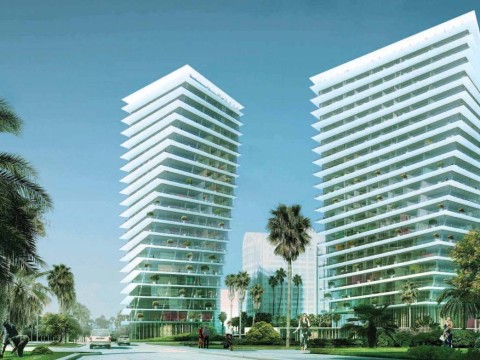
The project is a collaboration between Related Group’s Jorge Perez and architect Bernardo Fort-Brescia of Arquitectonica, with design by Yoo by Philppe Starck. The project is referred to as Perez’s “self-proclaimed legacy,” a fitting title for what is undoubtedly the most impressive project in an already impressive portfolio. Likened to New York’s Time Warner, the tri-tower property boasts 1,800 residences in two towers with a Viceroy hotel in the third. Situated at the intersection of downtown Miami and Brickell, the property sits at the mouth of Miami River, offering spectacular vistas of Miami’s expanding skyline.
The designs, which are being heralded as some of Starck’s greatest to date, are striking and bold, contrastingly described by Starck as both out of this world and human, but most importantly as “spectacular.” “The building isn’t my design,” explains Starck. “I make a movie set. I am sort of a movie director; I show people things to make them see a sort of vision, to make people see my vision, make them smarter and intellectual. [With ICON Brickell], I had a lot of room to express myself and make people happy. ICON was easy because it’s big and it gives me a lot of power to express and make people happy.”
Slated to open late February, the property held an exclusive preview during Art Basel 2008, and guests lined the block to be amongst the first to experience the ambiance inspired by the unique designs. The property entrance is marked by a sculpture garden inspired by the Maoi structures of Easter Island, envisioned by Starck as a dark cave illuminated by watchful “eyes.” “I just chose what is not very in style,” he explains of his choice for the structures. “I just make strange.” The unique mammoth faces, which appear on 100 twenty-two-foot-high columns, took shape over the course of a number of months, being carved and painted onto the giant structural columns. “We had to hire a full-time team of security,” explains Perez. “People have been drawn to the columns, and want to get a closer look even while the space is still under construction!” The faces guide guests and residents to separate entrances for the three towers, flanked by Mary Brickell Park to the south and Biscayne Bay to the east.
As is typical in Starck designs, the entranceway seeks to bring the outside in, with a continuing color scheme, 22-foot ceiling, and dramatic yellow glass. The lobby features one of the building’s many public gathering areas, which was one of characteristics that Starck focused on in his designs. “Everywhere, we created space where people are obliged to meet,” he says. “I feel we are in a society where people speak less and less to each other. In ICON Brickell, people will speak, live, and love together, which is important.”
What will undoubtedly be the main gathering space is the impressive-both for aesthetics and engineering strength-two-acre park terrace and pool deck, situated 140 feet above Biscayne Bay. The enormous sanctuary, flanked by the three towers, includes a multitude of unique characteristics, including a freestanding fireplace, mosaic tile carpet, and a sitting area framed by artistic glass panels, intended to serve as an outdoor living room of sorts.
But the center of the attraction is the waterway that runs like a canal across the enormous terrace. The canal is broken into three infinity-edged pools, a reflection pool, an oversized thermal hot tub, and a longer-than-Olympic-sized lap pool. The entire area is covered by a grove of trees, offering coveted shade. “It is a work of technological genius,” says Perez. “The entire floor below is dedicated to a drainage and support system for the trees’ roots.” Due to the expanse of the space, the different “neighborhoods” throughout the elevated park adapt to the varying moods of the residents and guests. A personal favorite is the oversized loungers on the terrace, which are situated facing Biscayne Bay, offering incredible vistas of the skyline from a dizzying exposed height.
But what Perez says is his favorite area in the building-or one of his three favorites-is Club 50, a lavish rooftop lounge and private pool, open exclusively to residents and guests, with talk of possible private memberships being available sometime in the future. The club’s design is courtesy of Kelly Wearstler, the mastermind behind the interiors of the Viceroy hotel tower. Her designs are a complete contrast to those of Starck, utilizing a diverse color palette and intricate details that Wearstler (an Haute Ambassador) is known for. The overall design scheme blends modern sophistication with a dash of exotic flair and timeless East Asian accents. The combination of Starck’s ethereal modernism with Wearstler’s layered sophistication enhances the property’s bold appeal.
Starck is also collaborating with Perez and Brescia on ICON Vallarta, another tri-tower development that is under construction in Puerto Vallarta. But the main thing that has taken hold of his attention right now is ecological design, and he is continually working on a line of products that encourage a sustainable future, such as the Darrieus H-shape Aeolian generator, which was a prototype shown in Milan last year. “I’m very, very happy to become useful,” the designer states, “and to invent technology that is very easy to use and produce. You’ll see this stuff on the shelves of supermarkets. You will buy a beautiful product that will save energy. Suddenly we are all in pursuit of ecological design, to understand and act. Now we can invest in the right technology to be in the fight for ecology, to save energy and not waste energy.” With ideas like these, Starck will continue to redefine the design world, and we can only hope that his imitators will continue to follow.
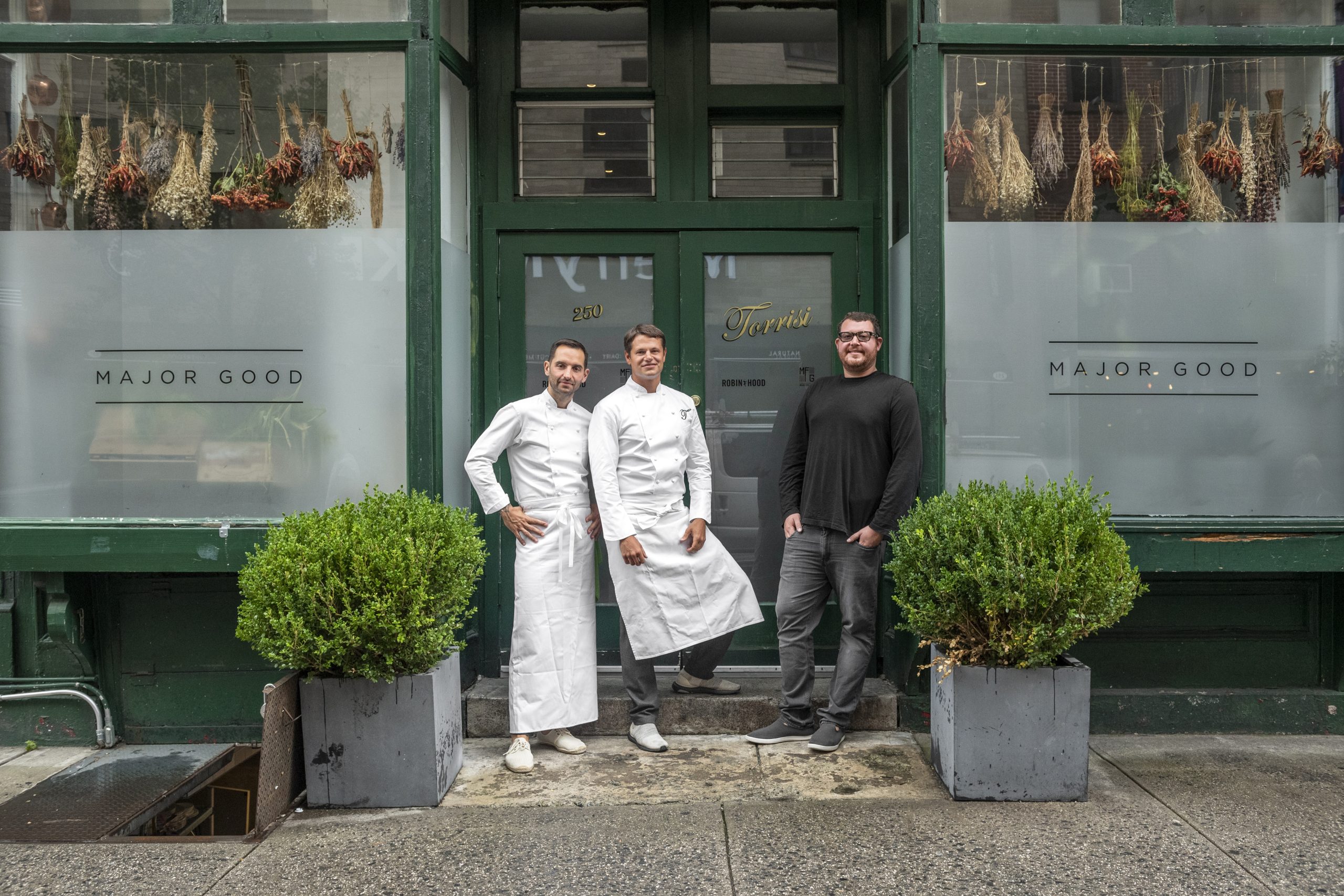
“Too many cooks spoil the broth,” warns the age-old adage. But here, in the melting pot of the United States, the tradition of diversity welcomes all, making it one of the most successful “kitchens” in the world. It is in this culinary petri dish that I decided to arrange the ultimate play-date, as a prelude to the South Beach Wine & Food Festival. Being the unrelenting foodie that I am, I agonized over which chefs I would want to bring together until I came up with the ultimate dream trio: Daniel Boulud, Jean-Georges Vongerichten, and Masaharu Morimoto.
In Boulud I saw the endearing perfectionist, a man as involved in every micro aspect of his restaurant empire as he is in a conversation about his beloved Citymeals-on-Wheels charity (one of New York’s most successful initiatives that delivers food to the homebound elderly). In Morimoto I saw the drive, determination, and fervor of a former athlete, and a pride in his Asian heritage that is infectious. In Vongerichten I saw the patience and soft-spoken charm of a true gentleman, and identified with his experiences living in Southeast Asia as a foreigner.

But, as mentioned before, I am an unrelenting foodie, and memories of lavish, infinite-course dinners filled with everything from foie gras to hummus to venison at Daniel, the best steak I’ve ever eaten at Morimoto, and samosas that rival my mother’s own (a near impossible feat) at Spice Market flooded my mind with incredible lucidity. The truth is, as personalities and as incredibly talented culinary masters, these three gentlemen are the countries finest. So, in hopes of fulfilling my ultimate food fantasy, I invited the three of them to speak about everything from fast food joints to embarrassing restaurant moments.
Coming together on that auspicious winter day in New York City seemed almost serendipitous, considering that these three personalities hail from such different backgrounds. Boulud’s story began on a farm outside of Lyon. His star quickly rose from astute apprentice under the likes of Roger Vergé, Georges Blanc, and Michel Guérard to a coveted position as private chef to the European Commission in Washington, D.C. After serving as executive chef at New York’s fine dining institution, Le Cirque, Boulud went on to open his own restaurant, Daniel, in 1993. He is now at the helm of a food and beverage empire that includes nine restaurants around the world, from Beijing to Vancouver, of course with a local outpost at the Brazilian Court in Palm Beach. Also born and raised in France, Vongerichten grew up in the German-influenced Alsace region of the country. When, at the age of 16, Vongerichten was treated to a birthday dinner at Auberge de l’Ile by his parents, he became sure of his future career as a chef. Vongeritchen’s indelible mark can be seen at 22 restaurants around the world, from New York to Hong Kong.
Both chefs’ paths crossed in their native France long before they came to the United States. Boulud explained that, “when Jean-Georges was chef at Lafayette, Pierre Franey invited me to lunch there. It was back in the mid-’80s-so long ago that Jean-Georges still had his little mustache! We had this delicious scrambled eggs with caviar dish. Next, I invited him to brunch at my home with his family, so we could get to know each other better. When I was still chef at Le Cirque, Jean-Georges had already taken the leap and opened his own place, a bistro, Jojo. He made the move first but I was right behind him when I opened Daniel. Then he followed a few years later with Jean Georges.”
Meanwhile in Hiroshima, Japan, Morimoto’s hope of becoming a professional baseball catcher came to a premature end after an arm injury. Fortunately for the culinary world, Morimoto cultivated a career as a sushi chef that led to stints on Iron Chef Japan and USA, winning him international acclaim.
The first topic on all our minds was, of course, a menu. I was keen to know each chef’s ideal menu for the ultimate event. Morimoto spoke of an elaborate seven-course meal, beginning with toro prosciutto and Yubari melon, the sweetest melon in Japan, priced at a cool $300. It would call for a whole 400-pound tuna from Hokkaido, Japan, using only the most delicious parts of the tuna belly and conclude with an elaborate Saga steak. Vongerichten chimed in. “If I could do anything I wanted,” he said, “it would be an outdoor fire pit feast. I’d make whole suckling pigs, whole goats, lambs, half a cow, medieval-style-it would be pretty amazing.” Boulud’s idea of the perfect gathering involves “great chef friends at my side making incredible food, plenty of delicious Burgundy to wash it down, guests who get to wear blue jeans while listening to blues, all coming together for a very important cause.”
As the wine was poured, jokes and interesting anecdotes arose. Suddenly, the fact that between these three men there are eight James Beard awards (the Oscars of the restaurant world), 44 restaurants, a galaxy of Michelin stars, and a Legion of Honor became less intimidating. Morimoto recalled one of the first times he met Vongerichten. “When I was the executive chef at Nobu 10 years ago or so, Jean-Georges came to the restaurant. I felt honored to serve him. But when I made a hot dish called ‘Tobanyaki’ in a sizzling plate, the waitress who was carrying the plate to Jean-Georges dropped it right next to him. As I was watching what happened from the sushi counter nervously, I saw Jean-Georges giving her some caring words and trying to make it seem as if nothing had happened. I thought he was such a gentleman.” Vongerichten immediately followed with a cooking tale of good times spent with Morimoto. “We were cooking for an event for the Dalai Lama and Richard Gere. There were 10 of us preparing the meal that night, and we had a great time,” he said with a smile. Boulud, who was so impressed with Morimoto’s work that he invited him as a guest chef to one of his annual galas, recalled, “I met him for the first time in his restaurant in Philadelphia soon after he opened. He pulled out all the stops with an incredible spread of sushi and sashimi. The taste and presentation were so exciting, it was like a fireworks display!”
Now that I was getting a little more comfortable (as if one wouldn’t be in such charming company), I finally had the courage to ask a lingering question of where these elite members of the culinary cognoscenti go for a quick bite of fast food. Jean-Georges was the first to reply with a chuckle, “In New York, my favorite place for burgers, hot dogs, and shakes is the Shake Shack. Sure, there’s always a line, but it’s worth the wait. When I’m traveling, I love to get the spicy chicken sandwich from Wendy’s. I wish I had come up with that recipe myself-it’s amazing.” Morimoto’s comfort food of choice is the Philly cheese steak (it figures, as he spends so much time in his Philadelphia flagship Morimoto), while Boulud’s junk food favorites were, well, not junky at all. “These may be just a step above true fast food, but I love Via Quadronno on East 74th Street for mortadella and green olive panini and Hale & Hearty for their lentil soup,” he said.
If I were asked to choose which element of the restaurant business I admire the most in my humble outsider’s opinion, it would be the endless cycle of mentoring upon which this industry thrives. And the generations continue. In the past few years, Boulud’s protégé Gavin Kaysen was selected to represent the U.S. in the Bocuse d’Or, the Olympics of the culinary world, and has won the prestigious James Beard award. “[It is] incredibly satisfying to me to nurture young talent and watch it evolve in my own restaurants. In fact, it is the talents in my kitchens that make my restaurants possible. I’d like to think the collaboration is rewarding on both ends,” said Daniel with all the affection of a proud father. Although Vongerichten has been involved in the rearing of his own army of gifted chefs, he humbly admitted, “It’s so hard for me to think of myself as a mentor, because I am still constantly learning and adapting to new experiences. The people who work with me share my curiosity for new flavor combinations, spices, and unique ingredients. When we work together, I see it as an exchange of ideas-I never feel like I’m passing down knowledge to the next generation. Everyone has something to learn, and something to teach.” Both of his compatriots emphatically agreed.
As our dream date ended, I was left with that similar feeling that I have after many evenings at every one of my three dream chefs’ restaurants-a lingering after-taste of all the ingredients that make a lasting culinary memory and every hope that I will be able to re-create these most cherished experiences again soon.

Distinguishing your Pauillacs from Pomerols is one thing. Hiring an expert to spot the undiscovered liquid gems is another. While personal wine experts have been around since Aristotle walked the earth, today’s sommeliers offer more than just hard to find Chateau Margaux ‘95. They school the willing in ways of God’s nectar.
Sommeliers have come a long way from the Roman times, when arbiter bibendis were entrusted with mixing water with wine. Depending on the day, their services aimed to enrich a meal or to poison the receiver. Indeed, the wine industry has become somewhat cutthroat. Sommeliers are a critical part of any fine dinning experience, and their finely tuned expertise renders a handsome financial reward. The competition for placement and recognition is fierce. Wine business is no longer a stodgy domain of the old and pompous. This luxury industry is driven by young, hip, competent men, and in few cases, women, whose goal is to take the pretention out of wine, giving this ancient profession a sexy and exciting new edge.
For Courtney Cochran, a San Francisco-based personal sommelier, wine induction was postcard perfect. “I was living in Paris and met up with a pal and her host family, a renowned winemaking family, at their home in Burgundy, and had one of my all-time greatest lunches.” In true French style, the meal lasted for hours, largely due to significant wine consumption and lively conversation. Cochran realized that wine and food lend themselves nicely to a lifestyle of superior quality. She came back hooked and built her career around a bottle.
It wasn’t love at first taste for Aldo Sohm, the reigning “Best Sommelier in the World,” and wine director of New York’s famed Le Bernardin. “To be honest, wine tasted bitter and sour when I started to drink it,” Aldo admitted. Professional demand has redirected his attention to all that wine can be, and today Aldo can successfully blind taste his way through any region of any wine producing country.
Nevertheless, touching stories of wine discoveries amidst rolling hills of southern France or expert knowledge of barrel building help little in becoming a certified master sommelier. One must hit the books, and, above all, one must drink a lot. Very few wine enthusiasts will wear this honor of distinction. American Court of Master Sommelier, the St. Peter of wine gates, puts candidates through three rigorous, palate-forming tests before they can attempt to reach for the ultimate of all boozy accolades. The invitation only, gut-wrenching exam is tough, to say the least. Of the thousands of contenders each year attempting to climb the ladder of wine titles, only four percent will pass the master test, and only 167 candidates have earned the master sommelier diploma. According to the Court of Master Sommelier, level of difficulty, not a massive hangover, is to blame for the small number.
Those who parlay their hard earned titles into careers often become star attractions of many top rated restaurants. Sohm is a media darling who enjoys a rock star status, complete with groupies to boot. So there is no surprise that personal sommeliers, without the cushy safeguard of an established restaurant, have to work harder to build equal name recognition. As their restaurant counterparts deal with placing orders, predicting trends, making sales quotas, and enthralling their subjects with witty conversations, personal wine stewards call upon psychology, etiquette, and event planning to create and maintain success. “The expectations of clients are incredibly high, and their needs very particular. In a word, it’s personal,” Cochran, who often feels the pressure of those expectations, confessed. Realizing the potential of this unique liaison befalls not only on purchasing racking components and establishing long term plans for collection. Clients, who will spend upwards of hundreds of thousands of dollars on a wine cellar, want to get their money’s worth. Wines that represent a fantastic value at a lower price point are as sought after as bottles that collectors keep for those special life moments.
Sally Kirk, whose Jupiter, Florida, home boasts an envy-worthy cellar, gets a kick out of serving inexpensive yet entirely respectable bottles that her personal sommelier turned her onto. Her “cave” is a custom-made, high-tech, beautifully finished room, where thousand-dollar vintages cohabitate in perfect synergy with young wines awaiting to mature. One easily deduces that her eclectic and incredibly well-stocked cellar, which took a year to build, is the showpiece of Kirk’s home. Charlie Haile, the head designer for Wine Cellar Innovations, a leading designer of wine cellars and wine racks, understands the passion behind such a grand, and seemingly frivolous, investment. “Bringing home a truly exceptional wine is like bringing home your baby,” he explains. “You want to provide it an environment that is safe and secure and where it can develop and grow into all that it has the potential to become.”
Ironically, if a sommelier is as good of a guru as he is of a wine expert, the collector will develop a palate and confidence, eventually cutting the cord that binds them. But the good news for the wine industry, and those making a very nice living because of it, is that it is growing, thus creating many guidance-seeking enthusiasts in need of council. According to the Wine Market Council, by the year 2012, the U.S. will be world’s No. 1 wine consuming nation. That is a lot of pouring! And if Aldo is right, the aficionados will be younger and more diverse. “I’ve noticed that people interested in wine are excited and well versed, and any notion of elitism is dispelled by the multicultural, multigenerational consumer I deal with everyday. That’s good news for my business, because it challenges us. As sommeliers we have to compete for their attention with bottles that are good and well priced.” Mr. Sohm, we’ll drink to that!

History has proven that luxury comes in a plethora of shapes, sizes, and materials, making the choice, for those most fortunate, of which extravagance to indulge in a difficult one. Since the Versace Group has established collaborations with luxury brands Airbus and Augusta Westland, allowing its signature modern baroque style to reach new, unrivaled heights in the sky, the choice got easier.
A European press conference in the spring of 2007 marked the official announcement that Gianni Versace S.p.A. would collaborate with TAG Aircraft Interiors Limited to transform the interior of the Airbus A319, one of the largest aircraft on the market, into a haven of luxury filled with signature pieces inspired by Versace’s Home Couture collection. “Versace is proud to have been chosen as the exclusive interior designer of this new Airbus A319 by a very discerning client,” reflects Versace CEO Giancarlo Di Risio. The fusion of luxury brands sparked an interest amongst the global jet-setting elite that has continued to grow.
This partnership marked the first ever between a fashion house and a private jet corporation (Versace did previously work with TAG on a Boeing Gulfstream 550, but the work was not a directly commissioned partnership between the carrier and design house) and the stunning results will undoubtedly set a trend for other designers and manufacturers to follow. “I’m sure that today the style of life is extremely important,” explains Di Risio. “The excitement from owning pretty things or shoes may not last as long as flying one’s own helicopter or jet. It’s a 360-degree turnaround.” The lucky owner of this Airbus certainly will relish in its magnificence for years to come, much longer than one would over a pair of even the finest custom driving moccasins.
Due to the fact that Versace and TAG previously collaborated with Boeing, a working dynamic was already present between the two companies, allowing a superior quality of work to be produced in a time-efficient manner. Versace S.p.A. was responsible for all of the design content and styling, while TAG was responsible for the logistics, technicalities, and management. This balance allowed each team to focus specifically on their objectives, resulting in the brilliant melding of technology and innovation, and the dazzling, sexy, fashionable manner. Though this project sounds more like a dream, it was no easy feat considering the massiveness of the Airbus A319’s structure.
The 16-seat aircraft interior, once bare, is now filled with the crisp, clean iconic Versace black and white color scheme, offering a sleek aesthetic. The armchairs are embossed with the House’s Greek fret motif, while the furnishings are all comprised of the finest imported leather, wood, and glass. Everything adorning the interior-from the carpeting to the seating-is fully customized, thus justifying the $60 million price tag. Though the owner’s name cannot be disclosed, it can be assured that the sir or madam is flying in high style.
As if designing the interior of one of the most impressive aircraft to grace the runway isn’t enough, Versace pursued its conquest of sky-born luxury with its Augusta Westland project. Roughly one year ago, Versace and Augusta Westland released word that the two luxury brands would partner to complete one of the most resplendent projects to ever hit the sky. This entailed Versace filling the interior of AW’s two exclusive helicopter models-the Grand and the 109 Power-with the sleek sophisticated style for which the design house is best known. “The interior design of helicopters is a natural development for Versace after its move into luxury resorts, private jets, super cars, and yachts, all fitting vehicles for the unique lifestyle purveyed by the Maison,” explains Di Risio. And these two helicopters certainly are befitting of the good life.
The first chopper, a Grand, can accommodate six people comfortably, and when we say “comfortable,” we mean each will have a personal armchair covered in full grain black-and-white leather bearing the Versace logo, a symbol of refined distinction. The flooring is made of wall-to-wall black carpeting and the walls are lined with butter-soft black leather interspersed with carbon fiber panels. A metal tag bearing the Versace name is located centrally in the cabin, giving the feel of a chic Manhattan boutique rather than an aircraft once intended for combat. The most important seats in the helicopter are the captain chairs, which Versace designed to be not only luxurious, but also technically superior with an aerodynamic wraparound shape. The 109 Power mimics this grandeur and chic-sophisticated style, offering one of the hautest modes of transportation.
With Versace’s continued growth expected to reach every aspect of the luxury market, the fashion house will continually redefine the luxury lifestyle, setting the standard for other design houses to follow.

You dream of an ultra-large business jet with all the trimmings. One whose twin engines will whizz you to other continents in premium style and comfort. One that indulges up to 19 passengers in a swanky cabin twice as large as that of any other aircraft with comparable range. One with five distinct privacy zones that have been configured to your specific needs, with a dining area, an executive suite loaded with a queen bed and a stand-up shower, a fully accessible walk-in baggage compartment, high speed Internet, and a fully equipped wet gallery. One that makes you master of time and space. That dream is no longer a flight of fancy, as Embraer has stretched the aviation imagination with the Lineage 1000.
Embraer started making sonic booms in the business jet arena in 2000 when it announced the Legacy 600, which derived from the successful ERJ-135 commercial airliner. Taking a similar approach with the larger E-190/195 (98 to 114 seats), the Brazilian manufacturer gave birth to the Lineage 1000 in 2006. This new business jet joins a rarefied field that includes heralded heavyweights like the Airbus Corporate Jet and the Boeing Business Jet. Though the Lineage is large, its price tag is relatively small. While the ACJ costs $75 million and the BBJ sells for $57 million, the latter without passenger cabin, the new Embraer model is approximately $43 million with the cabin installed. The Lineage 1000 thus brings a new set of variables that Embraer has aimed squarely at the middle of the ultra-luxe, executive-configured airliner market, hoping to carve out a unique niche. It already has been doing a good job, with 20 L-1000s on order.
The aircraft has received the necessary stamps of approval, as it was type certified in Brazil and Europe (meaning deemed air-worthy). Early 2009, the FAA gave its official sanction, which is timely because the Lineage’s first customer, the industrialist Aamer Abdul Jalil Al Fahim of Abu Dhabi, is anxiously expecting delivery in the first quarter of 2009. Who can blame him? The plane is powered by two General Electric engines that each deliver 18,500 pounds of thrust. It can blaze at Mach 0.82 at an altitude of 41,000 feet, aided by the top-of-the-line Honeywell Primus Epic avionics suite for reduced pilot workload. It comes with five LCD multifunction control screens; intuitive interface with cursor control device; auto-throttle; weather radar with turbulence detection; fly-by-wire; optional class two, electronic flight bag; enhanced vision; head-up display; and a host of other cutting-edge gizmos to keep Al Fahim safe and happy at cruising altitude.
He must also be ecstatic with the news that the L-1000’s max range-originally projected to be 4,200 nautical miles with eight passengers, or 4,350 with four-has been bumped up to 4,400 nautical miles with eight, or 4,500 with four, even with the requisite fuel reserves factored in. This is massive news for future operators, as it allows for even more route and destination options; the big bird can easily carry flyers directly from New York to Moscow, Dubai to Tokyo, and Jeddah to Beijing. Because of its low noise signature, steep approach angles, and shorter wingspan, it will also be able to operate from airports where some other “heavy iron” business jets can’t-places like Aspen, New Jersey’s Teterboro Airport, and London City.
When it comes to interior layouts, the Lineage’s cabin styling, designed in partnership with London-based Priestman Goode, is sweet. Customers have a broad range of choices, thanks to a modular scheme that divides the main cabin into five zones, plus the lavatory and walk-in baggage compartment. The modules maximize flexibility and utility, simplify installation, and hold down costs. Customer-specified interiors are available for an additional charge. The cabin-management system controls all in-flight information and entertainment components, as well as lighting, window shades, temperature, and water and waste, through a master control unit in the galley or through individual passenger control units. The aircraft can be equipped with all of the latest in-flight entertainment options, including Wi-Fi. In all, the wealth of choices and zones creates elegant and relaxing ambiances where separate groups of passengers can simultaneously enjoy privacy for working, resting, lounging, or dining.
The Lineage’s flowing foyer area resembles an office reception room. Adjacent to the main forward entry door, this space can be configured with a curved sidewall divan (it doubles as a crew rest area) and curved storage drawers and countertops. Finished in light-colored Ultraleather and metallic laminates, it looks open, airy, and inviting.
From here, passengers pass through the large double-sided galley and into Zone One of the passenger compartment. Galley finishes include generous use of Lexan, stainless finishes, and veneer, leading to a light, anti-claustrophobic atmosphere. The area can be outfitted with a choice of five modules, such as a large conference table with four side-facing single seats or three single seats and an entertainment unit. Additionally, when the seats recline, the zone can convert into a lie-flat sleeping area with optional mattresses.
Zones Two, Three, and Four can be combined to create a large, open, master salon with curved sidewall divans and single seats, credenzas with pop-out or fixed monitors up to 42 inches, and an office work area. Or variations of Zone One layouts can be duplicated (but here they also include divans). Or Zones Three and Four can be combined to create a junior salon. Or Zone Five can be configured as a master bedroom suite with a large bathroom that includes a bidet and shower. Or…well, you get the idea. Adding the shower, however, cuts deep into the main cabin luggage area, which measures 360 cubic feet and holds 2,293 pounds. (The jet’s total luggage capacity is 615 cubic feet.)
Apparently, Embraer realized that in order to take on the blue-chippers like Airbus and Boeing, it had to go big or go home. With the Lineage 1000, the airframer certainly hit the mark with the right combo of range, performance, cabin size, and price. So if you’ve been dreaming of having the biggest and best, with the Lineage 1000, your associates and competitors likely will have nothing on you.

You made it through another year and looked fabulous the entire time. Now it’s time to relax, regroup, and prepare for spring. What better way to do so than with a well deserved vacation? Whether you’re headed for a cruise to the French Riviera or to an isolated island in Fiji, you’ll want to journey in style. With so many already established and new and emerging designers inundating the fashion world with fresh looks and collections, it can become overwhelming to decide what pieces are essential to pack in that Louis Vuitton luggage set that’s been waiting to embark on an exotic adventure.
As I mentioned in previous columns, classic, transcendent pieces are always the best investment, and this holds true to resort wear. The nature of vacation is casual and uncontrived, and therefore sexy. You don’t want to jeopardize this with an overstuffed suitcase filled with a mediocre wardrobe. When packing, you should feel comfortable that you can slip on any piece in your luggage and look great. It is also important to bring pieces that are versatile, such as a blouse that can double as a cover up, taking you from beach to the hotel lounge and back again.
Over the past year I have seen some amazing collections from my never-ending list of favorite designers, but two stick out in my mind as being classic, innovative, and timeless: Chanel and Diane von Furstenberg. Year after year, both labels produce looks that pleasantly surprise with use of color, silhouette, and panache. This year proved to be no exception. Though the two collections are completely different, both bring equally important qualities that are essential for travel. And, of course, you can never go wrong by adding a piece from either label to your wardrobe.
Chanel debuted its 08/09 Cruise line in Miami Beach last May. The entire show was executed with such perfection, and the designs were so stunning it was impossible not to fall in love-at least that was my reaction, and I have a feeling I wasn’t the only one! From the music selection and picturesque locale at the Raleigh hotel to the water nymph ballet grand finale, performed by the American Olympic synchronized swimming team, the show was an iconic moment in fashion history. Lagerfeld chose to debut the collection in Miami because he feels it is a place where the sun is always shining and the people are always having fun, and the collection perfectly reflected these sentiments. Inspired by relaxed comfortable knits, this line is one of my favorites. It is vintage meets modern, quirky yet daring, and flowing and light. I absolutely love the juxtaposition of rocker silver jackets with beautifully flowing white satin gowns. When designs hit Chanel boutiques this past November, the positive response was tremendous. I knew that I had to have everything, and I can’t wait to rock some of the amazing swimwear (especially the one pieces) on the beach in the coming months. If you haven’t already, I encourage every woman to get your hands on a part of this collection.
The DVF Resort 08/09 collection is equally alluring as Lagerfeld’s, but for all of the reasons women have come to love Diane’s designs. They are sharp, clean, and classic while still maintaining an utterly femme quality not found in other designer’s work. What I specifically loved about this collection is that it embodied the true concept behind original resort wear: traveling light to gorgeous destinations. A vacation should be effortless, and investing in a few pieces from this collection will make it that way. Vibrant colors, nautical flags, ruffles, and bold stripes are in abundance, the silhouettes are some of the most flattering that I have ever seen, and the fabrics are low-maintenance and travel-friendly. It’s a smart collection that will make any woman look and feel fabulous regardless of age. The ruched swimwear is particularly flattering to any shape or size. DVF has long been hailed an ambassador and role model for women all over the world. One of her famed aphorisms always makes me laugh because it is so true: “When you figure out your suitcase, you figure out your life.” I’m still working on it, but one thing I know for certain is that I’ll always travel with a DVF dress; her designs are just that classic.
After reading this column, I sincerely hope that you are inspired to embark on the luxury vacation you deserve. Get that luggage set out of the closet and fill it with some eclectic pieces from Chanel and some retro-classic pieces from DVF. I promise you won’t regret it.
Until next time.